Iceland In September Travel Guide: Weather, Daylight, And Tips
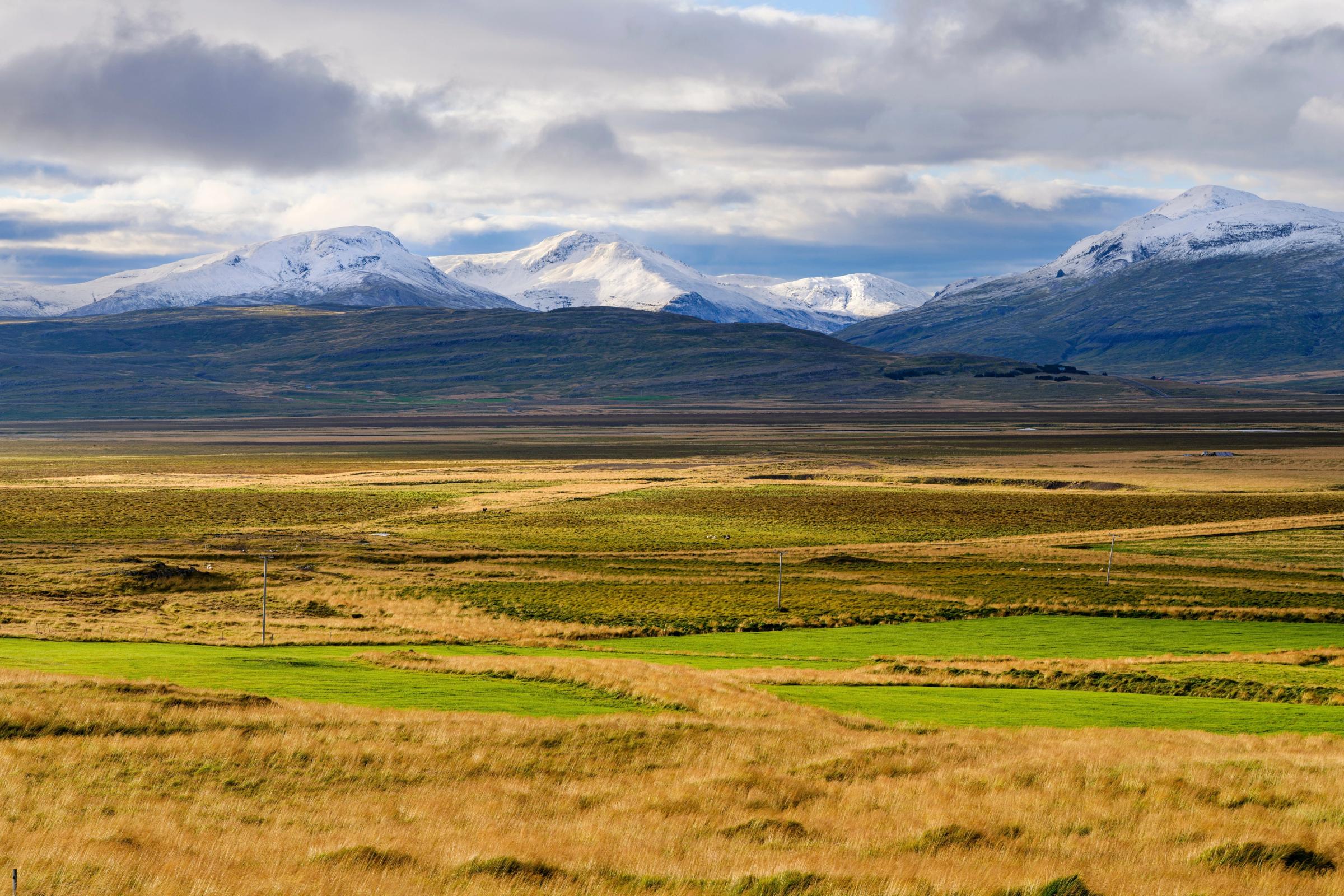
September is a fun month to visit Iceland. The roads are still easy, the nights get dark enough for northern lights again, and the whole country starts turning gold instead of green.
This guide walks you through the weather, the daylight, driving, the best spots to visit, what to pack, and a few sample itineraries depending on how long you're staying.
Key Takeaways
- September is one of the best all-around months to visit Iceland, combining manageable driving conditions, fewer crowds, lower prices than peak summer, and the return of dark enough skies for northern lights viewing.
- Expect cool, changeable weather and pack for wind and rain, with daytime temperatures around 10–13°C (50–55°F), frequent showers, strong coastal winds, and occasional mountain snow later in the month.
- Most of Iceland is easily accessible, but Highland travel becomes uncertain, as the Ring Road, Golden Circle, and South Coast are typically fine for 2WD vehicles, while F-roads may begin closing and always require a 4x4.
- September offers a wide range of experiences, including northern lights, glacier hikes, whale watching, hot springs, scenic road trips, and peak autumn photography, though puffins are mostly gone and natural ice caves are generally not yet open.
- Plan around shortening daylight and stay flexible, using the first half of September for longer sightseeing days and the second half for better aurora opportunities while checking weather, road conditions, and aurora forecasts daily.
Is September a Good Time to Visit Iceland?
September sits right between summer and winter, and that's really why it works so well. The roads are still easy, the summer crowds have mostly gone home, and the nights get dark enough for the northern lights to show up again.
September is a good fit if you:
- Are a first-time visitor who wants a bit of everything
- Are planning a Ring Road road trip
- Like photography and enjoy autumn colors and moody skies
- Want a shot at the northern lights without dealing with full winter driving
- Would rather skip the tour buses at the Golden Circle and South Coast
It's not the best month if you:
- Came specifically to see puffins (most are gone by early September)
- Are counting on getting into the Highlands
- Want a long camping trip in a tent, since nights turn cold
- Aren't a fan of wind and rain

Iceland Weather in September
Iceland's weather in September just doesn't sit still. Mild air off the Atlantic runs into cold air from the Arctic, and that's basically why the weather flips so much, sometimes in the same afternoon.
Average Temperatures
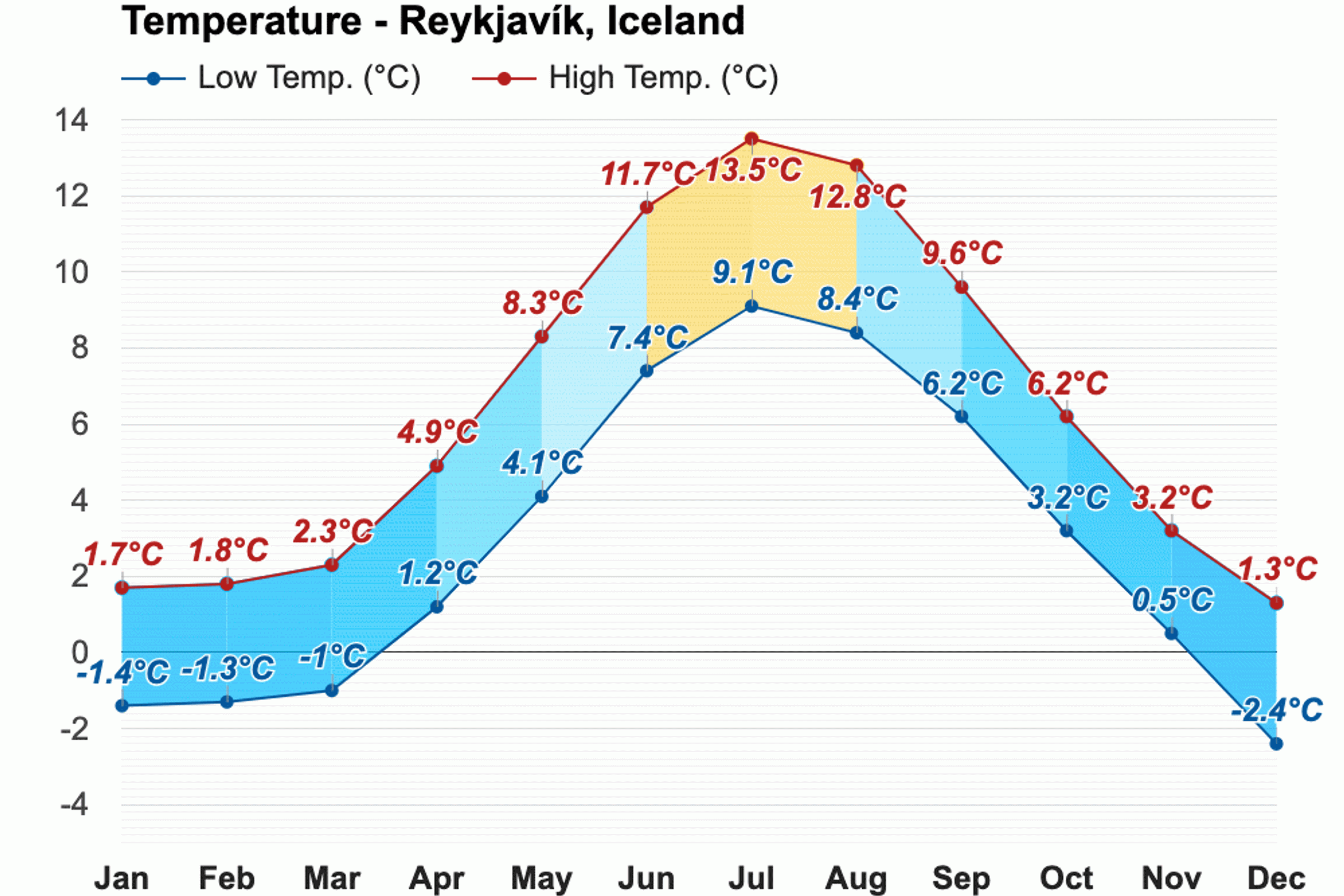
Daytime highs usually range from 10 to 13°C (50 to 55°F), and nights drop to 4 to 7°C (39 to 45°F). Early September tends to be a bit milder, closer to late summer, while the back half of the month starts to feel like real autumn. It's cool, not freezing, but don't expect it to feel like summer.
Rainfall and Wind
Rain shows up a lot in September, but it usually comes as short showers that pass through, not a full day of steady rain. Wind can matter just as much as the temperature, and it gets stronger the closer you are to open coastline or a mountain pass. An 8°C day with no wind feels totally fine. The same 8°C with wind and rain feels way colder. If I were you, I'd pack a real rain jacket for this trip, not just an umbrella. Umbrellas don't stand a chance against Icelandic wind.
Regional Weather Differences
Iceland's regions don't get the same weather on the same day, so it helps to know roughly what to expect depending on where you're headed.
- Reykjavík and the southwest: Mild but windy, with rain showers coming and going through the day.
- South Coast: The wettest part of the country in September, especially near the coast and the waterfalls.
- North Iceland: Usually a bit drier and cooler than the south, since the mountains block some of the rain coming off the Atlantic.
- East Fjords: Quiet and remote, and fog or mist can roll in and out within an hour.
- Westfjords: Gorgeous, but exposed to open ocean wind, so give yourself extra time in your plans here.
- Highlands: The least predictable part of the country, and it only gets riskier as the month goes on, with the first real snow of the season possible up high.
Does It Snow in September?
Snow at sea level is rare in September, but it can happen in the mountains and up in the Highlands, especially in the last couple of weeks of the month. Frost overnight in higher areas is also possible, so don't be surprised by a frozen windshield on a mountain morning even if the coast stayed mild that day.
Daylight Hours in September
Daylight changes fast in September, and that shift shapes almost every part of your trip.
Sunrise and Sunset
Reykjavík gets around 14 hours of daylight at the start of September, dropping to about 13 hours by mid-month and roughly 11.5 hours by the end.
- Early September: sunrise around 5:52 AM, sunset near 8:40 PM
- September 30: sunrise around 7:20 AM, sunset around 6:45 PM
That's almost 2.5 hours of daylight lost in four weeks. The start of the month and the end really do feel like two different trips.
How Daylight Changes Throughout the Month
Early September still feels like summer, with long, easy days for driving around. By late September, you'll notice the days getting shorter fast and the evenings arriving sooner, which also means real darkness comes back at a reasonable hour instead of well past midnight.
How Daylight Affects Your Itinerary
With more daylight early in the month, you can fit in more stops and drive further each day. Later on, plan fewer stops and skip long drives after dark, since that's also when you'll want to be out looking for the northern lights anyway. If catching the aurora matters to you, lean toward the back half of September, since darker nights give you a longer window. If you'd rather squeeze in as much sightseeing as possible and don't mind shorter nights, the first half of the month works better for that.

Can You See the Northern Lights in September?
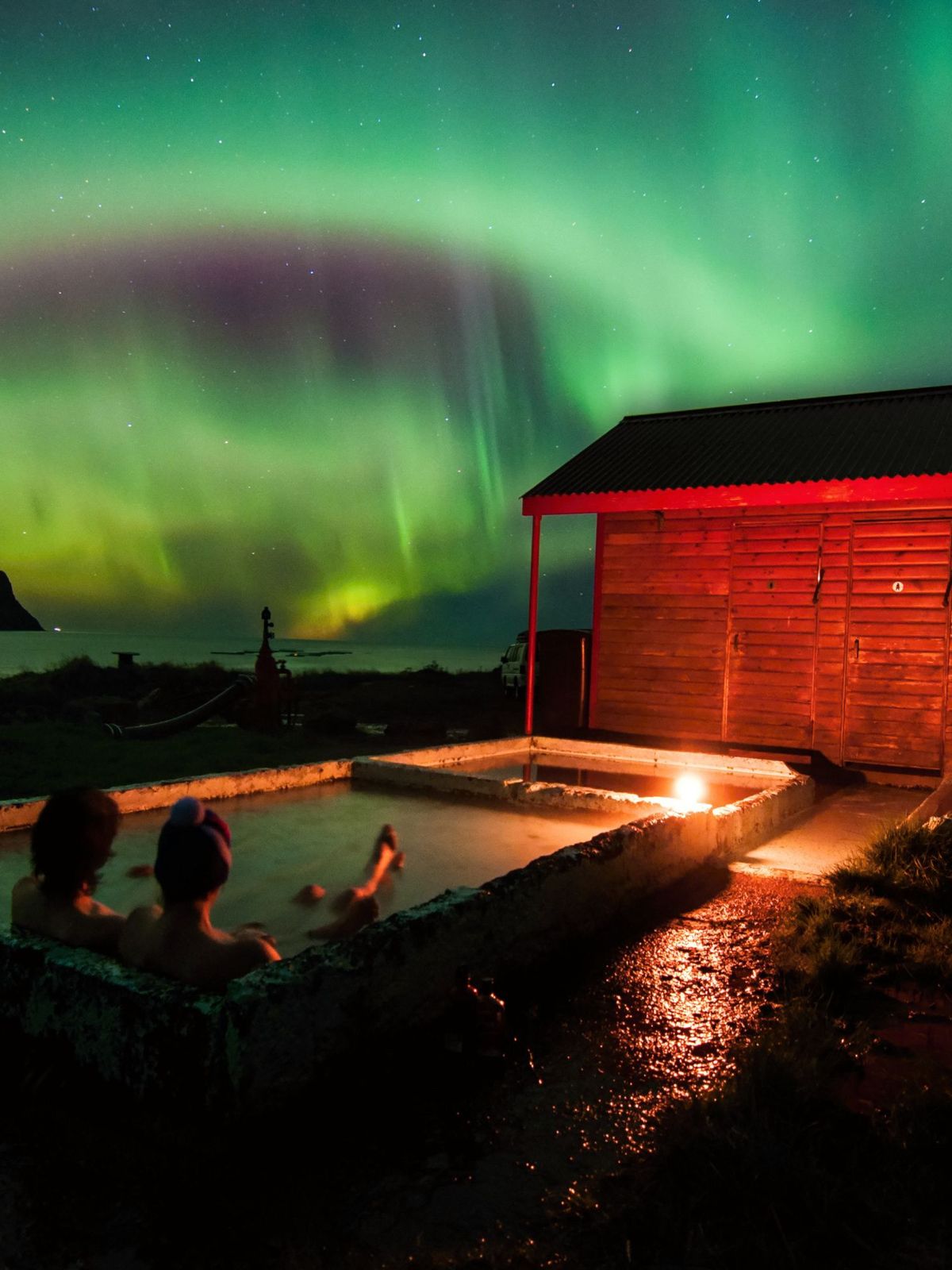
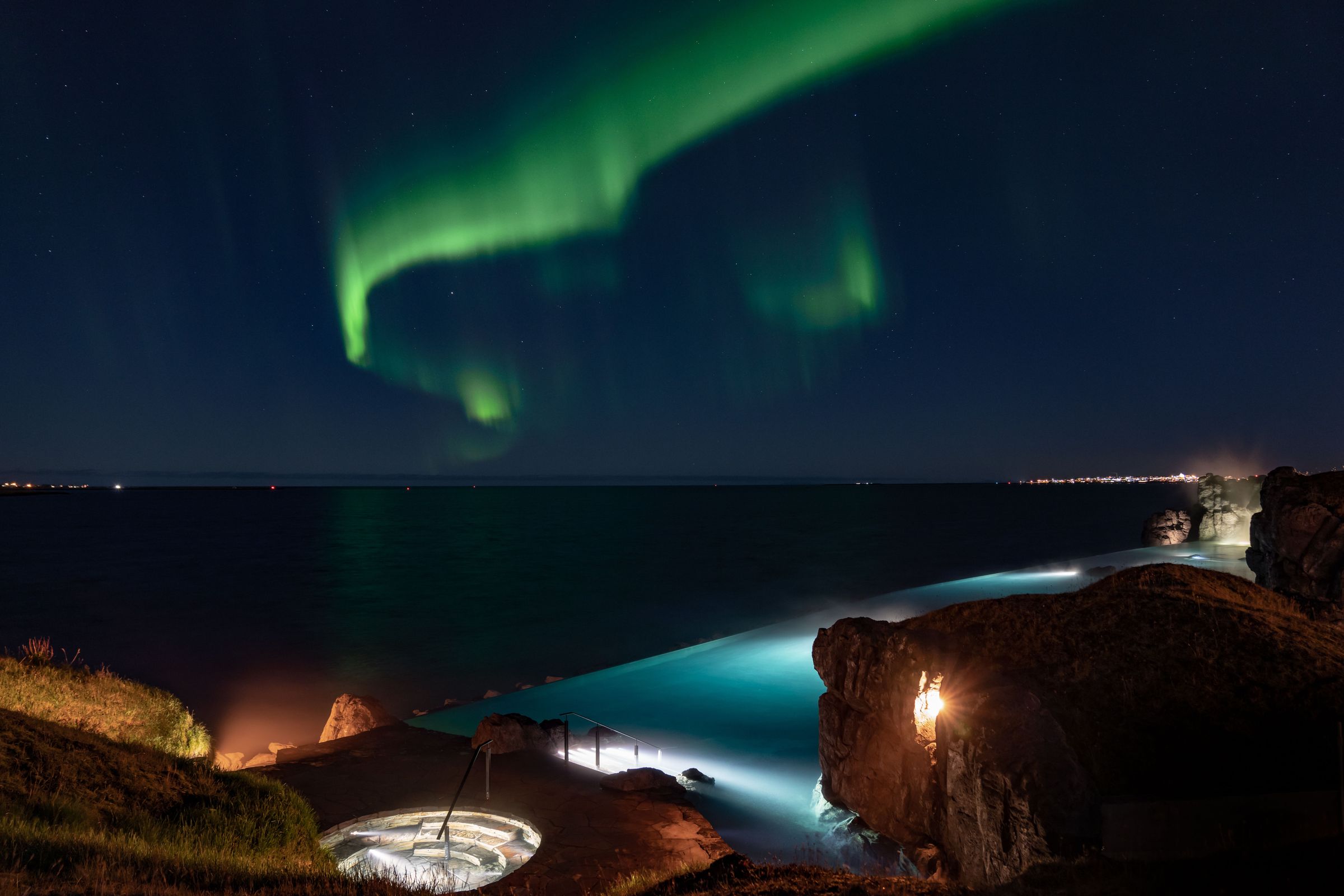
September is one of the first months where the Northern Lights start showing up again in Iceland, simply because the dark winter nights are coming back.
Is September a Good Month for the Aurora Borealis?
Yes, though nothing is guaranteed. You need darkness, a clear or mostly clear sky, and enough solar activity for the lights to actually show up. Miss any one of those three things, and you won't see anything, no matter where in Iceland you're standing.
Best Time of Night
Late evening through the early hours after midnight tends to be your best shot, especially away from city lights.
Best Places to See the Northern Lights
- Thingvellir National Park
- Snæfellsnes Peninsula
- The South Coast, away from any towns
- Jökulsárlón Glacier Lagoon
- North Iceland and the Westfjords

Aurora Forecasts and KP Index
The Icelandic Meteorological Office runs an aurora forecast that shows cloud cover and the KP index, which ranges from 0 to 9. I'd check it every day rather than just guessing, especially before committing to a long night drive in search of clear skies.
Driving in Iceland in September
Driving is one of the best ways to see Iceland, and September is usually a solid month for it, as long as you stay flexible.
Can You Drive the Ring Road?
Yes. Under normal conditions, a regular car handles the Ring Road, the Golden Circle, and most of the paved South Coast just fine.
Road Conditions
Conditions can change within a few hours, so check Road.is and SafeTravel Iceland every day you're driving, not just once before you leave home.
Weather Hazards
Wind gusts, sudden rain, and low visibility are all pretty common. Don't stop on the road to take photos. Pull into a real parking spot instead.
Gravel Roads
Some routes, especially in the Westfjords and East Fjords, turn to gravel. Slow down and give yourself extra time.
Sheep on the Roads
Sheep wander around freely in rural areas, especially before the autumn roundup called Réttir, so keep an eye out on quieter roads.
Road Safety Tips
Check the weather and road conditions every morning, and leave yourself extra time in your route. I'd also fill up on gas before long stretches of rural road, and never cross a river with your rental car unless it's actually built for that.

Are the Highlands and F-Roads Open in September?
The Highlands are one of the best parts of Iceland, but September is the tail end of their open season, so access gets shakier the further into the month you go.
What Are F-Roads?
F-roads are Iceland's mountain roads that lead into the Highlands. They're rough, remote, and sometimes involve crossing rivers, so they're not something a regular rental car should attempt.
Do You Need a 4x4?
Yes. F-roads call for a proper 4x4, and many rental contracts won't cover you at all if you cross a river.
Which Highland Areas Are Usually Accessible?
Early September gives you the best odds at these spots, though nothing here is guaranteed.
- Landmannalaugar: Popular for hiking, with colorful rhyolite mountains all around.
- Kerlingarfjöll: Known for its geothermal areas and dramatic peaks.
- Þórsmörk: A green valley you reach by crossing rivers.
- Askja: Remote, and best done with a guide or a proper tour.
When Do F-Roads Start Closing?
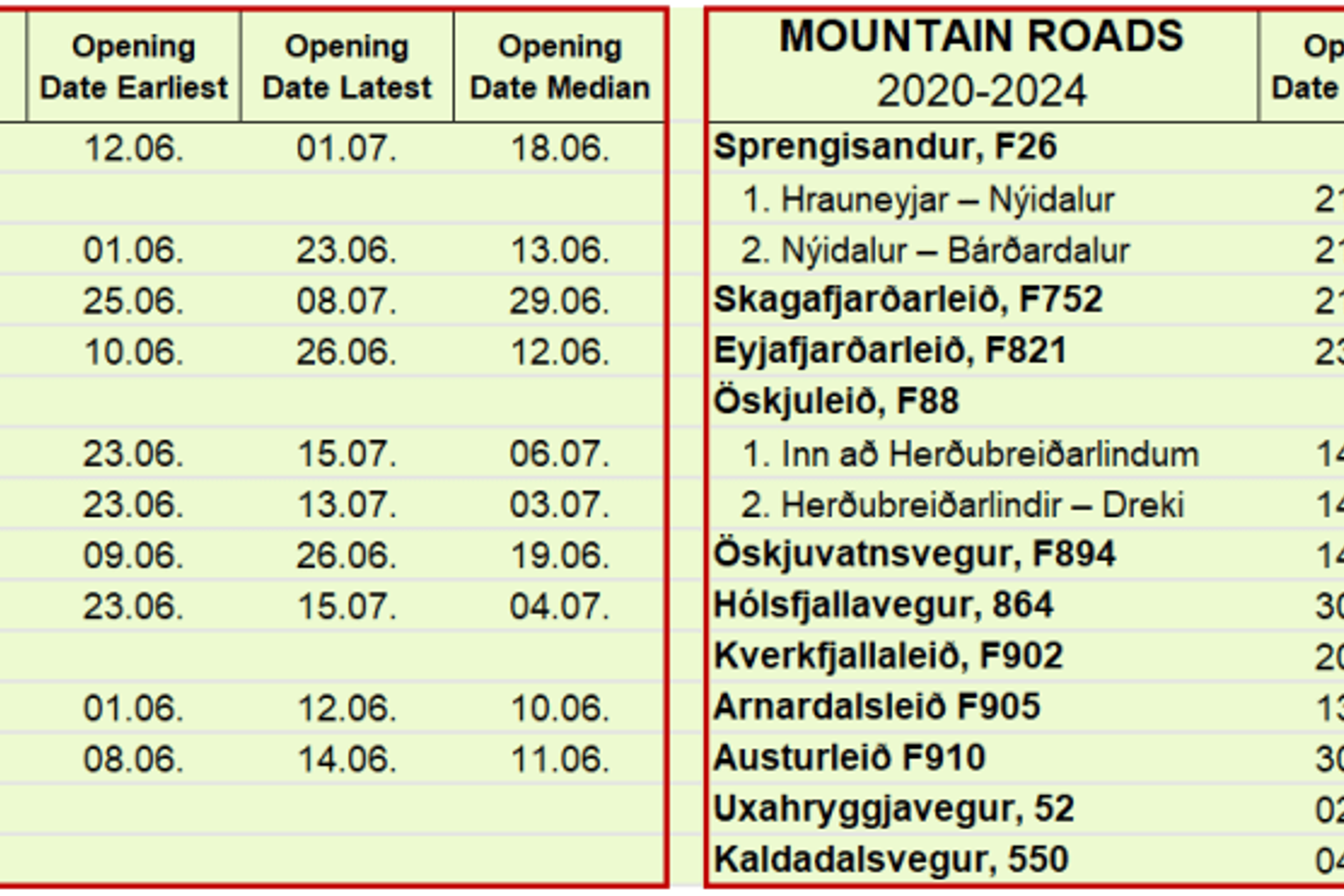
Closures usually start sometime during September and depend on snow, storms, and river levels. If I were you, I wouldn't build a fixed itinerary around getting into the Highlands this time of year. Treat it as a bonus if conditions line up, not the main plan.
Best Places to Visit in Iceland in September
Iceland fits a surprising amount of scenery into a small country, and September gives you a good window to cover a lot of it without fighting summer crowds.
Reykjavík
Iceland's capital makes a smart home base, especially on rainy days when museums, pools, and restaurants come in handy.

Golden Circle
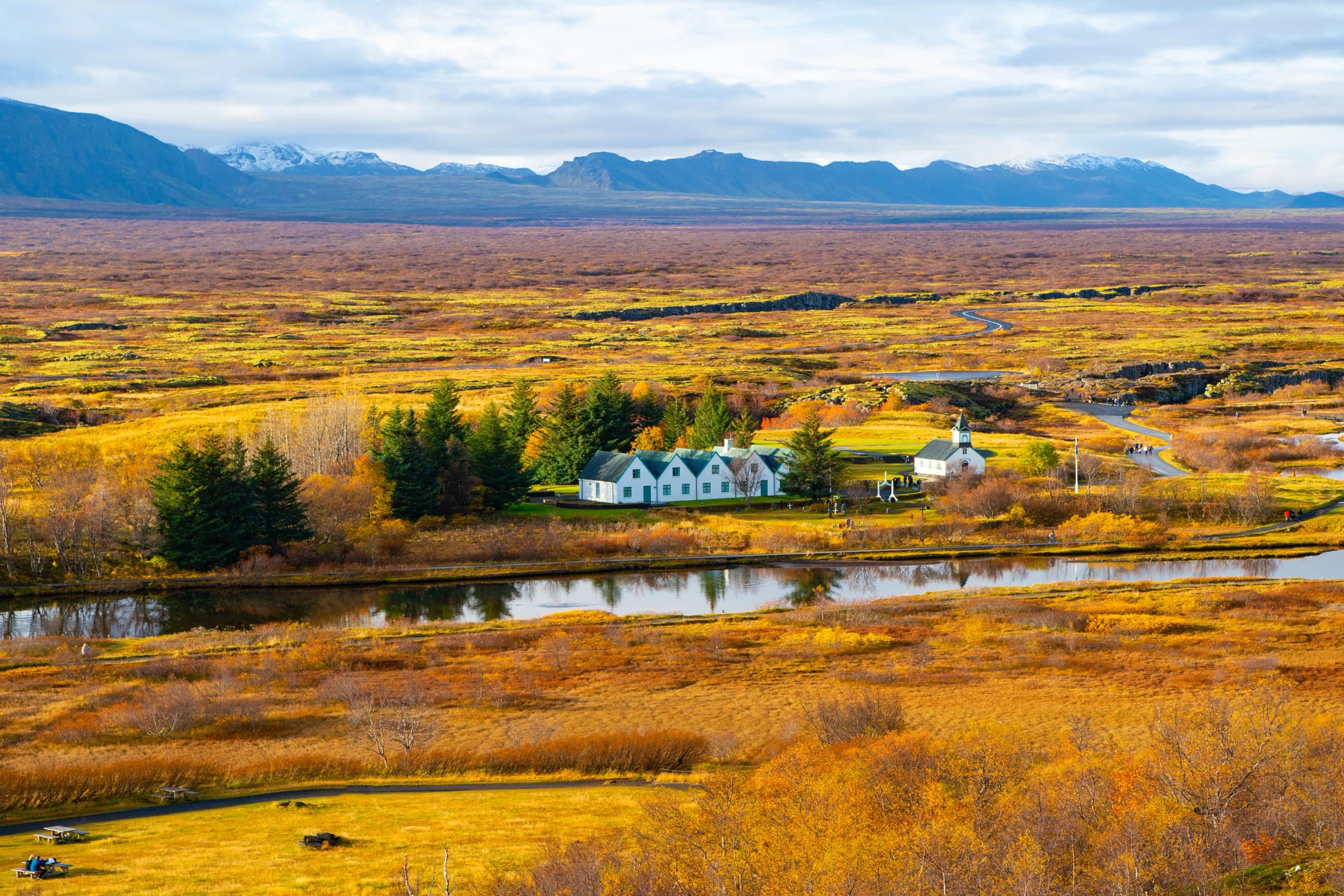
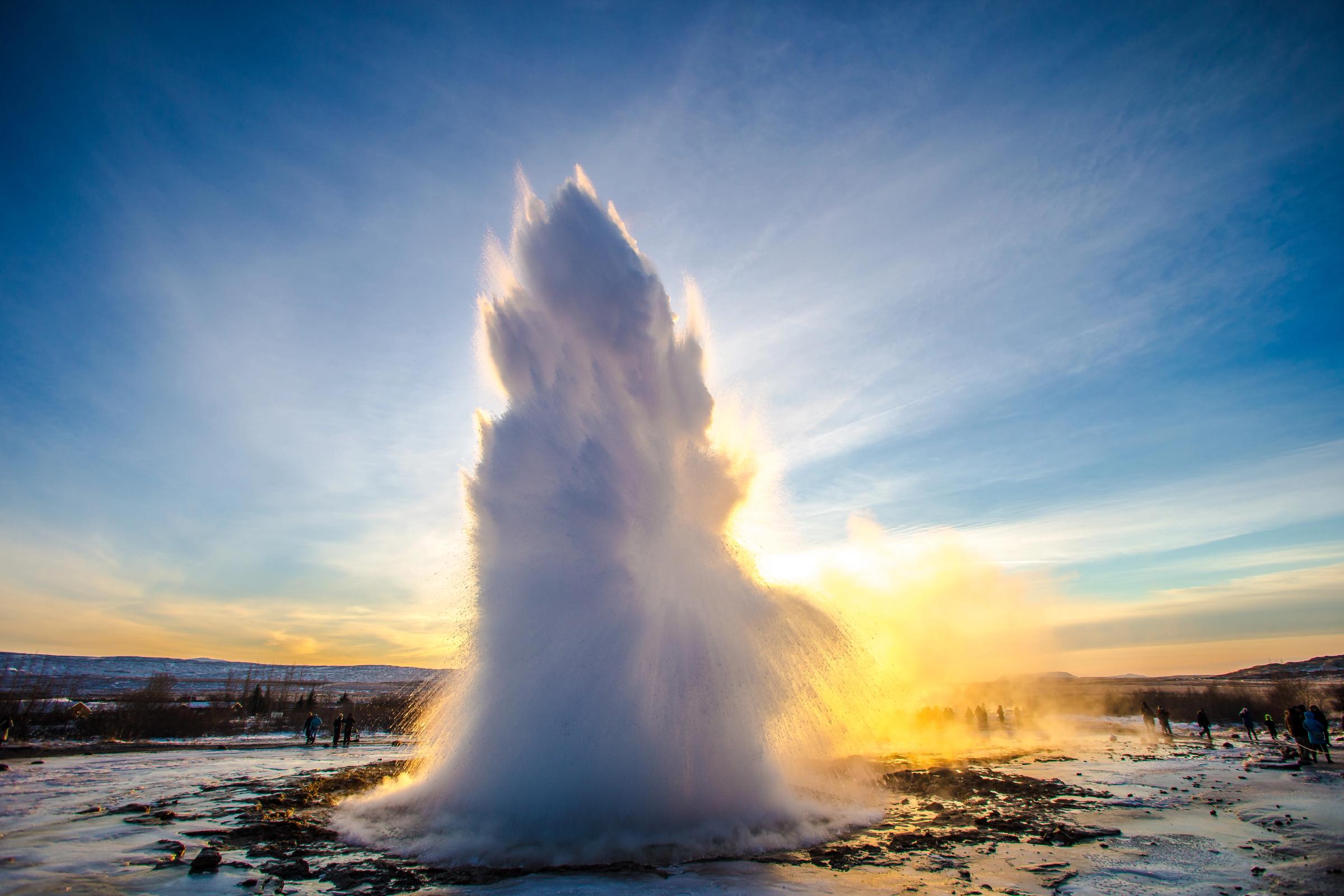
This classic loop stays easy in September and works well as a day trip from Reykjavík. It covers Thingvellir National Park, where two tectonic plates are slowly pulling apart, the geothermal area at Geysir, and the big two-tiered Gullfoss waterfall.

South Coast
This is probably the most rewarding stretch of road in the whole country, full of waterfalls and black sand.
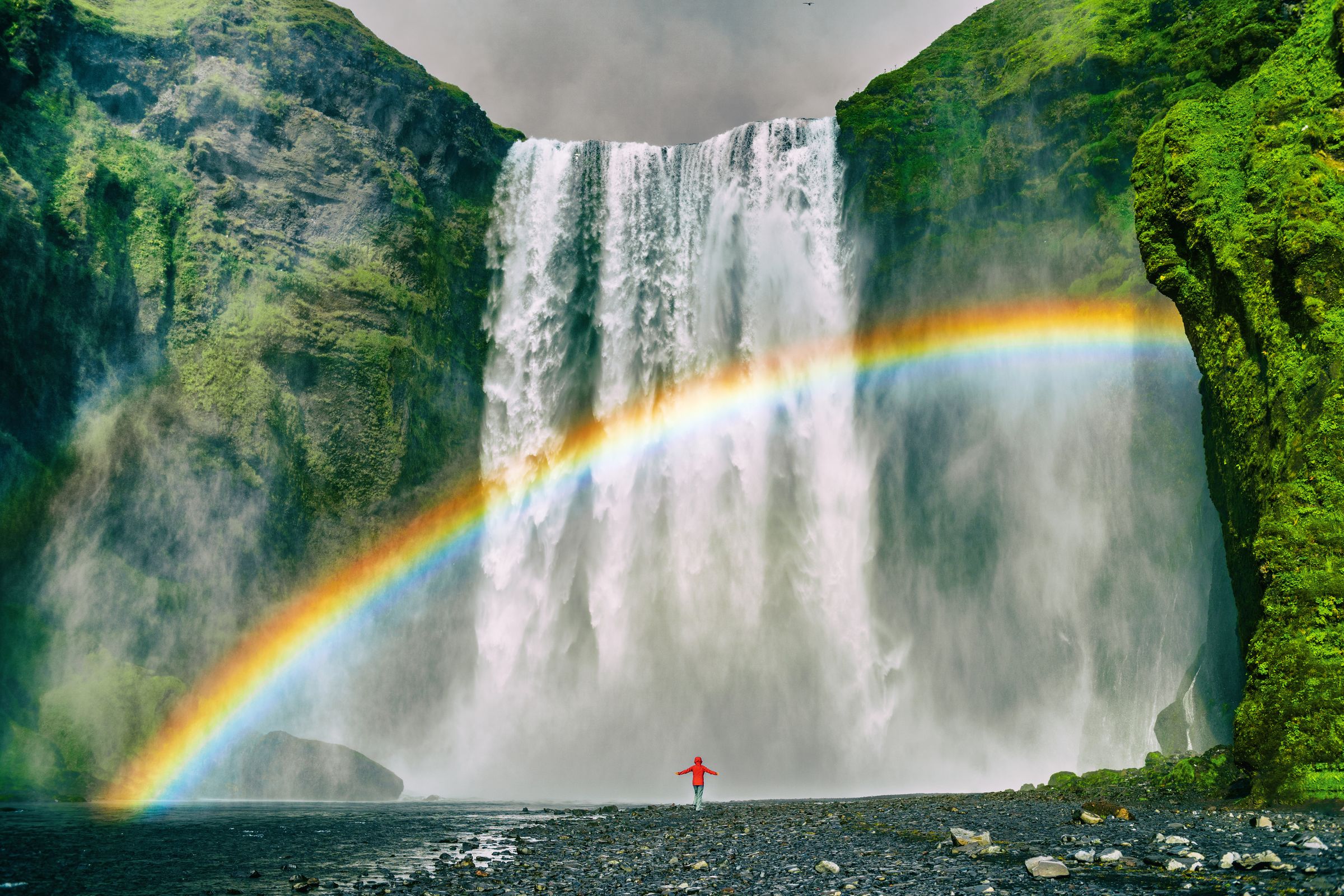
- Seljalandsfoss and Skógafoss: Two of Iceland's most famous waterfalls, one (Seljalandsfoss) you can actually walk behind.
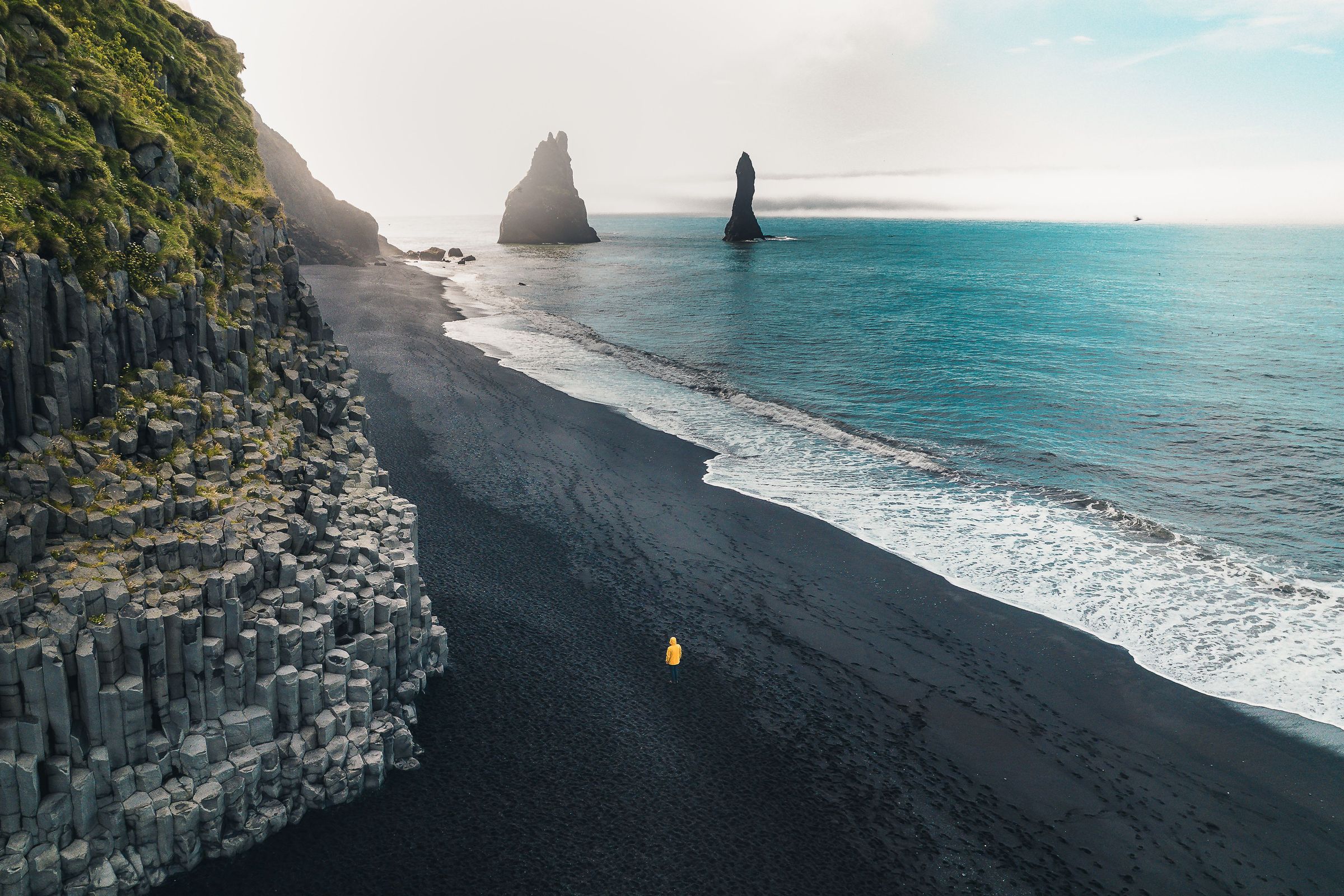
- Reynisfjara Beach: Black sand and basalt columns, but stay well back from the water here. Sneaker waves are genuinely dangerous. I'd get here early, before the tour buses show up, for both the crowds and the quieter shots.
- Dyrhólaey: A coastal rock arch with sea views.
- Vík: A small village that makes a good spot to spend the night.

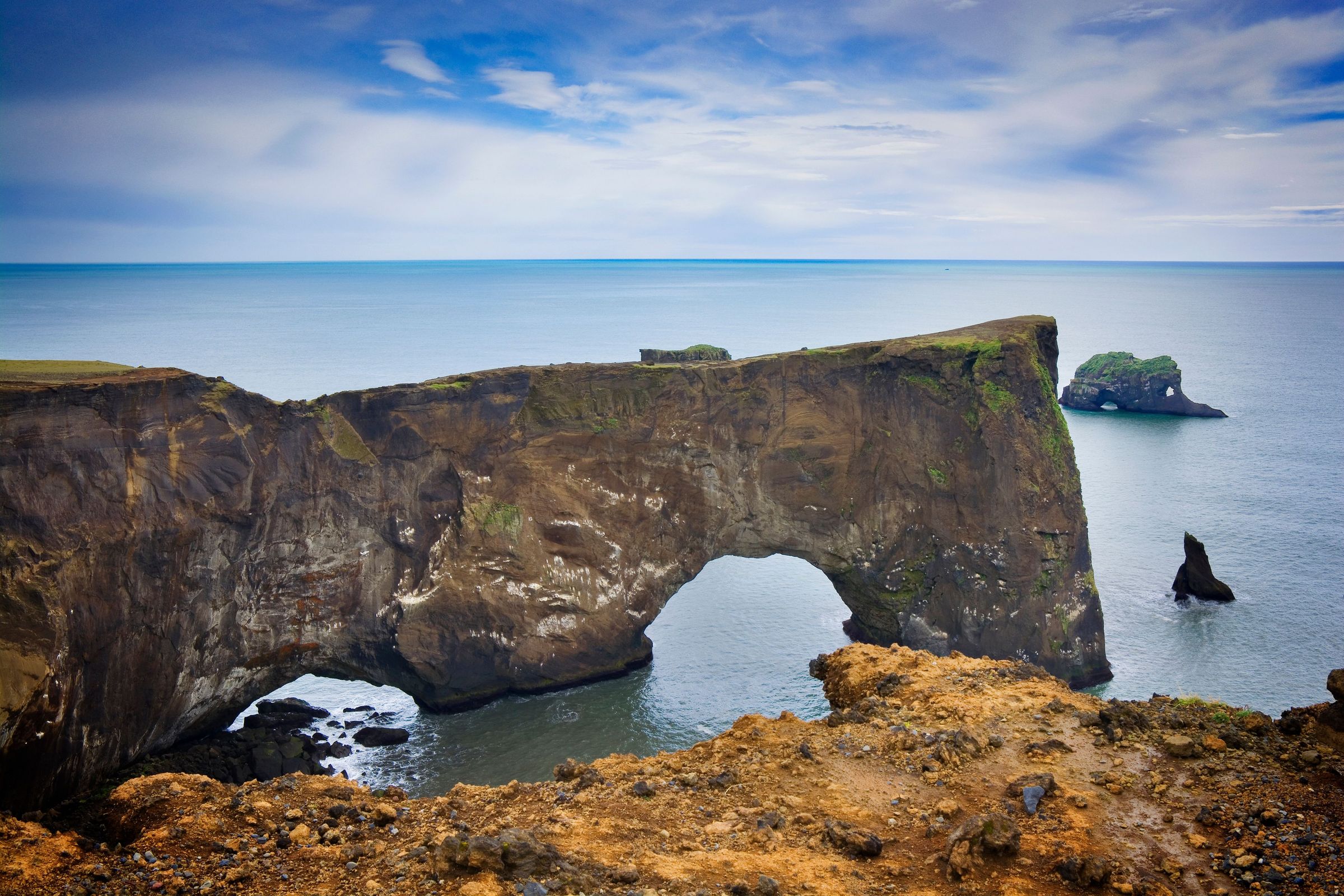

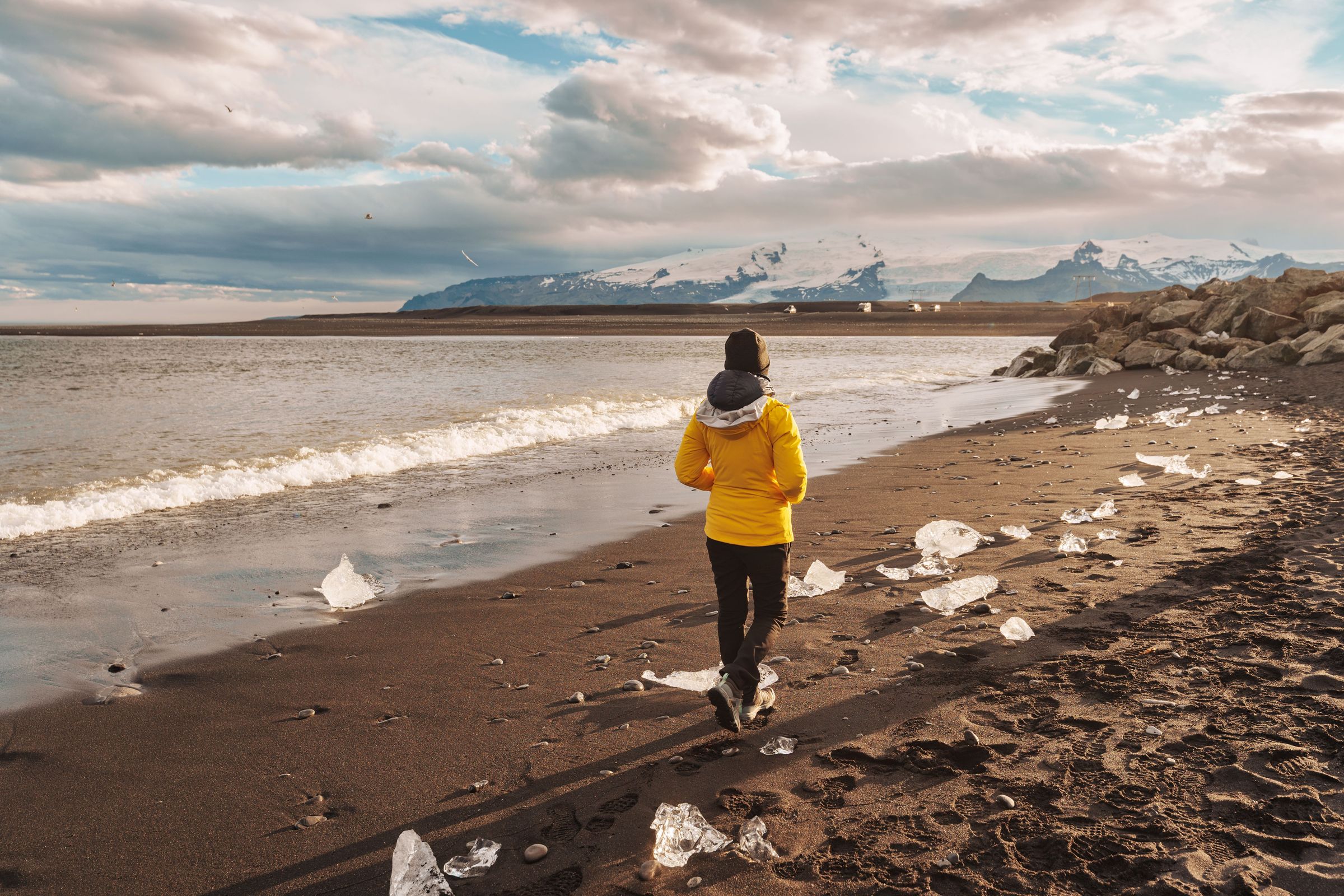
Jökulsárlón Glacier Lagoon and Diamond Beach
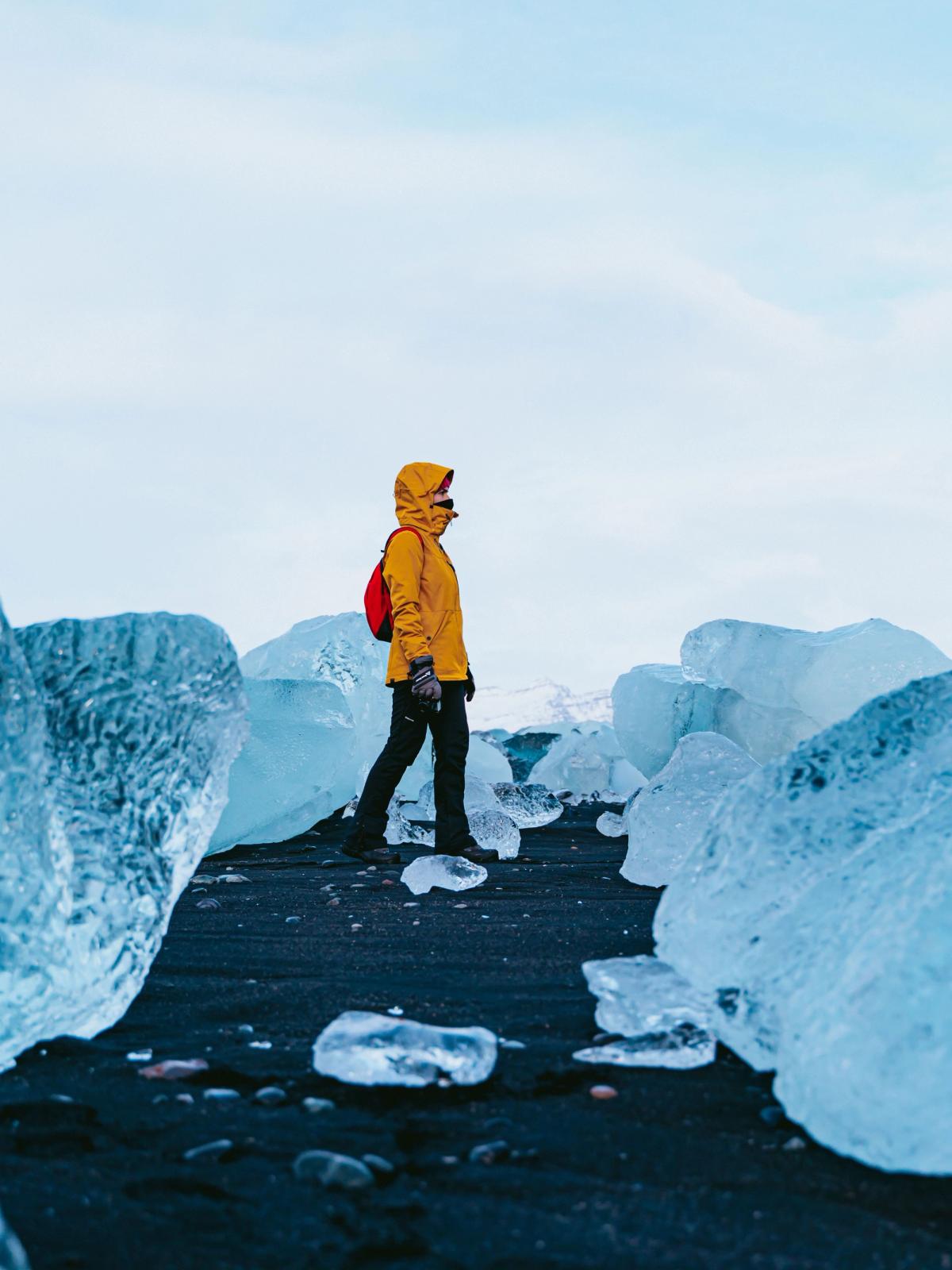
Icebergs drift across the lagoon and wash up as ice chunks on Diamond Beach, the black sand nearby. Give this stop more time than you think you need.

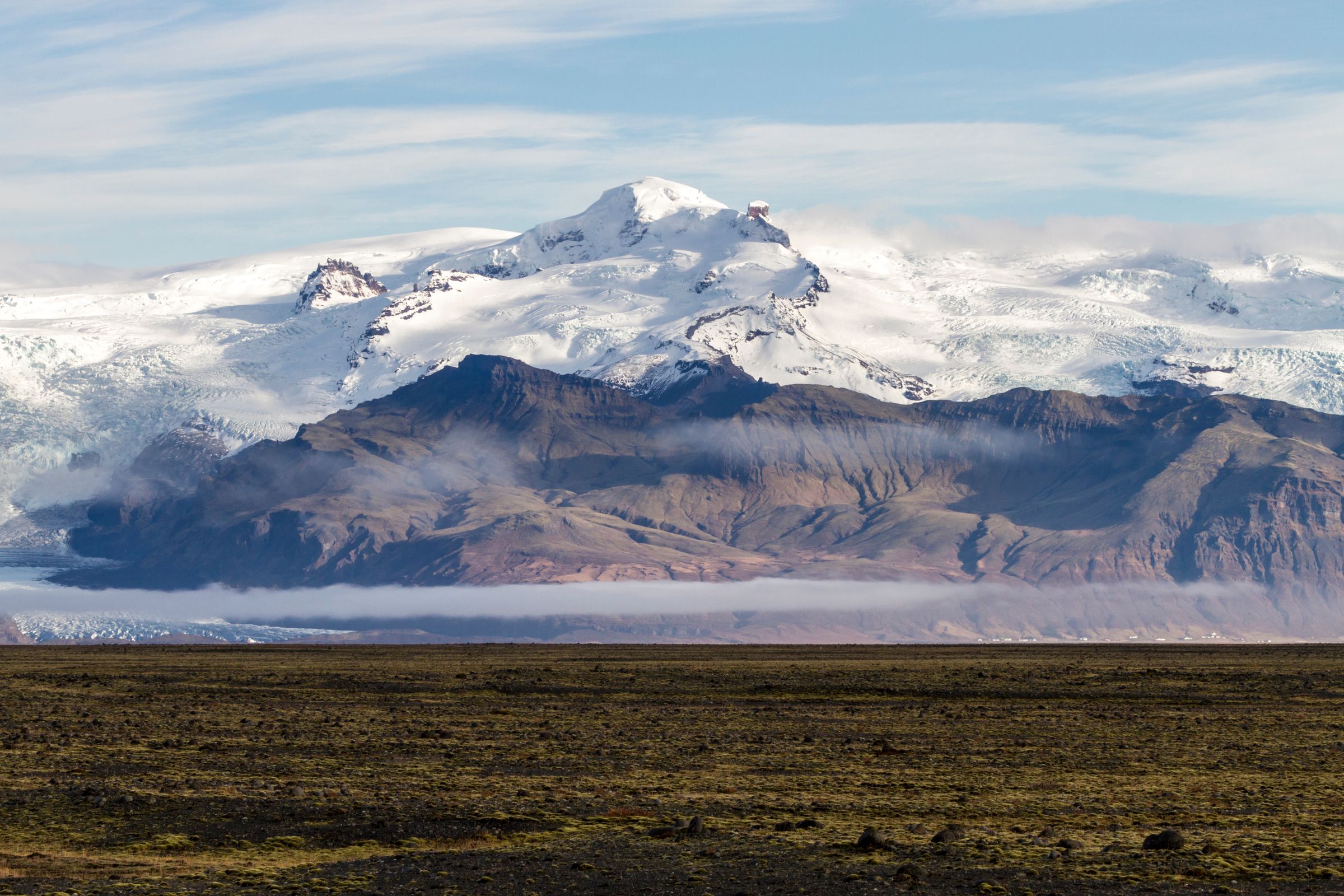
Vatnajökull National Park
Home to Europe's largest glacier and a good base for glacier hiking near Skaftafell.
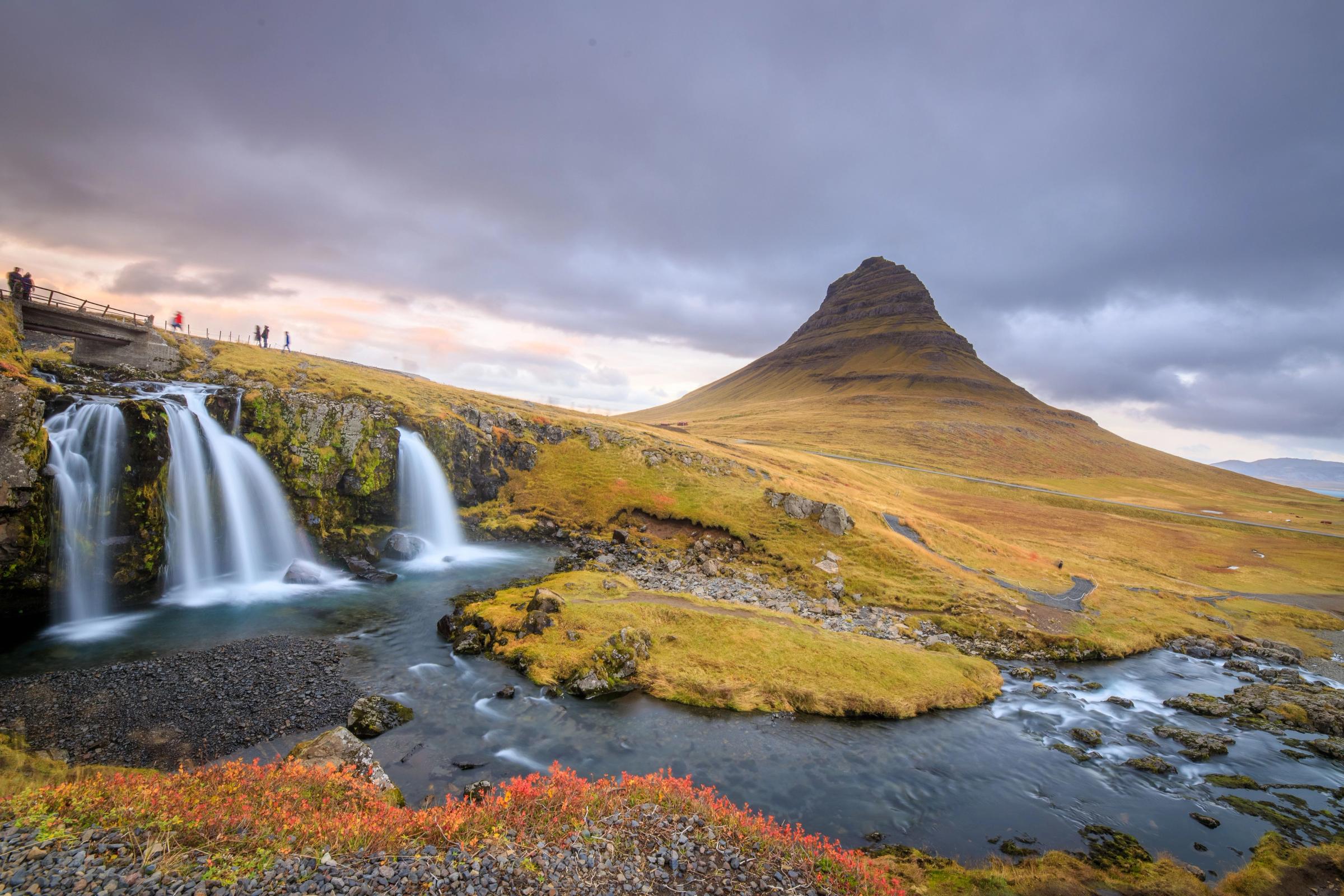
Snæfellsnes Peninsula
People often call this "Iceland in miniature," with lava fields, small fishing villages, and the very photogenic Kirkjufell mountain.
North Iceland
Akureyri and the Mývatn area offer geothermal landscapes, whale watching from Húsavík, and fewer tourists.

Westfjords
Remote, dramatic, and quiet, but it takes more time and planning than the South Coast or Golden Circle.
Best Things to Do in Iceland in September
Between the daylight, the weather, and the dark skies coming back, September gives you a good spread of things to do.
Chase the Northern Lights
Treat this as something you might get lucky with each night, not a fixed plan. Check the aurora forecast every evening and go from there.
- Book a tour: The guide reads the forecast and drives you to wherever the sky looks clearest. A good option if you're staying in Reykjavík without a car.
- Drive yourself: Works well if you're already staying somewhere rural with a dark, open view, since you can just step outside instead of committing to a whole evening in a van.
Either way, dress warmer than you think you need to. Standing around waiting is the slow part.
Hike on a Glacier
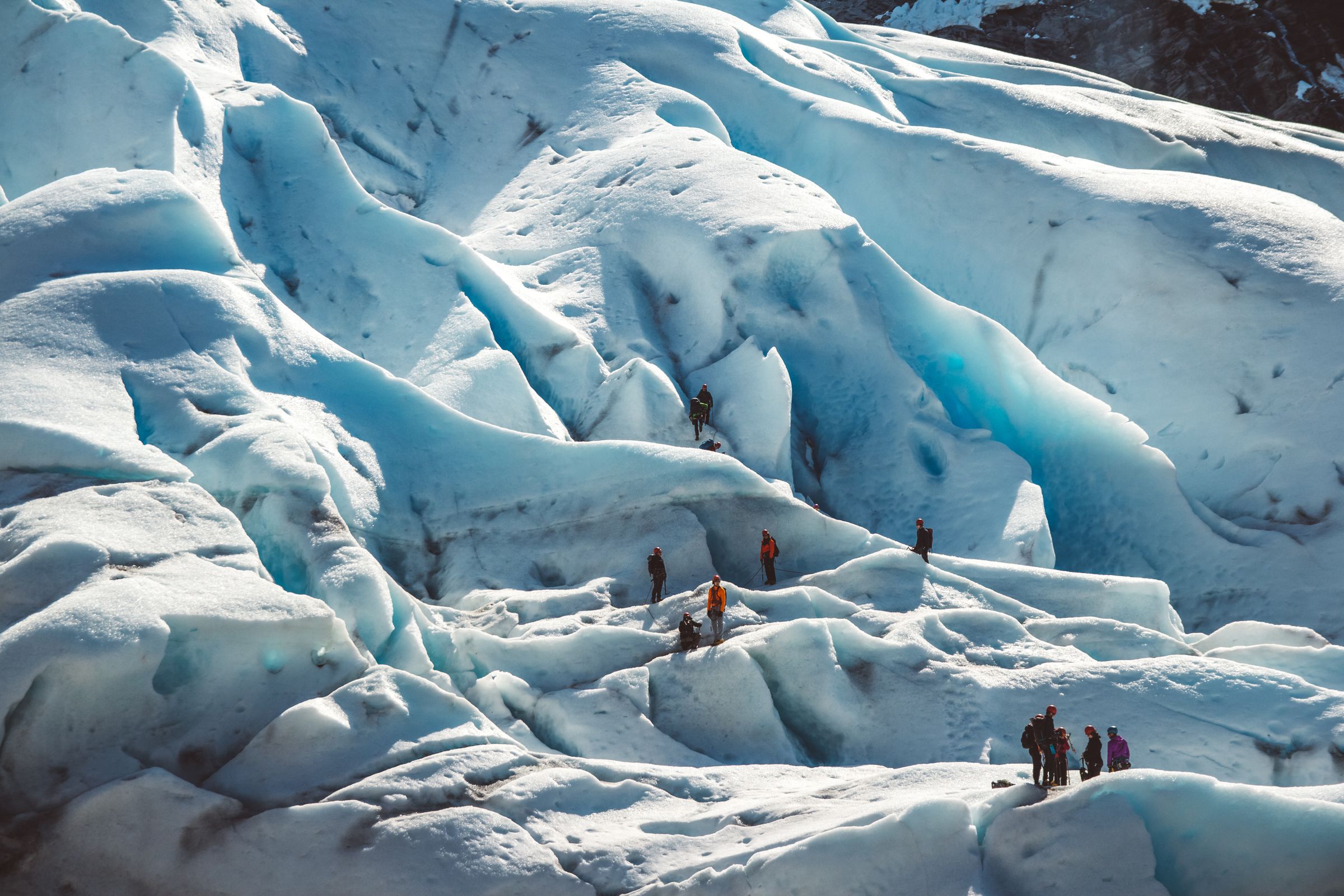
Glacier hiking is a good pick for September, since the weather is cool without being brutal yet. Most tours run a few hours and include crampons, a harness, and an ice axe, and you don't need any prior experience.
Best Glacier Hikes
Sólheimajökull sits close to the South Coast and is popular for shorter hikes. Skaftafell gets you onto several glacier tongues of Vatnajökull. Vatnajökull itself has longer guided routes on Iceland's biggest ice cap.
Guided Tours and Safety
I'd always go with a certified guide here, no exceptions. Crevasses aren't always visible from the surface, and that's not something worth risking on your own.
Relax in Iceland's Hot Springs
Cooler September weather actually makes a hot soak feel even better, and Iceland has options at pretty much every price point.
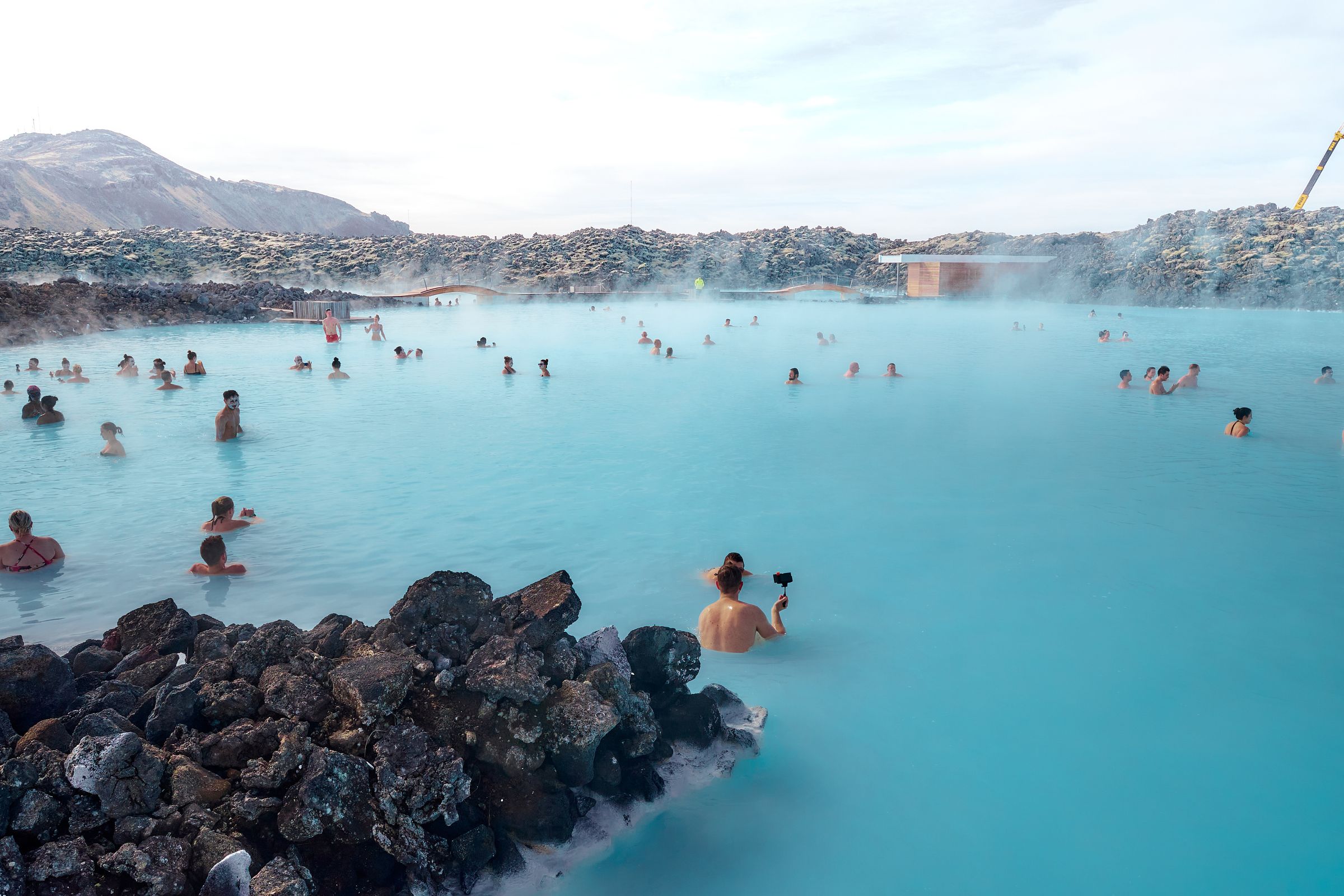
- Blue Lagoon: The iconic one, close to Keflavík Airport, good on your arrival or departure day. It's also the priciest and busiest of the bunch, so book your slot ahead of time.
- Sky Lagoon: A newer, sleeker option near Reykjavík, with an infinity-edge pool looking out over the ocean.
- Secret Lagoon: A simpler, rustic pool in the Golden Circle area, usually cheaper than the big-name spots.
- Hvammsvík Hot Springs: Sits right on a fjord, with pools at different distances from the shoreline.
- Earth Lagoon Mývatn: North Iceland's version of the Blue Lagoon, with a similar milky blue color and way fewer crowds.
- Forest Lagoon, Krauma, and Vök Baths: Smaller regional options near Akureyri, Borgarfjörður, and the East Fjords, worth a stop if you're already driving through.
- I'd book the Blue Lagoon or the Sky Lagoon ahead of time either way, since both tend to sell out closer to the date.

Go Whale Watching
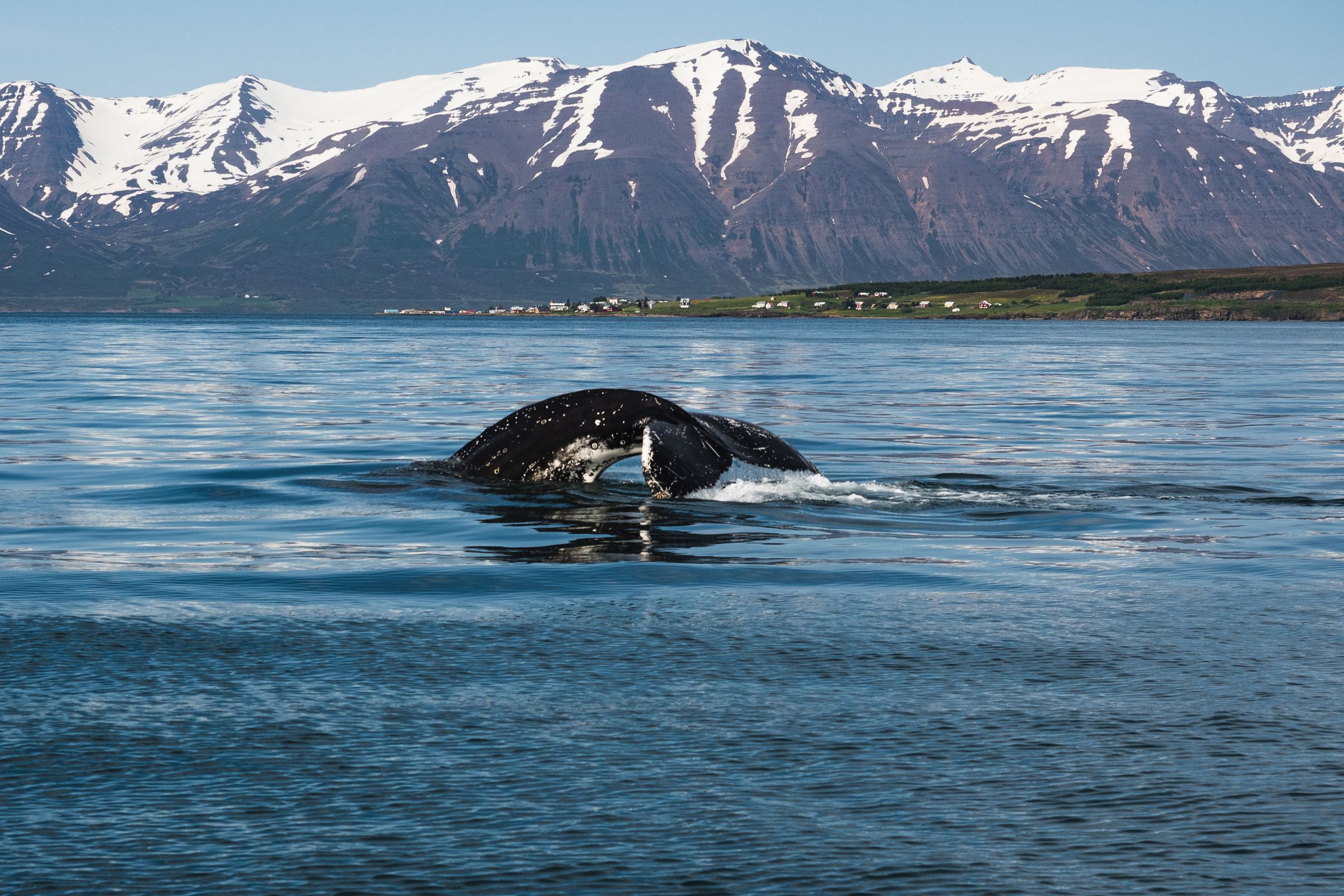
Húsavík, Reykjavík, and Akureyri all run whale watching tours in September, and humpback and minke whales are some of the more common sightings, with white-beaked dolphins and harbor porpoises also possible depending on the day. Tours usually run two to three hours, and most boats hand out warm overalls, since it gets cold fast out on the water even if it feels mild on land.
Go Horseback Riding
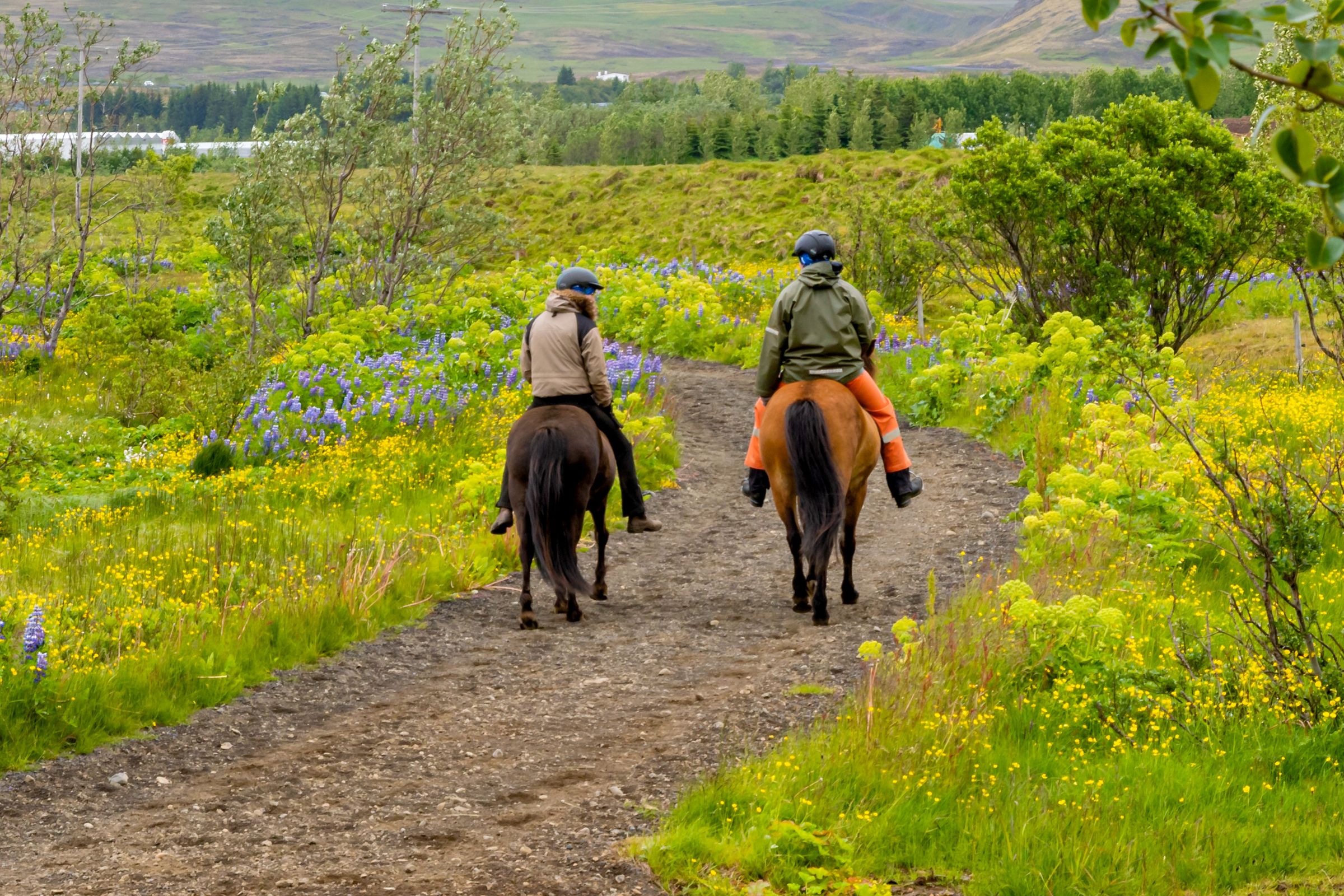
Icelandic horses are small, steady on their feet, and easy to ride even if you've never ridden before. They also have an extra gait called the tölt, which feels smoother than a regular trot, and most tour farms are set up for complete beginners.
Hike Iceland's Trails
Shorter, well marked trails are your safest bet in September, since the weather can turn fast on longer routes. Reykjadalur, with its warm river you can bathe in, is a good beginner-friendly option near Reykjavík. Longer routes like Fimmvörðuháls should only be attempted by fit, well-equipped hikers who are comfortable changing plans if the weather turns.

Snorkel or Dive at Silfra
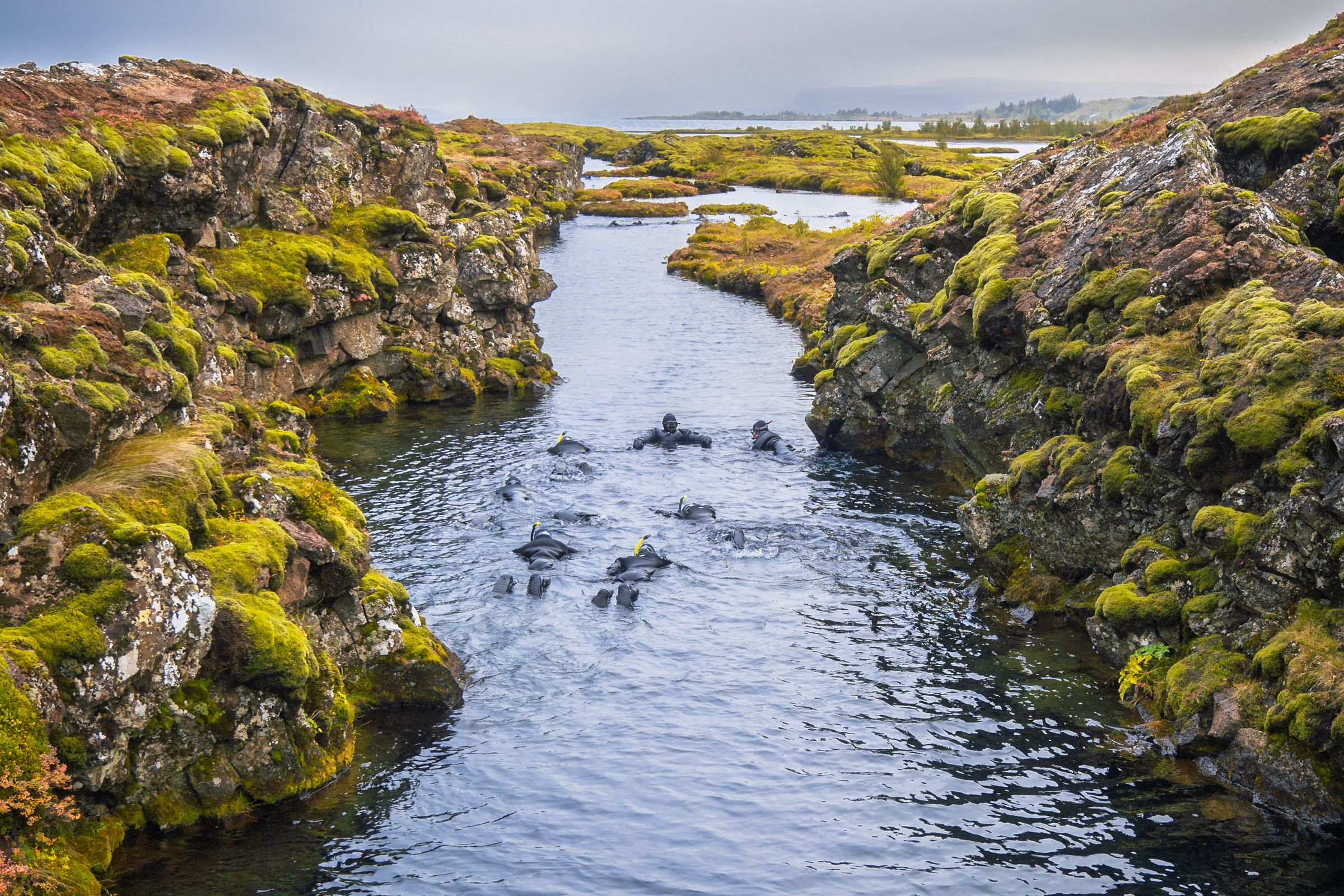
Silfra is a fissure between two tectonic plates, and the water there is about as clear as you'll find anywhere, since it gets filtered through lava rock for years before it reaches the fissure. The water sits close to freezing year round, so you'll be in a drysuit either way. Snorkeling doesn't need certification, but diving does.
Kayak Glacier Lagoons and Fjords
Paddling around icebergs at a glacier lagoon is one of the more unusual things you can do in Iceland, and guided kayak tours also run in some of the calmer fjords if you'd rather stay closer to shore.
Explore Lava Caves
Underground lava tubes make a good rainy day activity, since the weather doesn't matter once you're underground. Most guided tours hand out helmets and headlamps, and the temperature stays cool and steady no matter what's happening outside.
Join a Super Jeep Tour
A good way to reach Highland areas without needing your own 4x4, since the driver already knows the current road conditions and river crossings.
Photograph Waterfalls and Autumn Landscapes
Lower sun, storm clouds, and golden birch trees make September one of the better months in Iceland for photography. The lower sun angle means a longer golden hour both in the morning and evening, so you're not stuck shooting everything at high noon.
Wildlife in September
Iceland's wildlife shifts with the seasons, and September lands right in the middle of that change.
- Puffins: Mostly gone by early September, since they head back out to sea for winter.
- Whale watching: Still going strong, with tours running out of several coastal towns.
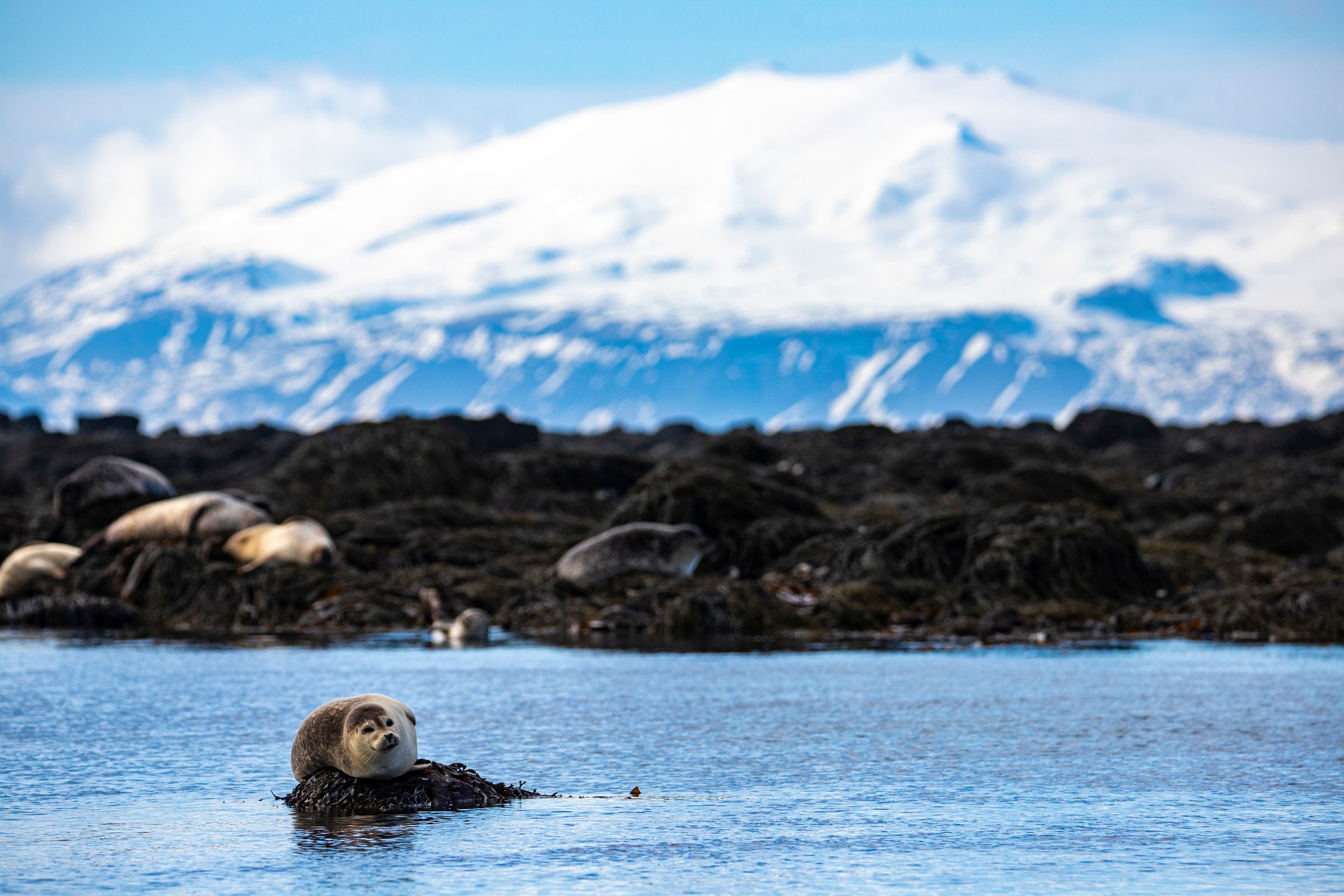
- Seals: Found in colonies along parts of the coast.
- Icelandic horses: Out on farms across the countryside all year.
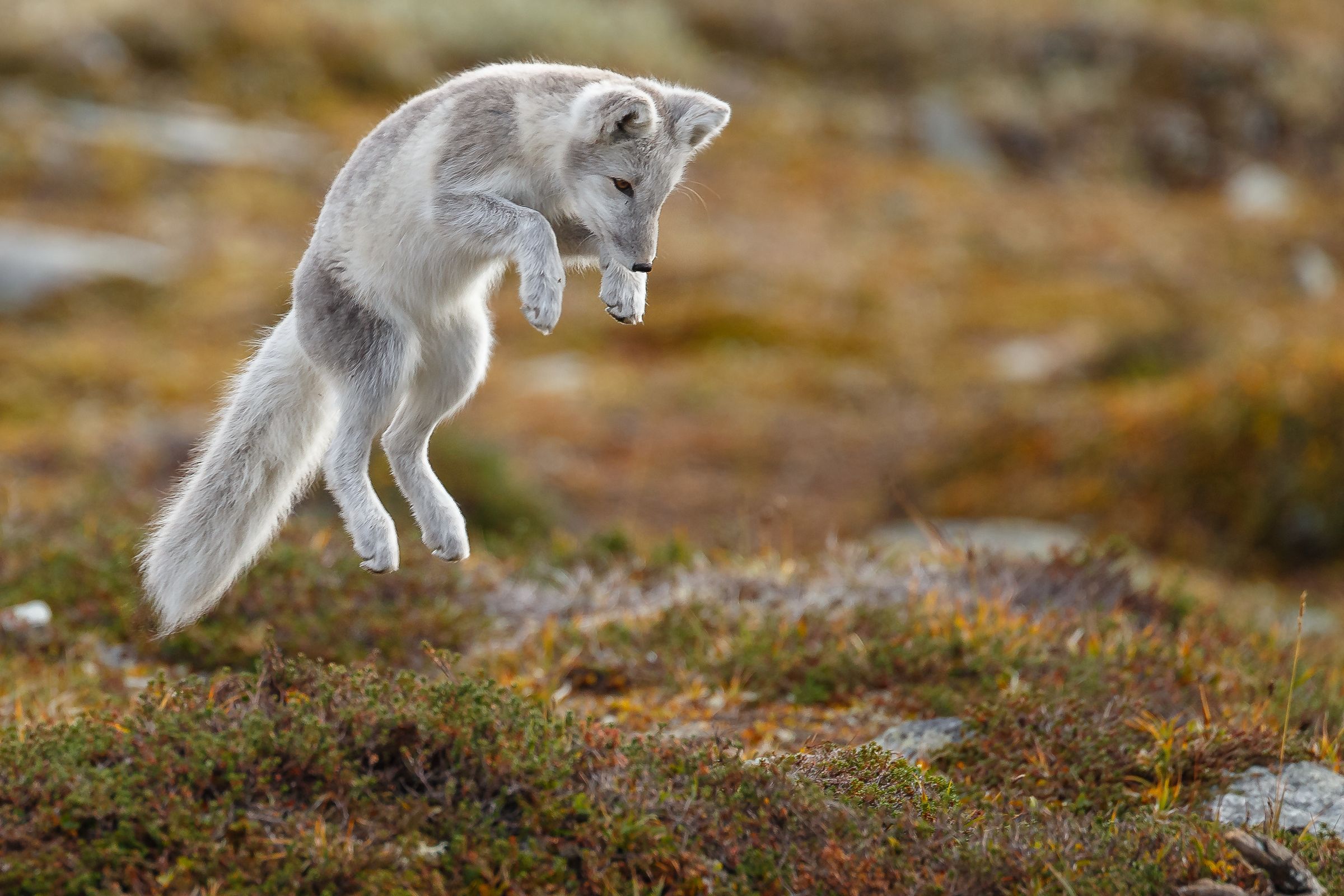
- Arctic foxes: Possible to spot in remote areas like the Westfjords, though there's no guarantee.

Festivals and Events in September
Autumn in Iceland comes with its own traditions and events, and a few are worth working into your trip.
Réttir (Sheep Roundup)
Farmers bring sheep down from the summer highland pastures in a tradition called Réttir. It's a local event rather than something aimed at tourists, so think of catching one as a nice bonus rather than something to plan your trip around.
Reykjavík International Film Festival
An annual festival that usually happens in late September. In 2026, it will take place from September 24 to October 4.
Other Local Events
Smaller music and cultural events pop up around Reykjavík throughout September, so it's worth checking local listings once you've picked your dates.
What to Pack for Iceland in September
September packing really comes down to one idea: dress for rain, wind, and cold, even when the forecast looks calm.
Clothing
- Waterproof, windproof jacket
- Waterproof pants
- Warm base layers
- A fleece or wool mid-layer
- Gloves, a hat, and a warm buff or scarf
- Wool socks
Footwear
Waterproof hiking boots handle mud, wet rocks, and gravel a lot better than sneakers or fashion boots ever will.
Photography Gear
A tripod is worth the extra bulk if you're hoping for aurora shots, and bring a lens cloth for rain and spray.
Road Trip and Camping Essentials
Bring offline maps, a car phone charger, a reusable water bottle, and some snacks for the long rural stretches. If you're camping, pack warmer bedding than you think you need, plus a headlamp for the dark evenings. I'd also throw in an extra pair of wool socks over cotton ones. Your feet will thank you after a wet hike.
Costs and Crowds
September usually costs less than peak summer, though "less" is a relative word in a country as expensive as Iceland.
Flights
Flight prices tend to ease up once August is over, since the rush of summer travelers has passed and airlines aren't charging peak season rates. Booking a few months in advance still helps, especially if your travel dates fall on a weekend.
Accommodation
Hotel rooms and guesthouses get easier to find than in July or August, and you'll have a better shot at last-minute availability in Reykjavík. That said, rural South Coast bookings near popular stops like Vík and Jökulsárlón still fill up fast, since there simply aren't many rooms out there to begin with. Hostels and guesthouses run cheaper than hotels, while private cabins and countryside hotels sit at the higher end. If I were you, I'd book the South Coast leg of your trip first, since that's the part that tends to sell out.
Car Rentals
A standard 2WD car covers the Ring Road, Golden Circle, and South Coast just fine in September, and it costs less than a 4x4. If you're hoping to reach any Highland areas or drive gravel roads a lot, a 4x4 is worth the extra cost. Fuel is one of the bigger hidden costs of an Iceland road trip, so factor it into your budget alongside the rental itself.

Food and Tours
Groceries and cooking for yourself keep costs down a lot, since eating out for every meal in Iceland adds up fast. Restaurant meals in Reykjavík and tourist towns run on the pricier side, while bakeries, gas-station food, and grocery-store meals stretch a daily budget a lot further.
Popular tours like glacier hikes, Golden Circle day trips, and whale watching keep running through September, usually with smaller groups than in summer, though prices don't really drop just because the season is winding down.
Is September Expensive, and How Busy Is It?
Iceland is expensive by most standards, but September usually costs a bit less than August across flights, hotels, and rental cars.
- Crowds thin out too, especially once you get north or east of Reykjavík.
- The South Coast and Golden Circle stay fairly busy all month, since they're close to the capital and easy to visit in a day.
- Regions like the East Fjords, North Iceland, and the Westfjords feel noticeably quieter.
- If you want emptier roads and fewer other travelers at the big sights, the tail end of September tends to be calmer than the first couple of weeks.
Suggested Iceland September Itineraries
How much of Iceland you can see really comes down to how many days you have, so here's a rough breakdown by trip length.
3-Day Itinerary
Reykjavík, the Golden Circle, and a South Coast day trip out to Vík.
5-Day Itinerary
Add Skaftafell, Jökulsárlón, and Diamond Beach to the 3-day route.
7-Day Itinerary
Fit in the Snæfellsnes Peninsula alongside the South Coast and Golden Circle.
10-Day Ring Road Itinerary
A full loop taking in the South Coast, East Fjords, Mývatn, Akureyri, and Snæfellsnes.
14-Day Complete Iceland Itinerary
Everything above, plus extra nights for the Westfjords or the Highlands if conditions allow.
Iceland in September vs Other Months
Every month in Iceland gives up something to gain something else, so here's how September stacks up against the months around it.
August vs September
September wins on northern lights, crowds, and price. August wins on warmer weather, more daylight, and puffins.
September vs October
September is easier for driving and hiking. October brings darker nights and a stronger shot at the aurora, along with even fewer crowds.
September vs Summer
Summer means Midnight Sun, but no northern lights at all. September gives up some daylight in exchange for a real shot at seeing the aurora.
September vs Winter
Winter brings darker nights and better aurora odds, but also ice, snow, and much tougher driving.
Conclusion
September might be Iceland's best trade-off month. You still get manageable roads, tours running as usual, and long enough days for sightseeing, plus dark nights back in the mix for a real shot at the northern lights. The catch is a bit more rain, a bit more wind, and less certainty around getting into the Highlands as the month rolls on.
Pack for weather that changes its mind, check the roads and the aurora forecast every day, and leave some room in your plans to adjust. Do that, and September gives you one of the widest ranges of experiences you'll find on any single trip to Iceland.
Frequently Asked Questions