Skútafoss Waterfall: Guide to East Iceland's Hidden Cave Falls
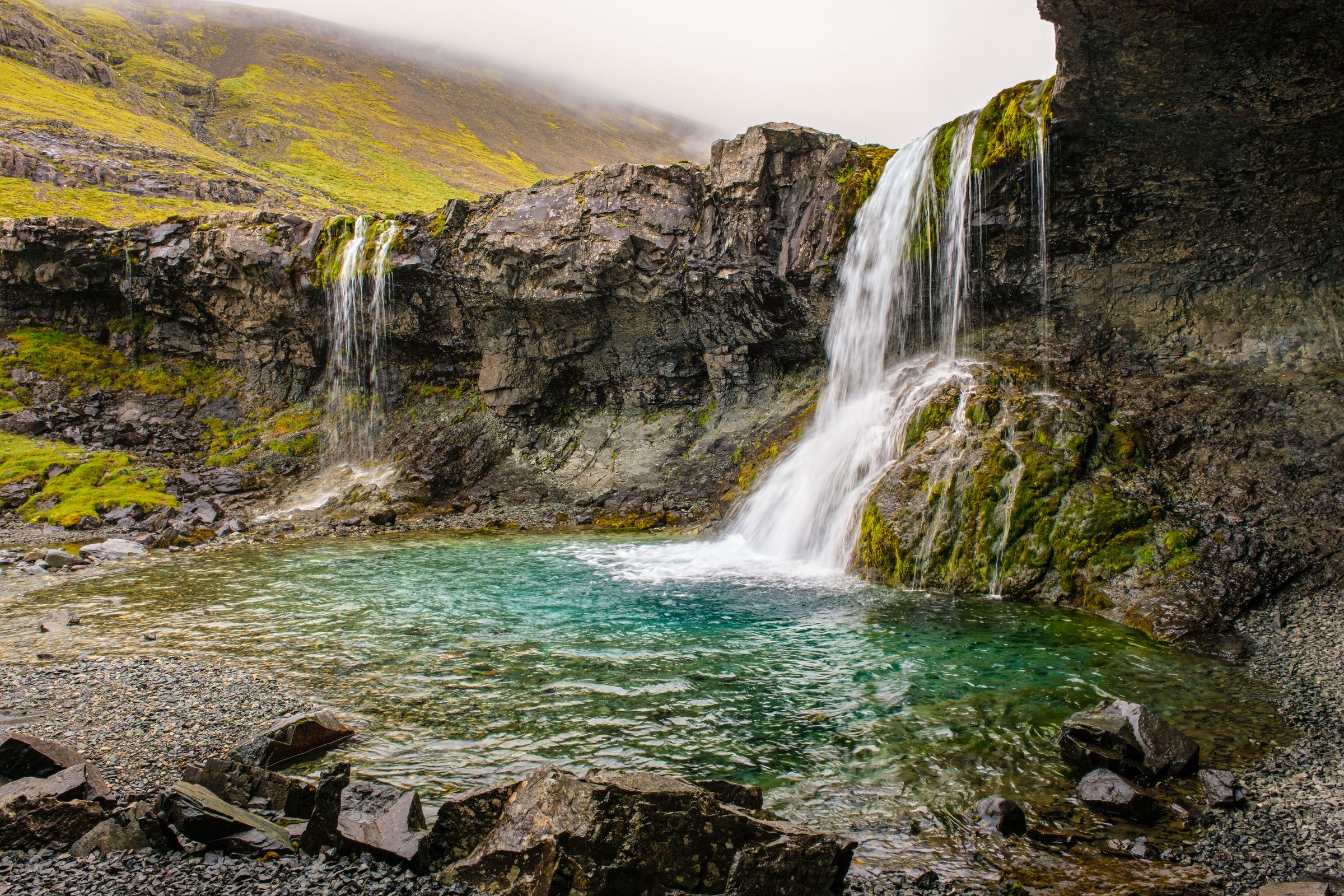
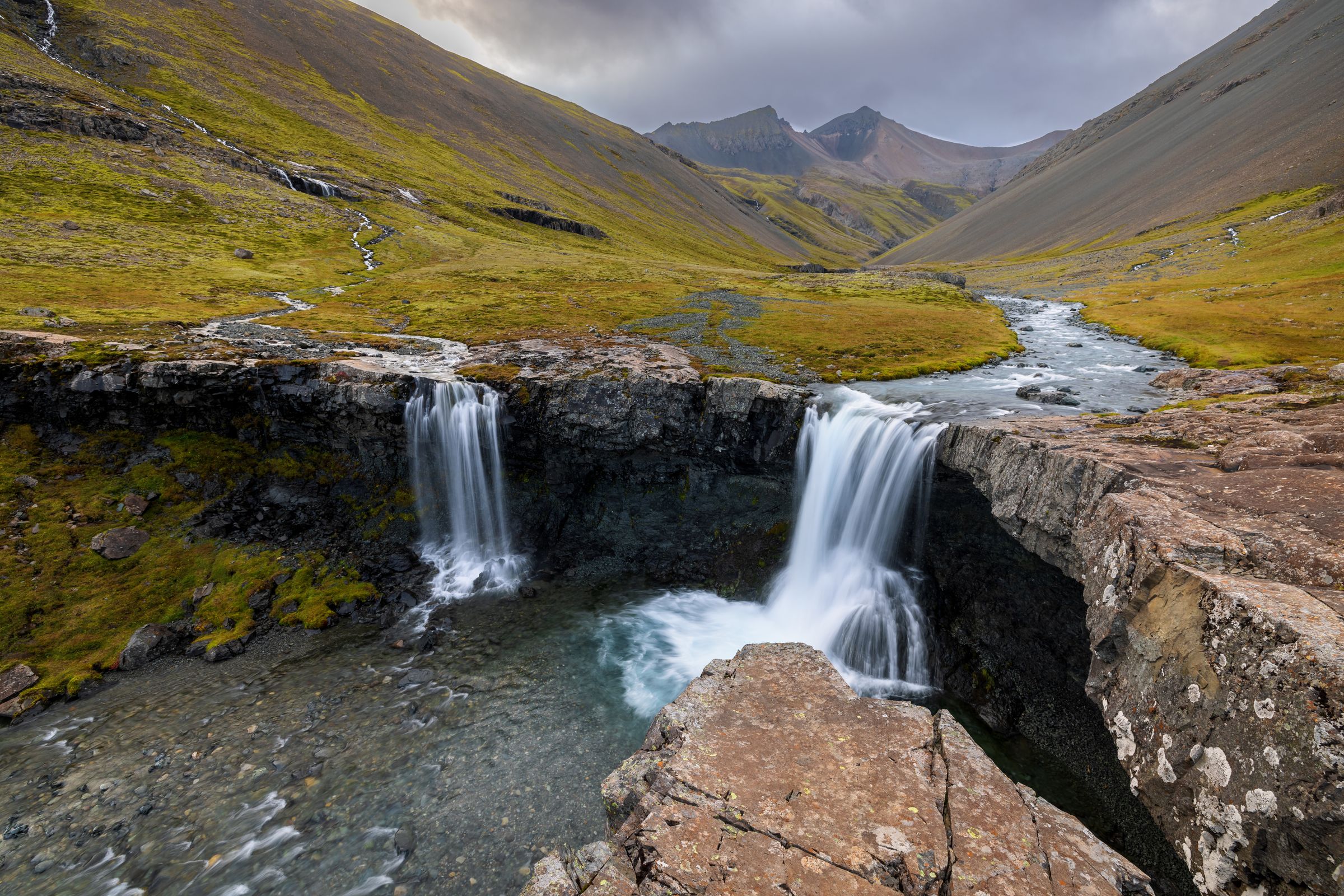
Skútafoss is a small waterfall on the Þorgeirsstaðaá river in Þorgeirsstaðadalur valley, east of Höfn in East Iceland. It's close to Route 1, between the Vestrahorn and Eystrahorn mountains, and it's known for its clear pool, dark rock, and a shallow cave-like overhang right next to the water.
One thing first: this isn't Skógafoss, the huge 60-meter waterfall on the South Coast. Skútafoss is much smaller and quieter, and it's in the Hornafjörður area of East Iceland instead.
Key Takeaways
- Skútafoss is a quiet waterfall near Höfn that's well worth a stop if you're driving Iceland's eastern Ring Road and want to see a place that most visitors miss.
- Getting there involves a short 10–20 minute walk over rough ground, so waterproof hiking shoes are a good idea, especially if it's been raining. The trail isn't suitable for wheelchairs or strollers.
- The waterfall is known for its split flow, dark volcanic rock, clear pool, and small rock overhang, which make it a great place for photos without the crowds you'll find at Iceland's bigger waterfalls.
- There are no facilities at Skútafoss, so bring your own food, water, and anything else you might need, and check the weather and road conditions before you leave Höfn.
- Skútafoss is easy to combine with nearby sights like Vestrahorn, Stokksnes, and Eystrahorn, making it a great stop on a scenic drive through East Iceland.
What's Skútafoss? Quick Facts
Here's the short version before we get into everything else.
- Attraction: A small waterfall on the Þorgeirsstaðaá river
- Valley: Þorgeirsstaðadalur
- Region: East Iceland (some call it Southeast Iceland), in the Hornafjörður area
- Nearest town: Höfn
- Main road: Near Route 1, Iceland's Ring Road
- Height: Usually said to be around 6 meters
- Visit duration: About 30 to 60 minutes
- Difficulty: Short walk, but the ground gets uneven and slippery in places
- Facilities: None. Treat it like a fully natural, undeveloped spot
- Best time to visit: Summer, since access is easiest and you get more daylight
Where Is Skútafoss?
People often mix this waterfall up with other spots, so let's start with where it actually sits.
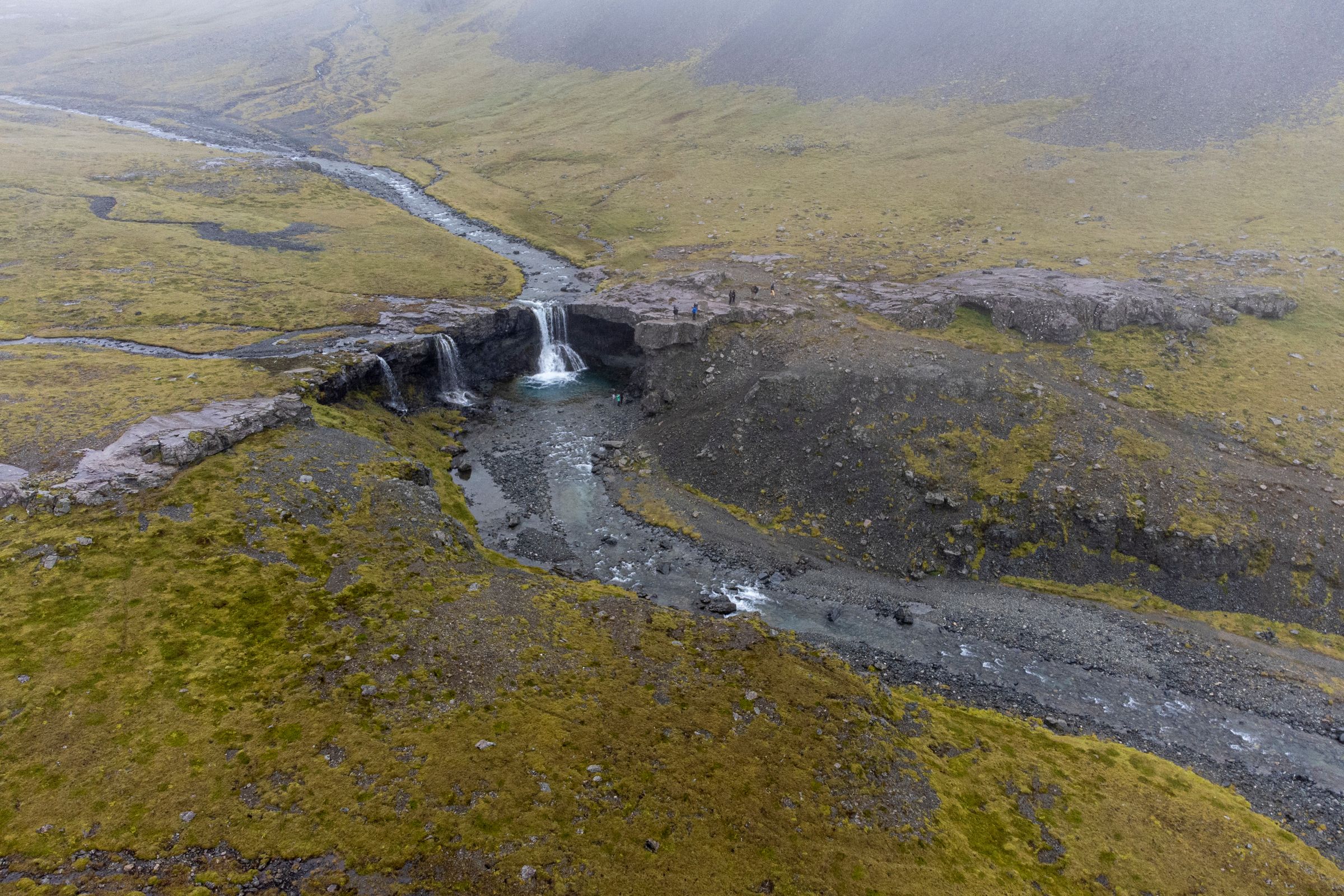
Skútafoss is in Þorgeirsstaðadalur, a valley east of Höfn, along the eastern part of Route 1 between Vestrahorn and Eystrahorn. You can't see it from the road. The river bends right before the falls, so it stays out of view until you're nearly standing in front of it. That's why people describe it as a hidden waterfall.
How Far Is Skútafoss From Höfn?
Höfn is your closest real town, and it's a good place to grab food, gas up, and find a place to stay before or after your visit. Most people fold Skútafoss into a longer road trip around East Iceland rather than driving out from Reykjavík just for this one stop.
How to Get to Skútafoss
Getting there isn't complicated, but it's not marked like a major attraction, so it helps to know roughly what to expect.
You drive Route 1 east of Höfn, then turn off onto a small road or track leading into Þorgeirsstaðadalur. From there, you park and walk the rest of the way to the river.
Driving Directions and Road Conditions
- From Höfn: drive east on Route 1 past the mountains near Vestrahorn, then turn inland toward Þorgeirsstaðadalur
- From Vestrahorn or Stokksnes: head back to Route 1 and keep driving east, Skútafoss makes a good next stop
- The final stretch is usually gravel or a rough track, not paved3
Do You Need a 4WD?
Not always, though I can't give you a flat yes or no. A regular two-wheel-drive car can usually manage it in dry summer weather, as long as you're okay stopping before any rough section and walking the rest. After rain, mud, or snow, that can change quickly. I'd check road.is before leaving Höfn, and don't push your rental car past what it can handle.
Parking
Don't expect a big paved lot. People usually just pull over near the access point and walk in from there. Park somewhere solid, and don't block gates or farm access.

The Walk to Skútafoss
Once you've parked, the walk itself doesn't take long, though that doesn't mean it's smooth the whole way.
It takes around 10 to 20 minutes on foot, over ground that isn't flat the entire time. There's no built path here. Expect loose rocks, wet grass, mud, and slippery stones once you get close to the pool.
Trail Difficulty and Footwear
For most people, the walk is easy to moderate as long as it's dry out. The tricky part isn't the distance; it's your footing. I'd wear waterproof hiking shoes with real grip instead of sneakers or sandals, especially near the wet rock by the falls.
Is It Accessible for Everyone?
Skútafoss doesn't work well for wheelchairs, and there's no dependable path for anyone with limited mobility. The rough, natural ground really does slow people down, and that stays true no matter the season.
What Makes Skútafoss Special?
Skútafoss won't blow you away with its size. What makes it worth the stop is a handful of smaller details.
- A split waterfall: When the water's flowing right, it breaks into two visible streams
- Dark volcanic rock: It stands out sharply against the white water and green valley
- A clear pool: Often shows up blue-green in photos, though that shifts with light and water level
- A shallow cave-like nook: The rock overhang beside the falls gives you a sheltered spot to look from and shoot photos
- Fewer people around: It sees a lot less traffic than Iceland's well-known waterfalls
The Icelandic word skúti means a rock shelter or shallow cave, which explains both the name and where the best photo spot ended up being.
Things to Do at Skútafoss
Once you're there, there's a short list of things to do, and most people end up doing all of them anyway.
Photograph the Falls
This is the main reason most people go. You can shoot from inside the rock nook to frame the waterfall naturally, or step back for a wider shot of the whole valley. A tripod, a polarizing filter, and an ND filter all help if you're after smoother water or more detail in the pool.
Check Out the Recess and the Valley
Some people get right up to the shallow cave-like recess beside the water, though how close you can go depends on the water flow and whether there's ice around. Past the main falls, the valley continues if you feel like walking further, but I'd treat that as its own separate walk rather than part of the main visit.
Keep an Eye Out for Wildlife
Valleys along the East Coast tend to attract birds and other wildlife depending on the time of year, so it's worth keeping your eyes open on the way in.
Best Time to Visit
The best time to visit comes down to what shape the road and trail are in more than what month the calendar says.
Season by Season
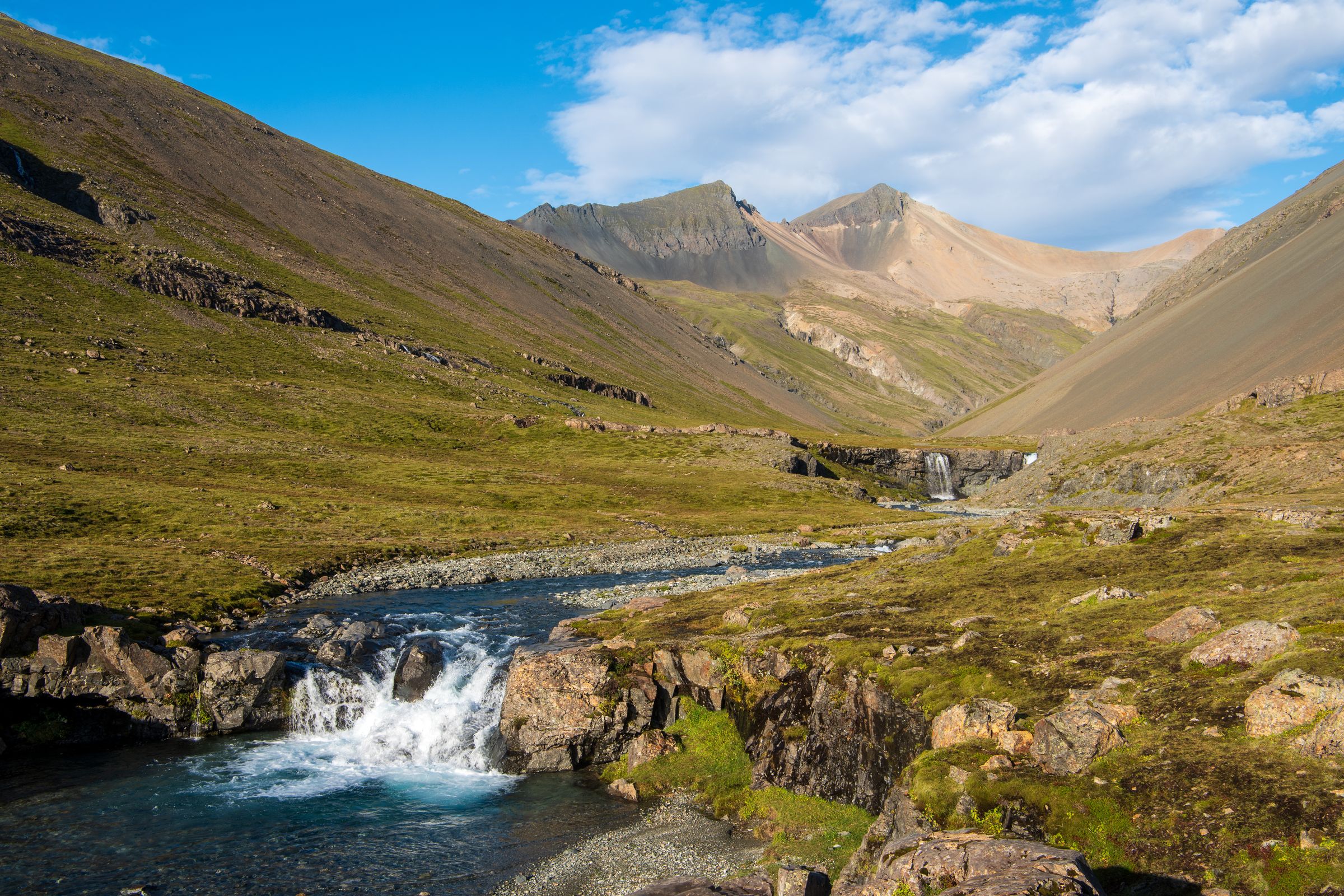
- Summer: Easiest access by far, with long daylight and less chance of snow or ice
- Autumn: Good light and nice fall colors, but expect more rain, mud, and shorter days
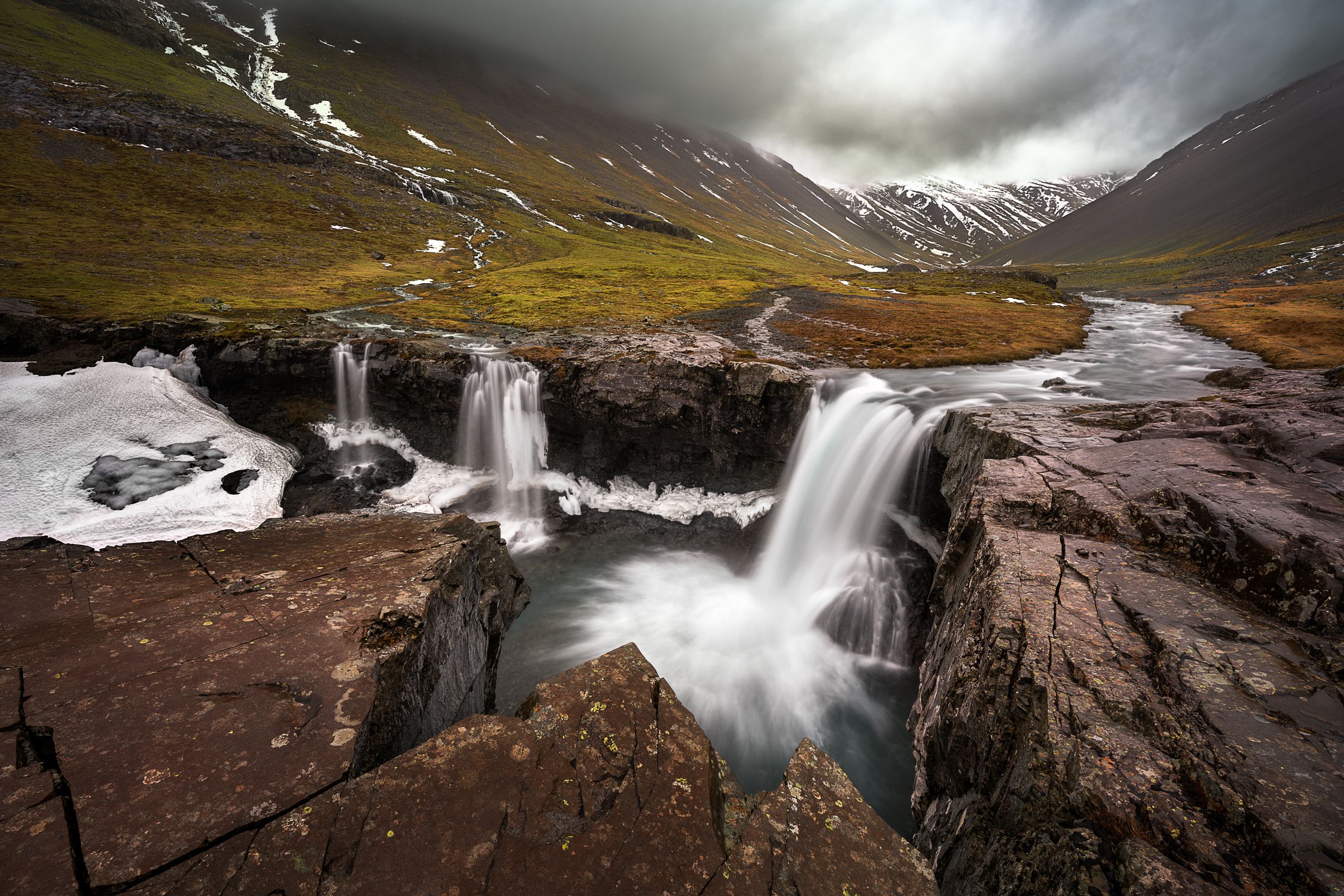
- Winter: Can look incredible with snow and ice, but getting there might not be safe, or even possible
- Spring: Snowmelt can push more water through the falls, but it also brings mud and shaky ground
Best Time of Day
If I had to pick, I'd go early morning. You usually get nicer light and a better shot at having the place to yourself. Cloudy days work well here too, since they soften the contrast between the bright water and the dark rock.
Travel Tips
A little planning goes a long way with this stop.
- Check road.is and the weather forecast before leaving Höfn
- Wear waterproof hiking shoes with solid grip
- Bring a waterproof jacket, even in summer
- Pack your own food and water, since there's nothing at the site
- Give yourself extra time if you're planning to take photos
- Stick to solid ground and try not to step on the moss
- Watch your footing on wet rock near the pool
Safety and Facilities
Skútafoss is a fully natural, undeveloped spot, so it helps to keep that in mind before you go.
Nobody's watching the parking, there are no signs guiding you along, and there's no rescue setup nearby. Wet rock near the pool is the biggest everyday risk, and ice or falling debris adds more danger in the colder months. Weather out here can turn fast, so don't assume the morning forecast still holds by afternoon.
What Facilities Are Available?
None. No toilets, no food, no staff anywhere close by. I'd take care of all that in Höfn before heading out, and carry out anything you bring with you.
Emergency Information
Save the local mountain rescue number and 112 before you leave, since cell service in the valley isn't something you can rely on.
Is Skútafoss Worth Visiting?
If you're already driving the eastern Ring Road, yes. Skútafoss is a good fit for photographers, people who've already seen Iceland's bigger sights, and anyone who wants a quieter stop between Vestrahorn and Eystrahorn. It's less of a fit if you want a huge, powerful waterfall, need paved access, or you're working with a tight schedule and rough weather.
Nearby Attractions
Skútafoss fits well into a longer loop around East Iceland, so here's what else is close by.
- Höfn: The main town in the area and your best bet for food, fuel, and a place to stay
- Vestrahorn: A dramatic mountain near Stokksnes, known for its black sand and reflections
- Stokksnes: The coastal spot tied to those classic Vestrahorn views, with a private entry fee
- Eystrahorn: Another striking mountain further east, often photographed from Hvalnes
- Hvalnes: Coastal views and a lighthouse stop on the way toward Djúpivogur
- Djúpivogur: A small Eastfjords town, good for an overnight stay further along the route
Conclusion
Skútafoss won't give you the scale of Iceland's biggest waterfalls, but it gives you something else instead: a quiet, cave-framed stop that rewards the extra turn off Route 1. If I were planning this drive, I'd pair it with Vestrahorn and Eystrahorn for a solid half-day around East Iceland. That combination gives you one of the more memorable, less crowded stops on the whole Ring Road.
Frequently Asked Questions About Skútafoss