Berserkjahraun: Iceland's Legendary Lava Field of Berserkers
A 4,000-year-old lava field on the Snæfellsnes Peninsula in West Iceland. It combines raw volcanic landscape with one of the more gripping stories from the Icelandic sagas, and it's almost always quiet. If you're driving the peninsula, this is one stop worth slowing down for.
What Is Berserkjahraun?
Berserkjahraun is a 4,000-year-old lava field on the north side of Iceland's Snæfellsnes Peninsula, sitting between Stykkishólmur and Grundarfjörður, on the western edge of Helgafell. It's free to visit, almost always quiet, and most people drive through in about half an hour. The ones who actually stop and look around tend to stay much longer.
The name means "Berserkers' Lava Field" in Icelandic. "Hraun" is just the Icelandic word for lava field. The name comes from one of Iceland's most well-known sagas, and that story is what sets this place apart from every other lava field on the peninsula. You're not just looking at old volcanic rock. You're looking at old volcanic rock with a named path cut through it, a burial mound, and a story about a deal that ended very badly, all preserved for over a thousand years.
The landscape
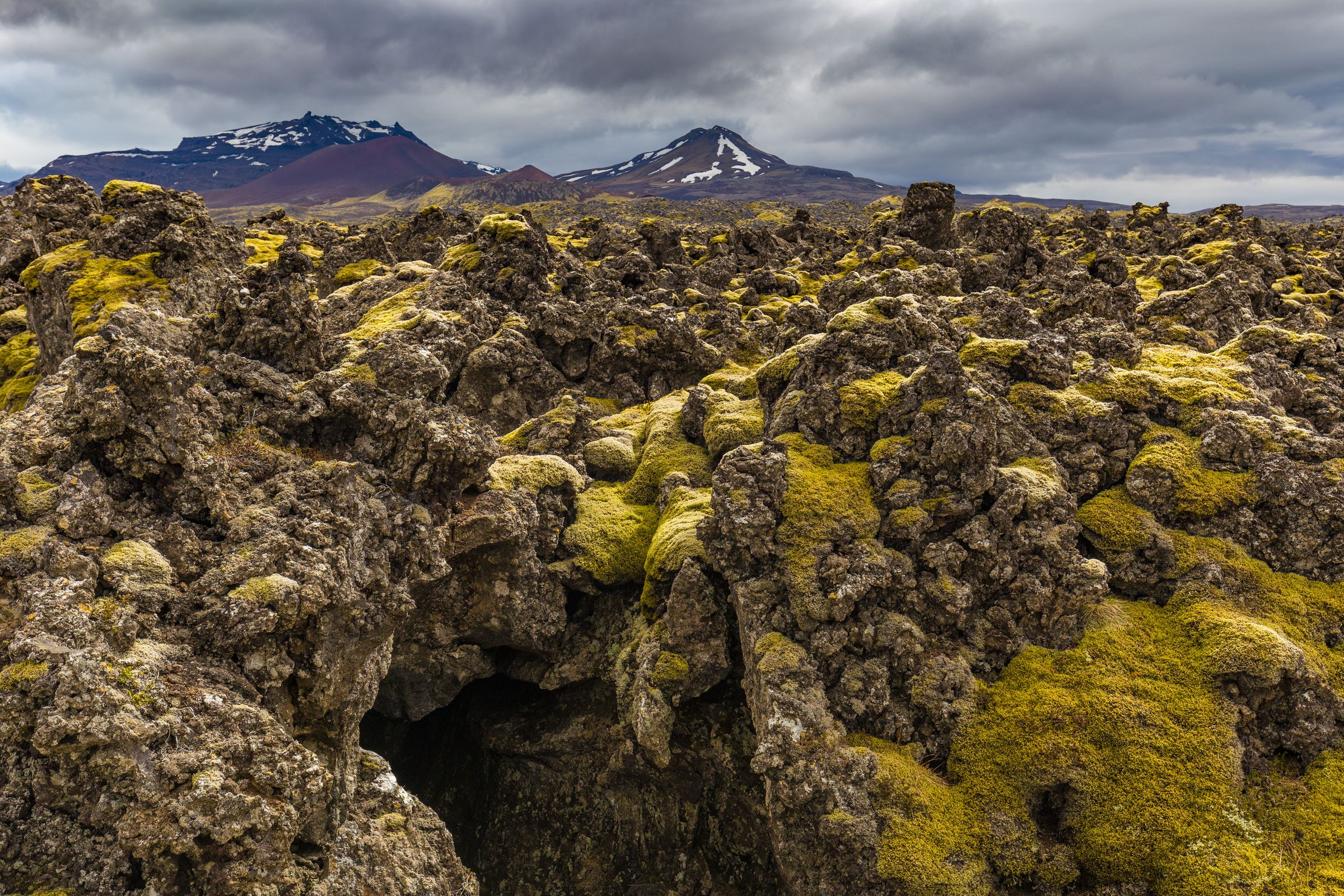
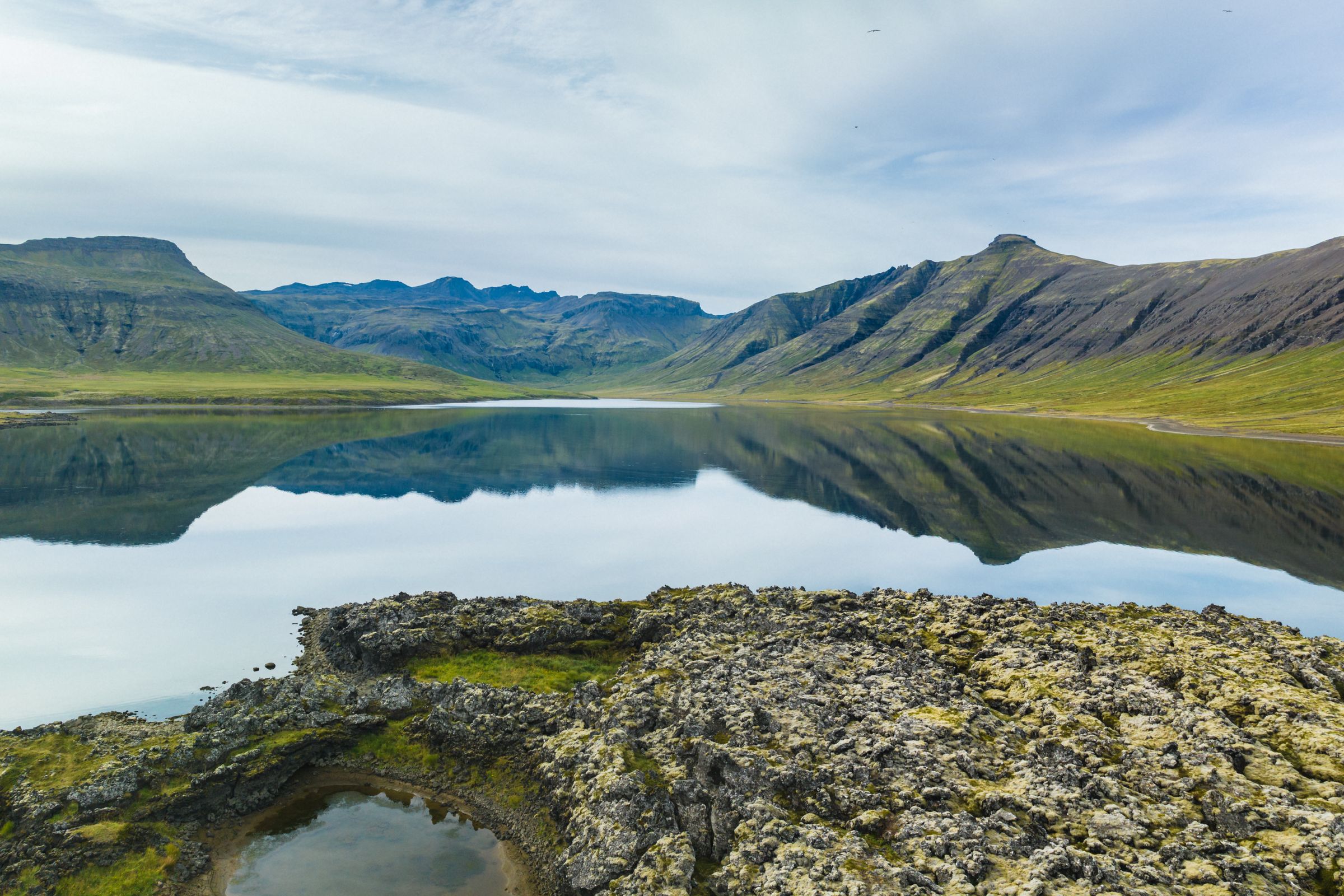
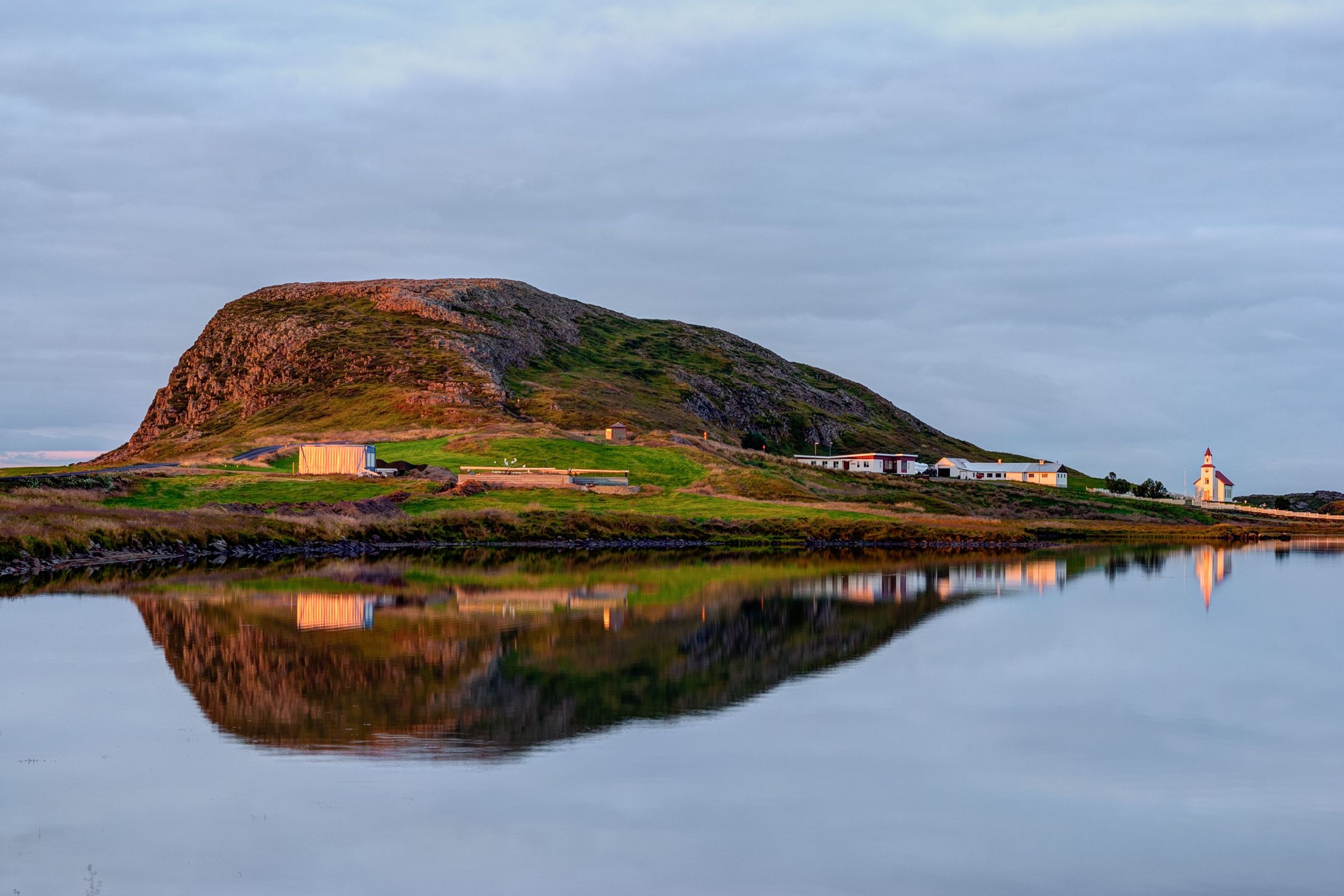
Up close, the terrain is jagged basalt lava covered in thick green moss, with patches of red and grey crater material and small lakes sitting at the lower edges of the field. From a distance, it looks almost soft. Step off the path, and you'll figure out pretty fast that it's sharp, uneven, and not easy to walk on. The moss makes it look approachable, but the rock underneath is anything but.
Two craters sit near the field: Rauðkúla (the Red Crater, 379 meters wide) and Grákúla (the Grey Crater, 211 meters wide), named for their coloring. The lava originally flowed down from Bjarnarhafnarfjall mountain toward the Hraunsfjörður and Hraunsvík fjords, leaving behind two small lakes, Selvallavatn and Kothraunsvatn, that are still there today.
Who it's best for
Berserkjahraun works well for people doing the Snæfellsnes driving loop, photographers who want texture and mood rather than one obvious shot, and anyone into Icelandic sagas or Norse history. It also works as a quieter stop between Kirkjufell and Stykkishólmur. If you're on the peninsula and have 45 minutes to spare, it's worth adding to your route.
Where Berserkjahraun Is and How to Get There
Berserkjahraun is in West Iceland, on the north side of Snæfellsnes. It's about 15 minutes from both Stykkishólmur to the east and Grundarfjörður to the west, and roughly 2 hours 10 minutes from Reykjavík via the Ring Road (Route 1) to Borgarnes, then Route 54 west along the peninsula.
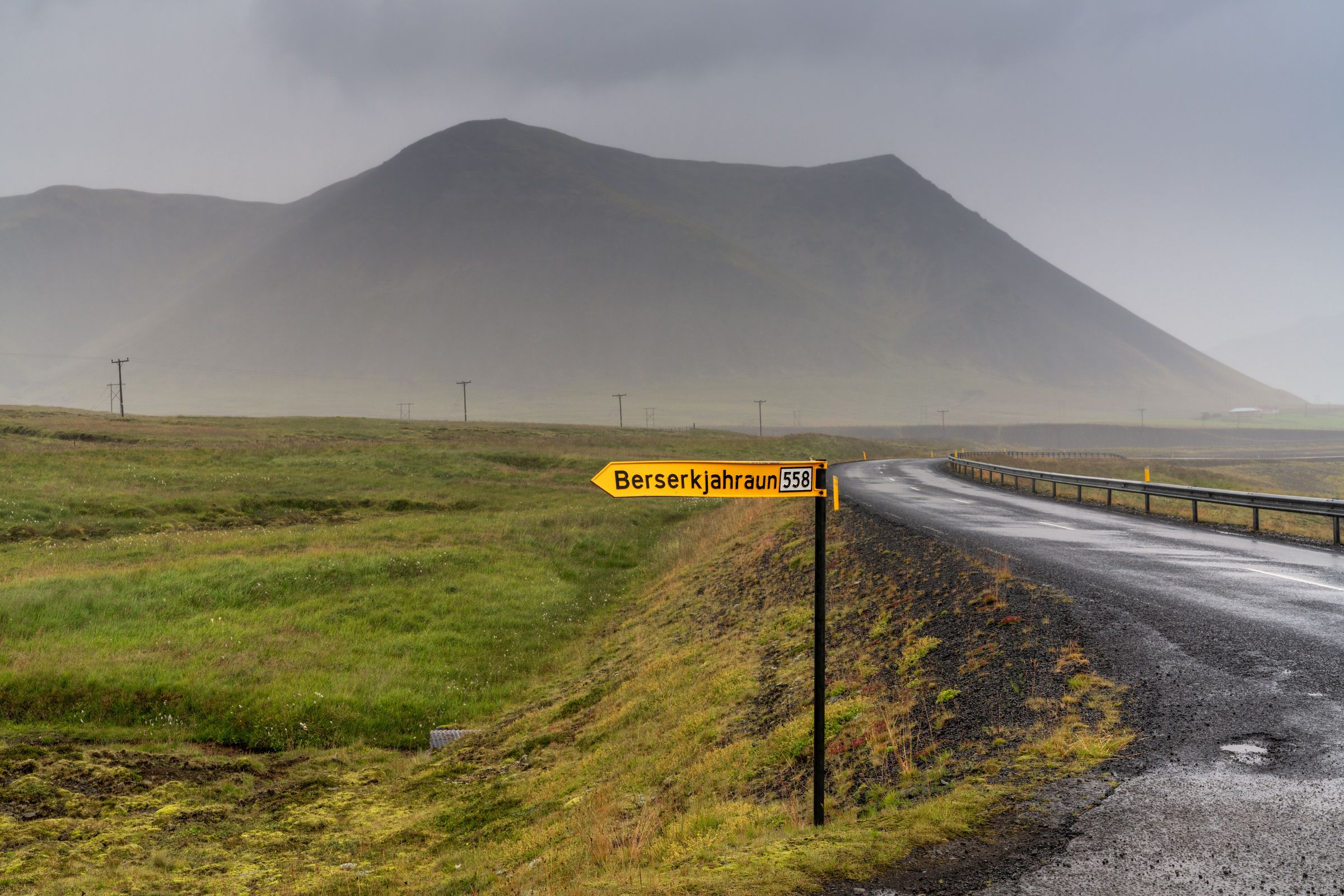
The access road is Road 558 (Berserkjahraunsvegur), a gravel loop that branches off Route 54. The loop runs roughly 6 to 10 kilometers with a few different entry points. It's not an official F-road, so you don't legally need a 4x4, but the surface is rough in places. A regular 2WD handles it fine in dry summer conditions. A higher-clearance vehicle is more comfortable and better for your rental insurance.
Always check road.is before heading out, especially outside of summer. Road 558 isn't maintained in winter and can be icy or snowbound. Real-time conditions are at road.is and via the 1777 traffic information line.
Coming from Grundarfjörður (west)
Cross the first bridge on Route 54, turn right onto Road 558, cross the small bridge, then turn right again at the junction. The lava field opens up almost straight away.
Coming from Stykkishólmur (east)
After the Route 54/56 junction, turn left onto Road 558. There are several pull-offs along the route where you can stop, take photos, and access the walking path to Berserkjagata.
There's a small parking area near the entrance. You can drive the full loop or park and walk to specific points. Road 558 is one lane in places, so use pull-offs when another car comes through.

Why Berserkjahraun Is Worth Visiting
Most people on Snæfellsnes are focused on Kirkjufell, the glacier, the black sand beaches, and the black church at Búðakirkja. All of those are worth it. Berserkjahraun is a different kind of stop: a lava field where the geology, the cultural history, and preserved saga landmarks all sit in the same place.
Iceland has bigger lava fields. Eldhraun in the south, from the Laki eruption of 1783 to 1784, is about 20 times larger. Dimmuborgir near Lake Mývatn has more dramatic individual rock formations. Leirhnjúkur near Krafla is still geothermally active with steaming fissures. None of them have a named, driveable path tied to a specific Viking-age story with physical remains you can walk up to and look at.
It's also one of the quietest stops on the peninsula. On a busy summer day at Kirkjufell, you'll be sharing the viewpoint with tour buses. At Berserkjahraun, you might genuinely have the place to yourself.
Berserkjahraun sits within the Snæfellsnes UNESCO Global Geopark, which covers the peninsula's volcanic and cultural landscapes. The wider area is also part of the Snæfellsnes Biosphere Reserve, a UNESCO-recognized zone of mixed volcanic, coastal, and cultural significance.
Top Things to Do at Berserkjahraun
There's no formal trail network and no visitor center telling you where to go. The place works best when you take it slow rather than try to tick things off a list. Here's what's actually worth your time.
Drive the full Road loop
For a lot of visitors, the drive through Road 558 is the main thing. The road cuts right through the lava formations, with mountain and fjord views opening up as you go. Give yourself at least 30 to 45 minutes if you plan to stop for photos. The light changes a lot across the green and black terrain, and it makes for one of the more photogenic drives on the peninsula.
Walk Berserkjagata and find the burial mound
This is the thing that takes Berserkjahraun from "nice landscape" to something you'll actually remember. The Berserkjagata path is the oldest known man-made road in Iceland with recorded builders. Park near Bjarnarhöfn or at one of the pull-offs on Road 558, follow the yellow protected-antiquities signs, and walk the preserved section to the burial cairn (Berserkjadys). The round trip takes 20 to 40 minutes. I'd strongly recommend not skipping this part. More on it in the section below.
Explore the craters and lakes
Rauðkúla and Grákúla, the two main scoria craters, are visible from the road and worth a closer look. The small lakes formed by the original lava flows, Selvallavatn and Kothraunsvatn, are good spots to stop and take in the wider landscape. Early morning light across the lake bridge is one of the better photo spots in the area.
Watch for wildlife
White-tailed eagles nest in the lava around Berserkjahraun. Arctic terns, common eiders, fulmars, and other seabirds are active in spring and summer. Bring binoculars if you have them. Arctic foxes turn up occasionally too, mostly at dawn and dusk.
Read the saga boards
There are information signs at several pull-offs with excerpts from Eyrbyggja Saga and explanations of the landmarks. Even if you haven't read the saga before arriving, the boards give you enough context to make the walk feel like more than a stroll through old rocks.
Berserkjagata and the Saga Connection
Berserkjagata is the reason this lava field has a name most people can remember. It's a roughly 1.2-kilometer preserved bridle path cut through the lava, and it's connected to one of the most memorable episodes in Eyrbyggja Saga.
The story
Around 982 AD, a farmer named Vermundur the Thin brought two Swedish berserkers to Iceland. In Norse saga tradition, berserkers were warriors known for extreme ferocity, often described as entering a kind of battle rage that made them nearly impossible to stop. Vermundur handed them over to his brother, Víga-Styr (also called Styr the Slayer), whose farm was on the far side of the lava field.
One of the berserkers, Halli, fell in love with Styr's daughter Ásdís and asked to marry her. Styr agreed, but gave them what he figured was an impossible task first: cut a clear bridle path through the lava field and build a boundary fence to connect the two farms. They finished it. Instead of honoring the deal, Styr lured them into a sealed sauna, overheated it, and killed them as they tried to get out. They were buried near the path.
Archaeological excavations in the area turned up remains of two unusually large men close to the route, which gave the legend a fair bit of credibility.
What's still there today
Four saga landmarks survive at the site and hold national monument status:
- Berserkjagata: the path itself, marked by yellow protected-antiquities signs
- Berserkjadys: the burial mound, roughly 7 meters by 3 meters, where the berserkers were buried
- Landamerkjagarður: the boundary fence the berserkers built
- Fjárrétt: a sheep pen connected to the farms in the saga
These aren't reconstructions. They're the actual preserved features from the saga period. That's rare anywhere in Iceland, where most saga locations have no physical remains at all.
Why knowing the story matters
Walking Berserkjagata without the backstory is still a decent walk. Knowing the story makes it something else. You're tracing a route two men cut through volcanic rock over a thousand years ago, under a deal they were never going to win. The lava reads differently once you know that.
Don't touch or climb the burial mound or boundary walls. These are protected national monuments. The moss around them is also extremely fragile, with some patches taking decades to grow back after a single footstep. Stay on the marked path.
Practical Travel Tips
Berserkjahraun has no facilities on site. No toilets, no café, no visitor center. Sort yourself out before you turn onto Road 558.
How much time you need
Most people spend 30 to 60 minutes here. If you walk the full Berserkjagata path, stop at the burial mound, and drive the Road 558 loop with a few photo stops, budget closer to 90 minutes. It's not a half-day destination on its own, but it fits well into a full Snæfellsnes day.
Best time to visit
Summer (June through August) is the easiest for access. Road conditions are good, the moss is a vivid green, and the Midnight Sun means you have usable light at any hour. Early morning is the best time, in my opinion: fewer people and better light across the lava.
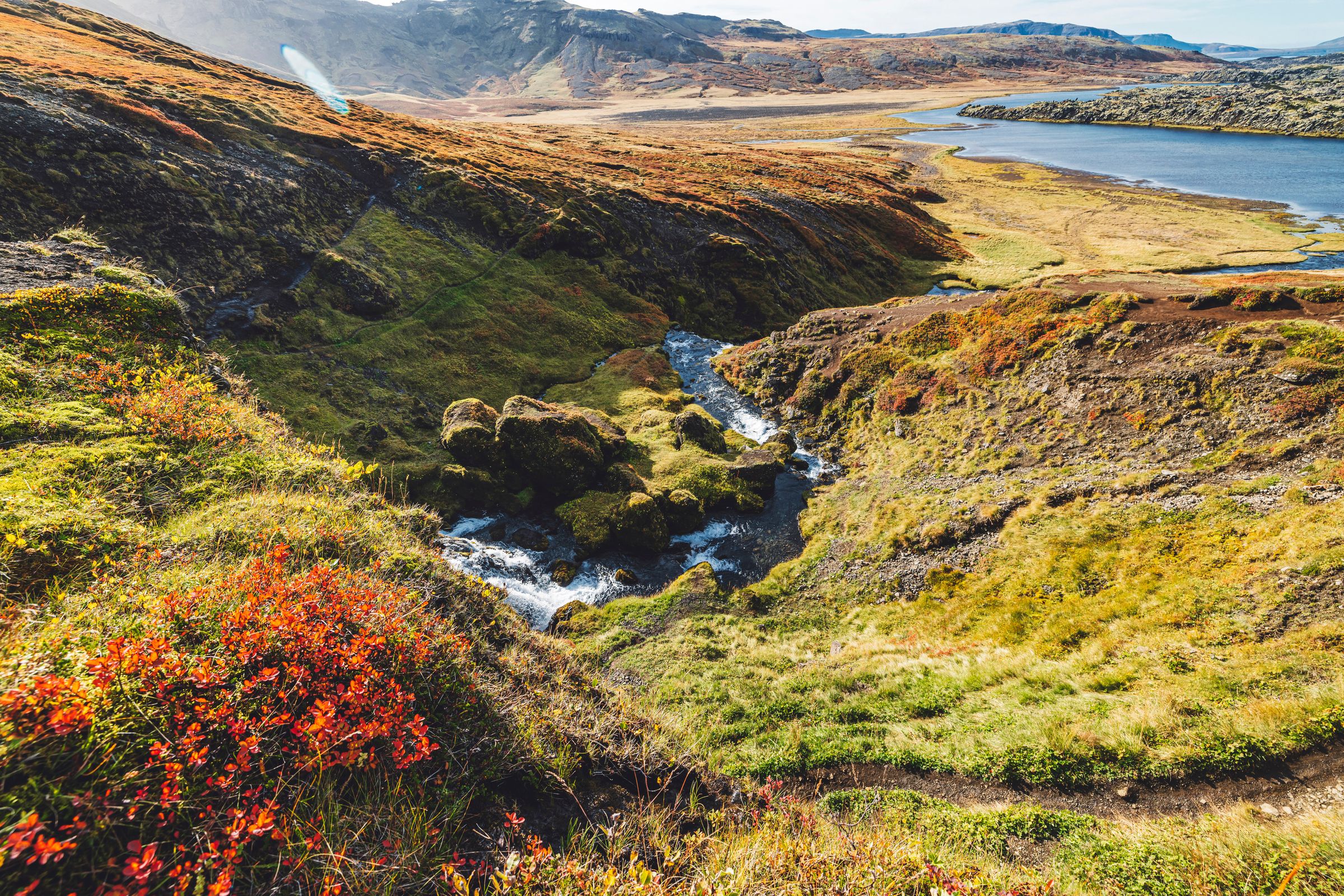
Autumn (September and October) brings color to the low shrubs and berries scattered through the field, and the light tends to be more interesting. If I were planning this trip, I'd seriously consider September as a first choice.
Winter is possible but needs more planning. Road 558 isn't cleared of snow, conditions change fast, and the shorter days limit what you can do. If you go in winter, check road.is and vedur.is before leaving town, take a 4x4, and let someone know your plans.
What to wear
Sturdy waterproof hiking boots aren't optional here. The lava is sharp, the gaps between rocks hide under the moss, and one careless step off the path can go badly. Layers and a windproof jacket are standard for Snæfellsnes regardless of season. The weather changes fast, sometimes within the same hour.
Safety basics
- Drive Road 558 slowly: sharp curves and uneven gravel need attention
- Cell service is limited or absent in parts of the field; let someone know your plans before heading out
- Stay on marked paths and solid rock surfaces; don't walk on the moss
- No drones in the protected area
- Iceland's emergency number is 112
Getting supplies
Get fuel, food, and water before you head to the lava field. Both Stykkishólmur and Grundarfjörður have supermarkets and gas stations.
Berserkjahraun as Part of a Snæfellsnes Itinerary
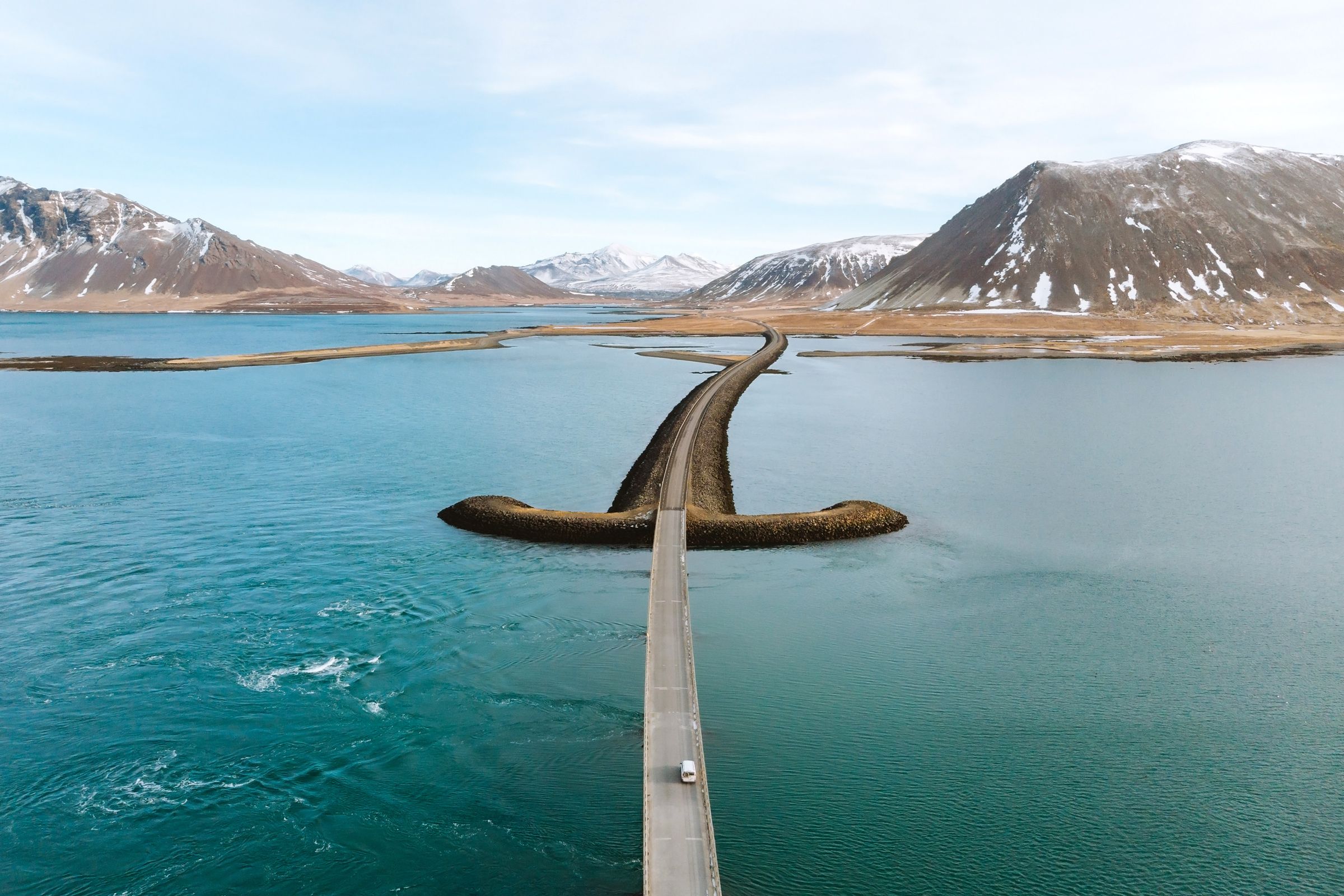
Snæfellsnes is one of the most efficient driving destinations in Iceland. The peninsula is about 90 kilometers long, compact enough to see most of in a day, and varied enough to justify two. Berserkjahraun sits on the north coast right between the two main service towns, which makes it one of the easiest stops to fit into any route.
One-day itinerary
If you're doing Snæfellsnes as a day trip from Reykjavík, a solid north-coast sequence is: start with Grundarfjörður and Kirkjufell (the mountain looks best in morning light), then head east along Route 54 to Road 558 for Berserkjahraun, then continue to Stykkishólmur for lunch and a walk around the harbor. That puts the most iconic stop early and the most story-rich one in the middle, with a town stop at the end when you're ready to sit down.
From Stykkishólmur you can continue south and west toward Snæfellsjökull National Park, taking in Búðakirkja, Arnarstapi, and Djúpalónssandur before heading back toward Reykjavík in the evening.
Two-day itinerary
With two days, Berserkjahraun gets much more enjoyable because you're not rushing. I'd split it like this: spend day one on the north coast (Kirkjufell, Berserkjahraun, Helgafell, Stykkishólmur), overnight in either Stykkishólmur or Grundarfjörður, then use day two for the western and southern parts of the peninsula, including Snæfellsjökull National Park, the black church, and the lava caves along the coast.
Nearby stops to pair with Berserkjahraun
Berserkjahraun works best when you combine it with nearby stops that have a similar feel.
Helgafell
A small holy mountain, 73 meters high, just outside Stykkishólmur. The tradition is that first-time climbers who go straight up without speaking, looking back, or taking a wrong step can make three wishes at the top. It's a 20-minute climb and pairs naturally with Berserkjahraun since both are compact stops with a lot of story behind them.
Stykkishólmur
The main town on the eastern side of the north coast, with a harbor, a good selection of restaurants, and a ferry connection across Breiðafjörður. It's the best base if you're staying the night on this side of the peninsula.
Grundarfjörður and Kirkjufell
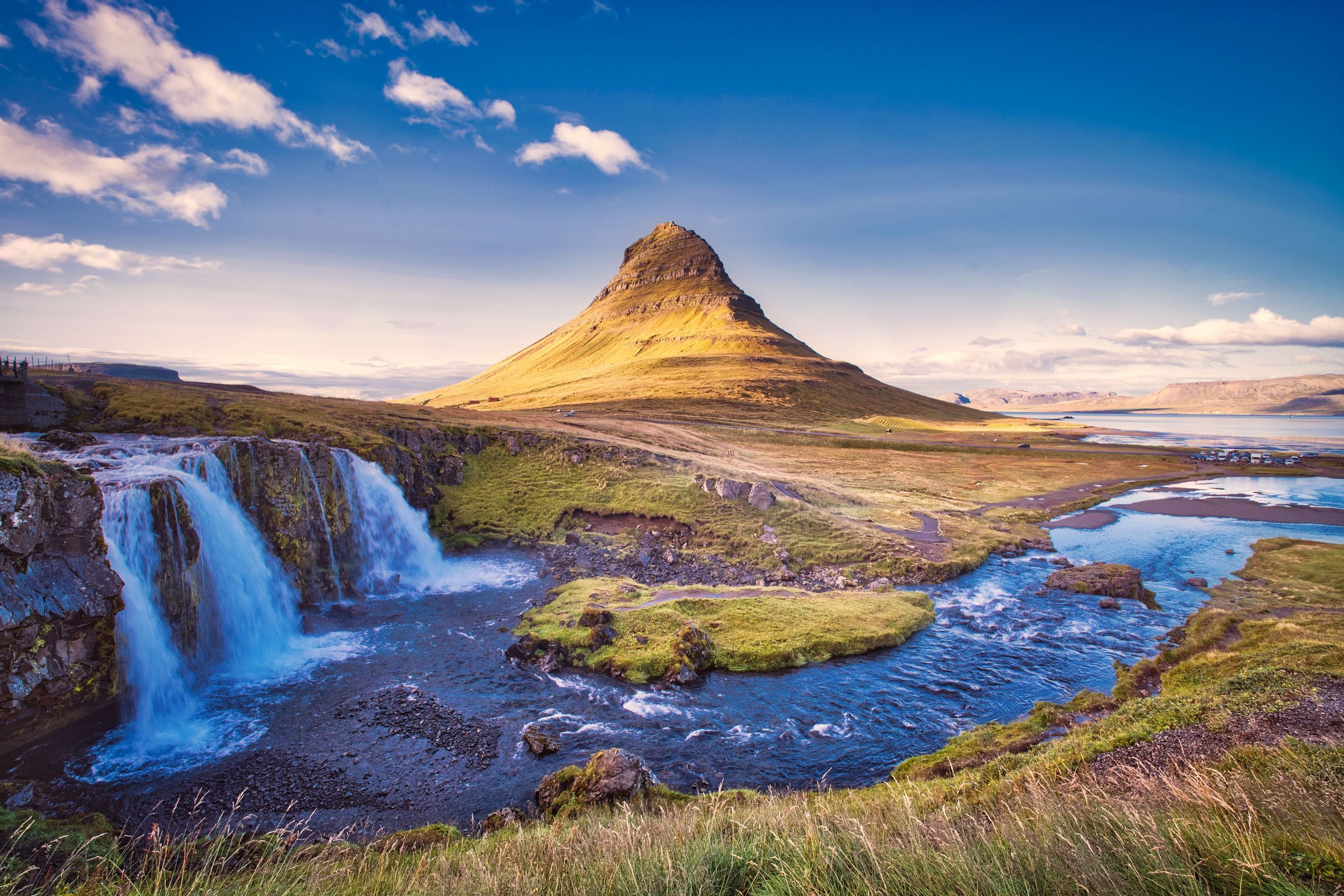
Fifteen minutes west of Berserkjahraun. Kirkjufell is one of the most photographed mountains in Iceland, and Kirkjufellsfoss, the small waterfall at its base, is a standard stop on any peninsula loop.
Bjarnarhöfn Shark Museum
Minutes from the lava field. The museum walks you through the process of making hákarl (fermented Greenlandic shark), one of Iceland's most notorious traditional foods. It has a direct saga connection through the area's history, and the tasting at the end is worth doing at least once.

Where to Stay Near Berserkjahraun
There's no accommodation at the lava field. Your two options are Stykkishólmur to the east and Grundarfjörður to the west, both about 15 minutes away.
Stykkishólmur
Stykkishólmur is the better pick if you want more of a town feel. It has the most accommodation options on this side of the peninsula: hotels, guesthouses, hostels, and cabins.
- Fosshótel Stykkishólmur: a modern hotel with fjord views, probably the most comfortable option on the north coast.
- Akkeri Guesthouse: a six-room place in the old town with balcony or terrace options, good if you want something quieter
- Campsite: near the golf course, walking distance from the pool, supermarket, and restaurants
Grundarfjörður
Grundarfjörður is smaller and quieter. If I were planning around Kirkjufell photography or an early start west toward the national park, I'd pick Grundarfjörður for the night.
- Kirkjufell Guesthouse & Apartments: you get direct views of the mountain, which is great if you want to catch the light at sunrise
- Campsite: basic but well-placed for budget travelers
Book well ahead for summer. Snæfellsnes is popular, and the total number of beds on the peninsula is limited. May and September give you good conditions with more availability.
Where to Eat Near Berserkjahraun
There's nothing to eat at the lava field itself. Eat before or after in one of the nearby towns. Outside peak summer, call ahead to check opening hours before making the drive.
Stykkishólmur
Stykkishólmur has the best options on this side of the peninsula.
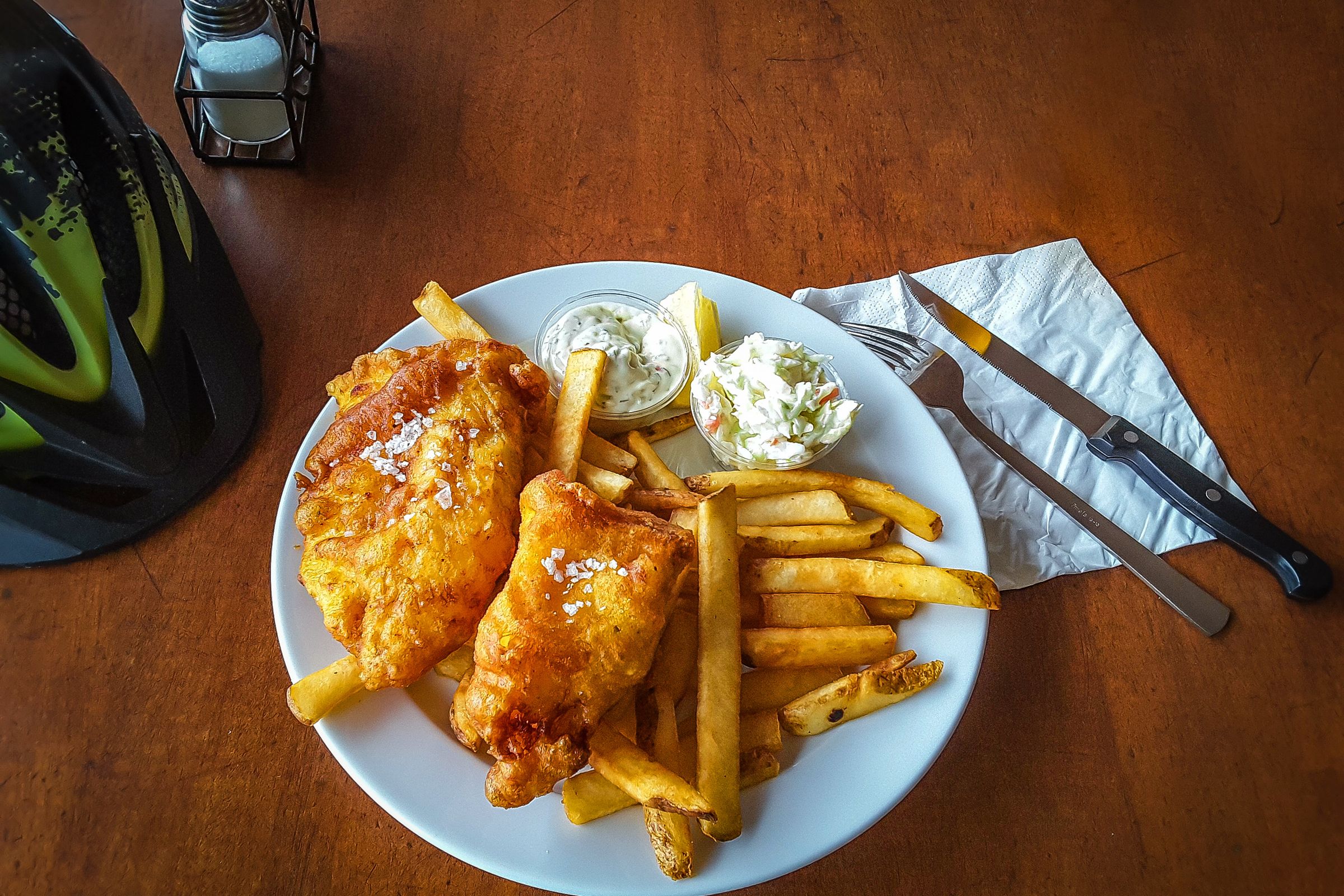
- Sjávarpakkhúsið: the go-to spot for seafood in town
- Narfeyrarstofa: a solid sit-down option in the older part of town, good for a proper meal
- Skúrinn: casual and no-fuss, works well for families
- Nesbrauð Bakery: worth a stop for coffee and something quick before heading out
Grundarfjörður
Fewer choices here, but one place genuinely stands out.
- Bjargarsteinn Mathús: sits right on the waterfront in an old Icelandic building, with views toward Kirkjufell. The menu changes with the season and leans heavily on local products. If you're eating in Grundarfjörður, eat here.
- Kaffi 59: casual spot with views of the mountain, fine for a quick lunch
Bjarnarhöfn Shark Museum café
If you're combining Berserkjahraun with a stop at the shark museum, the small café there offers a tasting of fermented shark. Not a full meal, but worth doing once.
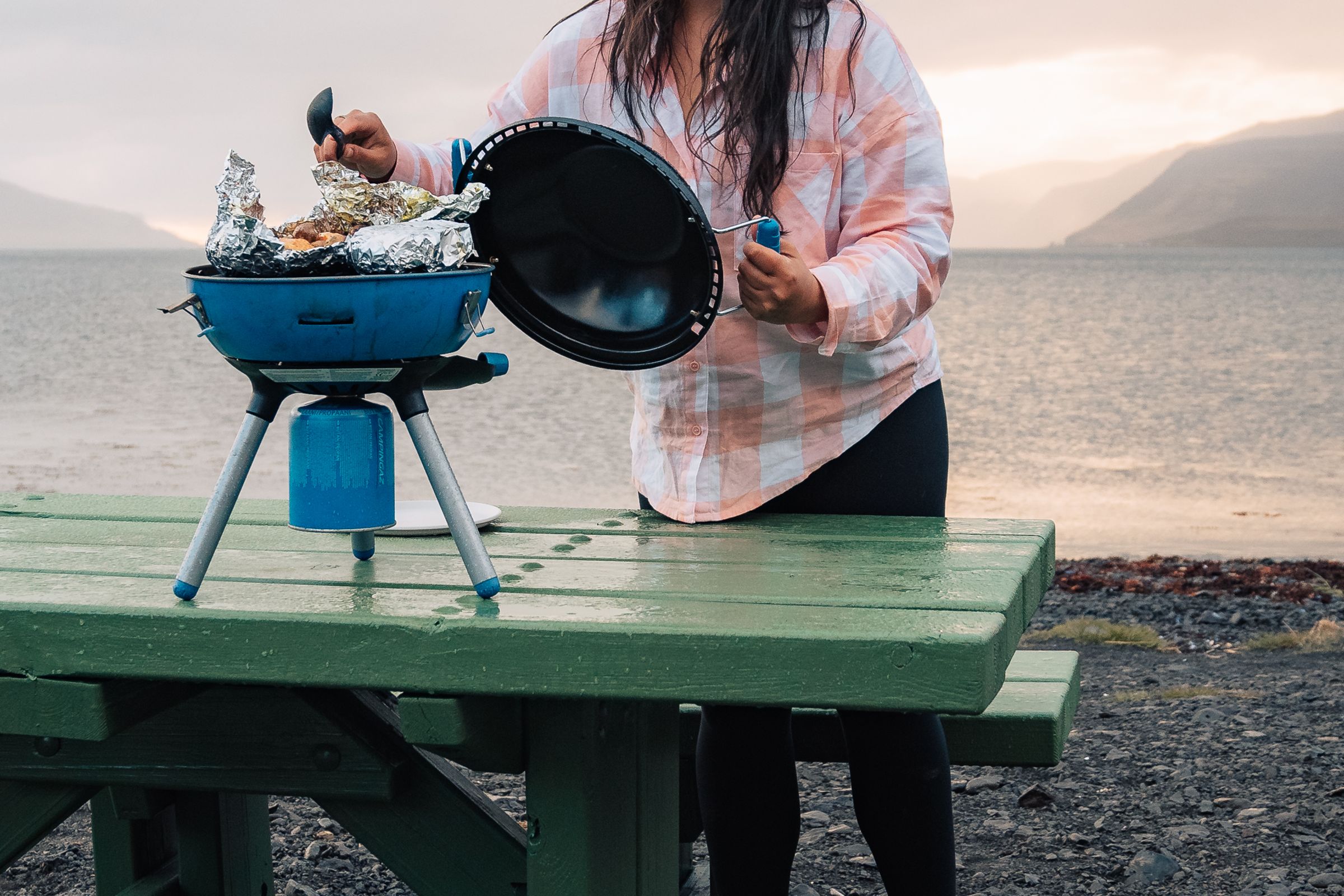
Bring snacks and water for the lava field. Rural Iceland has almost no roadside services, and it's a long gravel stretch between proper stops. A picnic at one of the Road 558 pull-offs on a calm day is actually a pretty good call.
Conclusion
Berserkjahraun isn't the most famous stop on the Snæfellsnes Peninsula, and it's not trying to be. What it offers is harder to find: an old volcanic landscape with preserved saga-era landmarks and real quiet, sitting 15 minutes from two towns with food and fuel, directly on one of Iceland's best driving routes.
Drive Road 558, walk the Berserkjagata path, find the burial mound, and don't rush it. That's the whole thing in one sentence.
Frequently Asked Questions About Berserkjahraun