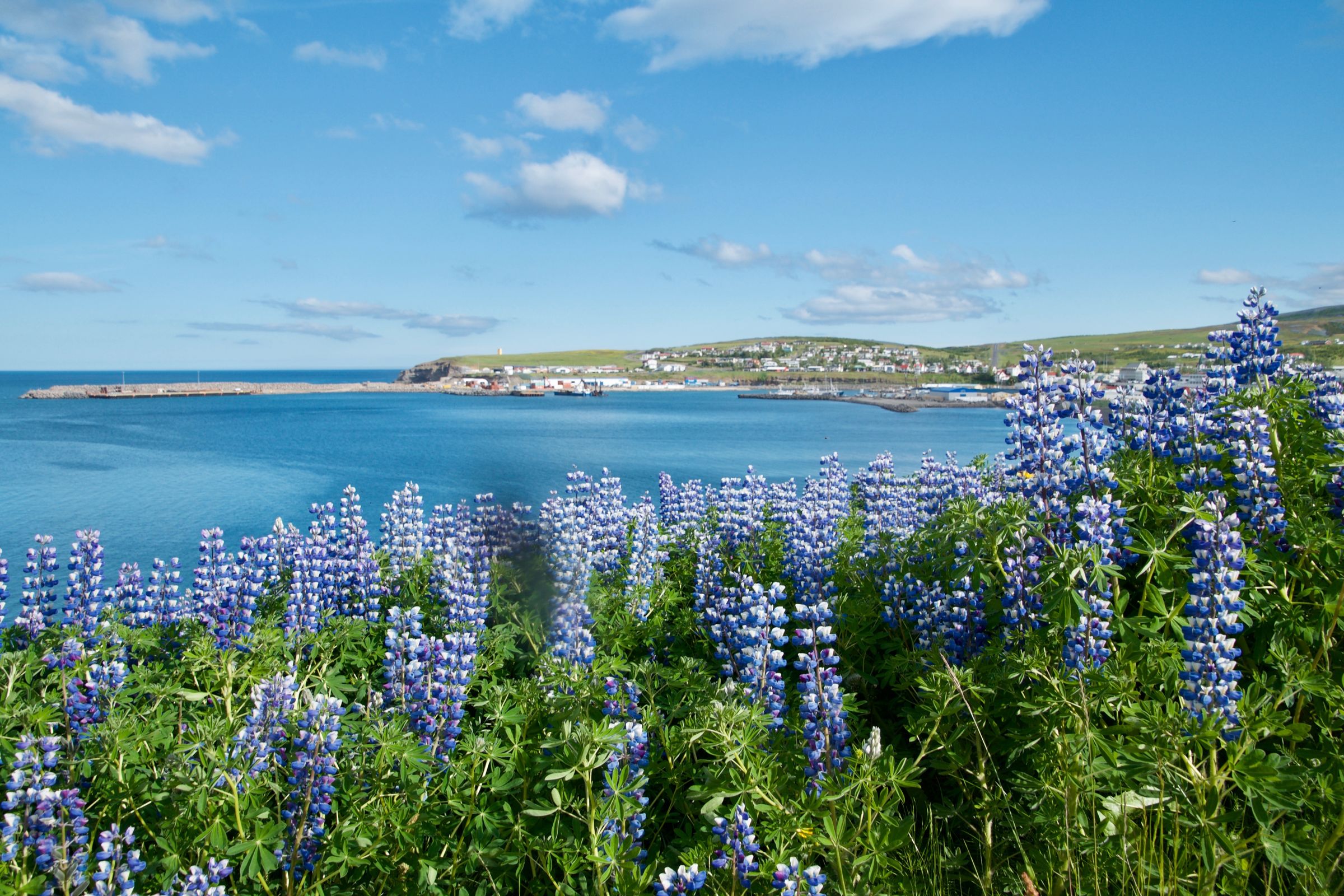
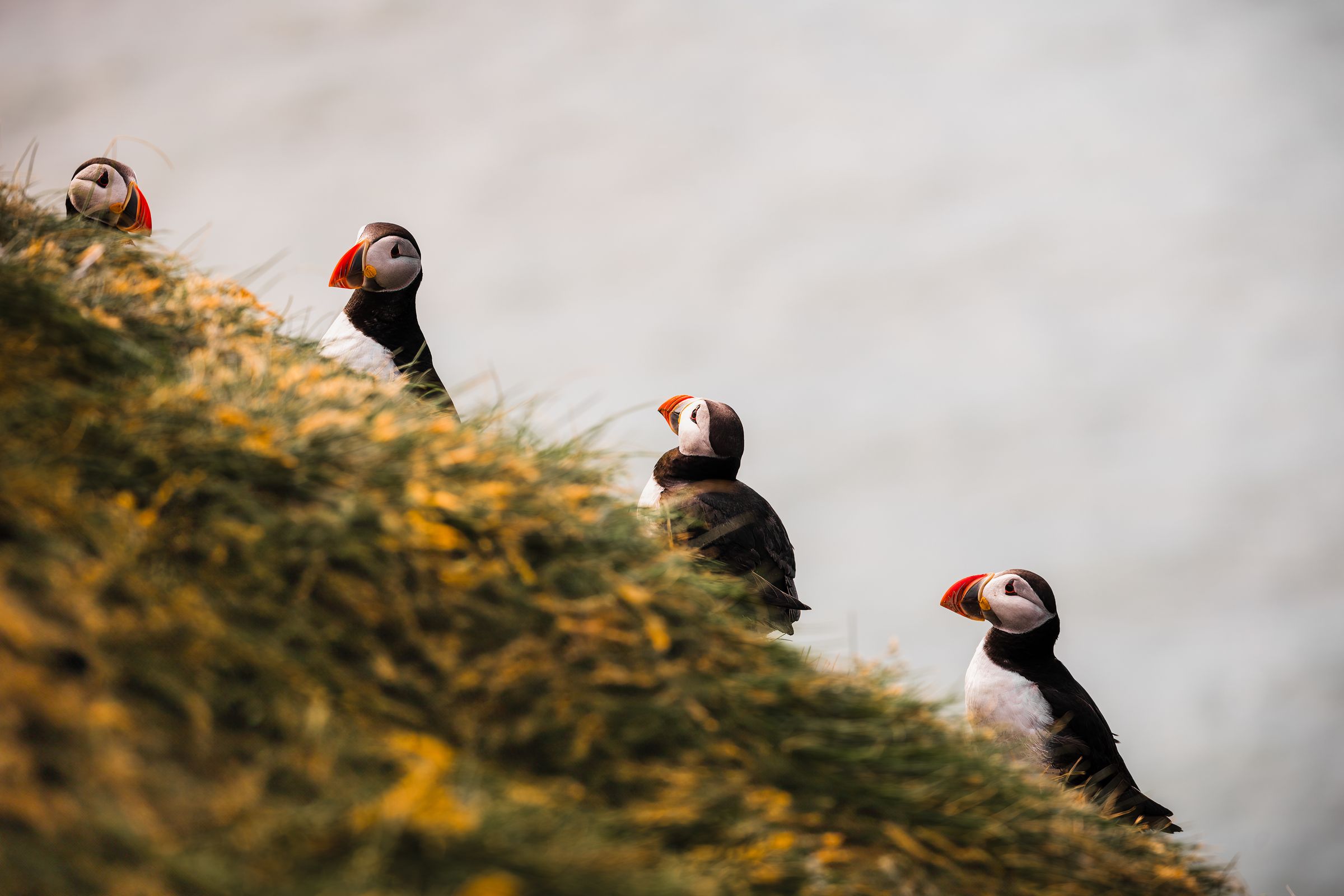
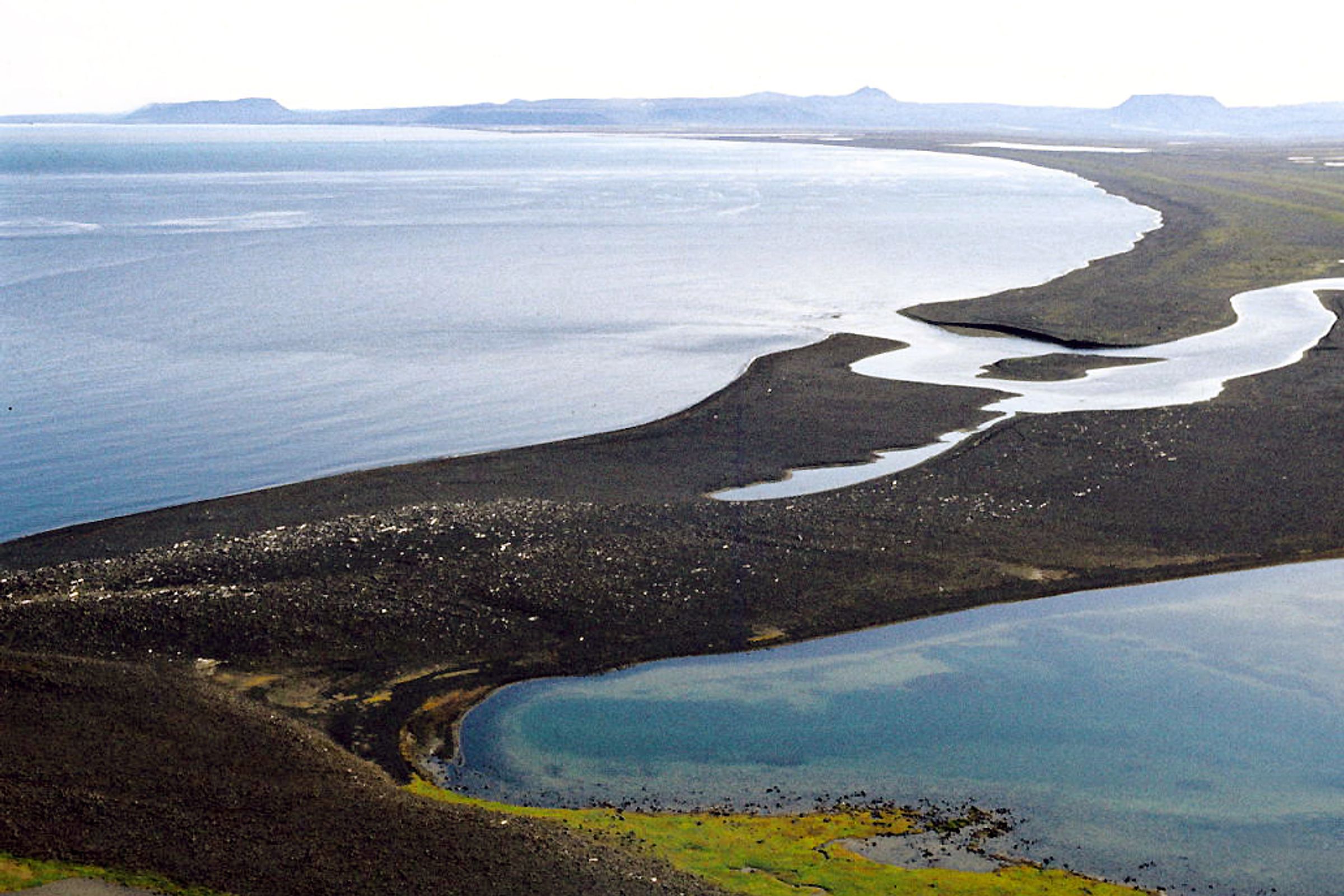
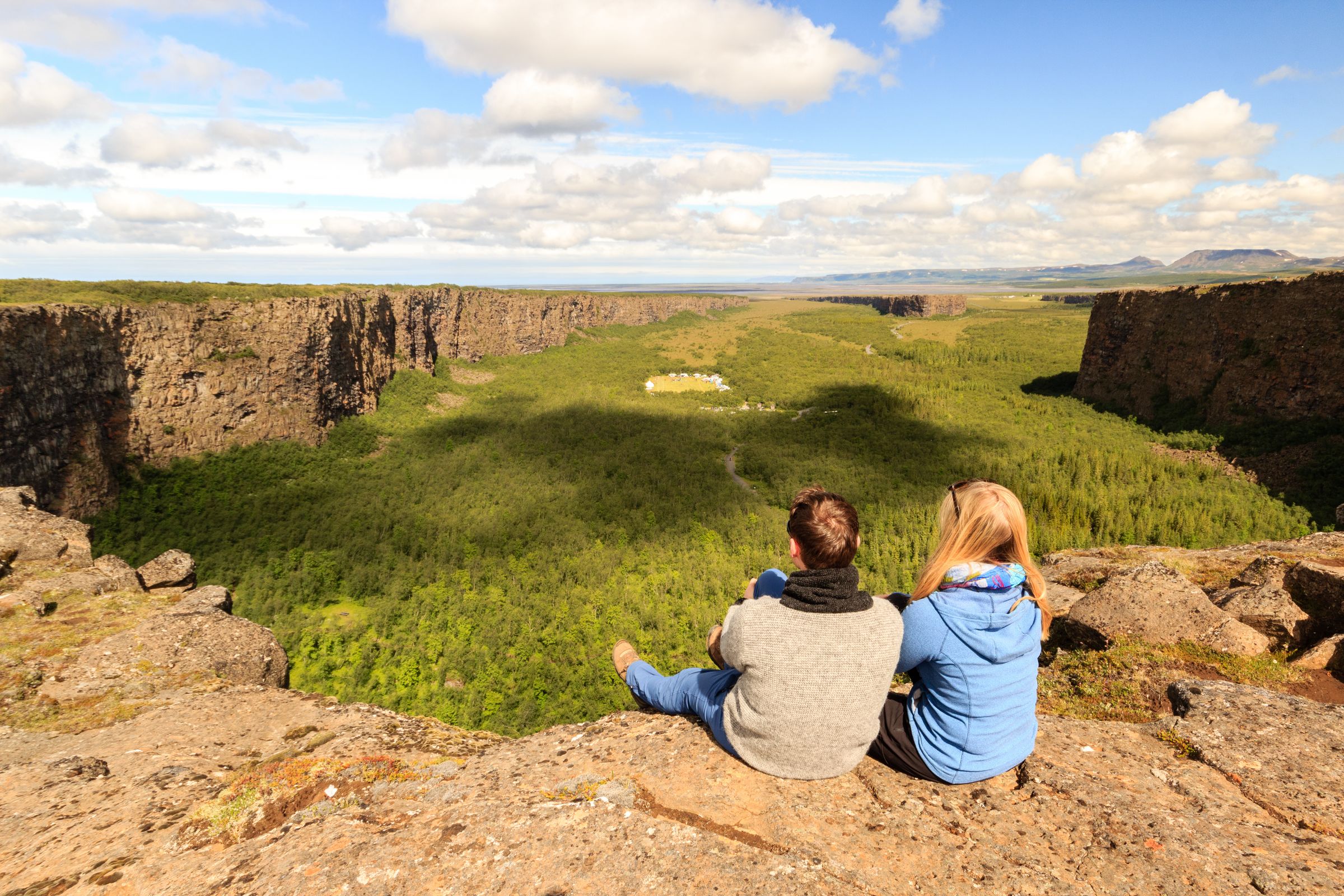
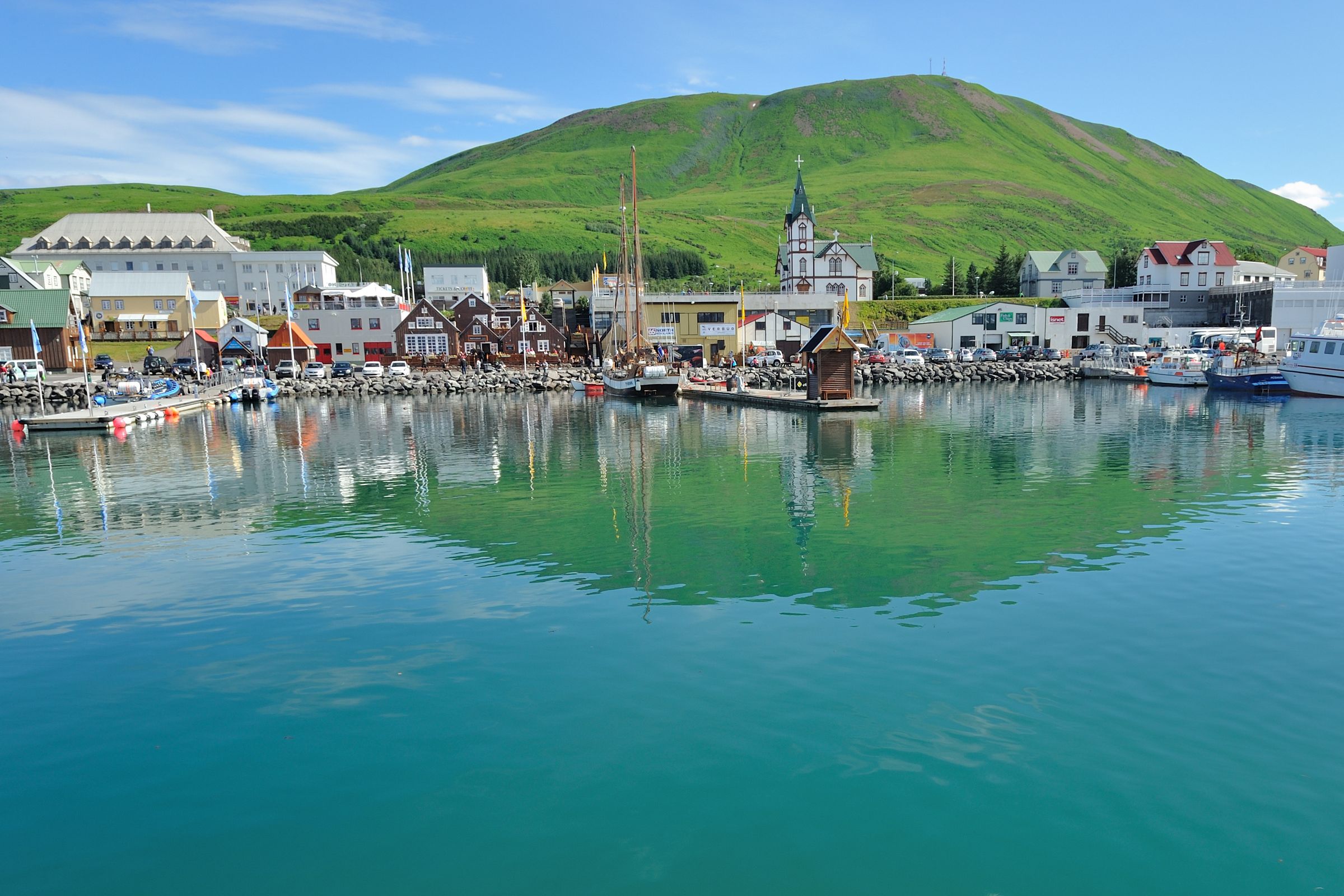
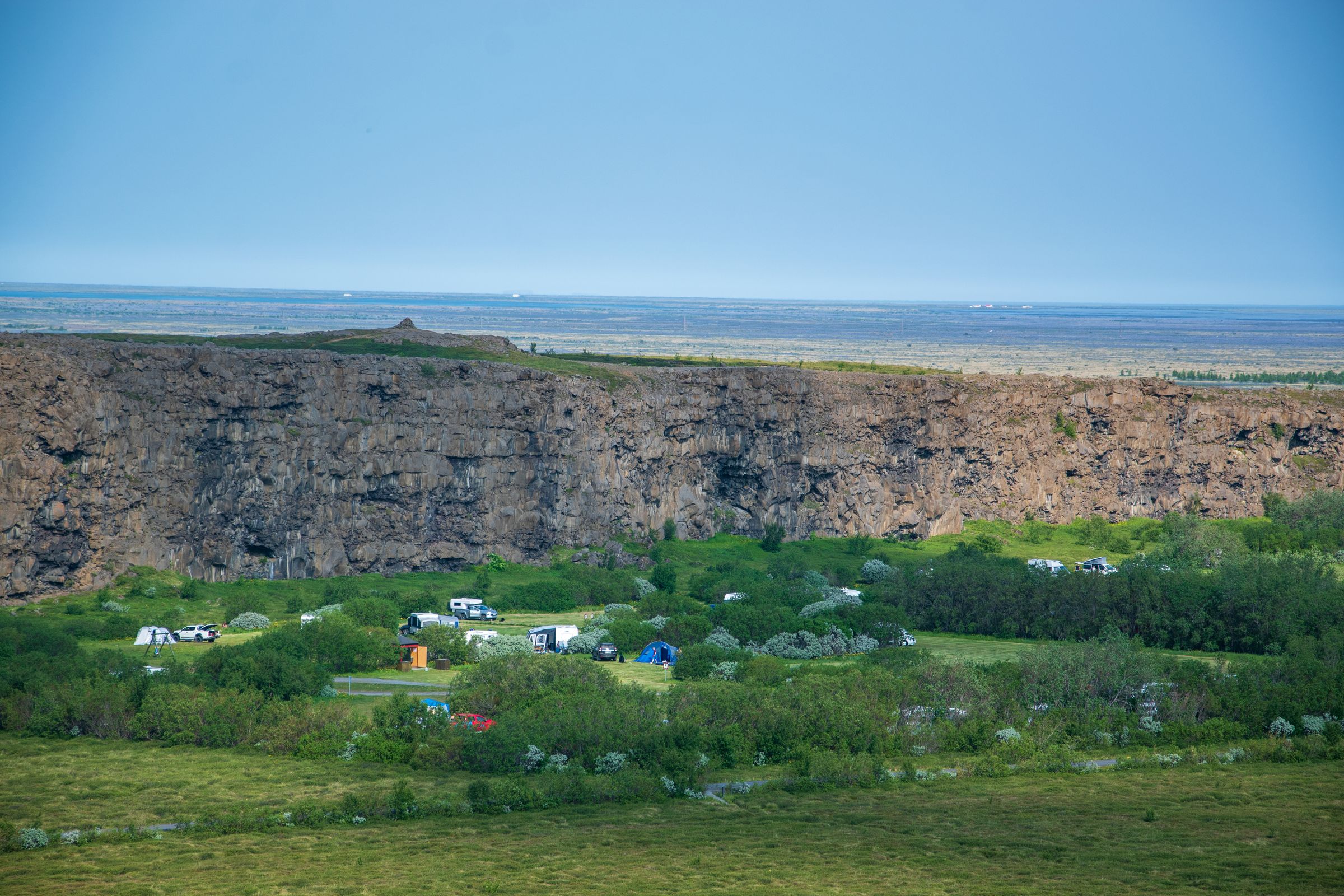
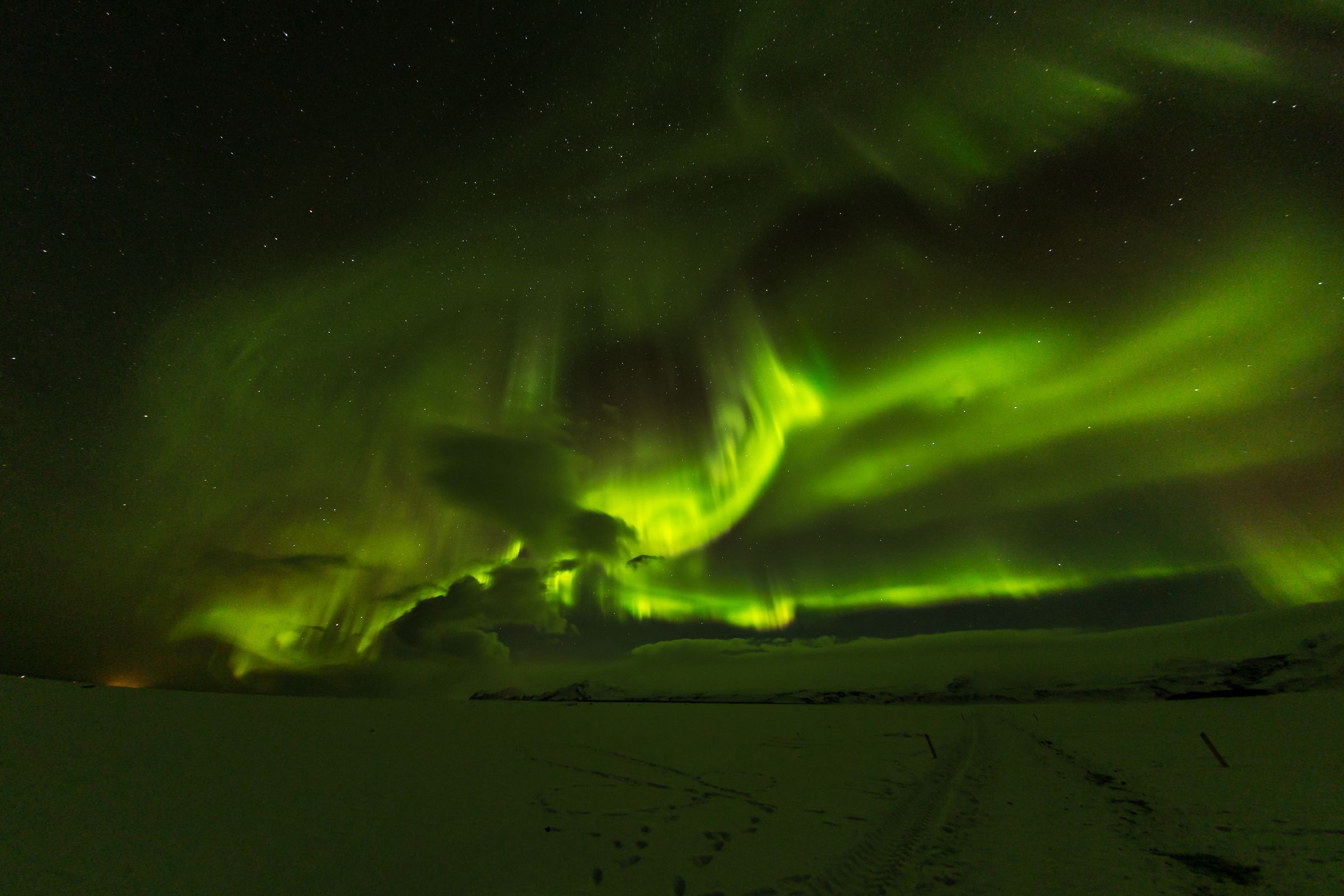
If you're doing the Diamond Circle, you've probably got Húsavík, Ásbyrgi, and Dettifoss on your list. The stretch of coast between them, Tjörnes, usually doesn't make the cut. It should. There are sea cliffs, thousands of puffins, and rock layers with 5-million-year-old marine fossils. Hardly anyone stops here, which is part of why it's worth it.
Overview of the Tjörnes Peninsula
Tjörnes is a coastal peninsula in northeastern Iceland between Skjálfandi Bay and Öxarfjörður, just north of Húsavík. Most people pass through it on the way to Ásbyrgi, but it offers more than a quick stop. It is quiet, remote, and largely overlooked. The area has fewer than 100 residents and no villages or tourist infrastructure.
What Makes Tjörnes Unique
Tjörnes stands out for its sedimentary rock cliffs full of marine fossils, unlike most of Iceland’s lava landscape. It preserves a record of North Atlantic life from millions of years ago and sits on the active Tjörnes Fracture Zone. The peninsula offers dramatic coastline, large puffin colonies, and almost zero crowds. It is known for its quiet drive and lack of tourist congestion.
Brief Cultural and Historical Context
Farming dates back to the Viking settlement era around 870–930 AD. During WWI, lignite mines employed about 70 workers, and coal waste is still visible on some beaches. The main cultural site is Minjasafnið á Mánárbakka, a small museum opened in 1995. Local folklore includes the story of Torfasteinn, a boulder linked to a murder tale.
Who Should Visit
Tjörnes suits people interested in nature, birds, and geology. It is ideal for photographers, birdwatchers, and geology fans. It also appeals to travelers on the Diamond Circle seeking less crowded stops. The peninsula offers a quieter alternative to typical Iceland itineraries.
Location and How to Get to the Tjörnes Peninsula
Tjörnes is in northeastern Iceland, about 20 km long, north of Húsavík. Route 85 runs through it, connecting Húsavík and Ásbyrgi, with mostly paved roads. No 4x4 is needed in summer, though some tracks are rough. Public transport is limited, so renting a car is the practical option.
Top Attractions on the Tjörnes Peninsula
Key stops include Hringsbjarg Cliff for views and seabirds, and Mánárbakki Museum for local history. Fossil cliffs at Hallbjarnarstaðakambur and Tungulending show 3 to 5 million-year-old marine life. Route 85 offers multiple scenic viewpoints over both coasts. The experience is based on several small stops rather than one main attraction.
Best Things to Do on the Tjörnes Peninsula
The main activity is a slow scenic drive along Route 85 with frequent stops. Birdwatching includes puffins, guillemots, fulmars, and Arctic terns. Photography is best in summer evenings and sunrise at key spots. Short walks, including the Skeifárfoss hike, and geological exploration are highlights.
Hidden Gems on the Tjörnes Peninsula
Skeifárfoss waterfall and Hallbjarnarstaðakambur fossil beach are often missed due to limited signage and rough access. The Mánárbakki antenna forest offers unusual sunset views. Eastern viewpoints over Öxarfjörður are quieter than Hringsbjarg. Torfasteinn and Tungulending shoreline provide a peaceful folklore stop.
Nature and Wildlife
Tjörnes is known for seabirds, including puffins nesting from May to mid-August. Other species include guillemots, fulmars, Arctic terns, and rock ptarmigan. Marine wildlife includes humpback and minke whales, with better viewing from Húsavík tours. Arctic fox and Icelandic horses are occasionally seen on land.
Geology of the Tjörnes Peninsula
The peninsula exposes up to 1,200 m of geological layers, including the fossil-rich Tjörnes Beds from 3 to 5 million years ago. These layers document climate changes and marine life shifts. Fossils include molluscs, bivalves, and a 4.5 million-year-old right whale skull. The area also lies on the active Tjörnes Fracture Zone, with frequent small earthquakes.
Nearby Destinations to Combine With Tjörnes
Húsavík offers whale watching, GeoSea baths, and museums. Ásbyrgi Canyon provides hiking and unique landscapes. Dettifoss is Europe’s most powerful waterfall by volume. Lake Mývatn features geothermal activity and birdlife, all part of the 250 km Diamond Circle.
Where to Stay Near the Tjörnes Peninsula
Accommodation on the peninsula is limited to Tungulending Guesthouse and Mánárbakki campsite. Most visitors stay in Húsavík, which has hotels and guesthouses. Ásbyrgi Campground is a good option for Diamond Circle trips. Booking ahead is recommended in summer.
Where to Eat
There are no restaurants on the peninsula, so visitors must bring food or cook. Húsavík offers several dining options, including seafood and local dishes. There is also a supermarket and bakery in town. Most travelers rely on Húsavík for supplies.
Best Time to Visit the Tjörnes Peninsula
Summer offers the best conditions with puffins, clear roads, and near 24-hour daylight. Spring and autumn provide fewer visitors and good photography opportunities. Winter allows northern lights but has harsh weather and limited access. Conditions vary, so planning depends on priorities.
Travel Tips for Visiting Tjörnes
Check road and weather conditions before السفر, as weather changes quickly. There are no services on the peninsula, so prepare in Húsavík. Cliffs are often unfenced, and wind can be strong. Fossils are protected, and removing them is illegal.
Suggested Itineraries Including Tjörnes
A half-day trip from Húsavík includes viewpoints, Hringsbjarg, and the museum. A full-day Diamond Circle route combines Tjörnes with Ásbyrgi. A multi-day plan includes Húsavík, Tjörnes, Dettifoss, and Lake Mývatn. More time allows deeper exploration of the peninsula.
Practical Information
Húsavík is the nearest full-service town with accommodation, food, and tours. Road and weather updates are available online, and emergency number is 112. Camping costs about 1,800 to 2,800 ISK, and guesthouses start at 18,000 ISK. Public transport is limited, with buses from Akureyri.
Conclusion
Tjörnes is a quiet coastal peninsula with fossil cliffs, puffins, and minimal tourism. Its geology spans up to 5 million years and sits on an active tectonic zone. It pairs well with nearby Diamond Circle destinations. Spending more time reveals its full value.
Overview of the Tjörnes Peninsula
Tjörnes, officially Tjörneshreppur, is a coastal peninsula in northeastern Iceland. It sits between Skjálfandi Bay to the west and the fjord of Öxarfjörður to the east, just north of Húsavík. Most people pass through it on the way to Ásbyrgi and don't think twice. That's a missed opportunity.
What Makes Tjörnes Unique
Iceland is mostly lava and volcanoes. Tjörnes is different. The cliffs here cut through thick sedimentary rock full of marine fossils, which makes it one of the only places in Iceland where you can actually see a record of what lived in the North Atlantic millions of years ago. Geologists travel specifically to study it. The peninsula also sits on the Tjörnes Fracture Zone, one of Iceland's most active tectonic systems.
For everyone else, that translates to: dramatic coastline, puffin colonies in the thousands, almost zero crowds, and a drive that's nothing like Húsavík's busy harbor. Fewer than 100 people live on the whole peninsula, scattered across a few farms. No villages, no gift shops, no queues.
Brief Cultural and Historical Context
Farming here goes back to the Viking settlement era, around 870–930 AD. During WWI, two lignite (brown coal) mines ran on the peninsula, employing roughly 70 workers. The red coal waste is still on some beaches if you look for it. The main cultural stop is Minjasafnið á Mánárbakka, a small local museum that opened in 1995, with everyday objects, farm tools, and records from the district.
One piece of local folklore worth knowing: Torfasteinn is a large granite boulder on the shore near Tungulending that's said to have drifted over from Greenland on sea ice. The story is that two farm workers were after the same woman, one murdered the other and threw the body into the sea, and it washed back up next to this rock. The rock was named after the victim, Torfi.
Who Should Visit
Tjörnes works well for people who like nature, birds, or geology, and for anyone who wants a bit of Iceland that's not on every itinerary. Photographers, birdwatchers, and geology fans will get the most out of it, but it's also a good call for anyone doing the Diamond Circle who doesn't want to just tick boxes.
Location and How to Get to the Tjörnes Peninsula
Tjörnes is in the Norðurland eystra region of northeastern Iceland, directly north of Húsavík. The peninsula stretches about 20 km into the North Atlantic, with Skjálfandi Bay on the west and Öxarfjörður on the east.
Driving Routes
You need a car. Route 85, part of the Arctic Coast Way, goes through the peninsula and links Húsavík to Ásbyrgi. Most of it is paved, with some gravel sections. No F-roads, no 4x4 needed in summer, though higher clearance helps on the rough track down to the fossil beach at Hallbjarnarstaðakambur.
Distances from Major Destinations
Húsavík: 15 minutes to the southern edge, 30–40 minutes to the northern tip
Akureyri: about 1.5 hours
Reykjavík: 6–7 hours via the Ring Road (Route 1) to Akureyri, then Route 85 north
Public Transport Options
There's almost no public transport onto the peninsula from Húsavík, so renting a car is the practical option for most people. Some day tours from Húsavík or Akureyri make stops here.
Rent a Car in Iceland
Explore the unbeaten paths of Iceland with complete ease
Tjörnes isn't built around one big sight. It's a slow drive with a few specific stops that are worth your time. Here are the ones that stand out.
Hringsbjarg Cliff
Hringsbjarg is on the eastern side, around 60 m above the shore. There's an observation deck, picnic tables, and information signs. You get wide views over the Kelduhverfi plains, Öxarfjörður, and the black-sand beach below. It's also one of the better spots for seabirds, including puffins. If you only stop once on the peninsula, make it here.
Mánárbakki Museum
The museum at Mánárbakki is worth 30 minutes if you want to understand what life actually looked like on this stretch of coast. Farm tools, household objects, and district records from over the past century. Small but useful for context.
Fossil Cliffs and Geological Outcrops
The rock faces at Hallbjarnarstaðakambur and near Tungulending are the scientific heart of the peninsula. The fossil-bearing layers are around 500 m thick, and the full sequence reaches up to 1,200 m. The foreshore here has marine life embedded in rock from 3 to 5 million years ago. You can look but not collect, since this is a legally protected natural monument.
Scenic Coastal Viewpoints
Route 85 has several pull-offs with views over both Skjálfandi Bay and Öxarfjörður. Because the two sides of the peninsula face different directions, each stop gives you a different view, which keeps the drive interesting.
Best Things to Do on the Tjörnes Peninsula
There's no single thing to anchor a day around. The whole point is to slow down, drive the loop, and stop often. Here's what to plan for.
Scenic Coastal Drive
Drive the Route 85 loop and pull over whenever something looks interesting. The drive is the main event. Coastal views, next to no traffic, and a stretch of Iceland most people skip entirely.
Birdwatching
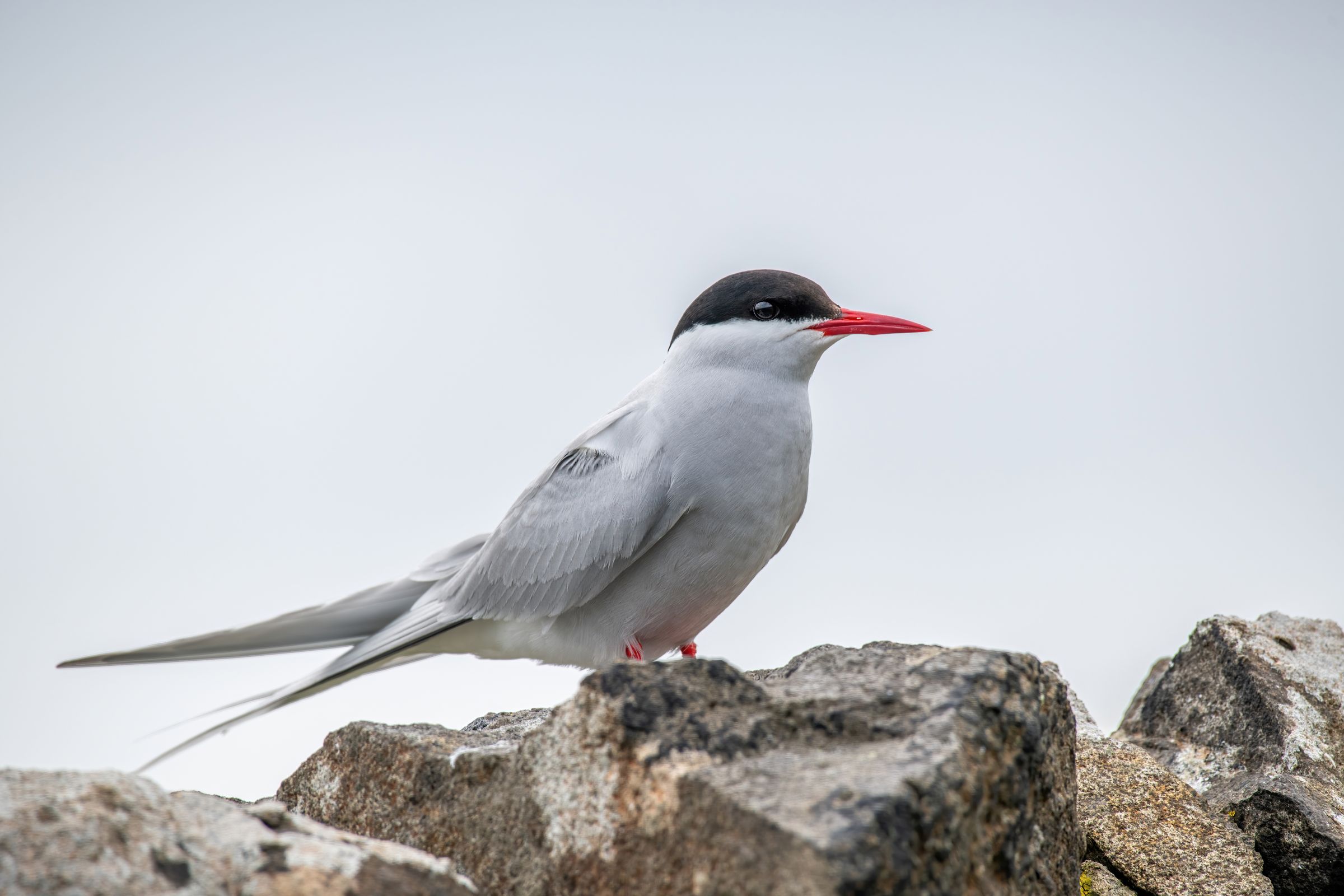
The cliffs at Voladalstorfa (the northern tip) and Hringsbjarg are two of the best spots in North Iceland to see puffins close up in summer. Black guillemots, fulmars, and Arctic terns are regular along the cliffs too. Rock ptarmigan are common all over the peninsula, with one of the highest population densities in Iceland. Bring binoculars and take your time.
For Skeifárfoss, evening light between 20:00 and 22:00 in summer is best. Hringsbjarg is good at sunrise. The area around the Mánárbakki campsite is known for North Atlantic sunset shots. No drones near bird colonies during breeding season.
Short Walks and Cliffside Stops
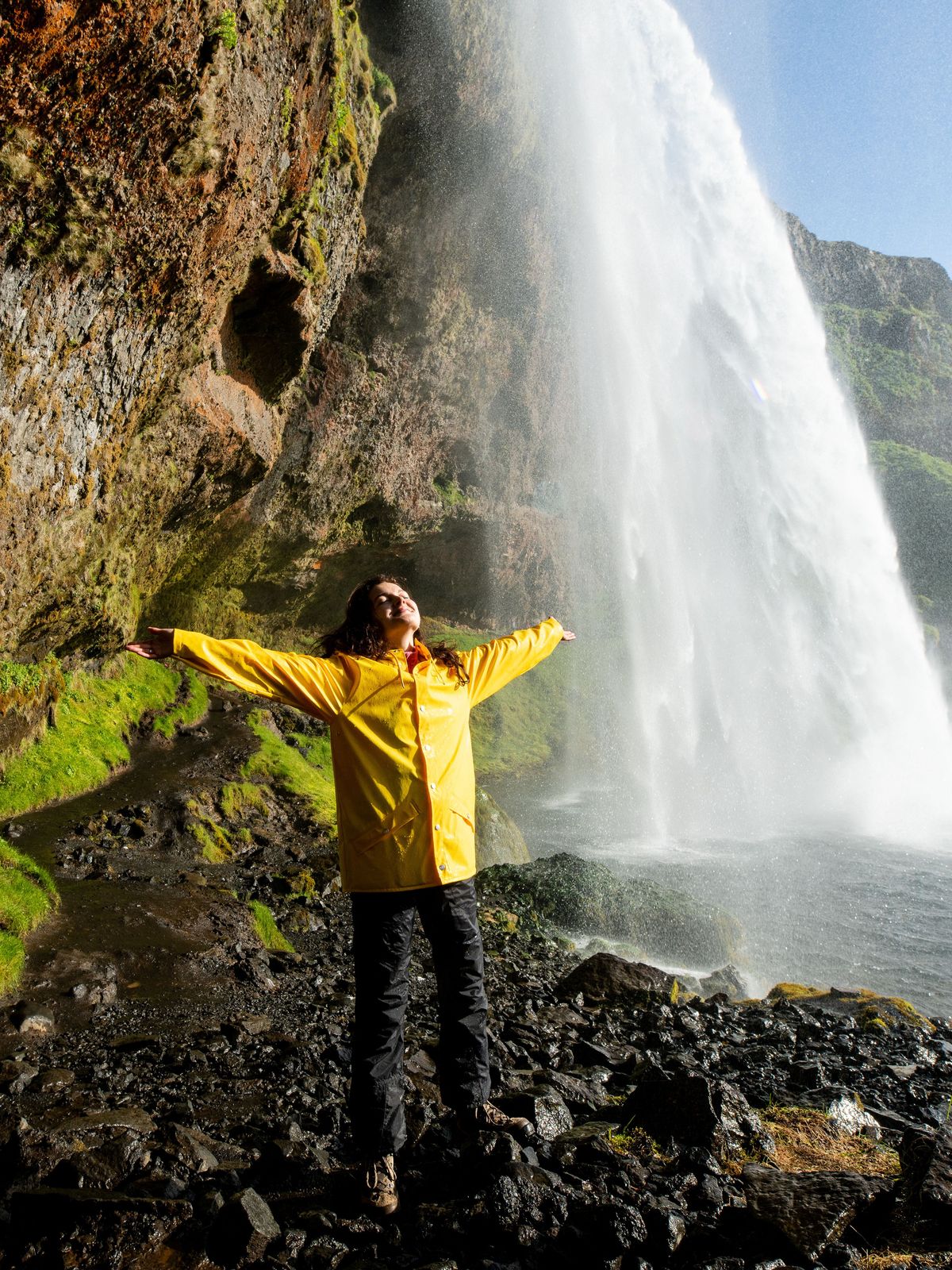
The walk to Skeifárfoss, a waterfall that drops over the sedimentary cliffs about 12 km (7.5 miles) north of Húsavík, takes around an hour round trip starting from the Tungulending Guesthouse. The path is rocky and not marked, but it follows the shoreline and isn't hard to follow. Evening sun regularly throws a rainbow over the spray and layered rock.
Geological Exploration
If you've read up a bit on the stratigraphy beforehand, the outcrops here are genuinely interesting. You can trace the sequence from the Kaldakvísl lavas at the base up through the Tjörnes Beds, then the Hóskuldsvík lavas, and the Quaternary Breiðavík Group at the top. It's one of the clearest geological cross-sections in Iceland. Look, don't take anything.
Hidden Gems on the Tjörnes Peninsula
These aren't hard to find. Most people just don't slow down enough.
Skeifárfoss Waterfall: A waterfall over sedimentary cliffs that most visitors miss because the access isn't well signed. Park at Tungulending and walk the shoreline.
Hallbjarnarstaðakambur fossil beach: The whole cliff face and foreshore are covered in 3-million-year-old shell layers. The access track is rough, so a lot of people skip it. Don't.
Mánárbakki antenna forest: A cluster of aurora research antennas near the campsite that looks genuinely odd at sunset.
Eastern viewpoints over Öxarfjörður: Fewer visitors than Hringsbjarg, and a completely different perspective on the peninsula.
Torfasteinn and the Tungulending shoreline: The boulder with the folklore is an easy, quiet stop that most people don't specifically seek out.
Nature and Wildlife
Tjörnes is a solid birdwatching spot, and the marine wildlife in the waters nearby is some of the best in the country.
Seabirds
Thousands of Atlantic Puffins nest on the cliffs at Voladalstorfa and Skeiðsöxl from May through mid-August. Black Guillemots, Fulmars, and Arctic Terns are common all along the coast. Rock Ptarmigan are everywhere on the peninsula and best spotted before mid-June. Eider Ducks nest along the Skeifárfoss beach trail, tucked into the vegetation well enough that you can almost walk past them.
Marine Wildlife
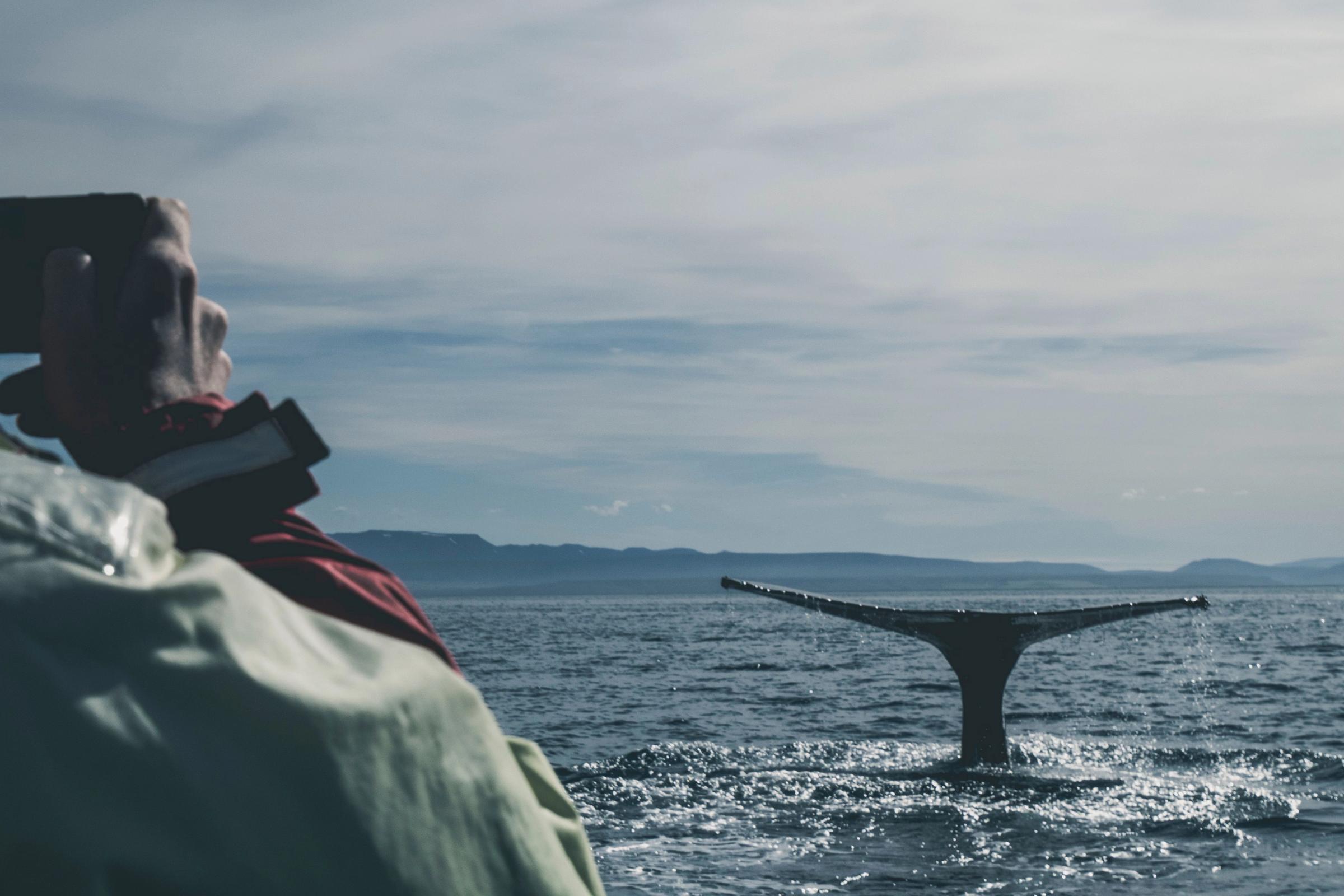
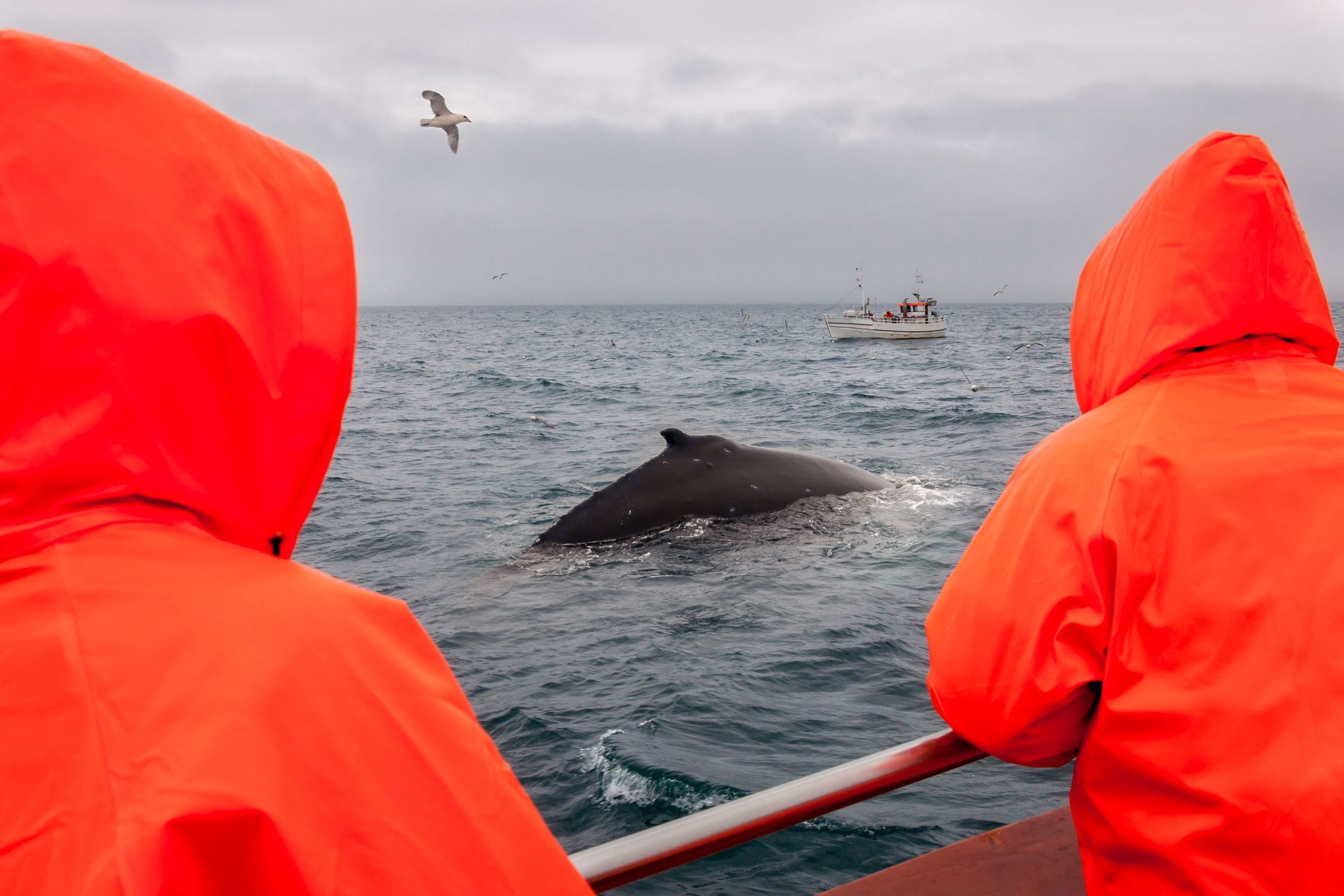
Humpback and minke whales are sometimes visible from the western cliffs looking over Skjálfandi Bay. Seals occasionally show up on the rocks along the shore. For actual whale watching, go to Húsavík: up to 23 whale species have been recorded in and around Skjálfandi Bay, and the tours from the harbor are among the best in Iceland.
Land Mammals
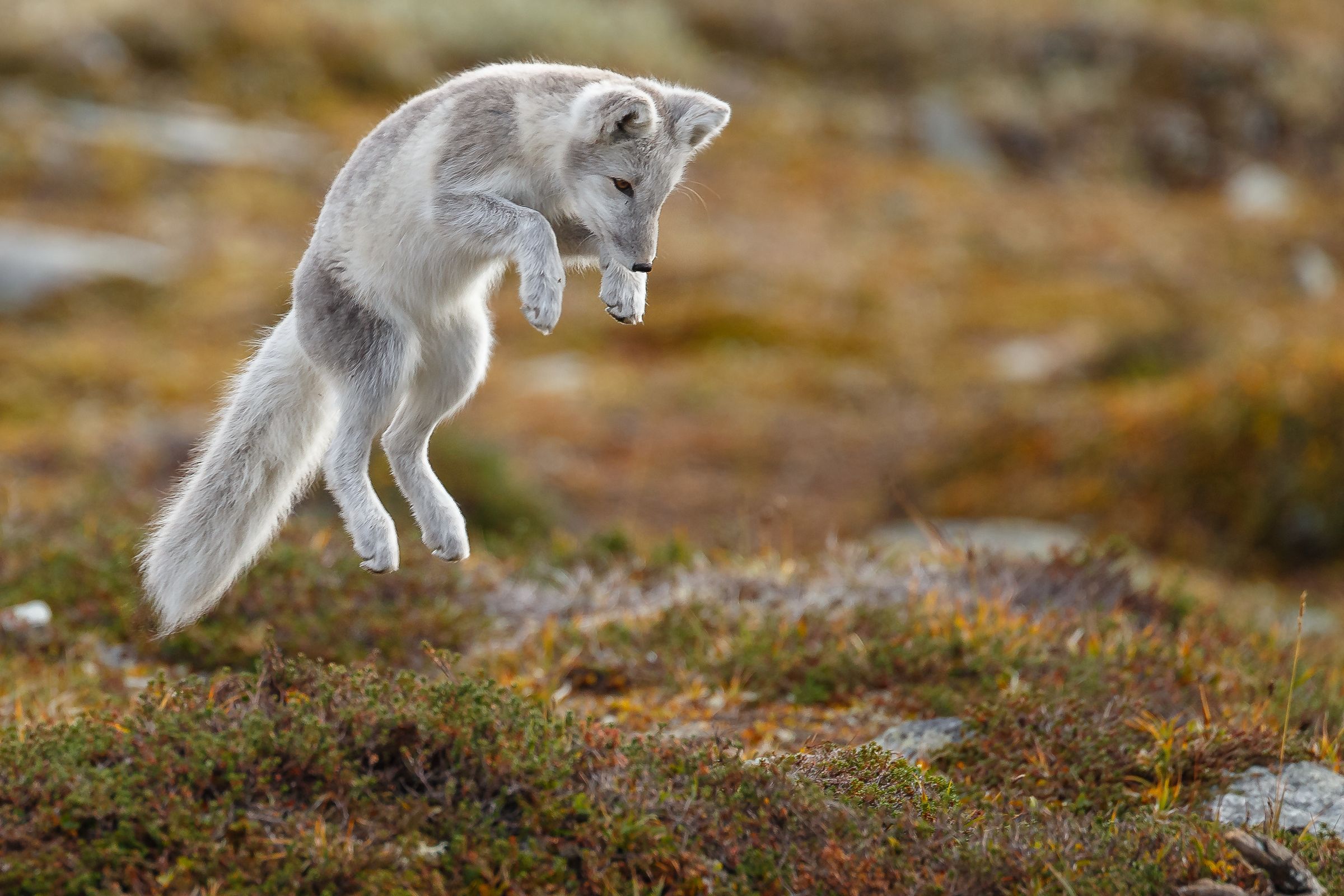
Arctic fox turn up occasionally on the open plains, though it's not a reliable sighting. Icelandic horses still work on several farms across the peninsula.
Geology of the Tjörnes Peninsula
This is what sets Tjörnes apart from almost everywhere else in Iceland.
The Tjörnes Beds (Barmur Group)
Almost all of Iceland is lava. Tjörnes is the exception. The cliffs expose around 500 m of sedimentary and fossil-bearing layers, with the full geological sequence going up to 1,200 m. The order runs: Kaldakvísl lavas at the base, then the Tjörnes Beds (more recently called the Barmur Group in scientific literature), then the Hóskuldsvík lavas, and the Quaternary Breiðavík Group on top.
The Tjörnes Beds date to the Miocene and Pliocene epochs, roughly 3 to 5 million years ago. They record warm interglacial seas, climate cooling, and at least 10 warm periods across the Ice Age cycles.
Fossil Significance
Most of the fossils here are marine molluscs and bivalves, split into three classic zones: the Tapes Zone, the Mactra Zone, and the Serripes Zone. These zones track how marine communities changed over time, including the arrival of North Pacific species in the North Atlantic after the Bering Strait opened. That's why Tjörnes comes up in global research on paleoclimatology and trans-Arctic faunal exchange.
There are also ostracod fossils here (tiny crustaceans useful for climate reconstruction) and some vertebrate remains. One of the most notable finds is a partial right whale skull, thought to be about 4.5 million years old and the oldest marine vertebrate fossil discovered in Iceland.
The Tjörnes Fracture Zone
Separate from the fossil story, the peninsula sits on the Tjörnes Fracture Zone, an active transform fault system connecting the offshore Kolbeinsey Ridge to Iceland's Northern Volcanic Zone. The main structure within it is the Húsavík–Flatey Fault, a right-lateral fault that's considered a real earthquake hazard for the Húsavík area. Small earthquakes are common; you can track activity on vedur.is. The fossils and the tectonics are two different stories, but both run through the same stretch of land.
Nearby Destinations to Combine With Tjörnes
Tjörnes fits best into a longer North Iceland trip rather than as a standalone day.
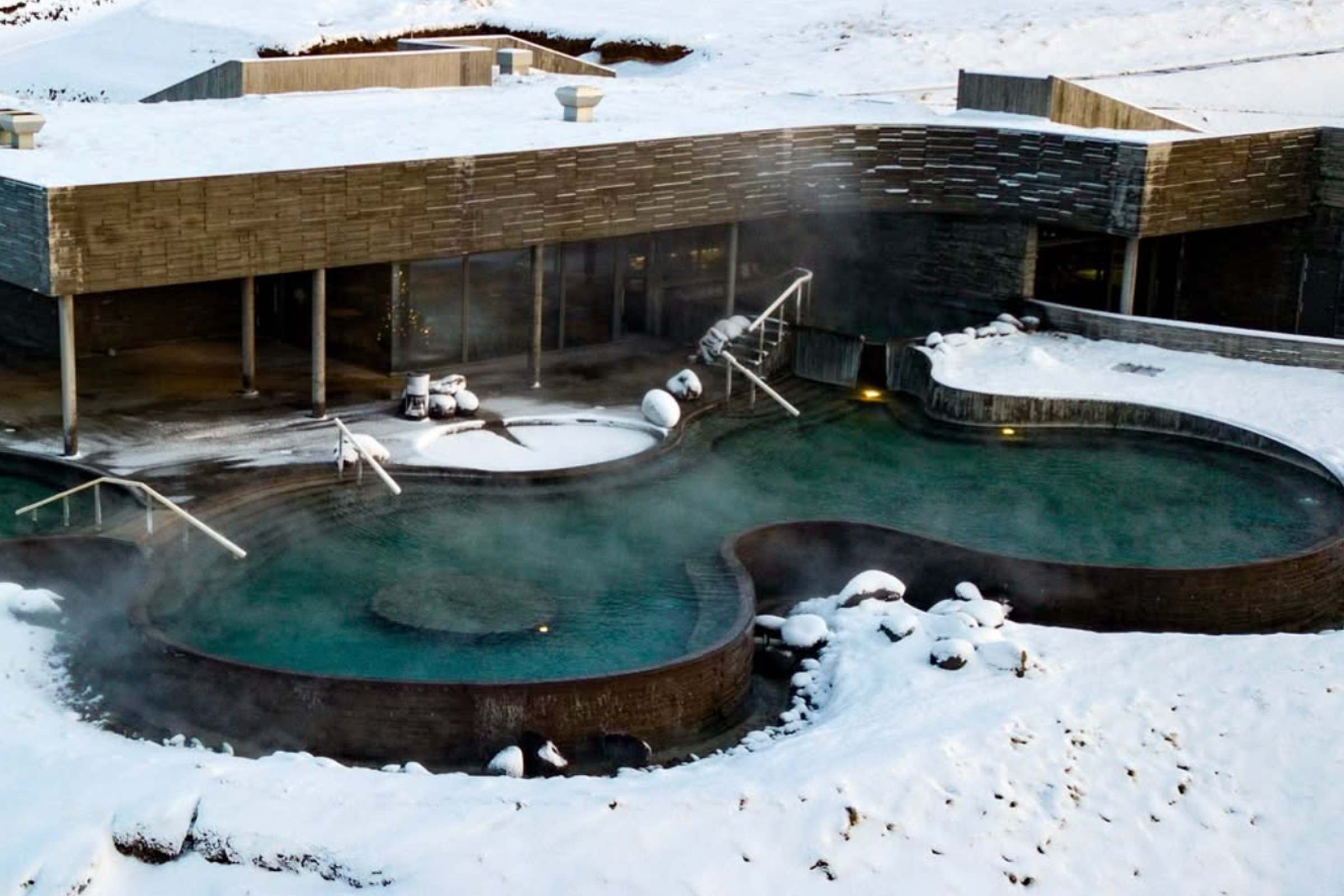
Húsavík: The main base and jumping-off point. Whale watching in Skjálfandi Bay, the GeoSea geothermal baths, and the Húsavík Whale Museum are all worth the time.
Ásbyrgi Canyon: A horseshoe-shaped canyon about 30 minutes from the northern tip of the peninsula. Good hiking, and the landscape is hard to find anywhere else.
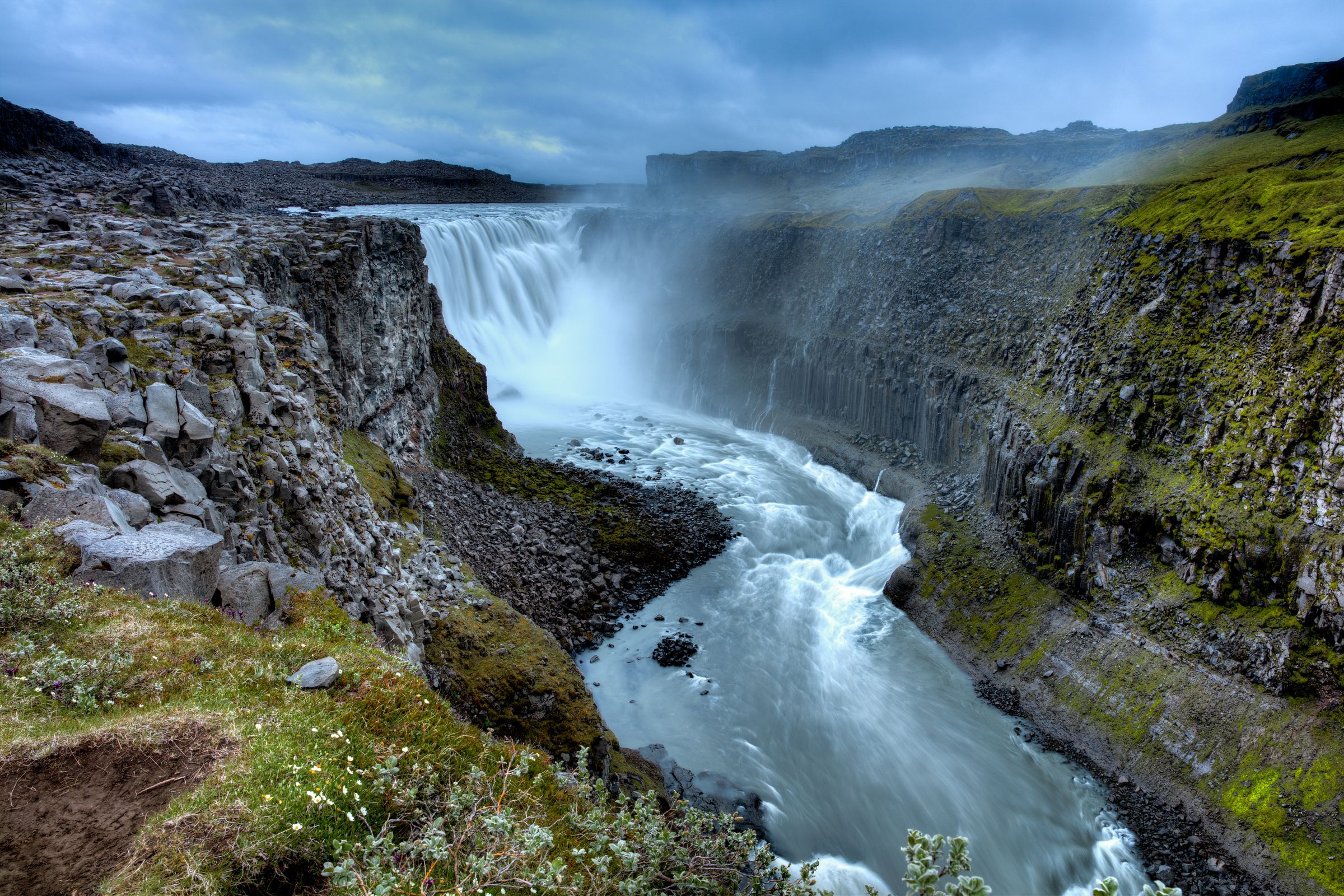
Dettifoss: About 30 km south of Ásbyrgi, it's the most voluminous waterfall in Europe. Pair it with Tjörnes in a full Diamond Circle day.
All four of these, plus Tjörnes, are part of the Diamond Circle, a 250 km self-drive loop through North Iceland.
Where to Stay Near the Tjörnes Peninsula
There aren't many options directly on the peninsula. Most people stay in Húsavík, 15 minutes away.
On the Peninsula
Tungulending Guesthouse: A farm stay right next to the fossil sites, with a kitchen and direct access to the Skeifárfoss hike. Best option if you want to really dig into the peninsula.
Camping 66.12 North at Mánárbakki: Oceanfront campsite with tent and RV spots. Basic facilities, so come prepared. Good sunset views over the North Atlantic.
In Húsavík
Fosshotel Húsavík is the main full-service hotel in town. There are also guesthouses and Airbnb options. Book early in July and August.
Camping Near the Diamond Circle
Ásbyrgi Campground, inside Vatnajökull National Park, is well-equipped and a good base if you're adding the canyon and Dettifoss to your plan. Book ahead during peak season.
Where to Eat
No restaurants on the peninsula. Pack food or use the kitchen at your guesthouse. Húsavík has solid options.
Gamli Baukur: On the harbor, fresh local fish, good fish soup, harbor views.
Salka Restaurant: One of the oldest buildings in town, open year-round, serving seafood, pizza, and steaks.
Rub 23: Known for Icelandic fish, sushi, and steaks.
Naustið: Family-run place with fresh seafood and good fish soup.
Hérna Café: Coffee and light bites, good for before you head out.
There's a supermarket and bakery in Húsavík too. If you're staying on the peninsula, you'll probably use them at least once.
Best Time to Visit the Tjörnes Peninsula
Summer is the obvious answer for most people, but the peninsula has something going for it in every season. Here's what to expect depending on when you go.
Summer (May to September)
Best time overall. Puffins nest from May through mid-August, roads are clear, and in June and July, you've got light for basically 24 hours. Temperatures range from 8 to 15°C, but coastal winds can make it feel colder. The peninsula is at its busiest, but it's still not very busy.
Spring and Autumn
Good for photography and avoiding what little traffic there is. Birdlife is active in April and again in September. Some Húsavík services may have shorter hours. Worth it if you're okay with more variable weather.
Winter
Northern lights are a real possibility, and the snow over the rock layers looks good. But roads can close, it gets down to -10°C and below, daylight is limited, and most services are reduced. Only a sensible option if you're used to Icelandic winter driving and check road.is before going out.
Travel Tips for Visiting Tjörnes
A few practical things to know before you go.
Road Conditions and Weather
Check road.is and vedur.is before you leave Húsavík. The weather on this coast can flip fast. The gravel sections on Route 85 get slippery in wet conditions, and the wind on the clifftop viewpoints is often stronger than it looks. Slow down, especially on the steep descent roads to coastal areas.
Fuel and Supplies
No fuel, no shops, no ATMs on the peninsula. Sort everything out in Húsavík beforehand. Cell service cuts out in parts of the peninsula, so have offline maps downloaded before you go.
Wind and Cliff Safety
A lot of the cliffs here aren't fenced. Keep kids close, watch your step, and back away from edges when the wind gets up. Off-road driving is illegal and causes long-term damage to the land.
Photography Tips
Evening light between 20:00 and 22:00 in summer is best for Skeifárfoss. Hringsbjarg is good at sunrise. No drones near bird colonies in breeding season.
Birdwatching Etiquette
Stay at least 200 m from puffin nesting sites from May to August. They'll tolerate you fairly close, but too close disrupts nesting.
Fossil Viewing
Look at the fossils, don't take them. This is a protected natural monument under Icelandic law 60/2013. There are fines for removing material.
Suggested Itineraries Including Tjörnes
Tjörnes works as a half-day add-on or as a full stop in a longer North Iceland loop. How much time you give it depends on how deep you want to go.
Half-Day Trip From Húsavík
Head north on Route 85, stop at viewpoints on the way, see Torfasteinn, spend some time at Hringsbjarg, visit the Mánárbakki Museum, and head back to Húsavík for dinner and a soak at GeoSea. Works well as an afternoon and evening in summer.
Full-Day Diamond Circle Itinerary
Húsavík → Tjörnes viewpoints and fossil beach → Hringsbjarg → Ásbyrgi Canyon → back to Húsavík. A full day that covers both the peninsula and the canyon without having to rush.
Multi-Day North Iceland Route
Day 1: Arrive in Húsavík, whale watching, and explore the town. Day 2: Tjörnes in full (fossils, Skeifárfoss hike, Mánárbakki at sunset). Day 3: Ásbyrgi and Dettifoss. Day 4: Lake Mývatn. This is the version that gives Tjörnes proper time and works naturally into a full Diamond Circle loop.
Practical Information
No surprises here, just the basics you'll want before you head out. Cell service is patchy, services on the peninsula are basically nonexistent, and conditions can change fast, so a bit of prep goes a long way.
Nearest full services: Húsavík (accommodation, restaurants, pharmacy, supermarket, tours, swimming pool, GeoSea)
Camping: Book Ásbyrgi Campground ahead in summer; Mánárbakki campsite is the quieter on-peninsula option
Costs: Most sites are free. Camping is roughly 1,800–2,800 ISK per night. Guesthouses start around 18,000–25,000 ISK.
Public transport to Húsavík: Strætó regional buses from Akureyri; check straeto.is for current schedules
Conclusion
Tjörnes is a quiet stretch of the North Iceland coast with good cliffs, thousands of puffins, fossil layers going back 5 million years, and almost no other tourists. The geology is genuinely world-class, and the Tjörnes Fracture Zone beneath it is still active. Combine it with Húsavík, Ásbyrgi, and Dettifoss, and don't just drive through. It's one of those places that's better the more time you give it.
Frequently Asked Questions About Iceland's Tjörnes Peninsula
A half day is enough for key stops, but a full day allows time for fossil sites, short hikes like Skeifárfoss, and multiple viewpoints without rushing.
Yes, but it’s more challenging. Roads may be icy or closed, daylight is limited, and conditions change quickly, so it’s best suited for 4x4 cars.
Yes. Puffins nest on cliffs like Hringsbjarg and Voladalstorfa from May to mid-August, and you can view them from land without needing a guided tour.
No. All main viewpoints and natural sites are free to access, though camping and accommodation have standard fees.
About the author
Aron Freyr
Local expert
Born and raised in Iceland, Aron Freyr has spent all 28 years of his life exploring the country and getting to know its landscapes, regions, and ever changing conditions.