
Tolls in Iceland (2026 Guide): Toll Roads, Tunnel Fees, Payments & Driving Costs
Iceland isn't cheap. But its roads? Almost entirely free. There's really just one toll you need to know about, and once you do, it's not a big deal at all.
Key takeaways
- Iceland is almost entirely toll-free (one of the least-tolled road networks in any developed country)
- Vaðlaheiðargöng is the only toll you need to know about as a tourist driving in Iceland
- Payment is electronic (cameras read your plate, you pay online at veggjald.is within 24 hours before or after driving through)
- There are no toll booths (driving through without stopping does not mean it's free)
- Pay promptly in a rental (miss the window and the rental company charges you the toll plus their own fee)
- The Hvalfjörður Tunnel is free (anything you've read saying otherwise is outdated)
- The tunnel is usually the better call, but the free Víkurskarð pass works fine in summer with good conditions
Are There Toll Roads in Iceland?
Most people drive hundreds of kilometers in Iceland, including big chunks of the Ring Road, without paying a single toll. The road network is almost entirely free. But there's one exception you should know about before heading north.
The Short Answer
Yes, technically, but barely. There's one active toll you'll actually need to pay: the Vaðlaheiðargöng Tunnel in North Iceland, near Akureyri. That's it. Everything else is free.
Compare that to mainland Europe, where paying tolls on motorways is basically the norm. Iceland is nothing like that.
Why Most Icelandic Roads Are Free
Iceland's roads are publicly funded and managed by Vegagerðin, the Icelandic Road and Coastal Administration. The Ring Road, regional roads, most of the tunnels: all of it is paid for through government funding and vehicle taxes, not per-use fees.
So no vignette, no transponder, no cash required. You just get in the car and go.
Current Toll Roads and Tunnels in Iceland
Knowing which roads cost money, and why, saves you from a surprise charge on your credit card long after you've flown home.
Vaðlaheiðargöng Tunnel (The Only Major Toll in Iceland)
The Vaðlaheiðargöng Tunnel, also called the Vaðlaheiði Tunnel, is the only toll most visitors to Iceland ever deal with. It's a 7.5-kilometer tunnel in North Iceland that opened in December 2018.
Before it existed, you had to drive over the Víkurskarð mountain pass to get through this stretch of the Ring Road near Akureyri. The tunnel shortens the route by about 16 kilometers and avoids a mountain road that can be genuinely dangerous in winter.
It connects the Eyjafjörður side near Akureyri with the Fnjóskadalur side to the northeast. It was built with toll financing rather than public money, which is why it costs something when the rest of Iceland's roads don't.
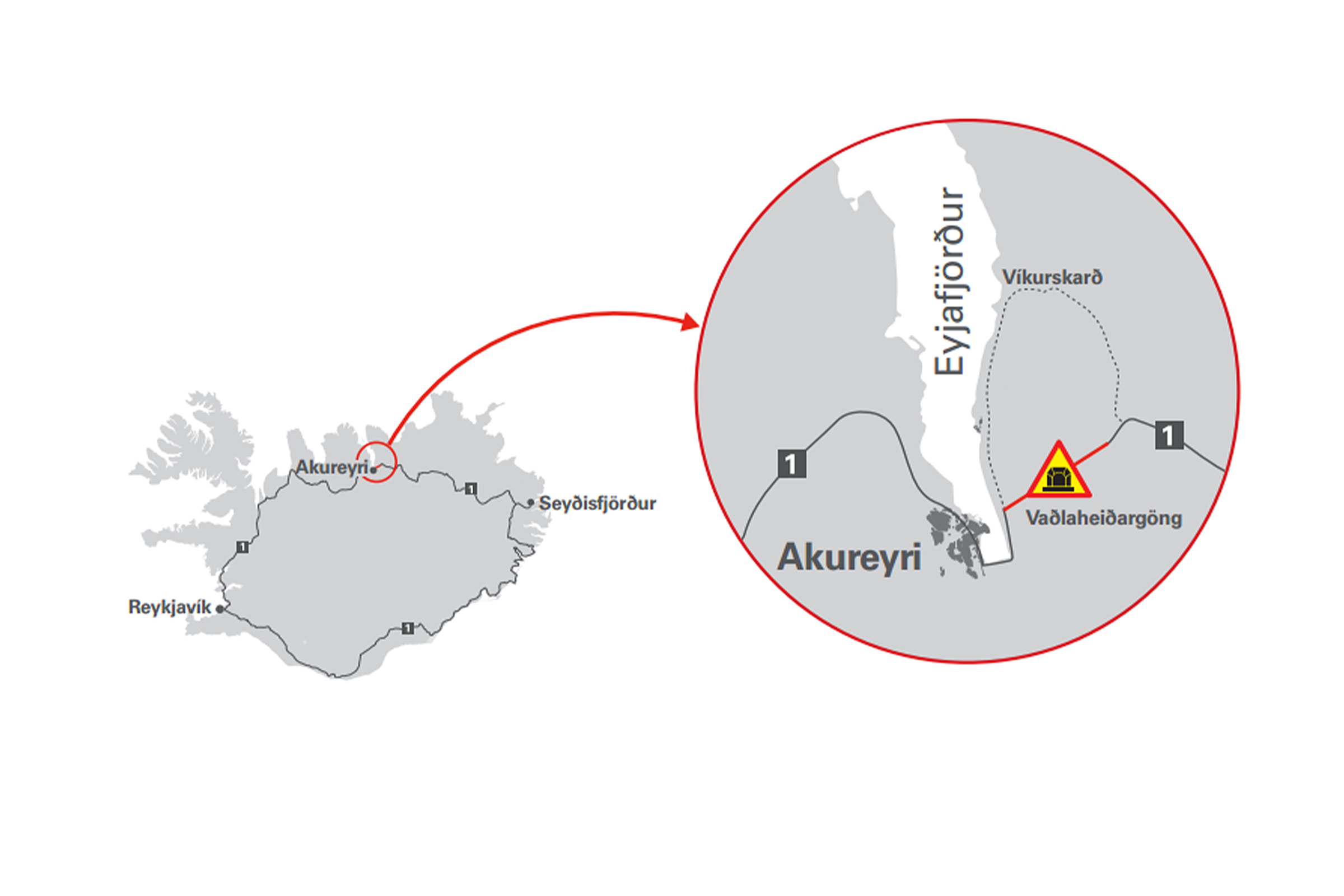
Where the Tunnel Is Located
The tunnel sits on Route 1, the Ring Road, east of Akureyri. Akureyri is Iceland's biggest city outside Reykjavík and the main hub for the northern Ring Road.
If your trip includes any of these places, you'll probably pass through or close to the tunnel:
- Goðafoss (about 50 km east of Akureyri)
- Lake Mývatn (about 100 km east)
- Húsavík (about 90 km northeast via Route 85)
- Egilsstaðir and East Iceland (continuing on Route 1)
If you're doing a full Ring Road loop from Reykjavík, the Vaðlaheiðargöng is right on your route.
How the Vaðlaheiðargöng Toll Works
This is where a lot of people get caught off guard. Not because it's hard to understand, but because the toll is completely invisible when you drive through. No barrier, no booth, nothing stops you. It's easy to think you just drove through for free.
You didn't.
No Toll Booths
There are no toll booths, barriers, gates, or staff at Vaðlaheiðargöng. The system uses cameras and Automatic Number Plate Recognition (ANPR). Your license plate gets read as you pass through, and Electronic Toll Collection handles the rest.
There are signs before the tunnel entrances telling you it's a toll zone and where to pay. Don't drive past them without reading.

Step-by-Step Payment Process
Paying takes about three minutes. Here's how it works:
- Drive through the tunnel (cameras capture your vehicle registration automatically)
- Go to veggjald.is (or tunnel.is, which redirects there) on your phone or computer
- Enter your license plate number and pick the right country of registration
- Select your trip (choose the date and direction)
- Pay by card (any international credit or debit card works; no Icelandic account needed)
- Save the confirmation (screenshot it or keep the email, especially if you're in a rental)
If you already know you'll be using the tunnel, I'd pay before you go in. The system lets you pay up to 24 hours in advance, which means no chance of forgetting afterward.
Payment Deadline
You have a 24-hour window, either before or after driving through, to pay online.
If that window closes without payment, the charge goes to whoever the car is registered to. For a rental, that's the rental company. They won't cover it. They'll charge your card and add an admin fee on top.
A few specific situations worth knowing:
- If you go both directions (through and back), that's two separate trips. You need to pay twice.
- If you pay but don't end up using the tunnel, payments generally aren't refundable, so don't pay speculatively.
- If you enter the wrong plate, contact the tunnel's customer service at veggjald.is right away, before the window closes.
Vaðlaheiðargöng Toll Prices (2026)
These prices came into effect on March 2, 2026, and already include VAT. It's worth checking veggjald.is before your trip to make sure nothing has changed.
Current Vehicle Categories
| Vehicle Type | Toll per one-way trip |
| Motorcycle | Free |
| Passenger vehicle under 3.5 tonnes | 2,216 ISK |
| Vehicle 3.5–7.5 tonnes | 3,087 ISK |
| Vehicle over 7.5 tonnes | 6,505 ISK |
Going through and coming back in a standard car costs 4,432 ISK ($35) total. The portal also has multi-trip bundles. A 10-trip pass works out to about 1,599 ISK per trip, but honestly, those are really only worth it for locals or people staying in the area for a while.
How Pricing Is Determined
The toll is based on your vehicle's weight, not its type. Under 3.5 tonnes pays the standard rate. Above that, you move into a higher bracket.
If you're in a commercial vehicle or a heavier motorhome, check your vehicle documents to see which weight class applies. It can change what you pay by quite a bit.
Rental Cars and Tourist Considerations
This is where most visitors run into trouble. Not because the system is unfair, but because rental company policies vary and most people don't think to ask before heading north.
Do Rental Cars Automatically Pay Tolls?
It depends on the company. Some handle the toll for you and charge it to your card. Others expect you to go online yourself within the 24-hour window.
If I were you, I'd ask at the rental desk when picking up the car: "Do I pay the Vaðlaheiðargöng toll myself, or does your company handle it?" That one question can save you from paying an unnecessary processing fee.
What Happens if You Forget?
If you don't pay within 24 hours, here's what usually happens:
- The bill goes to the rental company (they're the registered owner)
- They charge your card for the toll
- They add their own admin or handling fee on top, and that fee can easily exceed the toll itself
- If it stays unpaid, it can move to a collections process (Inkasso) with even more fees added
Once more than 24 hours have passed on a rental, you generally can't pay the single-trip rate yourself anymore. The billing has already shifted to the registered owner. That window is gone.
Best Practices for Tourists
Before you drive north, I'd run through this list:
- Take a photo of your license plate (you'll need the exact number and country code to pay online)
- Ask your rental company how they handle Vaðlaheiðargöng specifically
- Save veggjald.is on your phone before you leave
- Pay the same day you drive through (don't leave it until the night before you fly home)
- Keep your confirmation until your rental deposit or card hold is fully cleared
- Don't pay twice if your rental company has already told you they handle it automatically
Foreign plates work fine on veggjald.is. When the form asks for a country, use the vehicle's registration country, not your own nationality. Those are two different things if you're a tourist driving an Icelandic rental car.
Campervans, Motorhomes and RV Tolls
Campervan travel is big in Iceland, so it's worth knowing how the toll applies before you roll up to the tunnel in a larger vehicle.
Are Campervans Charged Differently?
Not because they're campervans. The toll is based purely on weight. Most smaller campervans that tourists rent in Iceland come in under 3.5 tonnes, so they pay the standard 2,216 ISK rate.
The typical tourist campervan in Iceland sits well under that threshold. But if you're not sure about yours, check the rental paperwork before you drive through.
Toll Costs for Larger RVs
Bigger motorhomes, especially full-size ones, can push past 3.5 tonnes and land in the 3,087 ISK bracket. Go over 7.5 tonnes and you're looking at 6,505 ISK per trip.
If you brought your own vehicle by ferry or you're in a particularly large motorhome, I'd recommend checking the listed weight in your vehicle documents before getting to the tunnel. The weight class determines your toll, not the vehicle type itself.
Free Alternative Route to Vaðlaheiðargöng
There's a toll-free way through this section, and some people prefer it. Others find it stressful. It really depends on when you're traveling.
Víkurskarð Mountain Pass
The free option is the older road over Víkurskarð, the mountain pass that the tunnel was built to replace. It adds about 16 kilometers and anywhere from 12 to 20 minutes of driving, depending on conditions.
Pros and Cons
Reasons to take the free pass:
- No toll (saves 2,216 ISK per car, per direction)
- Good views toward the fjord
- A decent drive if you have time and the road is clear in summer
Reasons to use the tunnel:
- Faster and more reliable
- Not affected by weather
- The mountain road can close completely when there's snow or ice
- Makes sense if you're tired, behind schedule, or conditions aren't great
Which Route Should You Choose?
Here's how I'd think about it:
- Summer travelers: The pass is a real option. Check conditions at road.is or through Vegagerðin's traffic line (1777) first. If it's open and dry, it's a fine drive.
- Winter travelers: Take the tunnel. The Víkurskarð pass can be dangerous or fully closed from autumn through spring. Saving 2,216 ISK isn't worth the risk.
- Families and campervans: The tunnel is the more reliable choice whatever time of year.
- Motorcycles: You go through for free anyway, so there's no reason to take the pass instead.
If you've set your GPS to avoid tolls in winter, double-check that the alternative road is actually open before you follow it. Don't trust the navigation app blindly when there's snow around.
Historical Toll Roads in Iceland
Iceland's toll history is pretty short. There was one other toll road that mattered, and it's been free for years.
Hvalfjörður Tunnel
The Hvalfjörður Tunnel runs under Hvalfjörður fjord, north of Reykjavík. Anyone driving from the capital toward North Iceland passes through or near it. For a long time, it was a toll tunnel. The fees covered the cost of building it.
Before the tunnel existed, drivers had to go all the way around the fjord, which added a lot of time to any trip heading north.
When the Toll Was Removed
The Hvalfjörður Tunnel became free in September 2018, when it was handed over to Vegagerðin and brought into the publicly funded road network. That's basically what happens with toll-financed tunnels in Iceland once construction costs are paid off.
What Travelers Need to Know Today
Nothing, honestly. The tunnel is completely free. You drive through, no payment needed, no website to visit. If you've read something on an old forum or blog mentioning a Hvalfjörður toll, that information is just outdated.
Future Toll Roads in Iceland
Iceland keeps building new roads, and it's worth knowing whether more tolls could show up, especially if you're planning a longer trip.
Could Iceland Introduce More Tolls?
It's possible. How to fund new infrastructure is a regular topic in Iceland's transport policy conversations. The toll-financing model used for Vaðlaheiðargöng works by recovering construction costs through usage fees, then eventually moving the road to public management. That's exactly what happened with Hvalfjörður.
That said, Iceland doesn't have much of a tradition of widespread road tolling, and most people there prefer keeping the roads free.
Planned Road Projects
Several tunnel and road improvement projects are being discussed as part of Iceland's longer-term infrastructure plans. If any of them get built with toll financing, the list of tolled routes could get longer.
One more thing to be aware of for 2026 specifically: Iceland launched a new nationwide kilometer-based road tax called kílómetragjald on January 1, 2026. This is not a road toll. It's a usage-based road maintenance fee that replaced part of the old fuel tax system. Rental companies typically collect it as a flat daily fee or calculate it from the odometer when you return the car. It applies to all vehicles, including electric ones. It has nothing to do with the Vaðlaheiðargöng tunnel toll. They're completely separate.
Final Verdict
Iceland's toll situation is about as simple as it gets. One tunnel. One payment portal. One 24-hour window.
If you're driving through North Iceland, save veggjald.is on your phone before you leave. Three minutes, one payment, and you're done.
Last updated: June 2026. Toll prices and payment rules can change, so always check veggjald.is before your trip.
Frequently Asked Questions About Tolls in Iceland