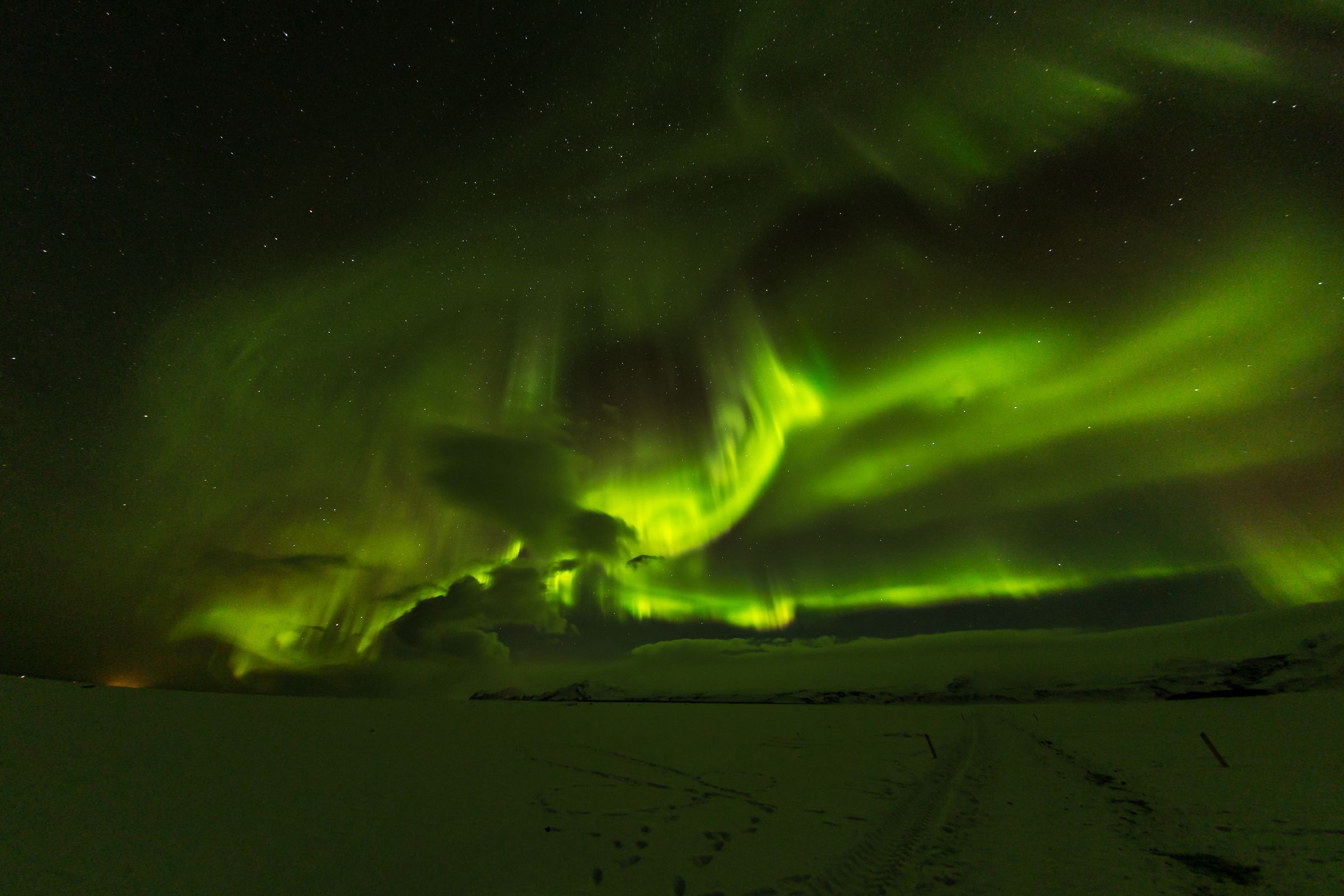
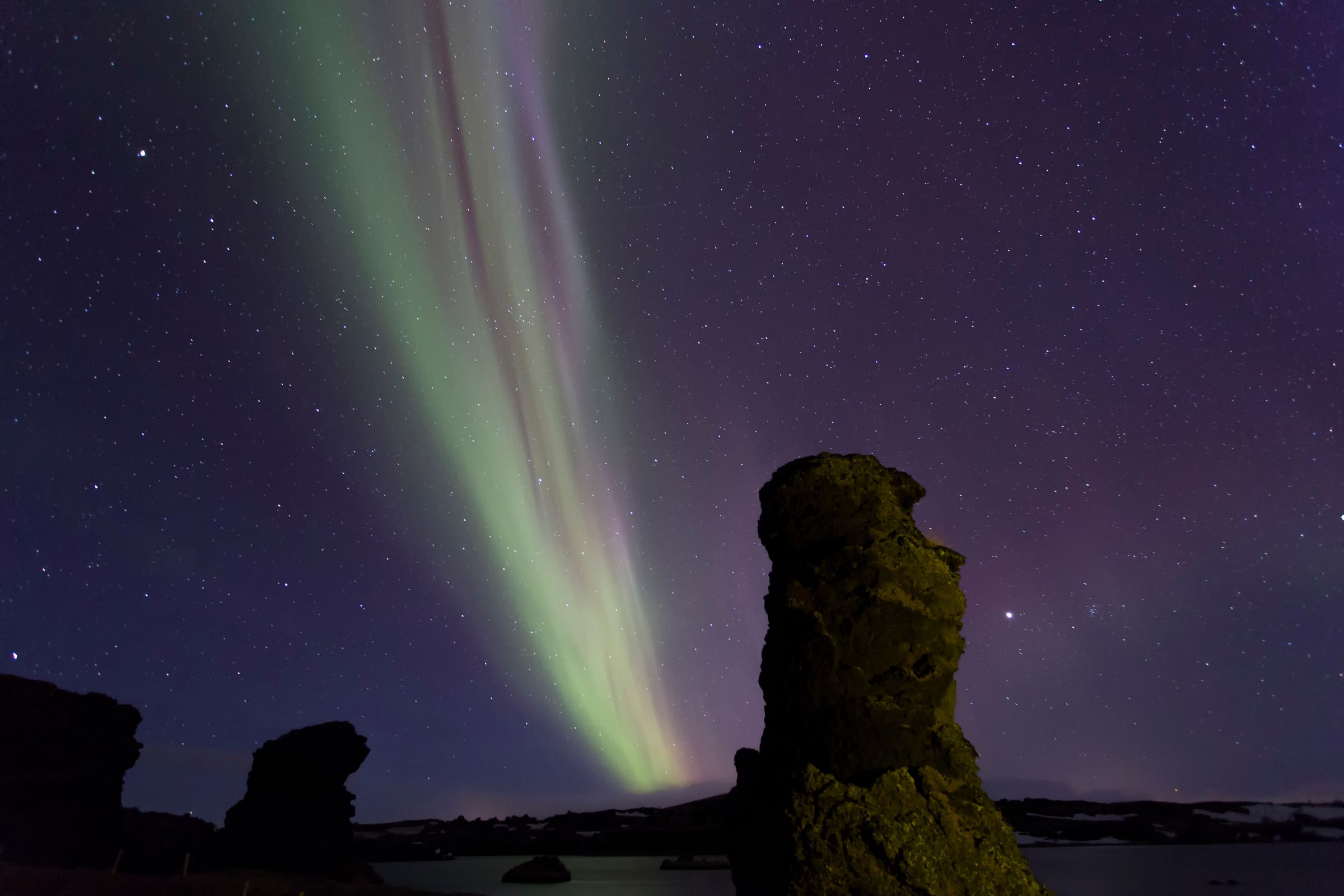
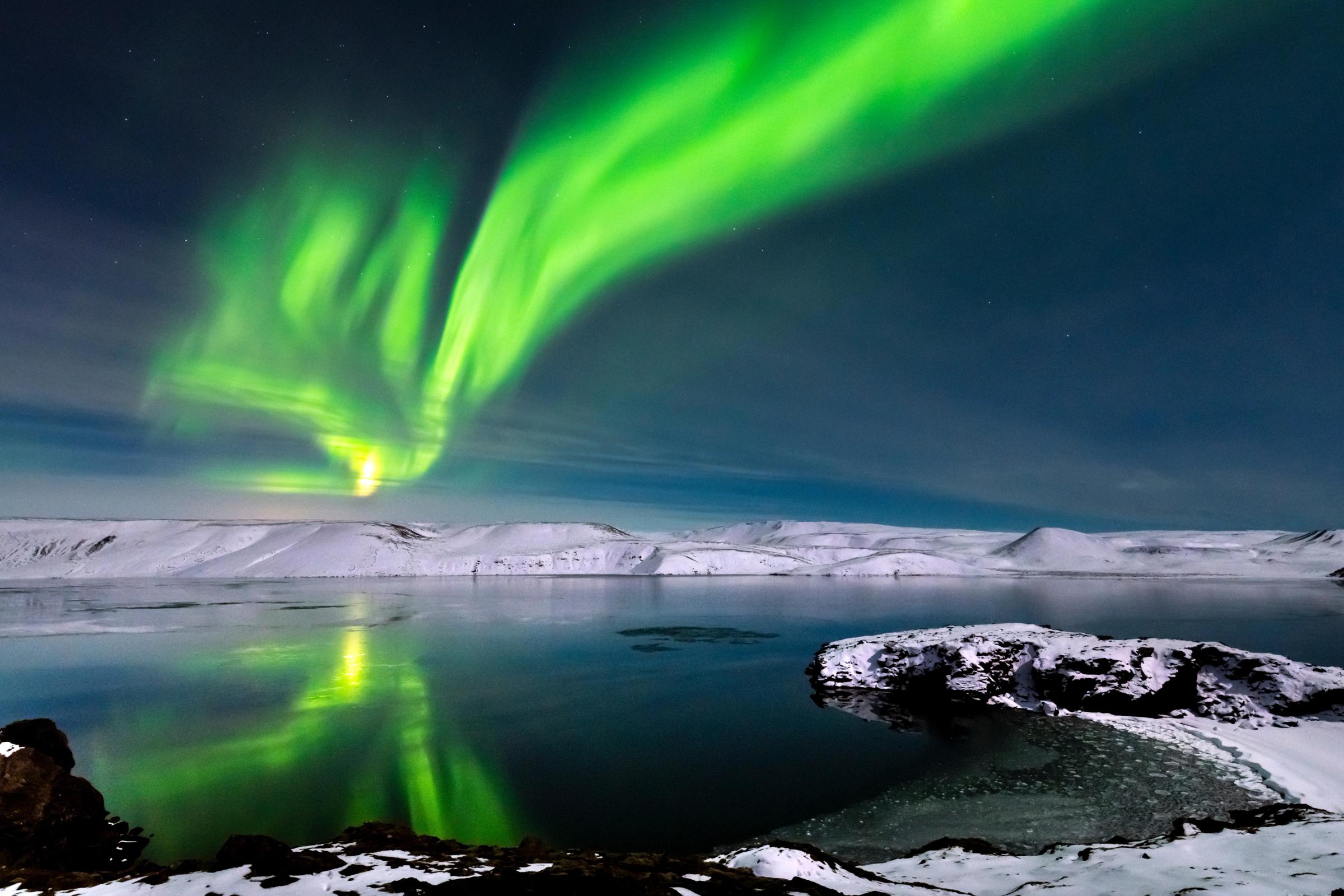
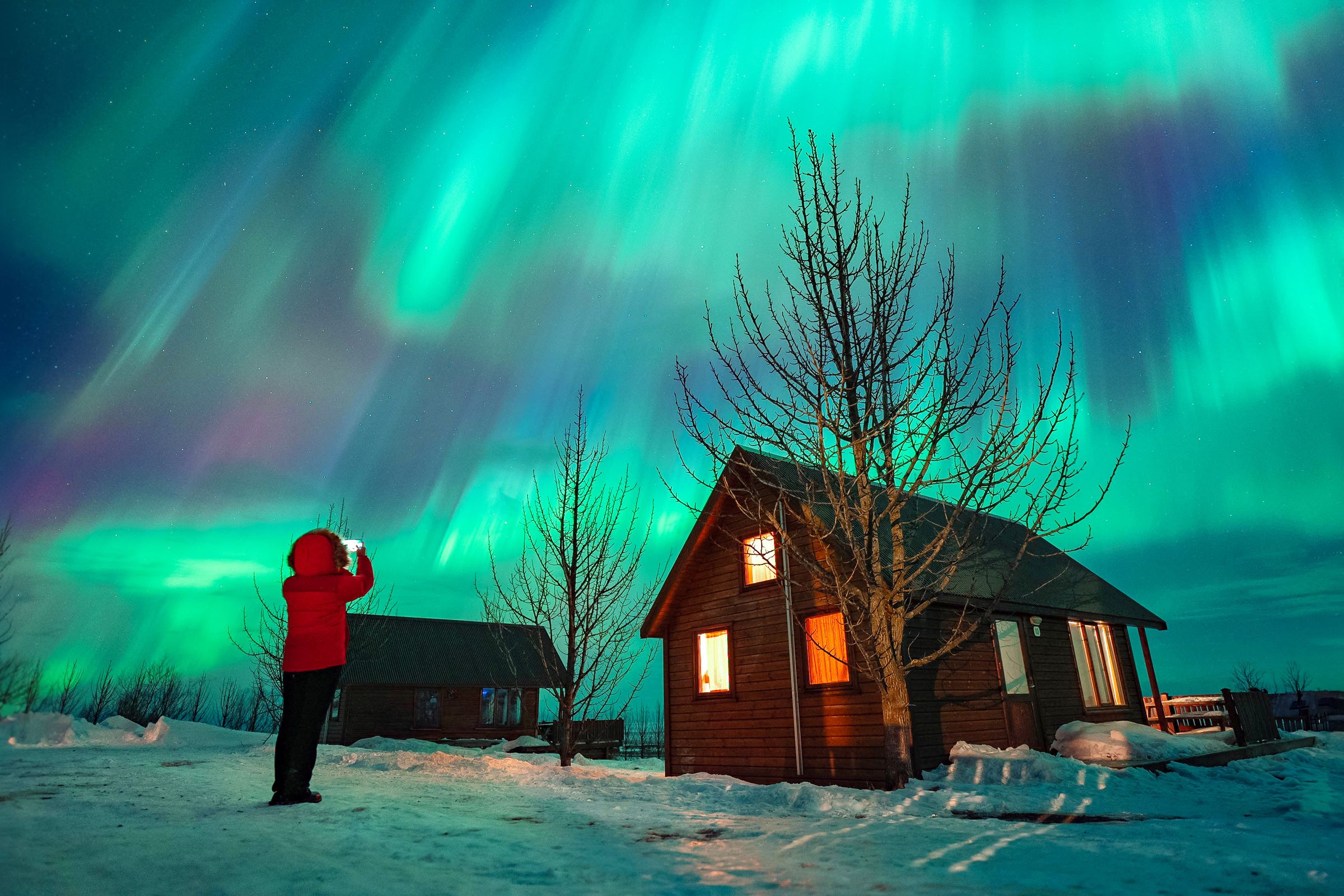
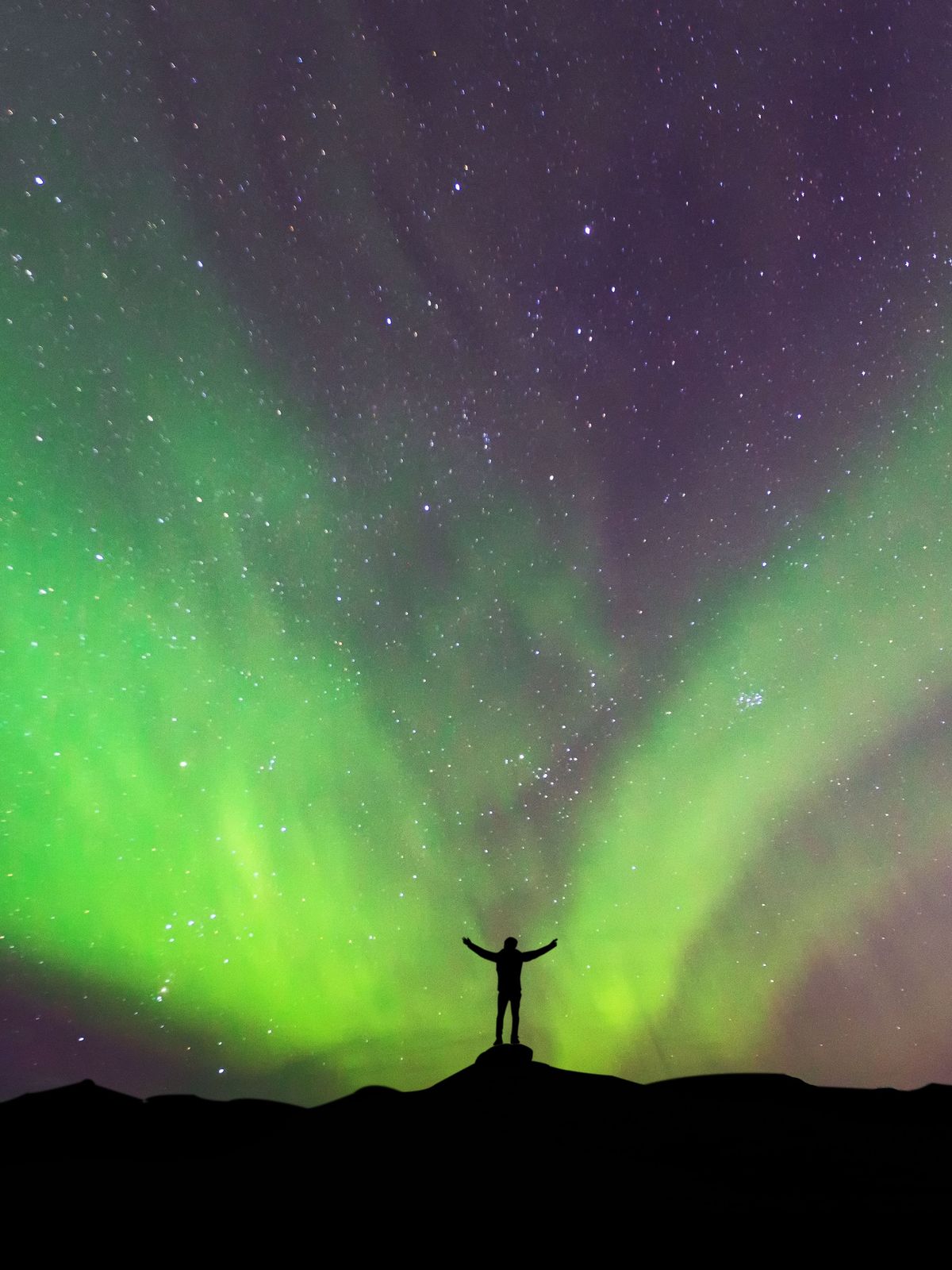
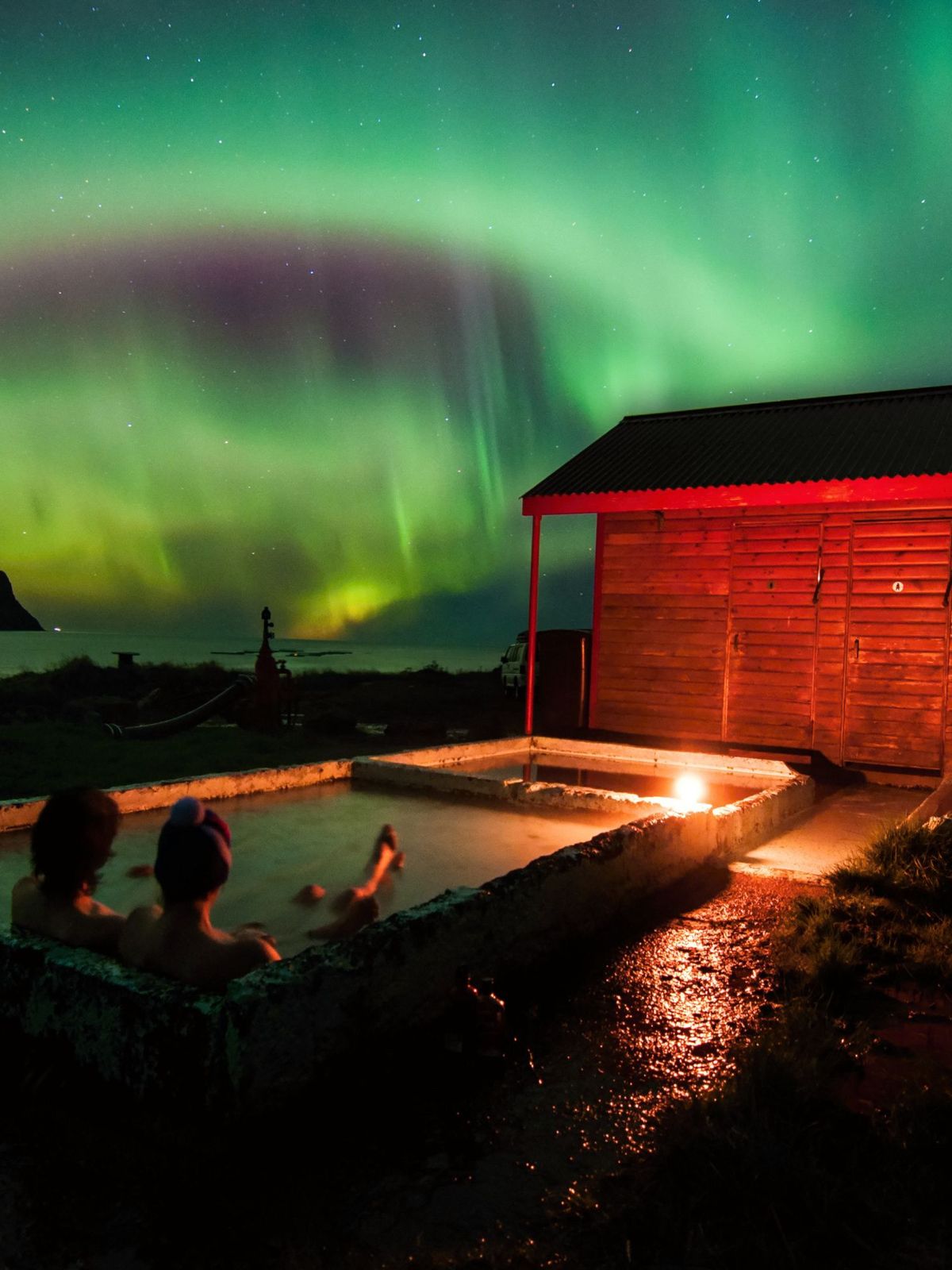
Iceland is one of the best places in the world to see the aurora because it’s far north, has a small population, and a lot of open, dark land. Fewer city lights and big skies make a huge difference.
This guide covers 15 of the best places to see the Northern Lights in Iceland. Some are famous spots that work well again and again, and others are quieter places most people don’t think about. Along the way, you’ll see how things like light pollution, latitude, weather, and how easy a place is to reach all affect your chances. Mixing popular locations with more remote ones gives you the best shot overall.
Key Takeaways
Iceland is a great place to see the Northern Lights because it’s far north, dark, and has lots of open space away from city lights.
Easy spots like Jökulsárlón, Kirkjufell, and Þingvellir give you good chances without needing much planning or long drives.
More remote areas like the Westfjords or East Iceland are darker and quieter, but take more effort to get to.
Clear skies matter more than how strong the aurora is, so always check cloud cover first.
Stay flexible and be ready to move if needed, late evening to early morning is usually your best window.
How to Choose the Best Aurora Location
Not every spot works the same, even on good aurora nights. Picking the right place can make a big difference, and it also helps you stay safe.
Light Pollution Avoidance
Artificial light makes faint auroras disappear fast. You don’t need to go high up, but you do need to get away from towns. Even small villages can wash out the sky more than you expect.
Horizon Visibility
Open views help a lot, especially if you can see north. A wide horizon lets you catch auroras earlier and follow them longer as they move across the sky.
Weather and Cloud Cover
Clouds change a lot from region to region in Iceland. It’s common for the south coast to be cloudy while the north or west is clear. Being flexible and willing to change plans can save an entire night.
Accessibility vs Remoteness
Remote places usually mean darker skies, but they also mean harder driving and more planning, especially in winter. Popular spots are easier and safer for most people, but you’ll likely share them with others.
8 Popular and Reliable Aurora Viewing Locations
These places are popular because they work. They’re easy to get to, usually dark enough, and they’ve got scenery that makes the lights feel more real when they show up. If you don’t want to overthink things or deal with rough driving, these spots give you solid odds without much stress.
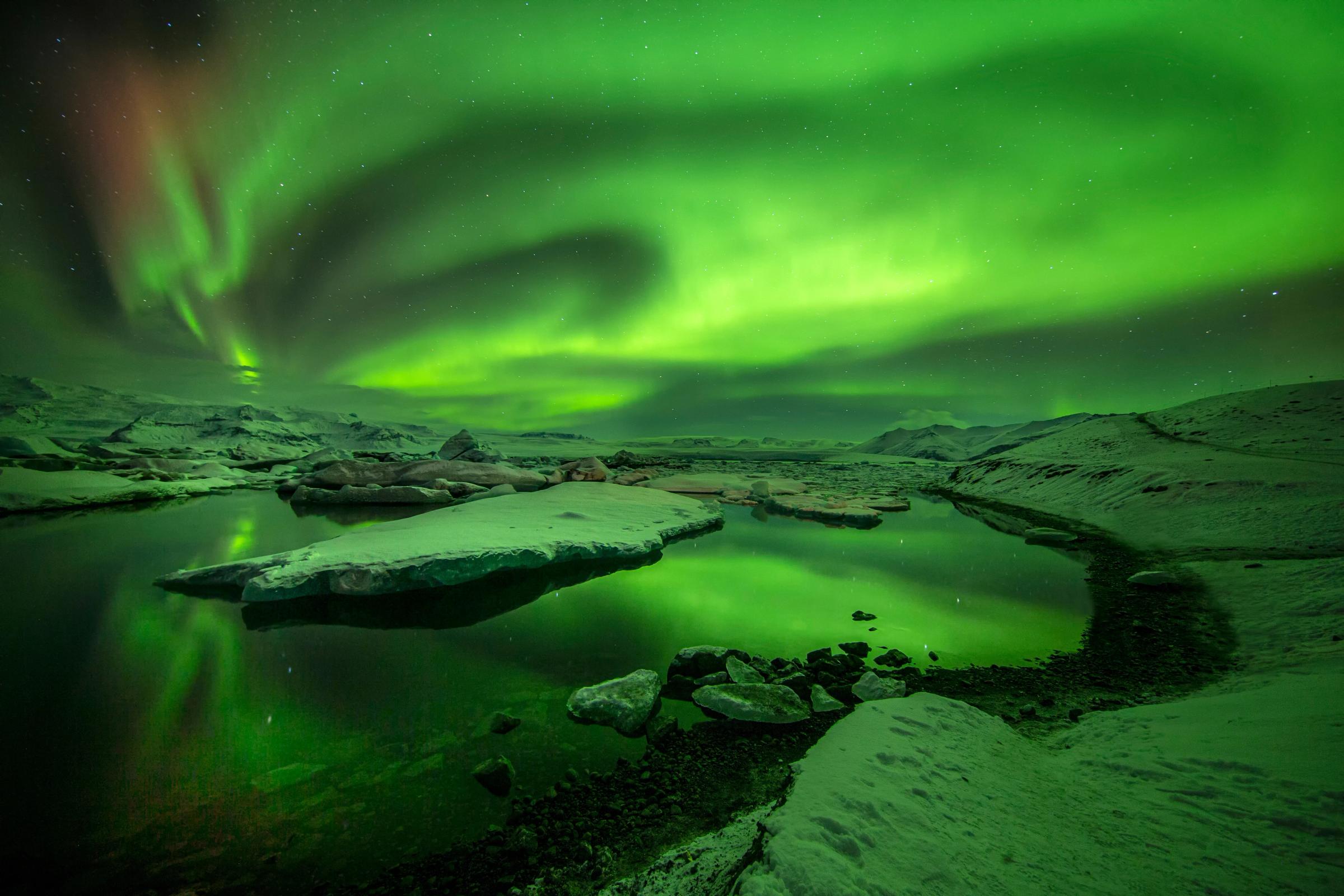
Jökulsárlón sits on Iceland’s southeast coast, right next to Vatnajökull glacier and just off the Ring Road (Route 1). That’s what makes it special. It feels remote, but it’s actually easy to reach. The area around it is very lightly populated, so the sky gets dark fast, and the lagoon itself gives you a wide, open view in every direction.
On calm nights, the water can act like a mirror. Green arcs and moving lights often reflect off the lagoon, which can make the whole scene feel twice as strong. Icebergs along the shore also give you a natural foreground without needing to hike anywhere.
For better results, walk away from the main parking area so headlights don’t spill into your view. Look for still water or ice with clean shapes that reflect light well. Be ready for wind and fast-changing weather here. This is a spot where cloud cover matters more than how strong the aurora forecast looks, so checking the Icelandic Met Office aurora and cloud map before you go really helps.
2. Diamond Beach
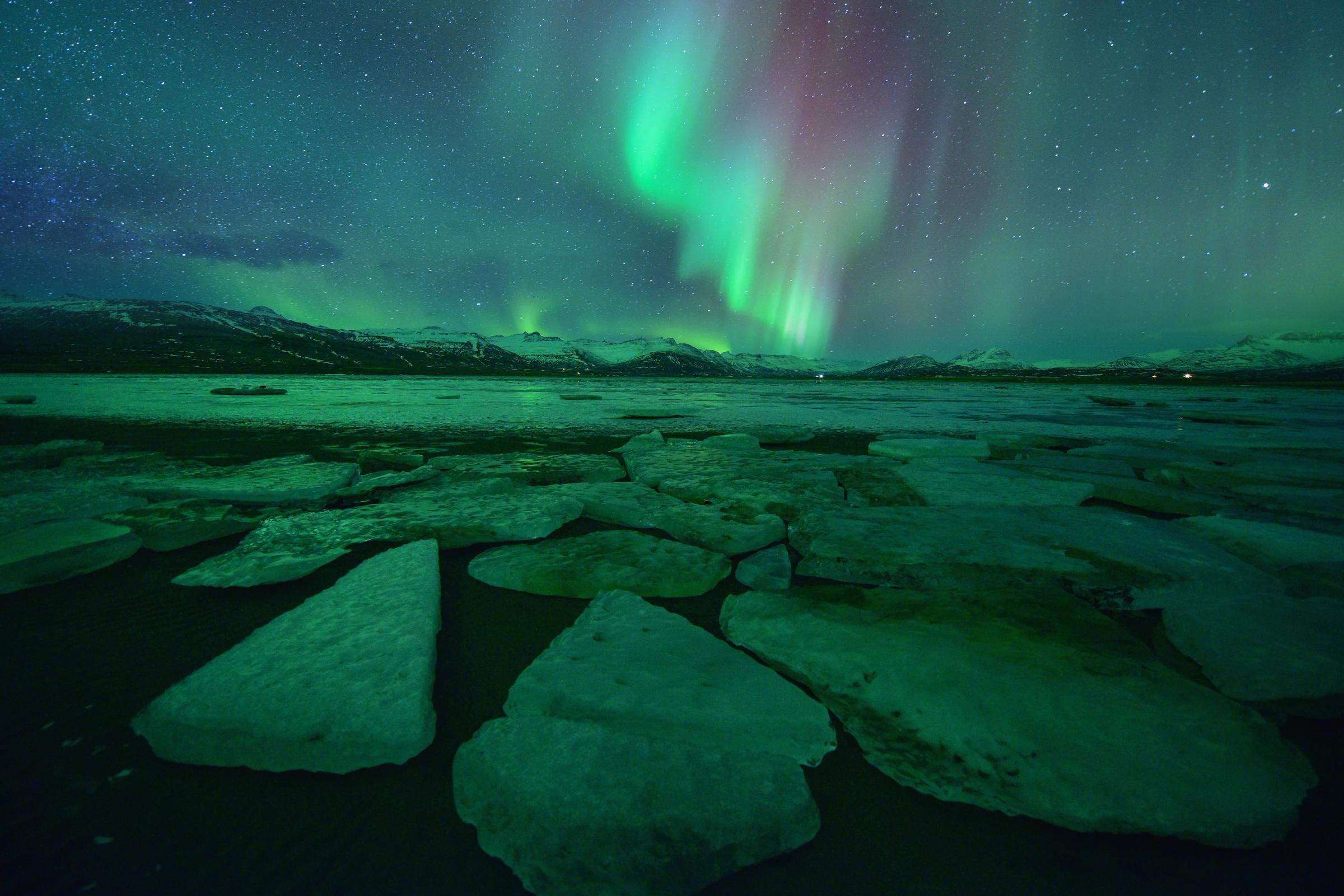
Diamond Beach is right across the road from Jökulsárlón. Glacial ice washes up onto black volcanic sand, which is where the name comes from. The contrast is the big win here. Dark sand stays dark, and the ice picks up even faint light from the sky.
That contrast makes moderate auroras look stronger than they actually are. Ice with flat sides or clear edges tends to glow more in photos, especially during long exposures. Shooting along the beach instead of straight toward the water usually works better, since it gives you more control over your foreground.
Safety really matters here. Waves can come much farther up the beach than you expect, especially at night when it’s hard to judge distance. Stay well back from the water and never turn your back on the ocean. No photo is worth getting too close to the surf.
3. Kirkjufell (Snæfellsnes Peninsula)
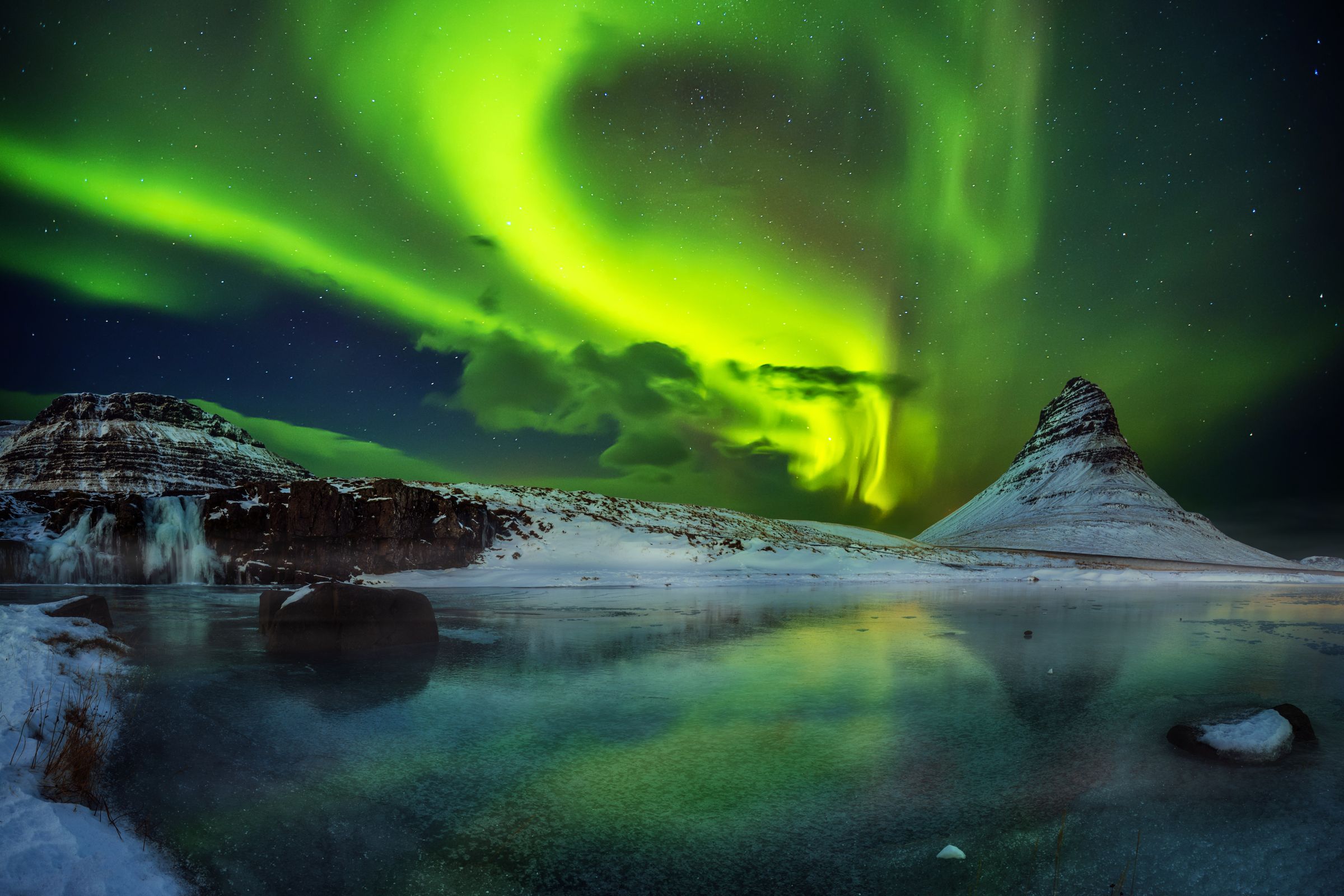
Kirkjufell sits near the town of Grundarfjörður on the Snæfellsnes Peninsula and is one of the most photographed mountains in Iceland. It works well for auroras because the shape of the mountain is easy to recognize, even in very low light.
The peninsula is darker than the Reykjavík area, and Kirkjufell faces north, which lines up nicely when auroras form arcs across the sky. When conditions are right, the mountain gives the lights a clear sense of scale, which is why it shows up in so many aurora photos.
Get there before dark if you can. Paths around Kirkjufellsfoss often get icy, and it’s much easier to move around safely when you can still see where you’re stepping. If the main waterfall viewpoint is crowded, shifting a little east or west helps. You’ll cut down on people’s lights and still get strong compositions using snowfields or the fjord as your foreground.
4. Þingvellir National Park
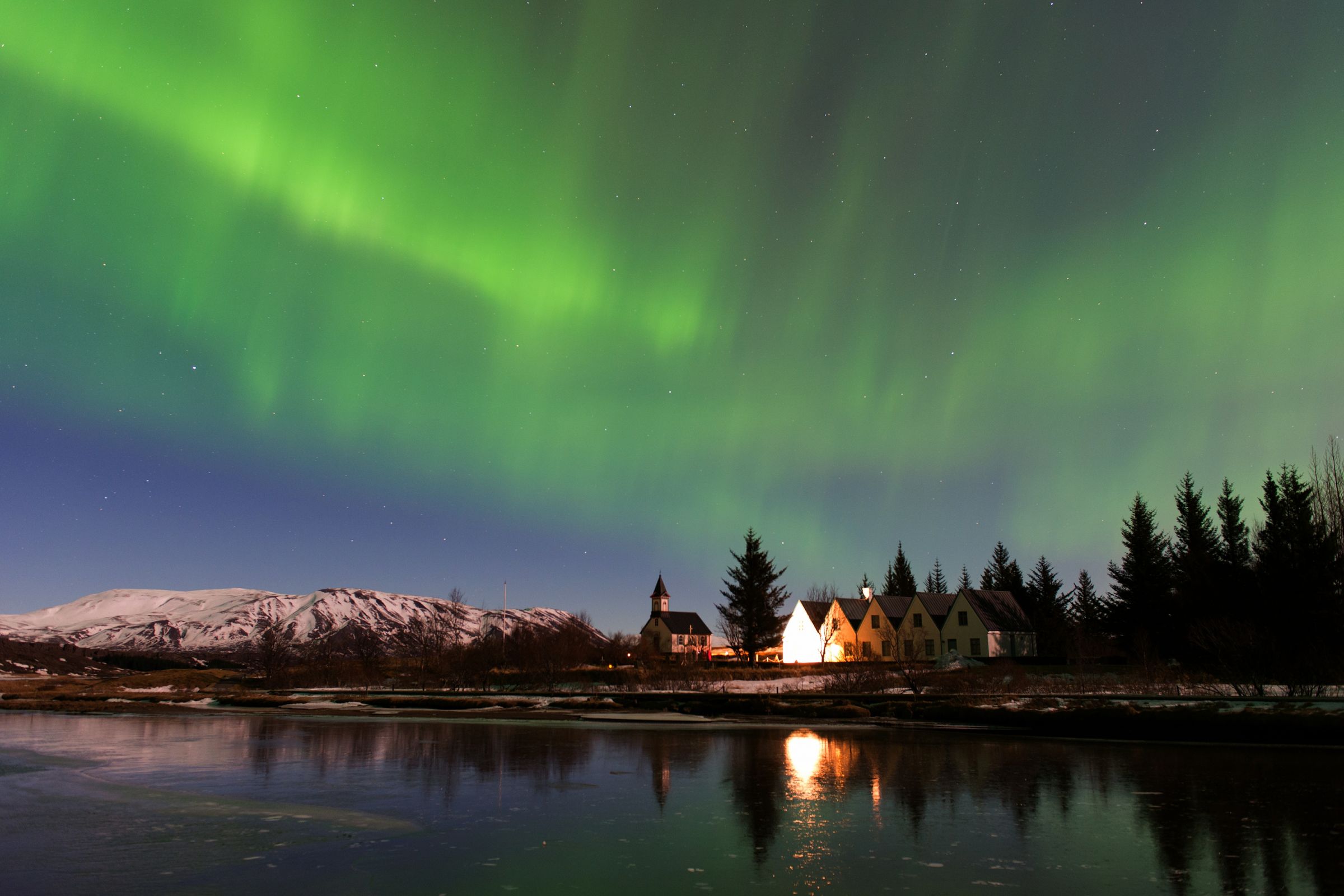
Þingvellir is part of the Golden Circle and sits about 45 minutes from Reykjavík, which makes it one of the easiest backup options when aurora conditions suddenly improve. Even though it’s popular during the day, it works well at night once you move away from visitor buildings and parking areas.
The park has large dark zones, open skies, and wide views near the lake and along the rift valley. If conditions are calm, Þingvallavatn can even give you reflections, which adds a lot without needing strong aurora activity.
When you arrive, don’t stop at the first dark-looking spot. Keep walking until the brightest lights are fully behind you. Always check cloud cover along with the aurora forecast, because Þingvellir can have good activity overhead but still be completely blocked by low clouds. The Icelandic Met Office maps are especially useful here.
5. Reynisfjara Black Sand Beach
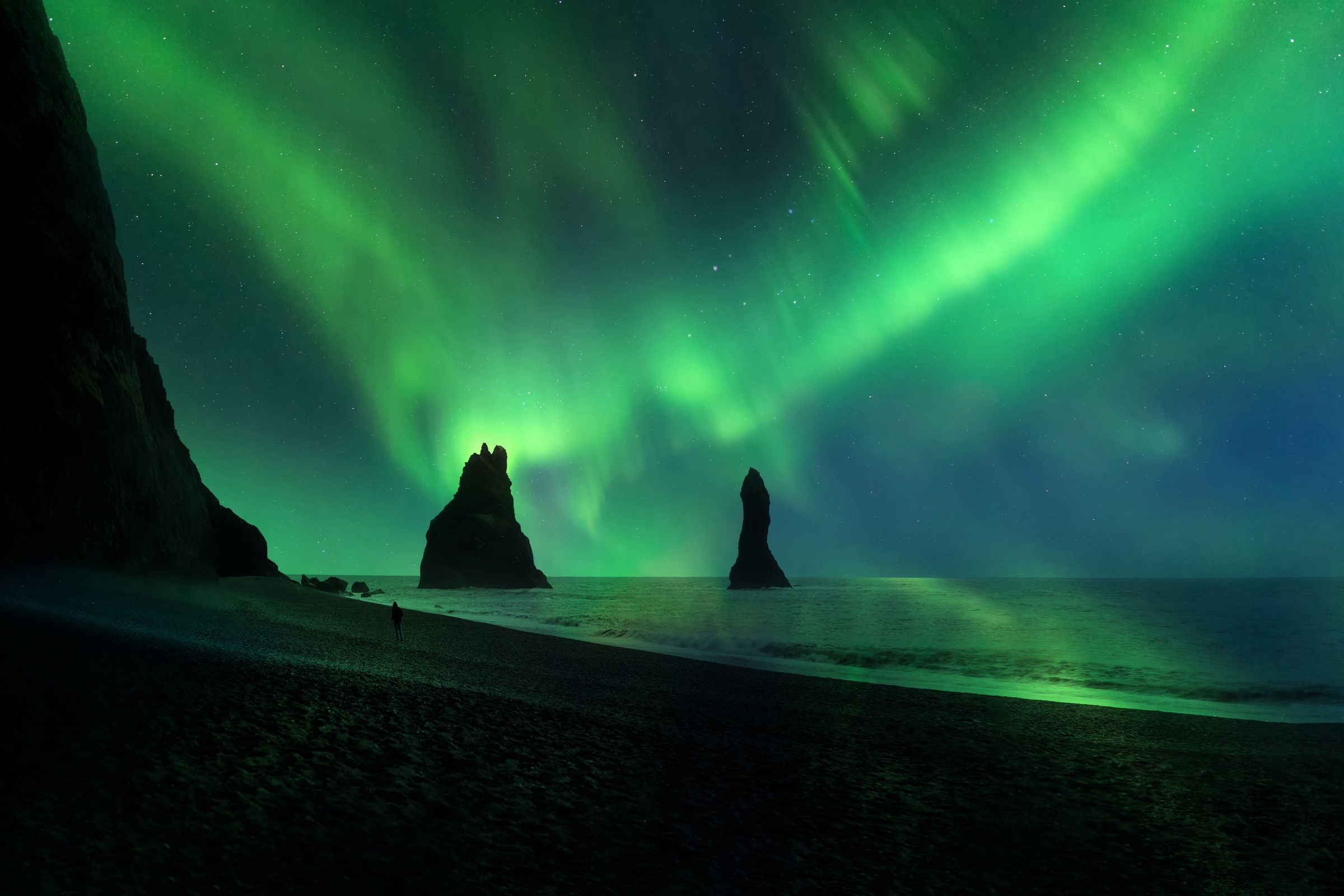
Reynisfjara is near the town of Vík on the South Coast and is one of the most dramatic places in Iceland. You’ve got tall basalt columns, a huge black sand beach, and the Reynisdrangar sea stacks sitting offshore. All of that gives the sky something solid to sit against, which makes auroras feel bigger and more intense.
Aurora viewing works well here because the horizon over the ocean is wide and open. When the lights stretch across the sky, they feel larger and more cinematic, especially with those dark shapes underneath.
The downside is exposure and safety. Wind can be strong, and the waves here are dangerous, especially at night when it’s easy to lose awareness of how close the water is. Treat this as a spot where you stay well inland. If you want the sea stacks to look bigger, use a longer lens instead of moving closer to the water. Stable ground always comes first here.
6. Skógafoss Waterfall
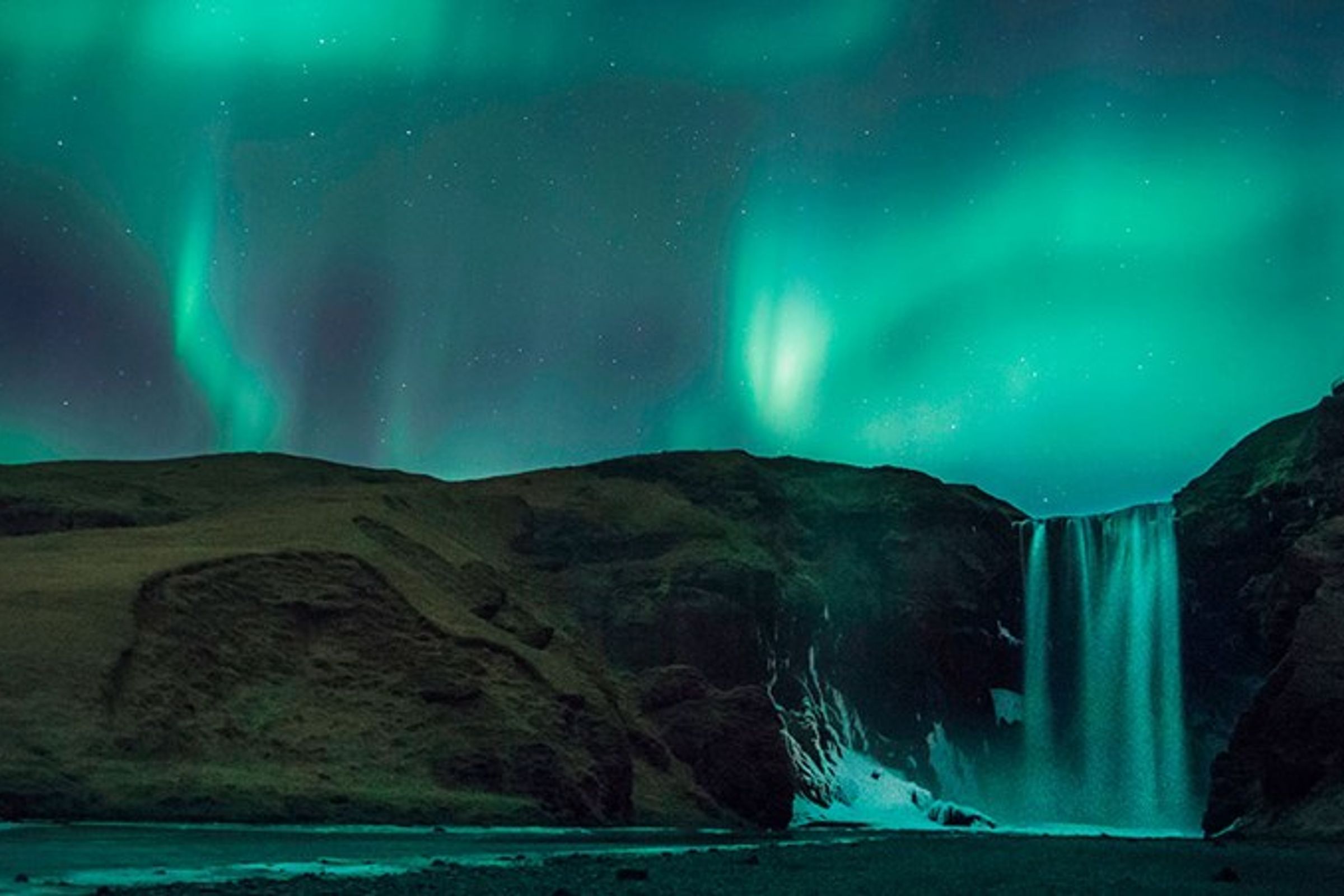
Skógafoss is right off the Ring Road (Route 1) on the South Coast, which makes it a solid option if you’re already road-tripping and don’t want to drive far off course. It’s easy to reach and has a huge, recognizable shape that works well as a foreground.
The area around the waterfall is fairly open, so once you get away from the parking lot lights, you usually have enough sky visibility to catch auroras overhead. It’s especially useful on nights when you’re trying multiple spots rather than committing to one remote location.
For shooting or viewing, standing off to the sides helps reduce mist hitting your face or lens. In winter, frozen spray can make paths slippery, so move carefully. If the aurora is strong, wide-angle views can capture both the full waterfall and the moving sky. If it’s faint, tighter framing helps keep the scene from feeling empty.
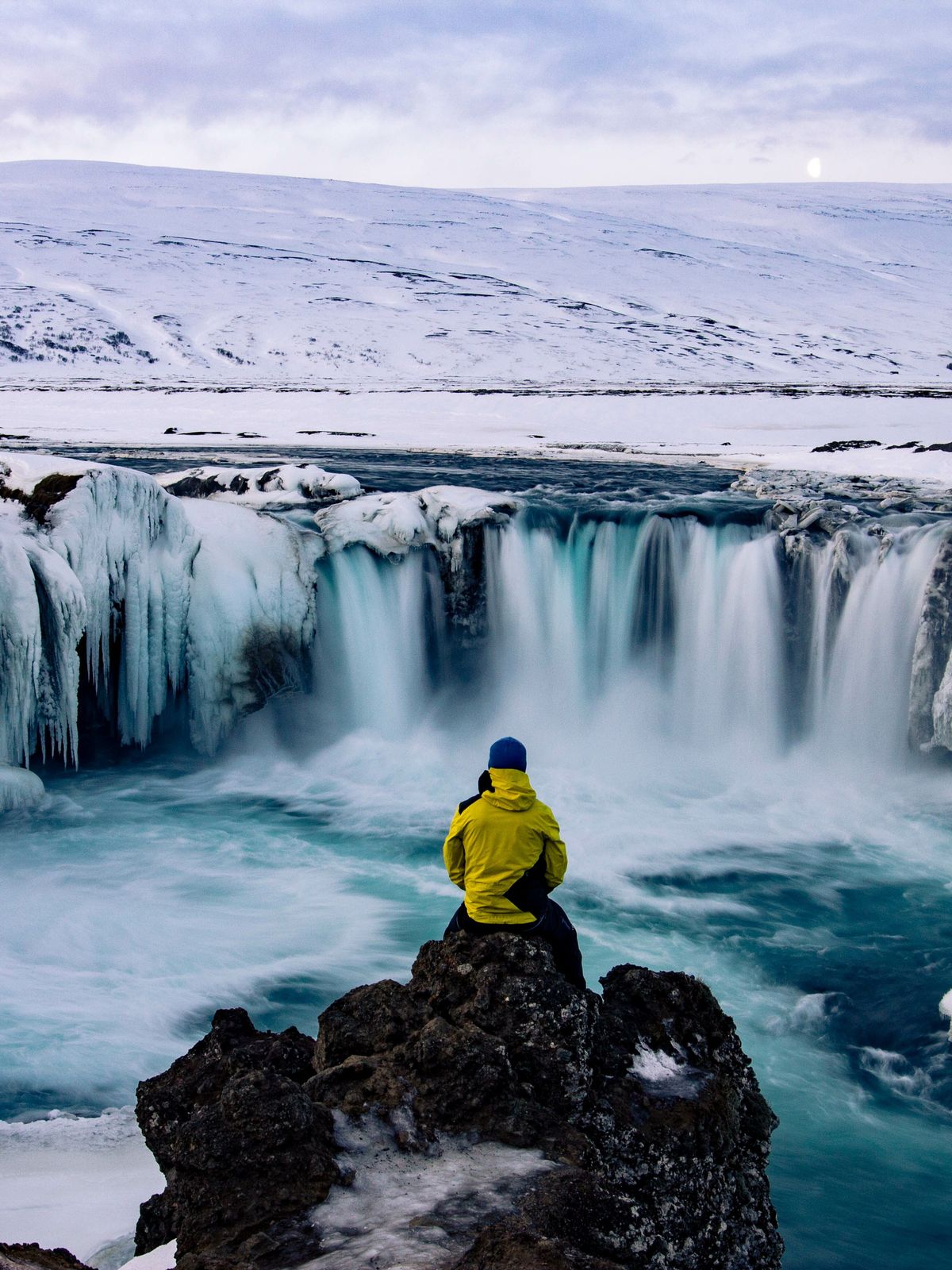
7. Goðafoss Waterfall
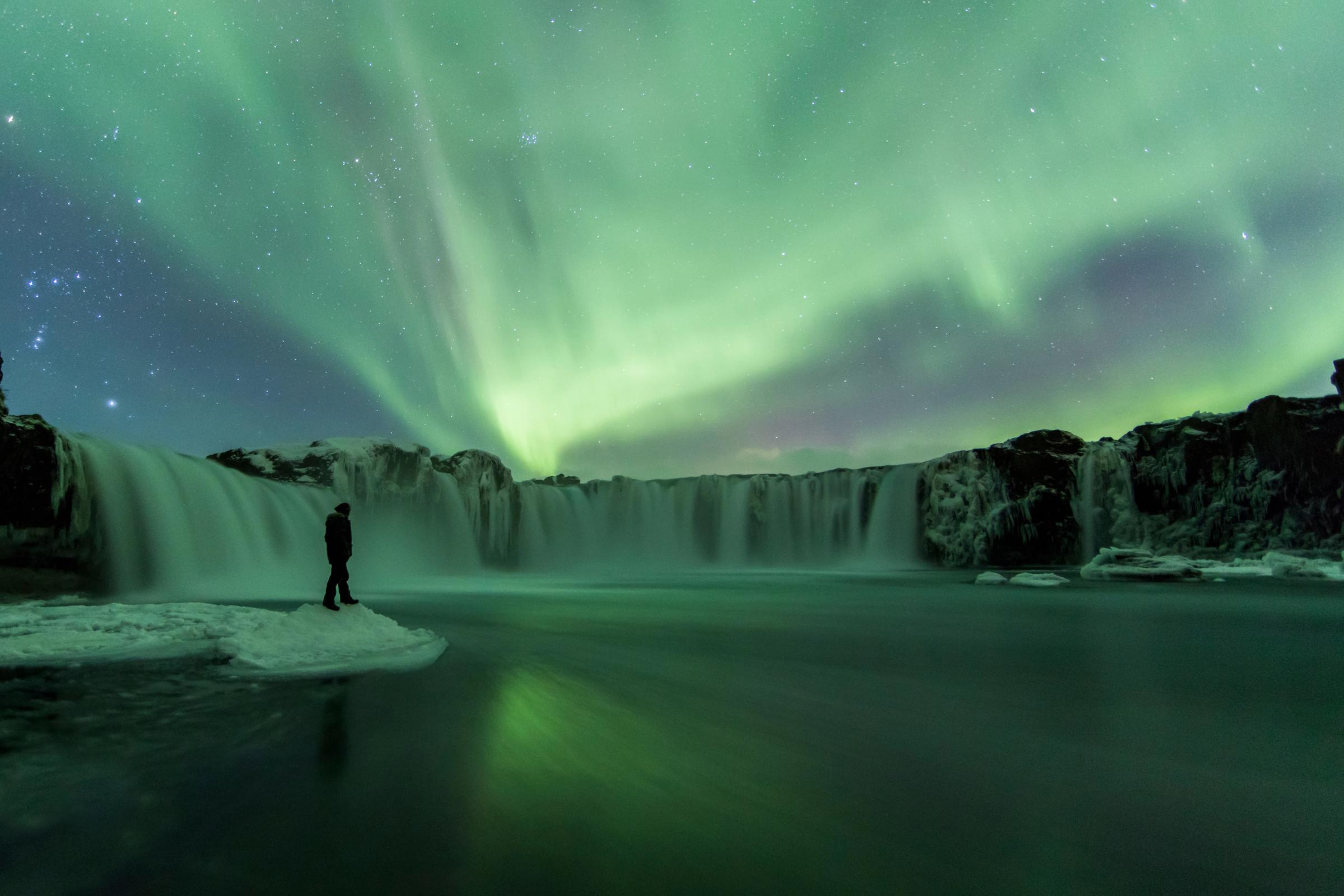
Goðafoss sits in North Iceland, not far from the Ring Road, and benefits from its latitude. Northern regions get longer winter darkness and often see aurora activity more often, which gives this area an edge.
The waterfall itself has a curved shape that works well at night. It gives you a clear foreground without needing reflections or perfect conditions. Even when the aurora isn’t filling the whole sky, Goðafoss still gives your view some structure.
Because it’s a roadside stop, headlights can be an issue. Move away from parked cars and be patient when traffic comes through. In winter, always check road conditions before heading out. North Iceland weather can change quickly, and the safest aurora plan is the one that doesn’t involve stressful driving. Road updates from road.is are especially important here.
8. Lake Mývatn Area
Lake Mývatn isn’t about one single viewing point. It’s more about having options. The area is full of lake shores, lava fields, and geothermal landscapes, which lets you adapt to cloud cover by moving short distances.
It’s strong for auroras because there’s very little light pollution, long winter darkness, and lots of places where you can pull over and get away from artificial light. If clouds build in one spot, you can often find clearer skies a few minutes down the road.
The best approach is to stay away from hotels and their exterior lights and aim for wide horizons. On very cold nights, geothermal steam can drift through the scene and add a strange, almost unreal texture. Just keep your distance. Ice, wind, and uneven ground can make simple viewpoints feel much harsher than they look.
7 Lesser-Known and Quieter Aurora Gems
These spots take more effort; there’s no way around that. They’re farther out, quieter, and not always convenient. The upside is fewer people, darker skies, and a calmer feel overall. If you’re okay with extra planning and slower travel, these places can feel a lot more personal when the aurora finally shows.
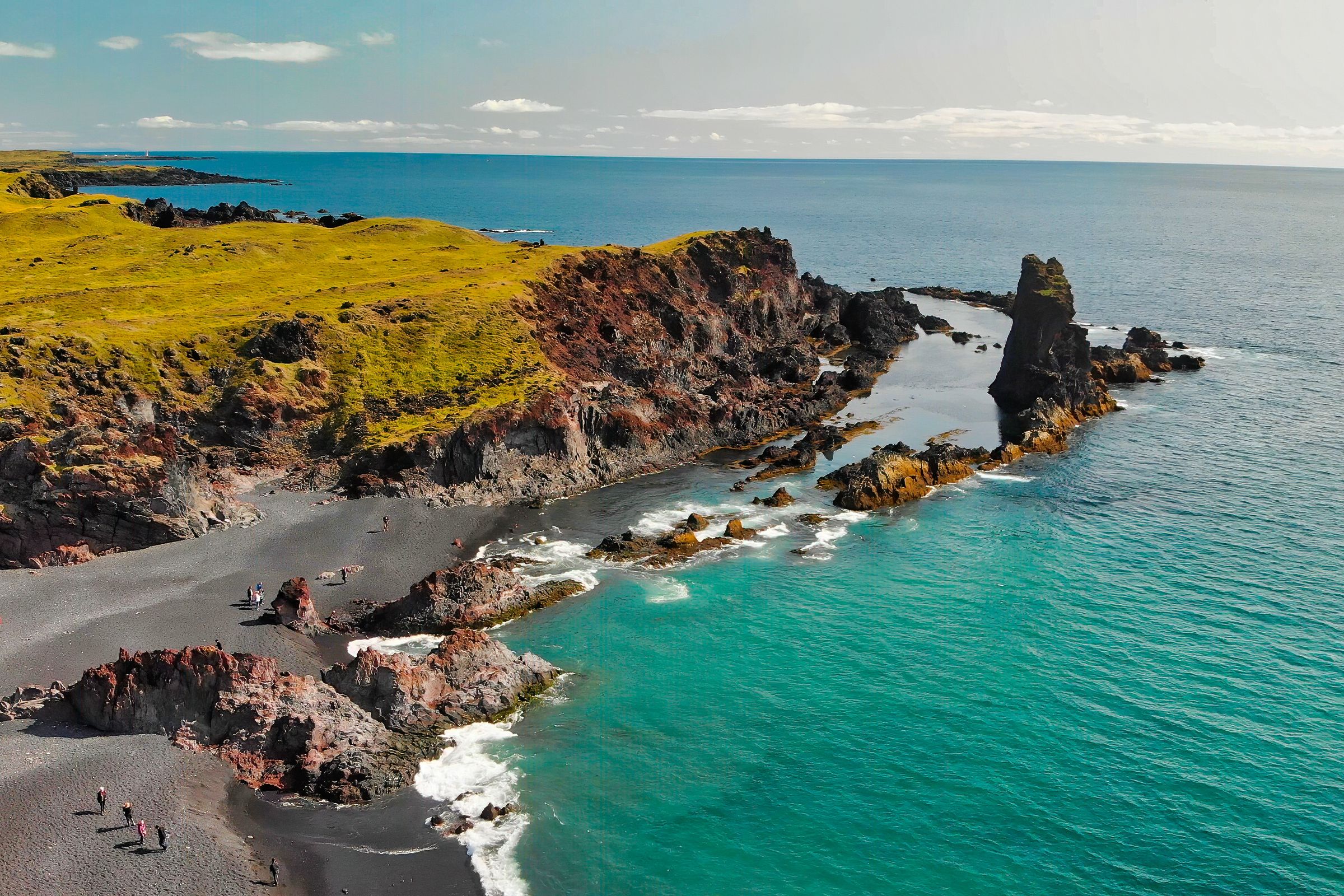
Djúpalónssandur is a black pebble beach inside Snæfellsjökull National Park. It feels much wilder than most South Coast beaches, with lava formations, scattered rocks, and very little development. At night, it’s dark. Really dark.
That lack of artificial light is why it works so well for auroras. Even weaker displays show up clearly against the black pebbles and rough textures of the landscape. You don’t need a huge sky show for it to feel impressive here.
Treat this like a night hike. Arrive before dark, learn the path, and keep your headlamp use minimal so your eyes adjust to the dark. The ground is uneven, and the ocean can be misleading at night. Build your shots or viewing angles from solid ground using lava shapes, pebble patterns, or the old shipwreck remains, and stay well away from the surf.
2. Lóndrangar Cliffs (Snæfellsnes)
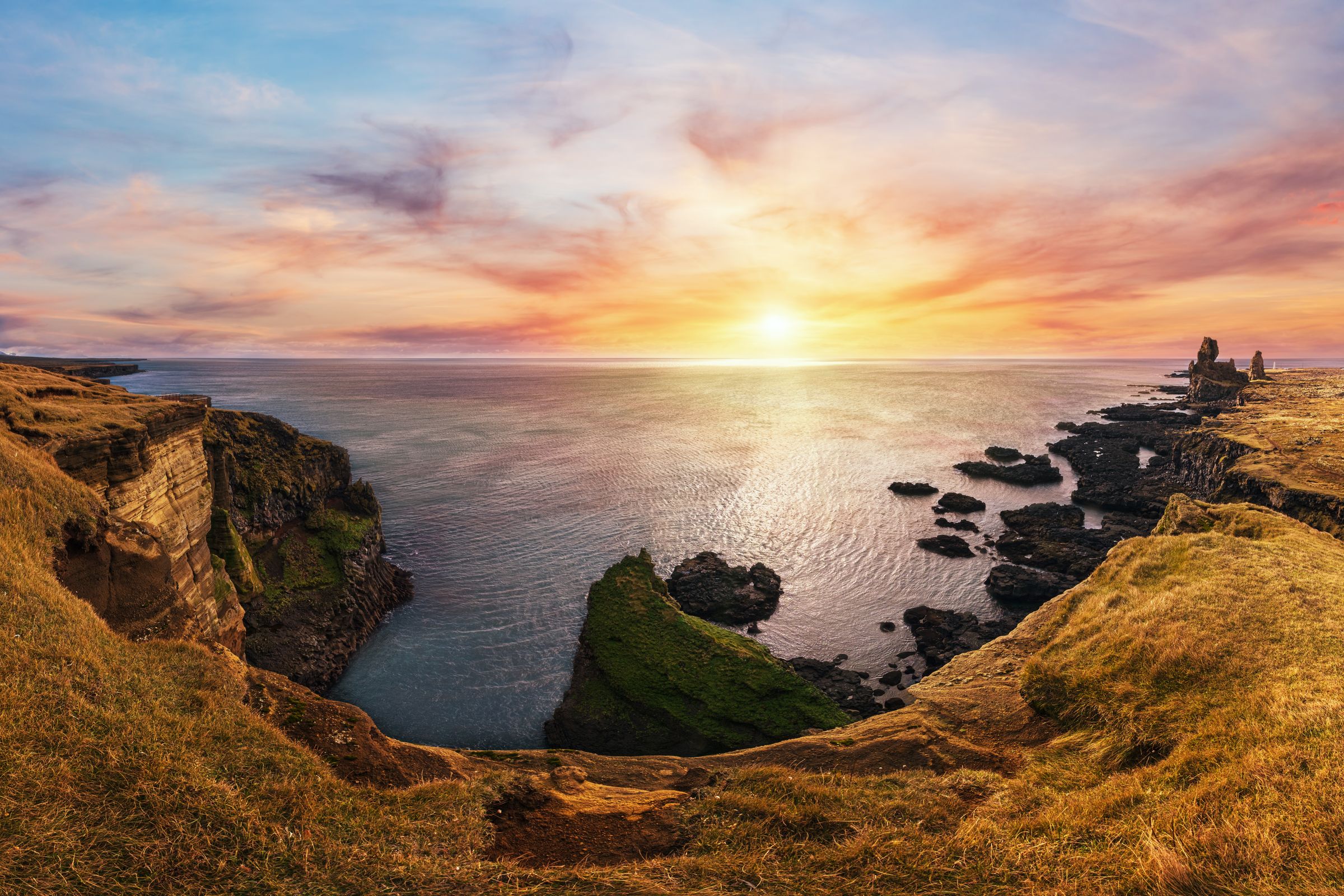
Lóndrangar is known for its tall basalt sea stacks, which are actually old volcanic plugs. They rise straight out of the landscape and turn into strong silhouettes once the sun is gone. Under auroras, those shapes really stand out.
It’s quieter at night than most of the well-known Snæfellsnes spots, and the lack of nearby lighting helps keep the sky dark. When aurora arcs form overhead, the cliffs give the sky something solid to frame against.
Wind is the main challenge here. Stay on marked paths and keep your distance from cliff edges. It works best if you treat the cliffs as dark shapes rather than trying to capture fine detail. If wind shakes your tripod, lower it, add weight, and shorten your exposure. Sharp photos beat bright but blurry ones every time.
3. Westfjords (Remote Fjords & Roadsides)
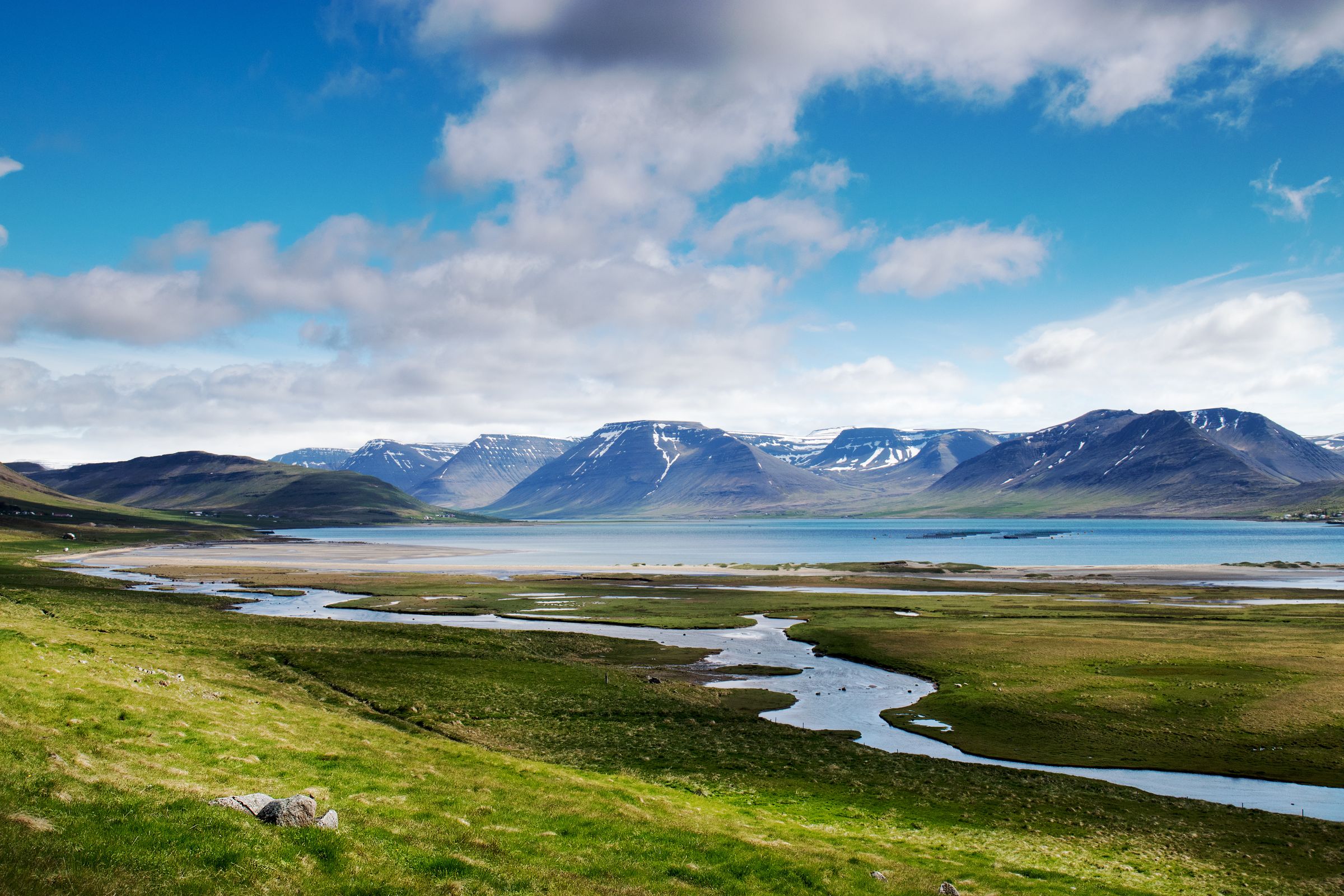
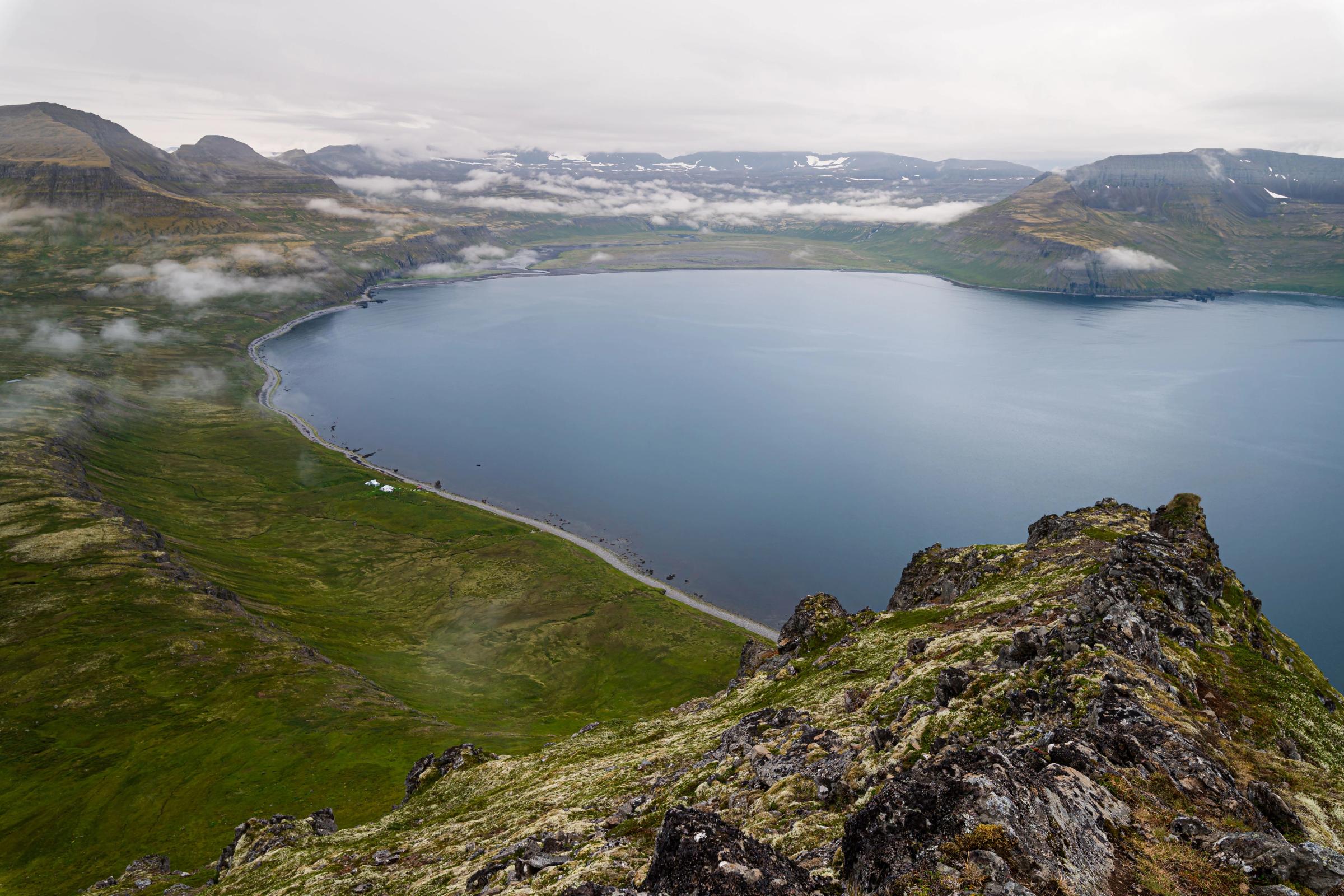
The Westfjords are the most isolated part of Iceland. Fewer people, deep fjords, and very little artificial light make this one of the darkest regions in the country. When conditions line up, auroras here can look incredibly clear and well-defined.
The key is not to chase the lights all night. Pick a base town or guesthouse, then make short, careful drives to dark roadside pull-offs with open sky. That keeps things safer and a lot less stressful.
Road conditions matter more here than almost anywhere else, especially in winter. Always check official road updates before heading out and don’t push into storms or closures. The best aurora night is the one you can actually get back from safely. Road conditions from road.is are essential in this region.
4. Strandir Coast (Westfjords)
Strandir is a remote stretch of coastline north of Hólmavík. It’s known for abandoned farms, empty roads, and some of the darkest skies you’ll find in Iceland. When the aurora shows up here, the sky feels huge.
There’s almost no glow on the horizon, which makes even small movements in the aurora feel intense and close. It’s quiet in a way that really sticks with you.
That said, this is not a casual stop. Services are limited, weather can turn fast, and cell coverage can drop out. Treat it like a serious remote outing. Keep your fuel tank full, carry emergency gear, and follow official safety guidance. Safetravel.is is the best resource before heading into areas like this.
5. Borgarfjörður Eystri
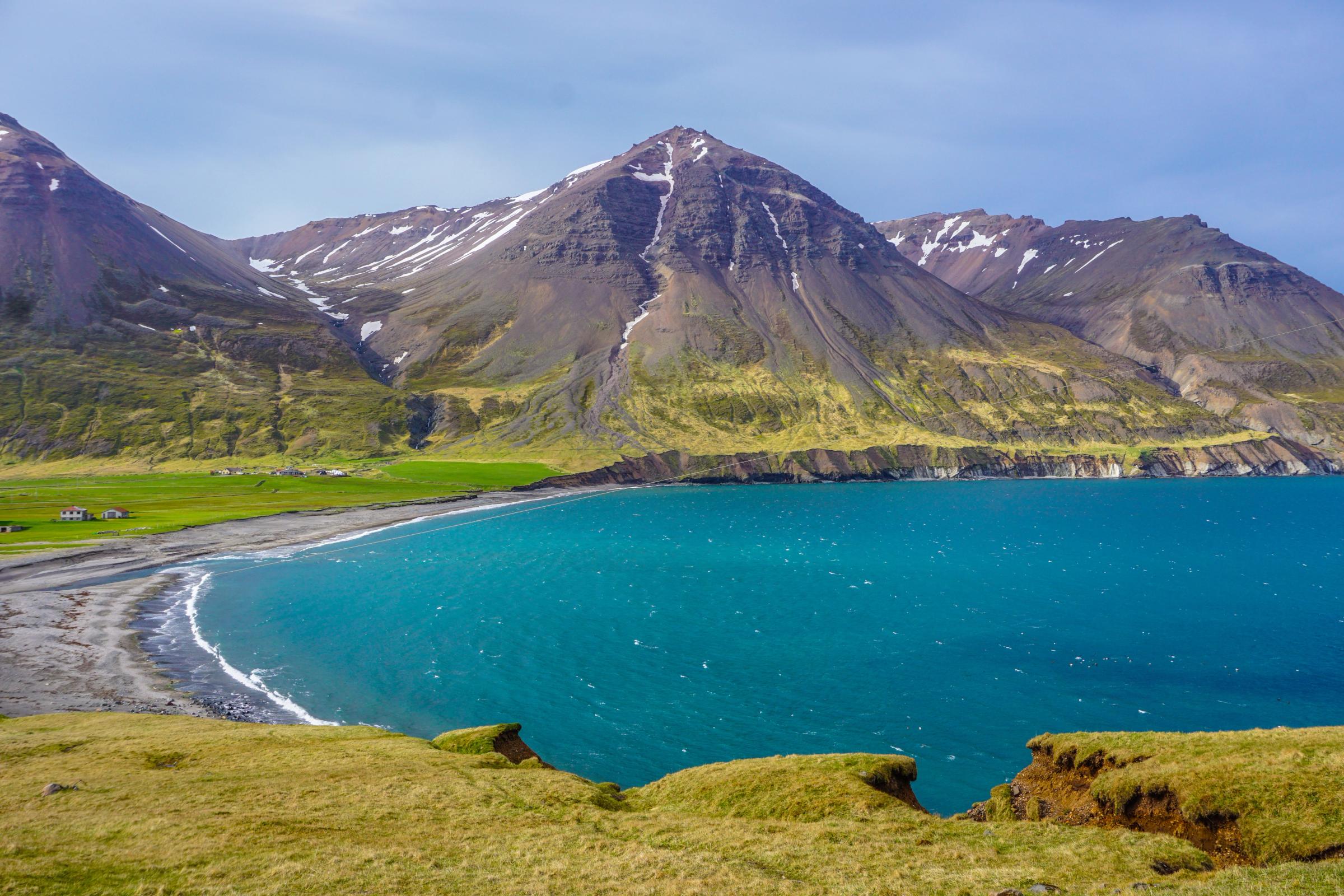
Borgarfjörður Eystri is a quiet fjord in East Iceland, surrounded by mountains that create strong silhouettes at night. Those mountain walls can also help block wind, which makes standing still a little more manageable than on open coasts.
The Eastfjords often get clearer breaks when the south or west is fully clouded over, and this area usually sees fewer visitors. That combination makes it a great alternative when more popular regions aren’t working.
For better darkness, move just outside the village to reduce local lighting. Use the curves of the fjord and the mountain edges to frame the sky. Winter driving in East Iceland can be slow, so build in extra time and stick to safe pull-offs where you’re fully off the road.
6. Skagafjörður Countryside
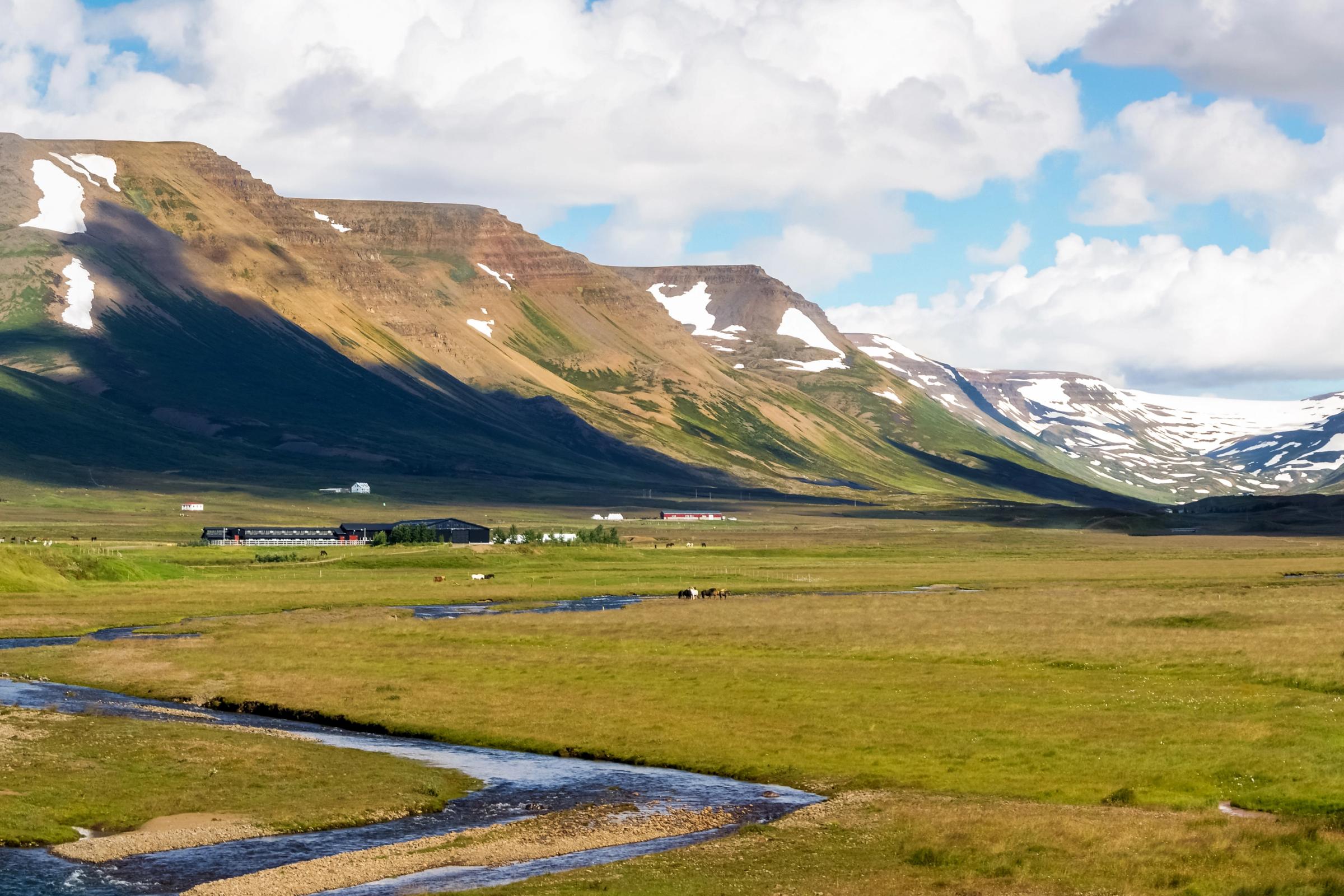
Skagafjörður is a wide valley in Northwest Iceland, known for farms and open land. That openness is exactly what makes it good for aurora viewing. Big horizons, very little light pollution, and lots of space to watch the sky.
Snow-covered fields can naturally brighten the foreground, which helps photos without needing artificial light. Even simple scenes can work really well here.
Plan fuel and lodging ahead of time, since services are spread out. Choose safe roadside pull-offs with clear views in both directions. When it comes to photos, simple things like fence lines, barns, and rolling hills often work better than complicated foregrounds that disappear in the dark.
7. Reykjanes Peninsula
Reykjanes is the fastest way to escape Reykjavík’s light pollution. Within 30 to 60 minutes, you can reach dark coastal stretches that still feel raw and strange, with lava fields, cliffs, and geothermal areas.
Its biggest strength is flexibility. When a forecast suddenly looks good, you don’t need a long drive or detailed planning. You can just go.
Keep moving away from towns and airport lighting until the sky visibly darkens, then aim toward open ocean horizons. Conditions and access can change quickly here, especially near active or restricted areas, so pair your aurora plans with official alerts and safety updates. Safetravel.is is important for this region.
Checking Aurora Forecasts
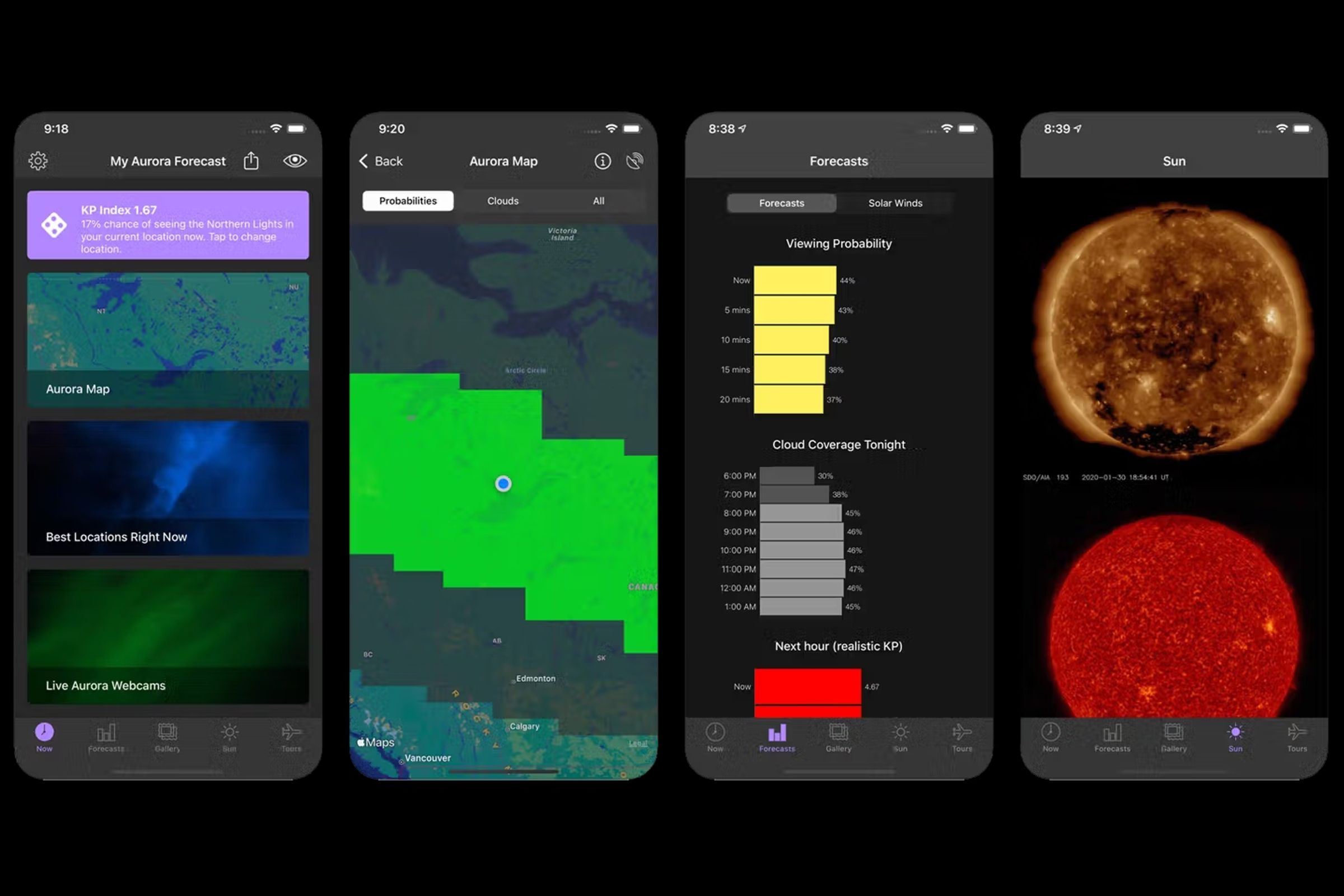
Before you head out, always check the forecast. In Iceland, the Icelandic Met Office is the main one to use. It shows both aurora activity and cloud cover.
Cloud cover matters more than the aurora strength. You can have a high KP number, but if the sky is cloudy, you won’t see anything. A lower KP with clear skies usually wins. Always look at the cloud map first, then the aurora map.
Best Times of Night to Look
Auroras often show up the most between about 10 p.m. and 2 a.m., but that’s not a rule. Strong displays can happen earlier in the evening or much later at night.
If the sky is dark and clear, it’s always worth checking, even if the timing doesn’t look perfect. Some of the best shows come when you least expect them.
Staying Warm and Shooting Photos
Standing still in Iceland gets cold fast. Dress for that. Wear insulated layers, a windproof outer shell, warm boots, gloves, and something to cover your face. Even on calm nights, the cold creeps in.
If you’re taking photos, keep it simple. Use a tripod, a wide-angle lens, and manual focus. ISO usually falls between 1600 and 3200. Exposure times are often around 5 to 15 seconds, depending on how fast the aurora is moving. If it’s moving quickly, shorter exposures work better.
Conclusion
Iceland is one of the best places in the world to see the Northern Lights because everything lines up. High latitude, long winter darkness, and landscapes that stay wild and open.
Whether you’re standing by Jökulsárlón, watching the sky over Kirkjufell, or pulled over on a quiet road in the Westfjords, every location offers a different kind of experience. Some places are easy and familiar. Others feel remote and intense.
Mix a few well-known spots with darker, quieter areas, stay flexible with the weather, and keep safety first. When it all comes together, it’s something you don’t forget.
Frequently Asked Questions About Iceland's Northern Lights
Your chances are very high in Iceland to see the northern lights. That is because Iceland’s aurora season lasts eight months, providing high chances to spot them.
No, they will not appear every night, even in the darkest of months. If there is a big geomagnetic storm, then there could be extra solar activity. Even at a complete maximum, the lights would not come out every night.
The Sun constantly releases tiny charged particles into space in a stream known as the solar wind. When these particles reach Earth, our planet’s magnetic field directs many of them toward the North and South Poles. As the particles enter the upper atmosphere, they collide with gases like oxygen and nitrogen. These collisions release energy in the form of light.
Different gases produce different colors:
Green (most common) – oxygen
Red – oxygen at higher altitudes
Blue and purple – nitrogen
Plan at least 3 to 5 nights during the aurora season. Weather and cloud cover change quickly in Iceland, so multiple nights increase your chances of clear skies and visible activity.
About the author
Aron Freyr
Born and raised in Iceland, Aron Freyr has spent all 28 years of his life exploring the country and getting to know its landscapes, regions, and ever changing conditions. From long summer road trips to winter journeys through remote areas, he has traveled across Iceland more times than he can count. As part of the Go Car Rental Iceland team, Aron turns this firsthand experience into trustworthy, practical guidance that helps visitors navigate Iceland with confidence. His deep local insight makes him one of the most reliable voices on Icelandic travel today. He claims this expertise also includes knowing exactly which gas stations make the best hot dogs.