A Road Trip to Iceland’s Geysir: The Geyser That Named Them All
Steam comes up from the ground. The earth shakes a little. Then boiling water shoots 20 meters into the air, and everyone around you steps back.
That's Geysir. It's in Iceland's Haukadalur Valley, it's why the word "geyser" exists, and it does exactly what you'd hope it does.
Here's what you need to know before you go.
What Exactly Is Geysir?
Most people show up expecting to see "Geysir" erupt. Here's the thing: technically, they don't. Good to know before you get there.
The Great Geysir
The Great Geysir is a historic geyser in southwestern Iceland, and it's the reason every geyser on earth has that name. The word comes from the Old Norse verb geysa, which means "to gush." One spring, in one Icelandic valley, gave the name to all of them.
The catch: Geysir has been mostly dormant since around 1916. It does erupt sometimes, but only when earthquakes shift things underground. The last big one was after seismic activity in June 2000, when it reportedly shot water up to 122 meters. On a normal day, it's a wide, steaming pool with a lot of history and not much happening.
Strokkur: The One That Actually Erupts
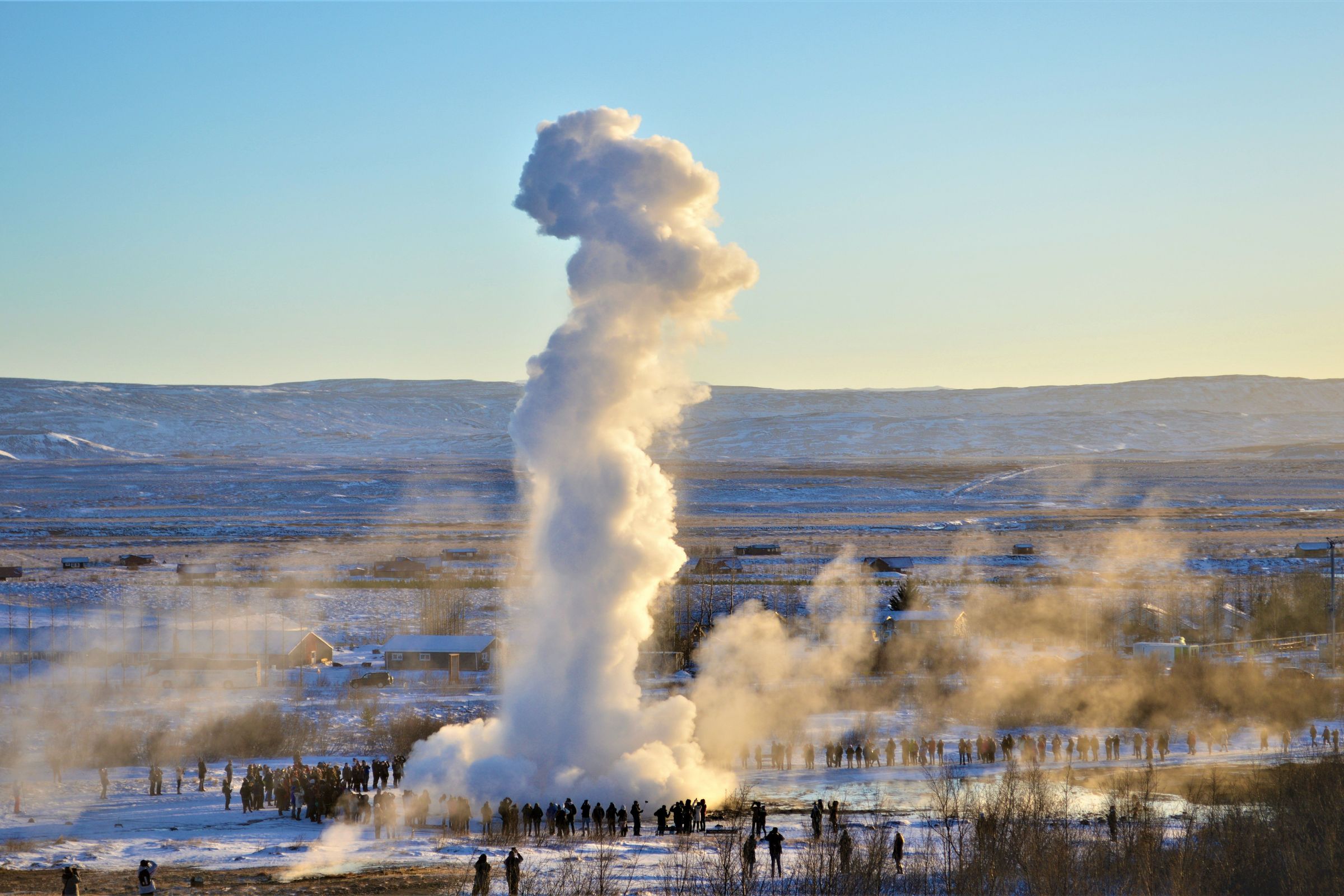
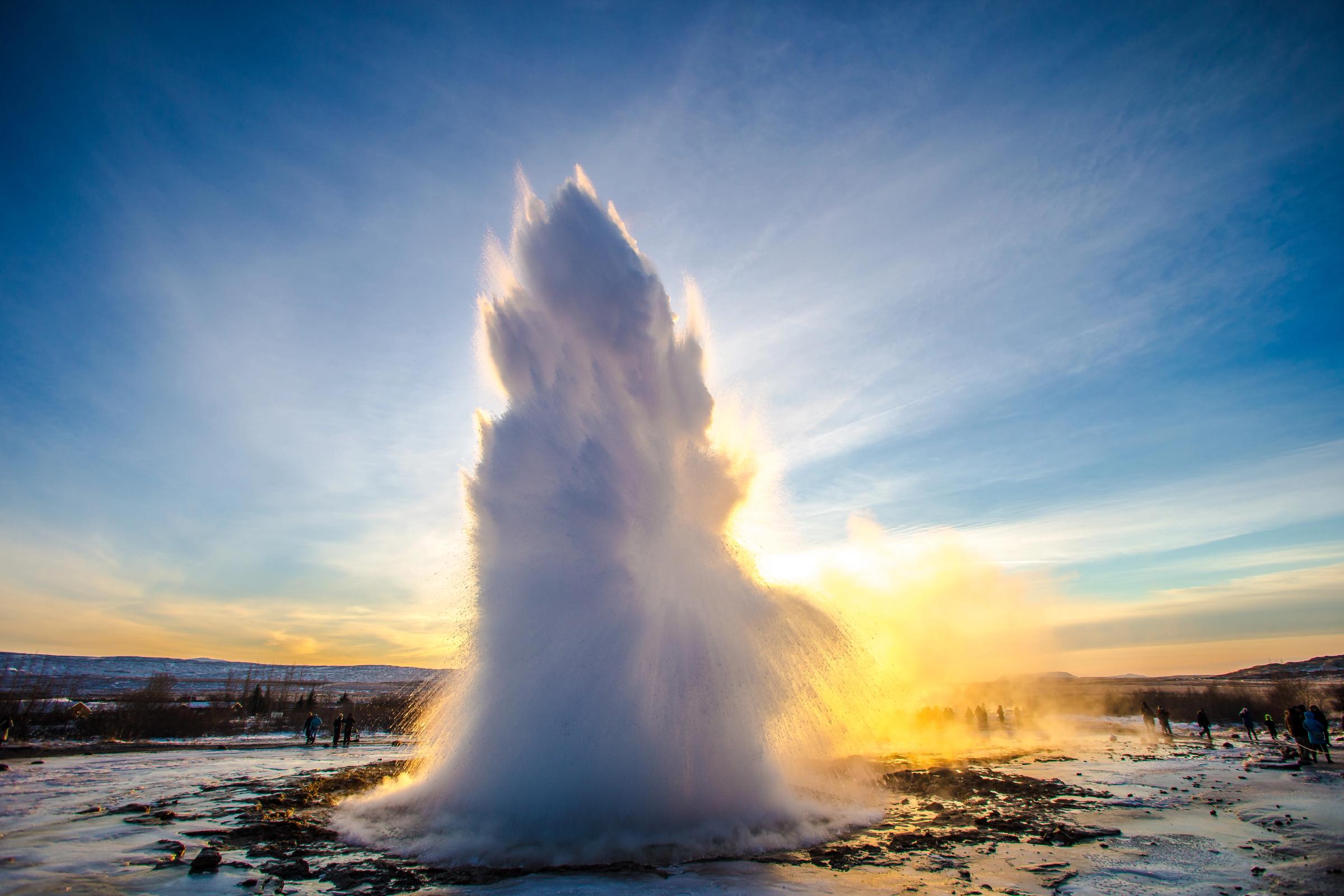
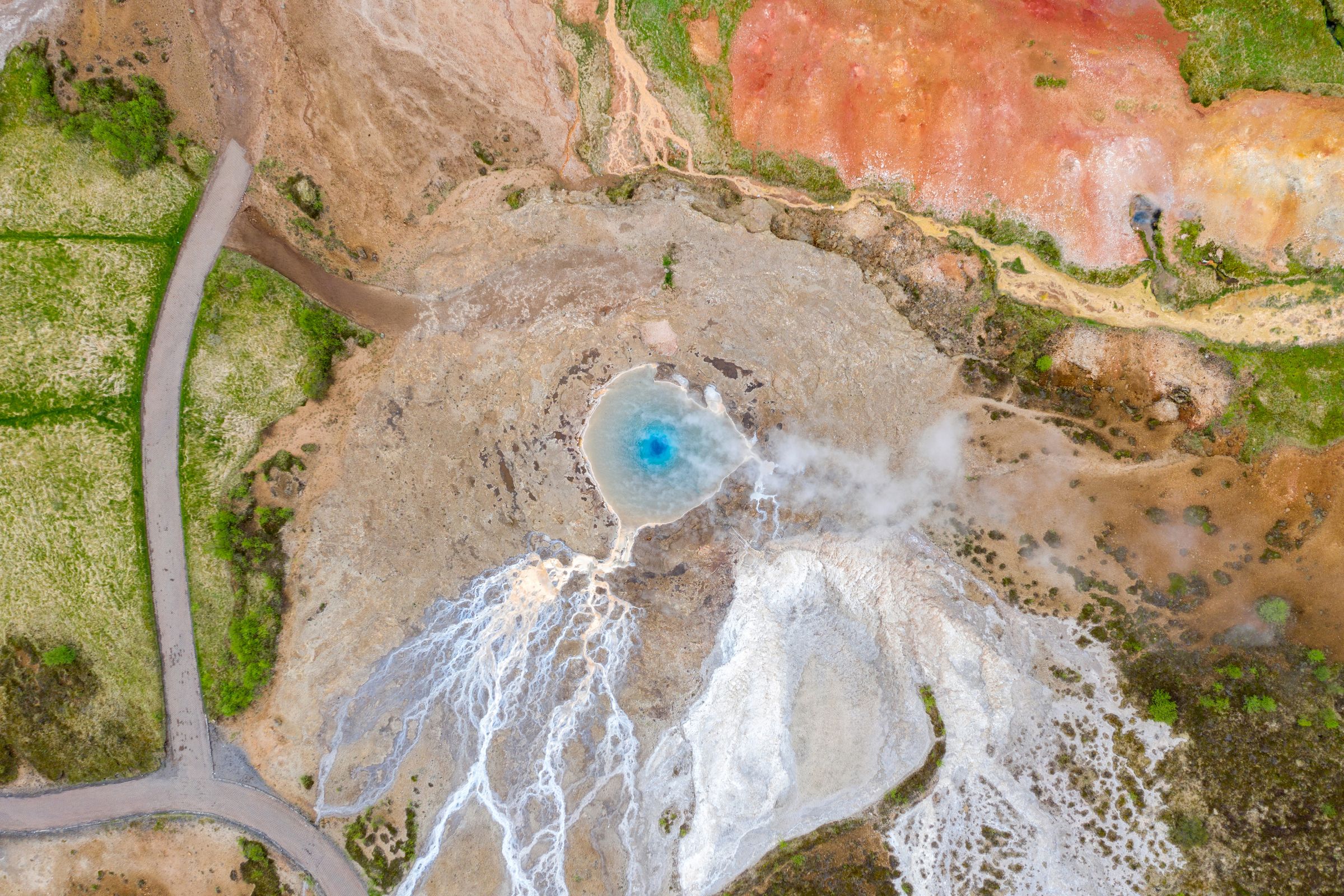
About 50 meters away, Strokkur erupts every 5 to 10 minutes, usually reaching 15 to 20 meters. Sometimes more. This is what people come for, and it works every time.
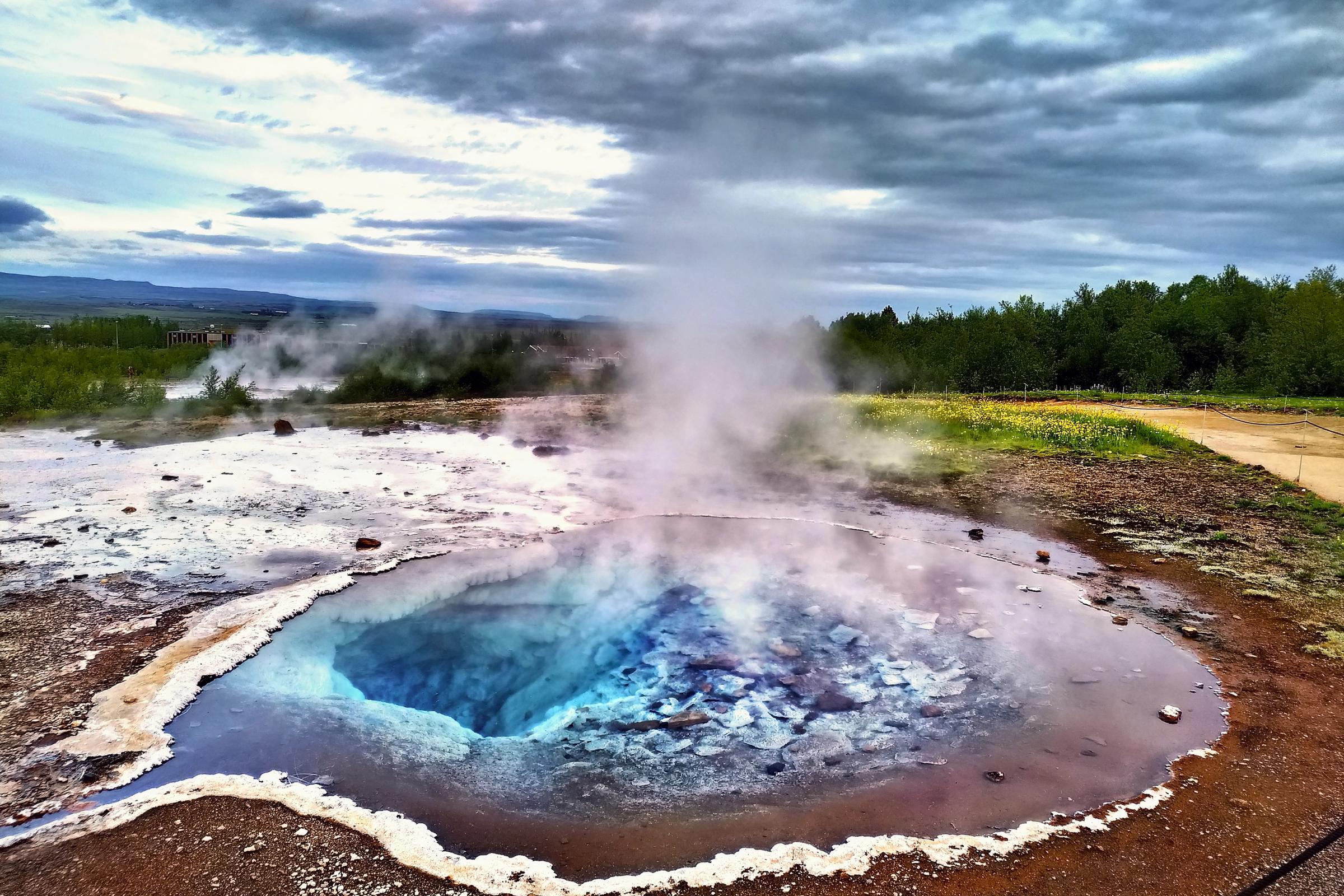
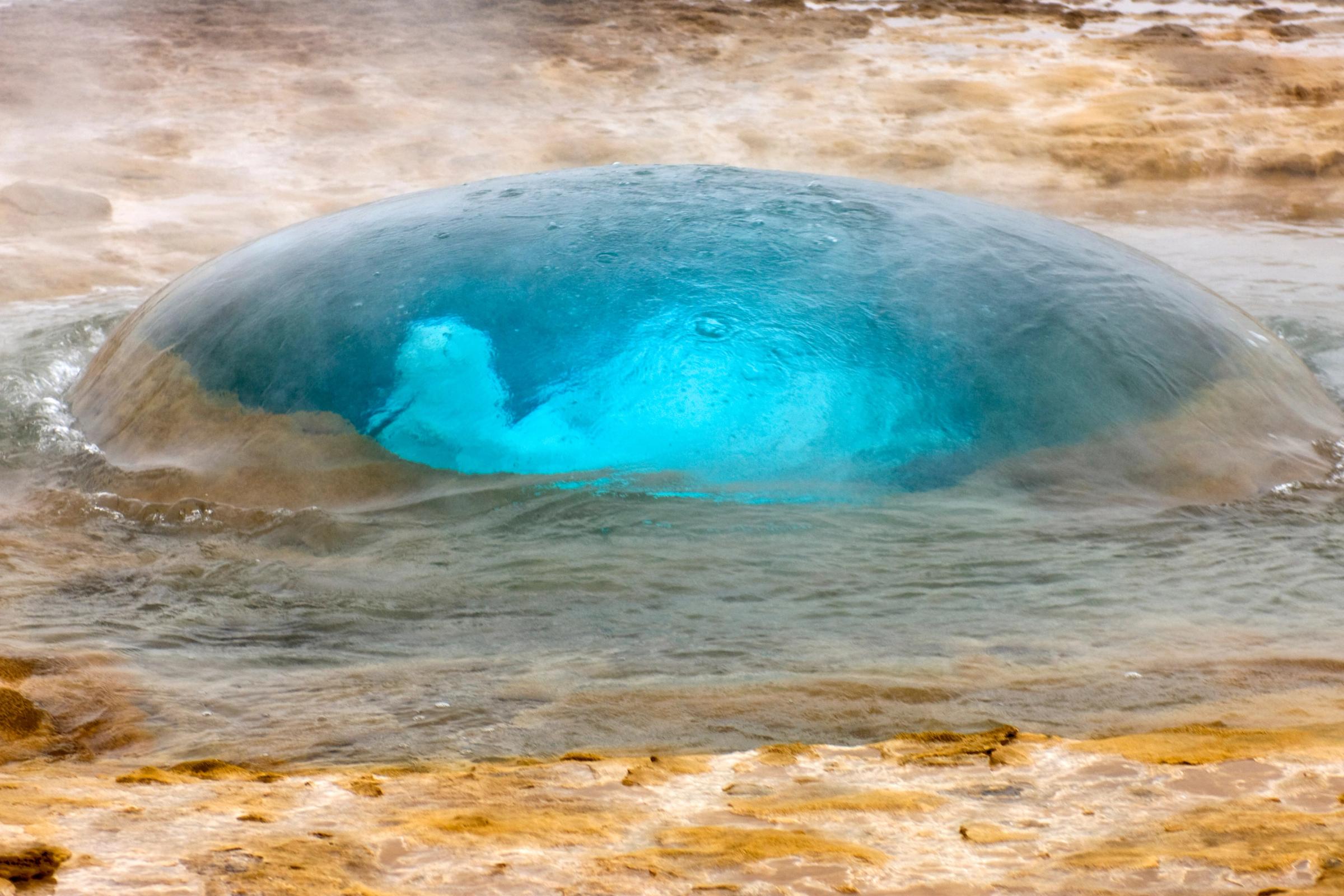
Just before each eruption, a dome of water swells at the vent. That's the blue bubble you see in every photo from this place. When you see it form, get your camera ready.
How Geysers Actually Work
Both Geysir and Strokkur feed into the same underground system. Water seeps deep into the ground, heats up past boiling in volcanic rock, and builds up pressure in narrow underground channels. When the pressure gets high enough, the water turns to steam, and everything shoots up.
Iceland sits on the Mid-Atlantic Ridge, where the North American and Eurasian tectonic plates are slowly pulling apart. That's why Iceland has so much geothermal activity and why places like Haukadalur exist.
Where Is Geysir Located?
Geysir is in the Haukadalur geothermal area in southwestern Iceland, about 115 km east of Reykjavík. By car, that's roughly 1.5 to 2 hours via Route 35.
Golden Circle Context
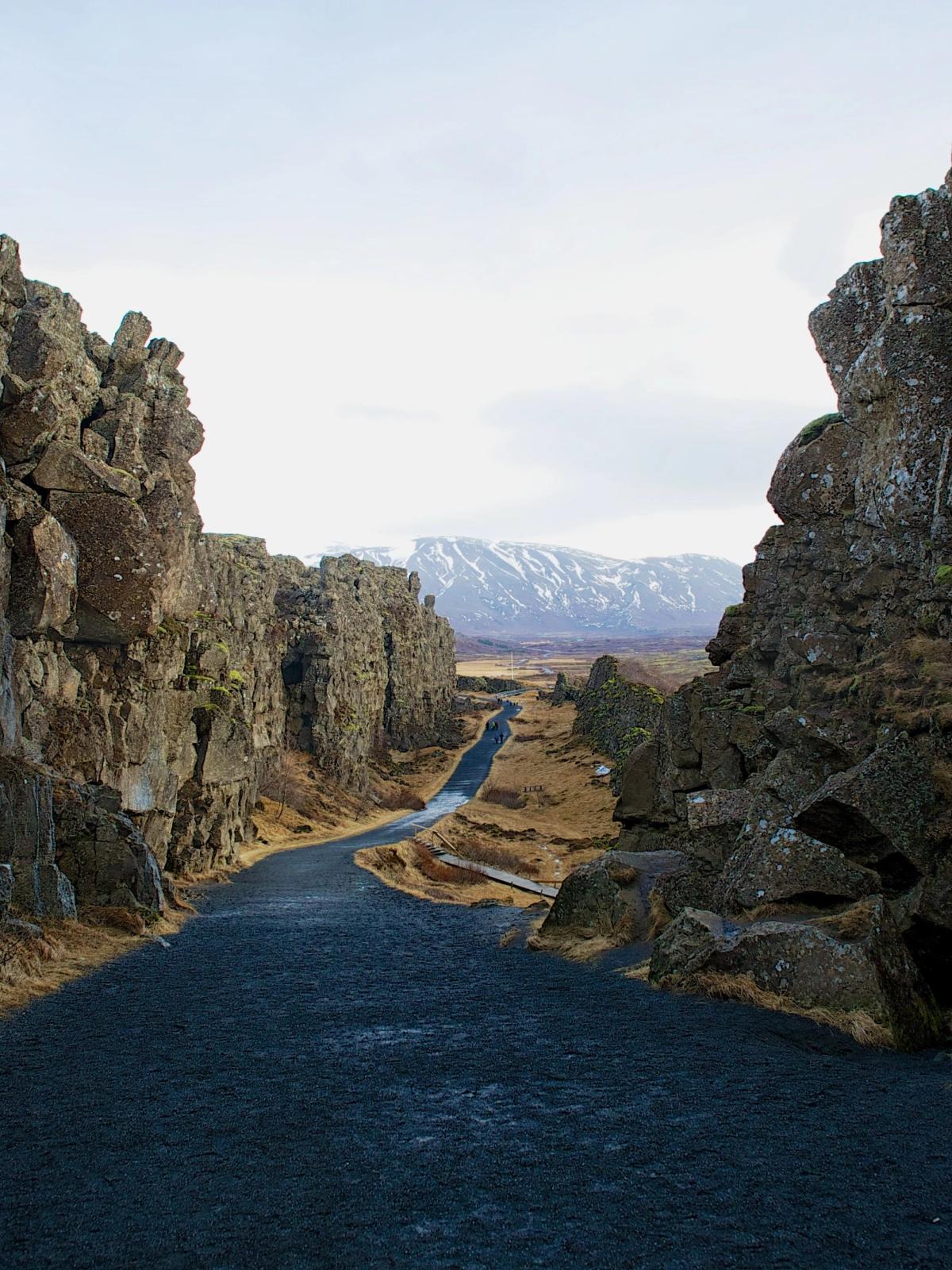
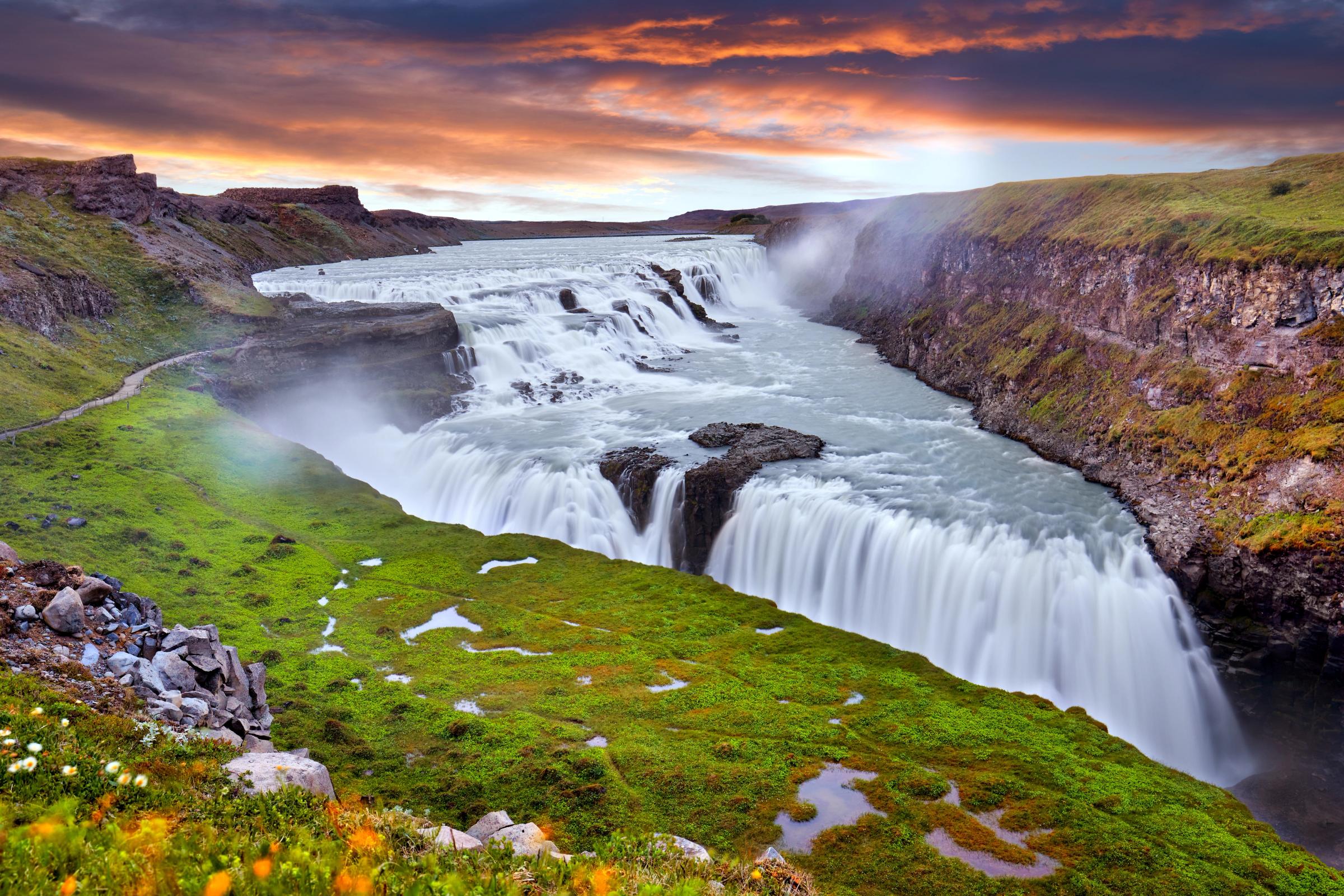
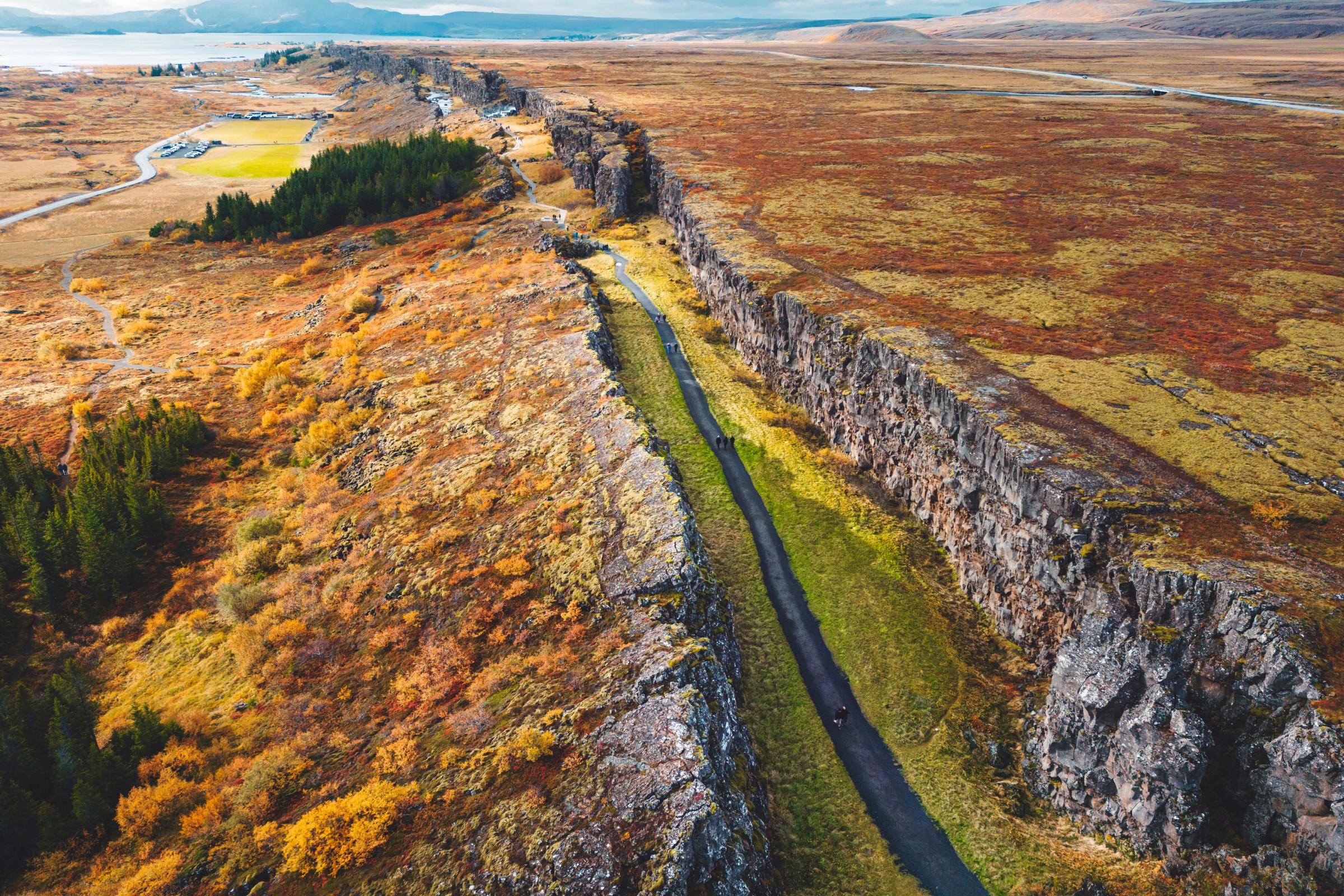
Geysir is the second of three main stops on the Golden Circle, between Þingvellir National Park and Gullfoss Waterfall. The full loop is around 230 km and connects three different things: the tectonic rift at Þingvellir, the geothermal activity at Geysir, and the big waterfall at Gullfoss, just 10 km further down Route 35.
Parking costs 1000 ISK and is paid via the Parka app. The area is open year-round, but if you're going between October and April, check road.is and vedur.is before you leave. Things can change fast in Iceland.

What You'll Actually See at Geysir
There's more here than two geysers. If you just watch Strokkur and go back to the car, you're missing a good part of the place.
The Great Geysir
Even when it's not doing anything, it's worth a stop. The pool is wide and deep blue, with silica deposits around the edges built up over hundreds of years. Knowing this is the exact spring that gave geysers their name, and that it once shot water over 100 meters, makes it more interesting than it looks at first.
Don't come expecting an eruption. Come knowing what you're actually looking at.
Strokkur
This is the main event. Eruptions happen every 5 to 10 minutes, so the wait is short. Watch at least 3 to 5 cycles because the wind shifts between them, and each eruption looks a bit different.
A few things that help:
- Wind direction matters. Stand upwind for a clear view. Stand downwind and you'll get hit with hot spray.
- Get lower. Crouching gives you a better angle against the sky.
- Use burst mode or slow motion. The eruption is over in about a second. One frame often catches nothing.
The Geothermal Landscape
Past the two main geysers, the area has mud pots bubbling at 80 to 100°C, steam vents, warm streams, and mineral staining across the rocks, yellow from sulfur and red from iron. The ground is warm underfoot in spots. It looks pretty unlike anything else.
The sulfur smell is there. You stop noticing it quickly.
Laugarfjall Viewpoint
There's a short uphill walk to the Laugarfjall lava dome above the geothermal field. From up there, you can see the whole area below, steam rising from multiple vents across the valley, and on a clear day, glaciers in the distance. It takes about 20 extra minutes, and most people skip it. Don't skip it, especially if the main area is busy.

Things to Do at Geysir
The site is compact, but there's enough to fill 60 to 90 minutes if you walk around properly.
Here's what's worth doing:
- Watch Strokkur from a few different spots, not just one angle
- Walk the full marked loop through the geothermal field; most people only stop at Strokkur and leave
- Walk up to Laugarfjall for the view over the whole area
- In winter, snow around steaming vents makes for some of the best photos on the whole Golden Circle
- Combine the stop with Gullfoss, 10 minutes away by car, and Þingvellir to complete the full route
- The Secret Lagoon, about 25 km (15 miles) away, is a good last stop if you want a warm soak before heading back
Tip: Most tour buses stop for 20 to 30 minutes and move on. If you wait them out or walk to the far side of the loop, you'll often have the place nearly to yourself.
Best Time to Visit Geysir
The site is open around the clock, year-round. When you show up makes a real difference.
Summer (June to August)
The Midnight Sun means you can visit at 10 PM in full daylight, which is actually useful. Crowds peak from late June through mid-August, with tour buses arriving from mid-morning through mid-afternoon. Roads are in good shape, and logistics are simple, but expect a lot of people.
Winter (November to March)
Fewer visitors and more dramatic scenery. Snow around steaming vents looks really good. Northern lights are possible on the drive. Roads can be icy, studded tires are standard in Iceland in winter, and checking road.is before you go is not optional.
Shoulder Seasons (April to May and September to October)
The best balance for most people. Fewer buses, manageable crowds, decent weather. Autumn adds some color to the hills; spring brings wildflowers near the geothermal field.
Best Time of Day
Before 9 AM or after 5 PM, whatever the season. Between 11 AM and 3 PM is when the buses all arrive at once, and the viewing area gets packed.
Geysir vs. Strokkur: What's the Difference?
This is what trips up most first-time visitors. Here's a simple breakdown:
| Feature | Geysir | Strokkur |
| Eruption frequency | Rarely, triggered by earthquakes | Every 5 to 10 minutes |
| Typical height | Historically 70 to 100+ meters | 15 to 20 meters, sometimes up to 40 |
| Reliability | Unpredictable | Very reliable |
| Why it matters | Historical significance, gave geysers their name | The actual eruption experience |
Both are in the same geothermal field, about 50 meters apart. Strokkur is the one you'll watch. Geysir is why the site is famous.
Golden Circle Itinerary Planning
Geysir fits naturally into a Golden Circle day. The loop is around 230 km and takes 6 to 8 hours at a comfortable pace.
Half-Day Golden Circle
The three core stops in order:
- Þingvellir National Park: walk the rift valley, see Öxarárfoss waterfall (allow 1 hour)
- Geysir Geothermal Area: watch Strokkur, walk the loop (allow 60 to 90 minutes)
- Gullfoss Waterfall: two-tiered cascade into a canyon, short walk to viewpoints (allow 45 minutes)
Total driving between the three stops is about 1.5 hours combined.
Self-Drive vs. Guided Tours
Driving yourself gives you control over timing, which is useful for avoiding the midday rush. Guided tours from Reykjavík range from 10,000 to 19,000 ISK, and include transport and cover all three stops in one loop.
If you're self-driving in winter, check road.is for conditions and vedur.is for weather warnings before you leave.
Optional Add-Ons
Two stops that work well on a longer day:
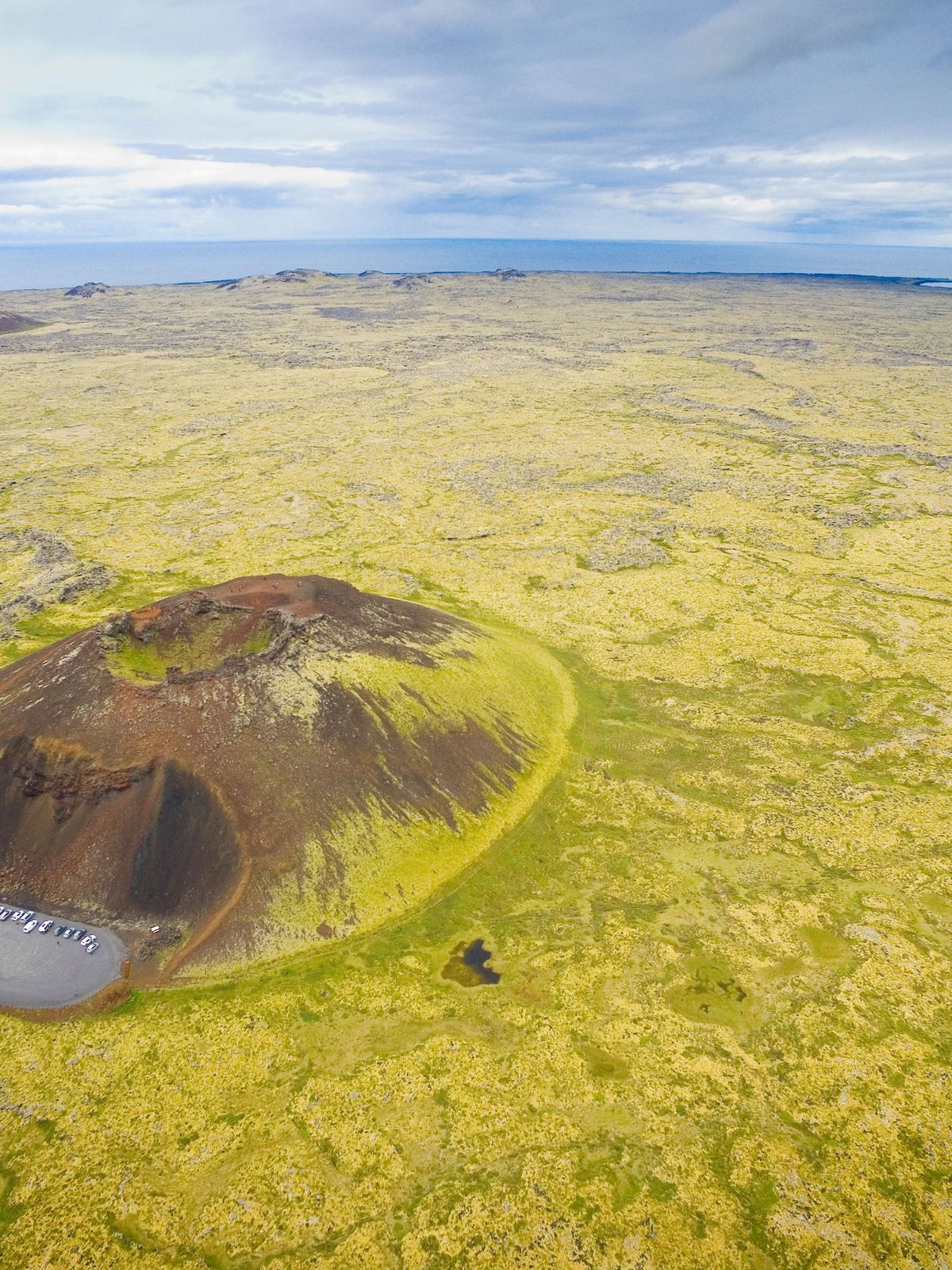
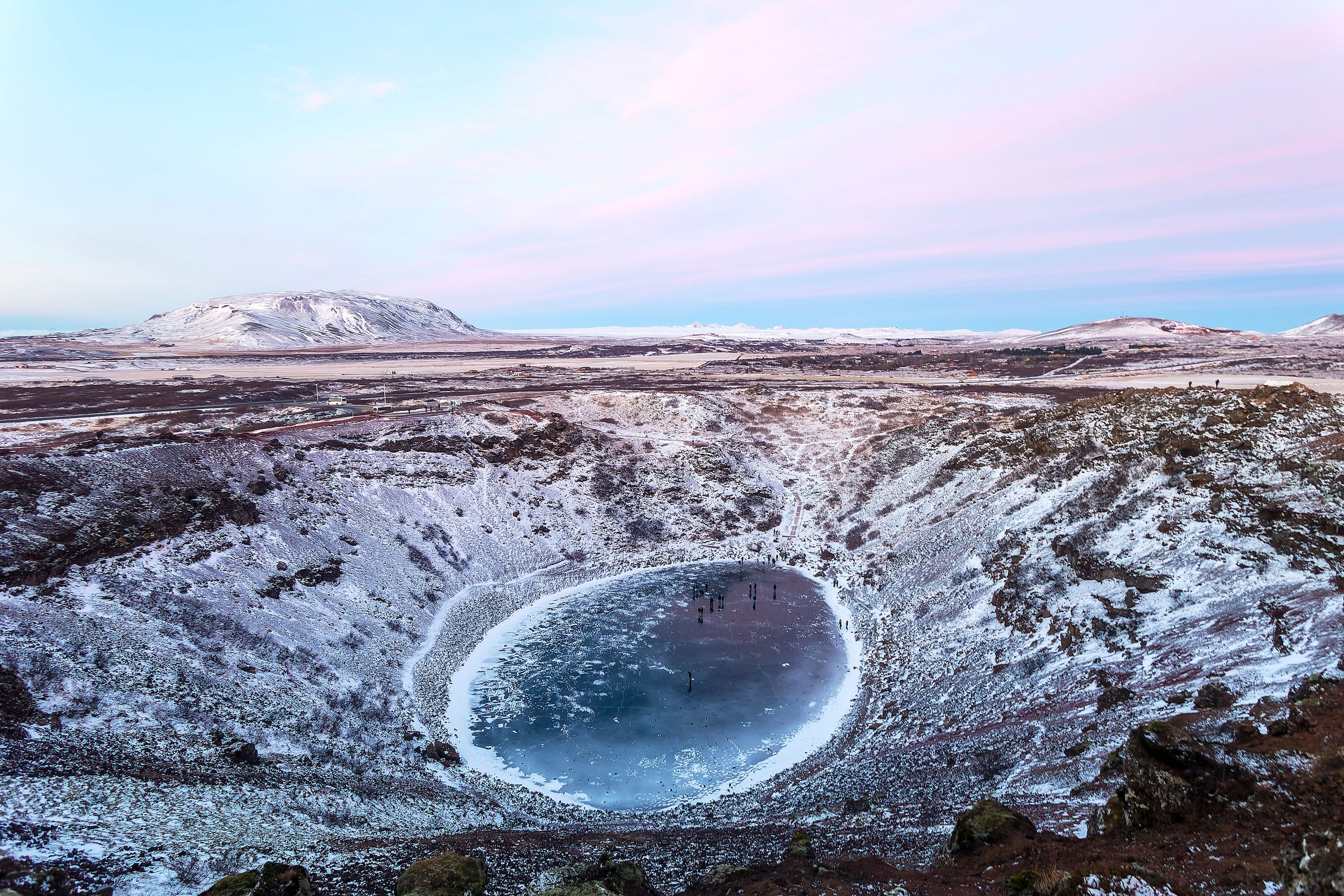
- Kerið Crater: a volcanic crater lake with red slopes and blue water, about 30 km from Geysir
- Secret Lagoon: a natural hot spring pool near Fluðir, about 25 km away. The entry fee is 4,500 ISK ($37).
Practical Travel Tips
The basics before you arrive.
Time Needed
If you just want to see Strokkur erupt a couple of times, 30 to 45 minutes is fine. A proper visit, the full loop, Laugarfjall, a few eruption cycles, takes 60 to 90 minutes. If you're into photography, two hours go fast.
Costs and Facilities
Getting in is free. Parking is paid through the Parka app. The car park is open around the clock, but overnight stays aren't allowed.
On-site, there's a visitor center, restaurant, café, gift shop, and restrooms. Most of those run during daytime hours.
Safety
A few things that aren't optional:
- Stay on the marked paths and boardwalks the whole time. The ground in geothermal areas can be thin and unstable, even where it looks fine.
- The water in the pools and streams is boiling, up to 100°C. Don't touch it, and don't let kids near the edges.
- Pay attention to the wind direction around Strokkur. Hot spray goes where the wind goes.
- Keep children close on the boardwalks at all times.
Safety note: The barriers around the pools are there for a reason. People have been badly burned by ignoring them. Stay behind them.
Photography
- Shoot from upwind of Strokkur for clear shots
- Watch for the blue bubble swelling at the vent just before each eruption, that's the one worth waiting for
- Flying a drone in Iceland requires a permit; check the rules before bringing one
- Bring a lens cloth because the steam mist gets on everything near the vents
Is Geysir Worth Visiting?
Yes, with one thing to know first.
Strokkur erupts every few minutes; the landscape is worth walking around, entry is free, and the whole thing takes under two hours. It works for families, solo travelers, and anyone doing the Golden Circle.
The one thing: the Great Geysir almost certainly won't erupt while you're there. If you show up expecting both geysers to perform, you'll probably leave a bit flat. Go knowing Strokkur is the show and Geysir is the history, and the visit makes total sense.
As far as famous geysers go, Geysir holds up well. Old Faithful at Yellowstone erupts roughly every 90 minutes. Strokkur goes every 5 to 10. El Tatio in Chile and the Valley of Geysers in Kamchatka, Russia, are both much harder to get to. Geysir wins on reliability and ease of access, even if it doesn't have Yellowstone's scale.
Conclusion
Geysir is more than a box to tick on the Golden Circle. It's the place that gave geysers their name, sitting on some of the most geologically active ground on the planet. Even if the Great Geysir stays quiet, Strokkur goes off every few minutes without fail.
Give yourself 90 minutes, walk the full loop, go up the hill for the view, and pair it with Gullfoss and Þingvellir for one of the most varied day trips Iceland has.
Frequently Asked Questions About Geysir