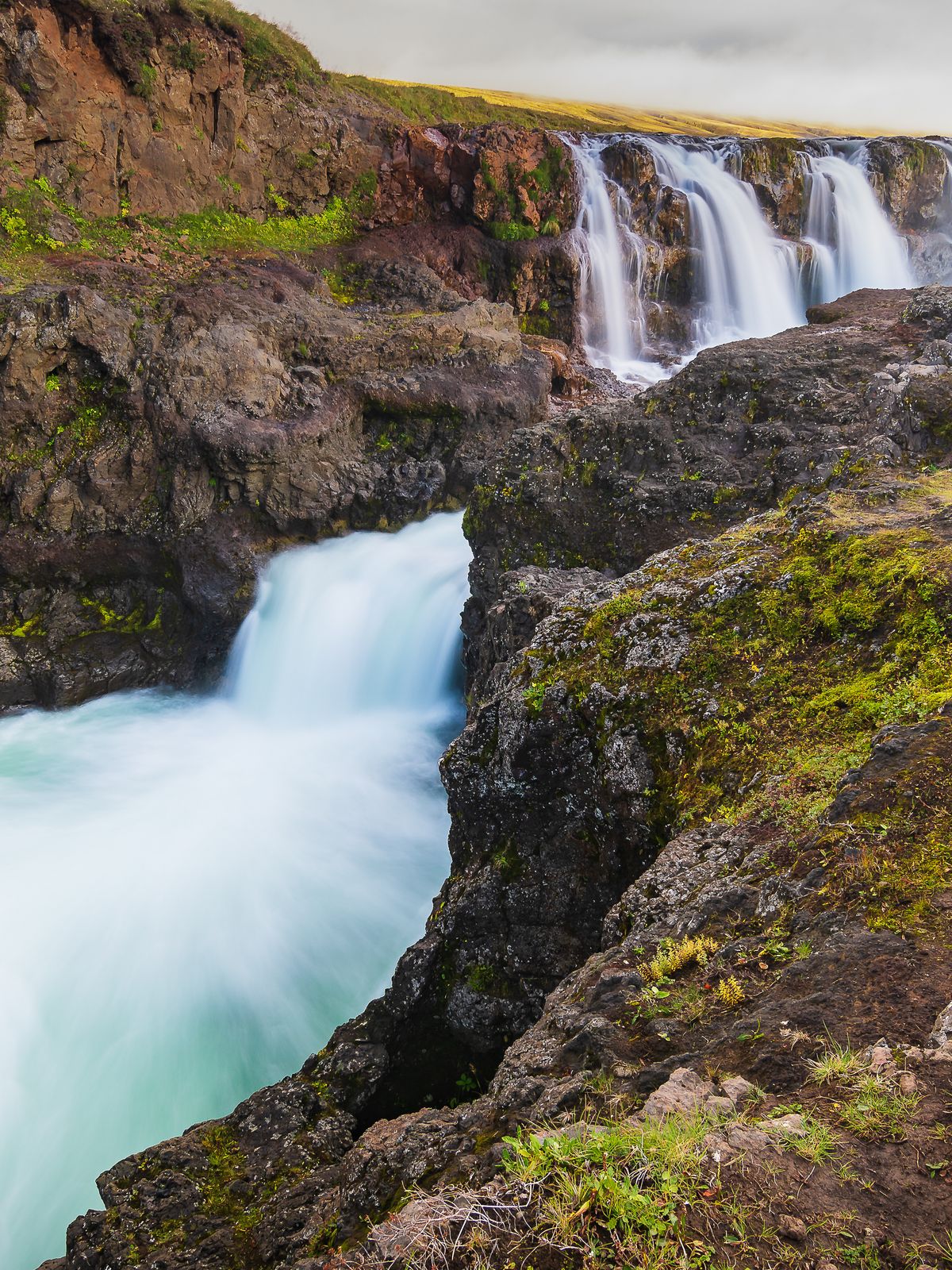
Most people visiting Iceland stay focused on the south. Up north, though, there’s a canyon that deserves just as much attention. Jökulsárgljúfur may be tough to pronounce, but once you’re there, it makes immediate sense why people talk about it. You’ll find Europe’s most powerful waterfall, unusual rock shapes that look almost engineered, and long trails where you might not see anyone else for quite a while.
What’s Jökulsárgljúfur?
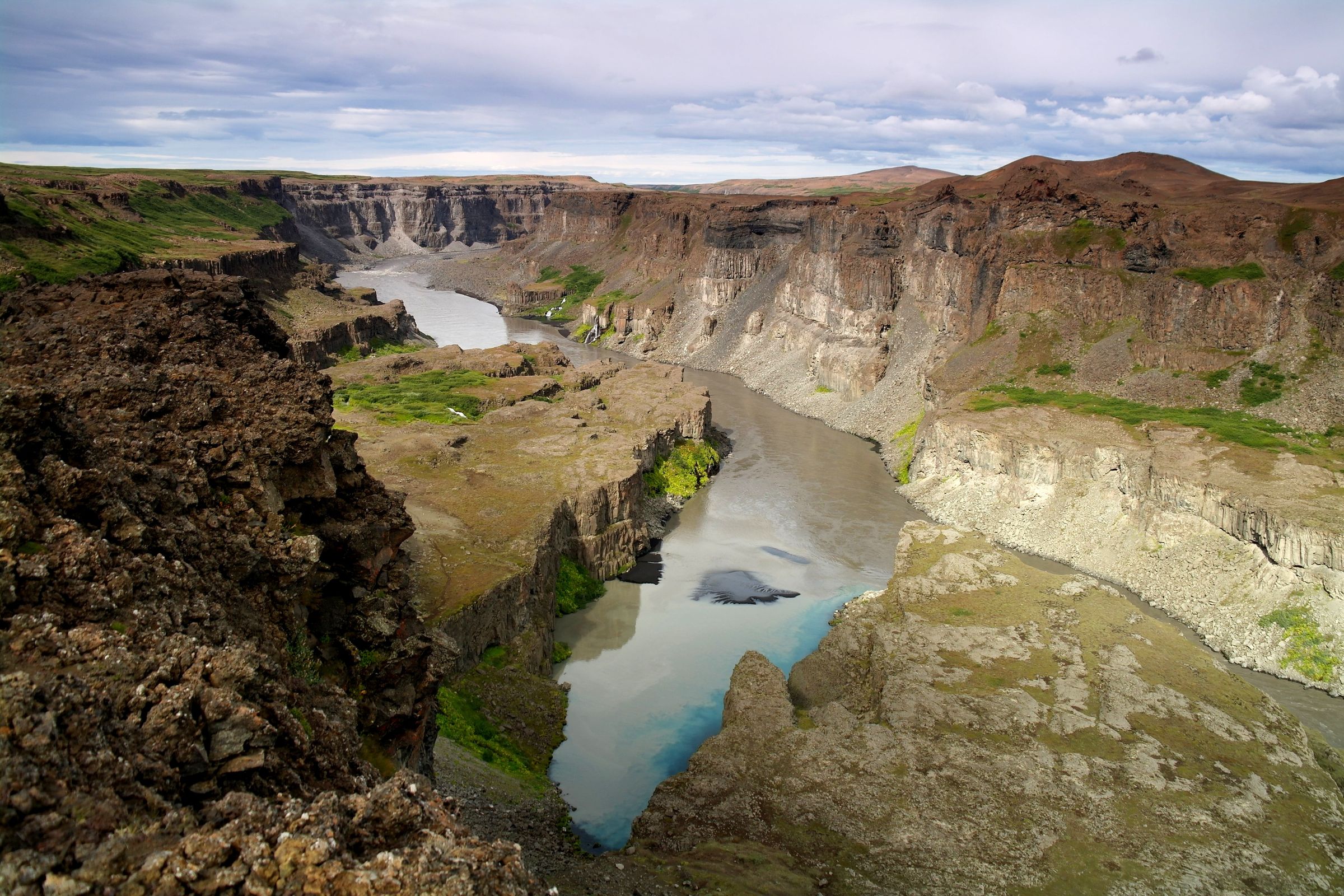
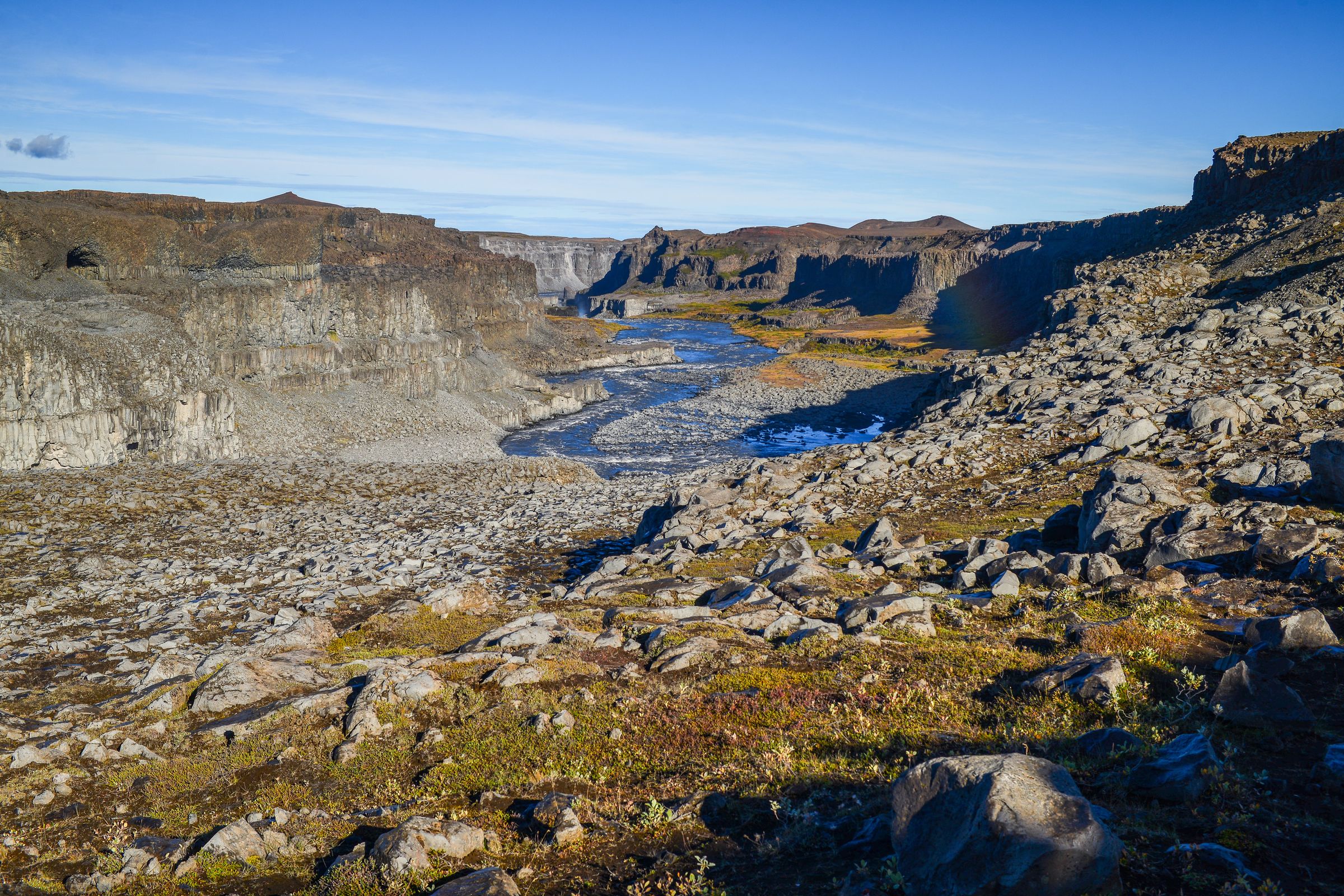
Jökulsárgljúfur means “Glacial River Canyon,” shaped by a river flowing from Iceland’s largest glacier. It did not form slowly, but through massive floods caused by volcanic eruptions under the ice. Those floods carved the canyon in a very short time. The area later became part of Vatnajökull National Park.
Why it’s worth the drive north
This part of Iceland sees far fewer visitors than the south. That means more quiet and more space at major sights. You can stand near huge waterfalls without crowds. The whole area feels calm and remote.
Where Is Jökulsárgljúfur?
Jökulsárgljúfur is in northeast Iceland, far from Reykjavík. The canyon runs along the Jökulsá á Fjöllum river between Ásbyrgi in the north and Dettifoss in the south. It takes about 2.5 hours to drive from Akureyri and 5 to 6 hours from Reykjavík. Most visits require at least one overnight stay.
Getting your bearings with nearby spots
Lake Mývatn is the closest major area, about an hour away. Many people visit both places on the same trip. Once you leave the Ring Road, the landscape becomes more remote. Knowing your route ahead of time helps.
How Jökulsárgljúfur Was Formed
The canyon was created by sudden floods, not slow erosion. Volcanic eruptions under the glacier melted large amounts of ice at once. The released water reshaped the land very quickly. This explains the canyon’s dramatic features.
Best Time to Visit
Your visit depends a lot on the season. Summer has long days and open roads, which makes travel easier. Spring and fall can work with flexible plans. Winter access is very limited.
How to Get There
Getting there is simple once you understand the roads. Some routes are paved, while others are gravel and rough. Road conditions can change with the weather. Planning your drive makes the trip smoother.
Top Things to See in Jökulsárgljúfur
The canyon includes waterfalls, forests, cliffs, and unusual rock formations. Each stop feels different from the next. Seeing a few sites shows how varied the area is. The contrast is a big part of the experience.
Best Hikes in Jökulsárgljúfur
Hiking is the best way to explore the canyon. There are short walks and longer, more demanding routes. Even easy trails have great views. Longer hikes reach quieter parts of the area.
Nearby Attractions to Add to Your Itinerary
Several well-known places are close to the canyon. These include geothermal areas, a whale-watching town, and popular waterfalls. They are easy to add without long detours. Together, they round out a northern Iceland trip.
Practical Tips for Visiting
This is a remote area with limited services. Road conditions and weather can change quickly. Bringing supplies and checking conditions is important. Good planning makes the visit more relaxed.
Conclusion
Jökulsárgljúfur feels powerful, quiet, and remote. It is less developed than many parts of Iceland. The planning and long drive are part of the experience. Taking your time here makes it more rewarding.
Key things you need to know:
The canyon stretches 25 kilometers through northern Iceland
Dettifoss is here, and its force is on a different level from anything you’ll see elsewhere
Roads often close in winter, so planning matters
June to August is the most reliable time to visit
Trails range from short, simple walks to multi-day routes
Much quieter than the busy southern sights
What's Jökulsárgljúfur?
The name translates to “Glacial River Canyon,” and that’s exactly what it is.
This canyon was shaped by a river flowing from Iceland’s largest glacier. What’s surprising is how fast it formed. Instead of millions of years of slow erosion, the main shaping events were huge floods caused by volcanic eruptions under the ice. When those eruptions melted enormous amounts of water all at once, the floods tore through the land in days or weeks.
The area became a national park in the 1970s and is now part of Vatnajökull National Park. That shift brought better protection and resources.
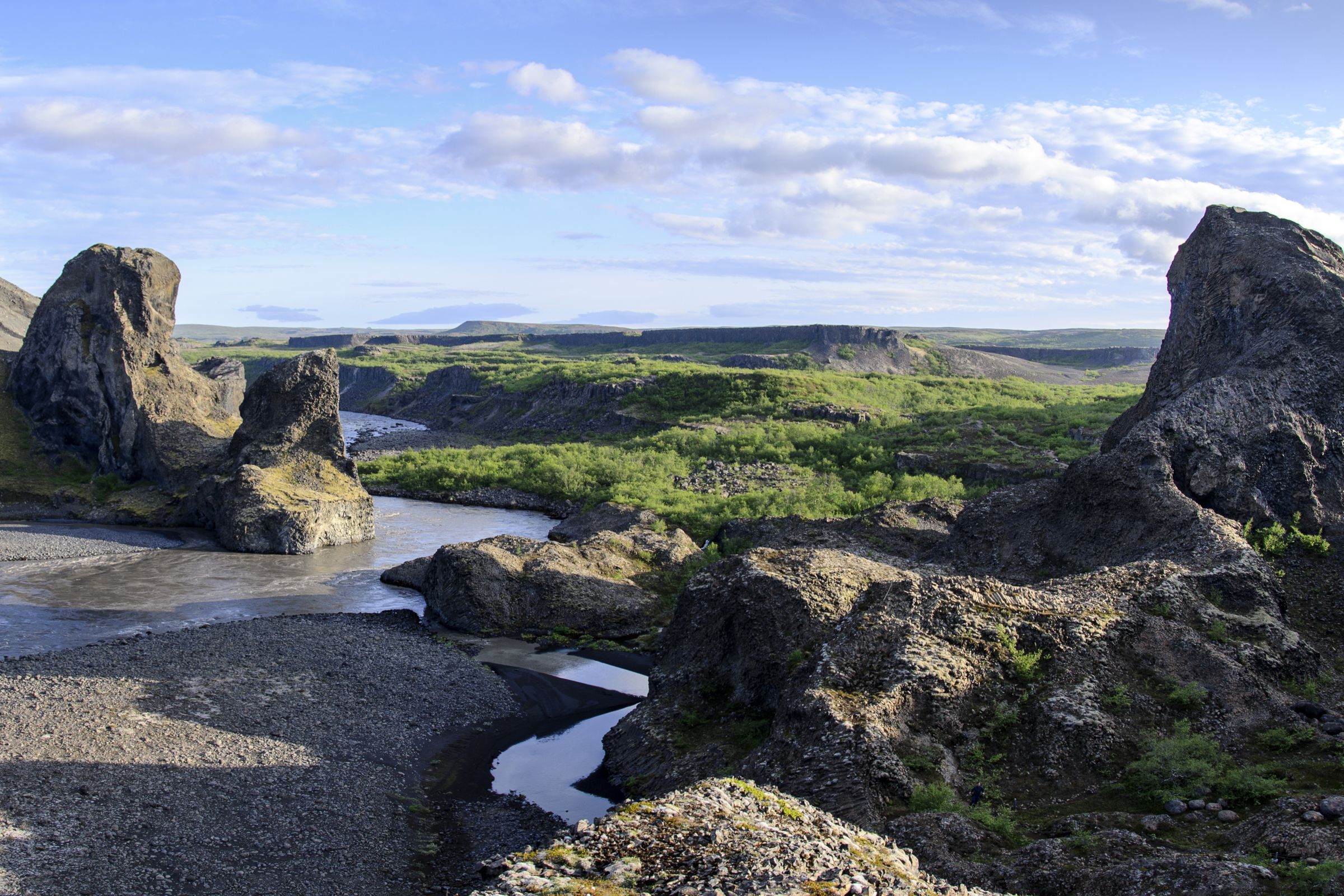
What stands out is how much the landscape changes as you move through it. One area is loud and intense with waterfalls, another is filled with odd rock patterns that carry sound in strange ways, another has an unexpected patch of forest, and then you reach red volcanic hills that look nothing like the rest.
Most travelers never make it this far, which means you get space and quiet that’s hard to find in the south. The canyon sits on the Diamond Circle, a northern route that includes several major sights but sees far fewer visitors.
Here you can stand near an enormous waterfall without dozens of people squeezing in beside you. You can also walk through rock formations tied to old stories and likely hear nothing but natural sounds.
Where Is Jökulsárgljúfur?
Jökulsárgljúfur sits in Iceland’s northeast, a long way from Reykjavík.
The canyon follows the Jökulsá á Fjöllum river. At the northern end is Ásbyrgi, a horseshoe-shaped canyon. At the southern end are Dettifoss and the nearby waterfalls.
From Akureyri, it’s about a 2.5-hour drive. From Húsavík, it’s around an hour. Coming from Reykjavík usually means planning an overnight trip, since it’s a 5–6-hour drive before you start exploring.
Getting your bearings with nearby spots
Lake Mývatn is the closest major stop, roughly an hour south of the waterfalls. Many people combine both areas since they’re on the same route.
Once you turn off the Ring Road, you’re heading into more remote terrain. This isn’t a quick detour. It’s better to know where you’re going before you start.
How Jökulsárgljúfur Was Formed
The canyon’s history is unusual. Instead of slowly eroding over ages, it was shaped by sudden floods caused by volcanic eruptions under the glacier. These events moved huge amounts of water and rock in a short time, creating the layout you explore today. Once you know that, the whole place feels easier to understand.
When volcanoes and ice don’t mix
Iceland’s largest glacier sits over active volcanoes. When those volcanoes erupted under the ice, they melted huge amounts of water with no obvious outlet. Pressure built until the water broke free all at once in enormous floods.
Two of these floods are known: one around 10,000 years ago, another about 3,000 years ago. They carried house-sized boulders and reshaped the landscape quickly.
The unusual geology
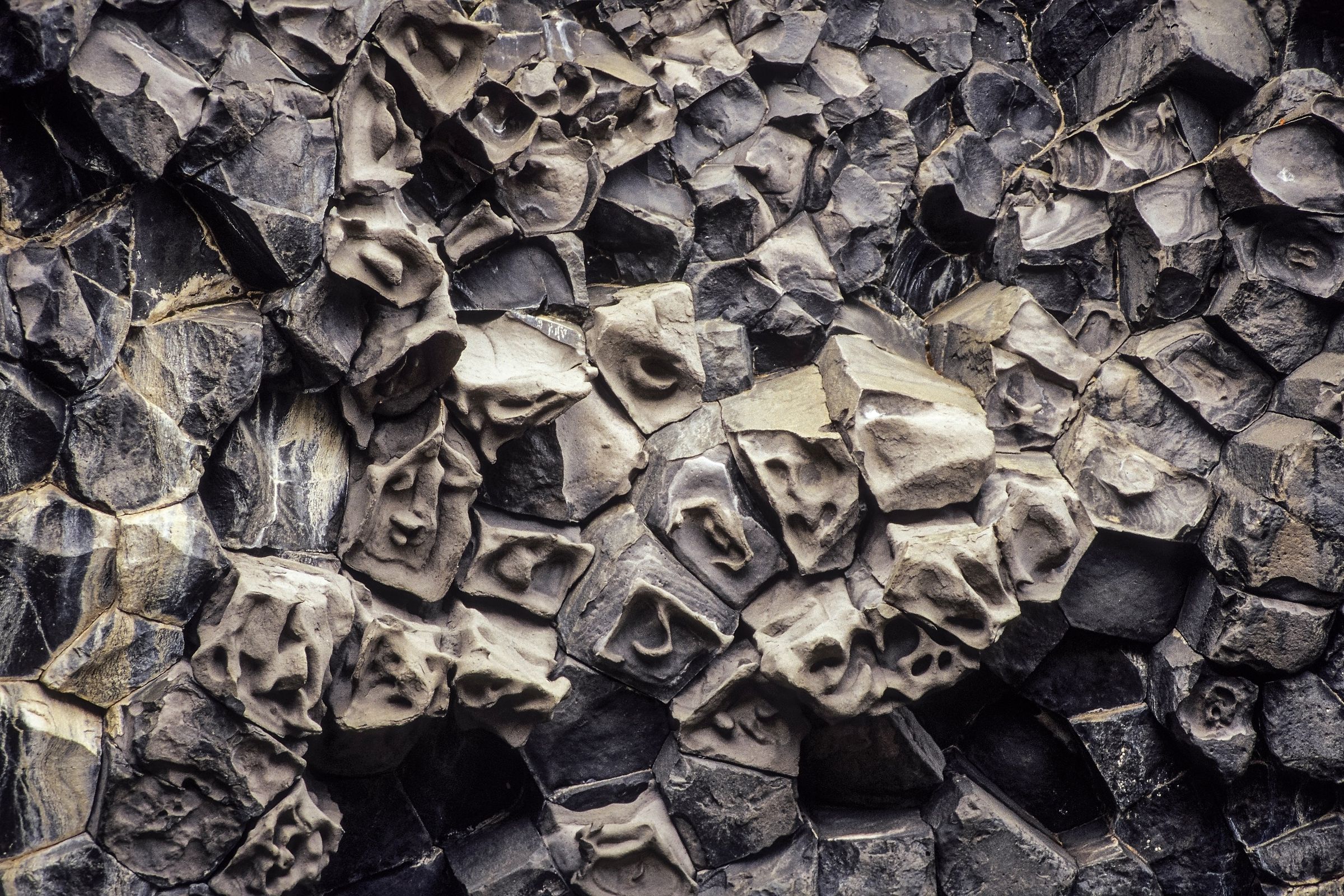
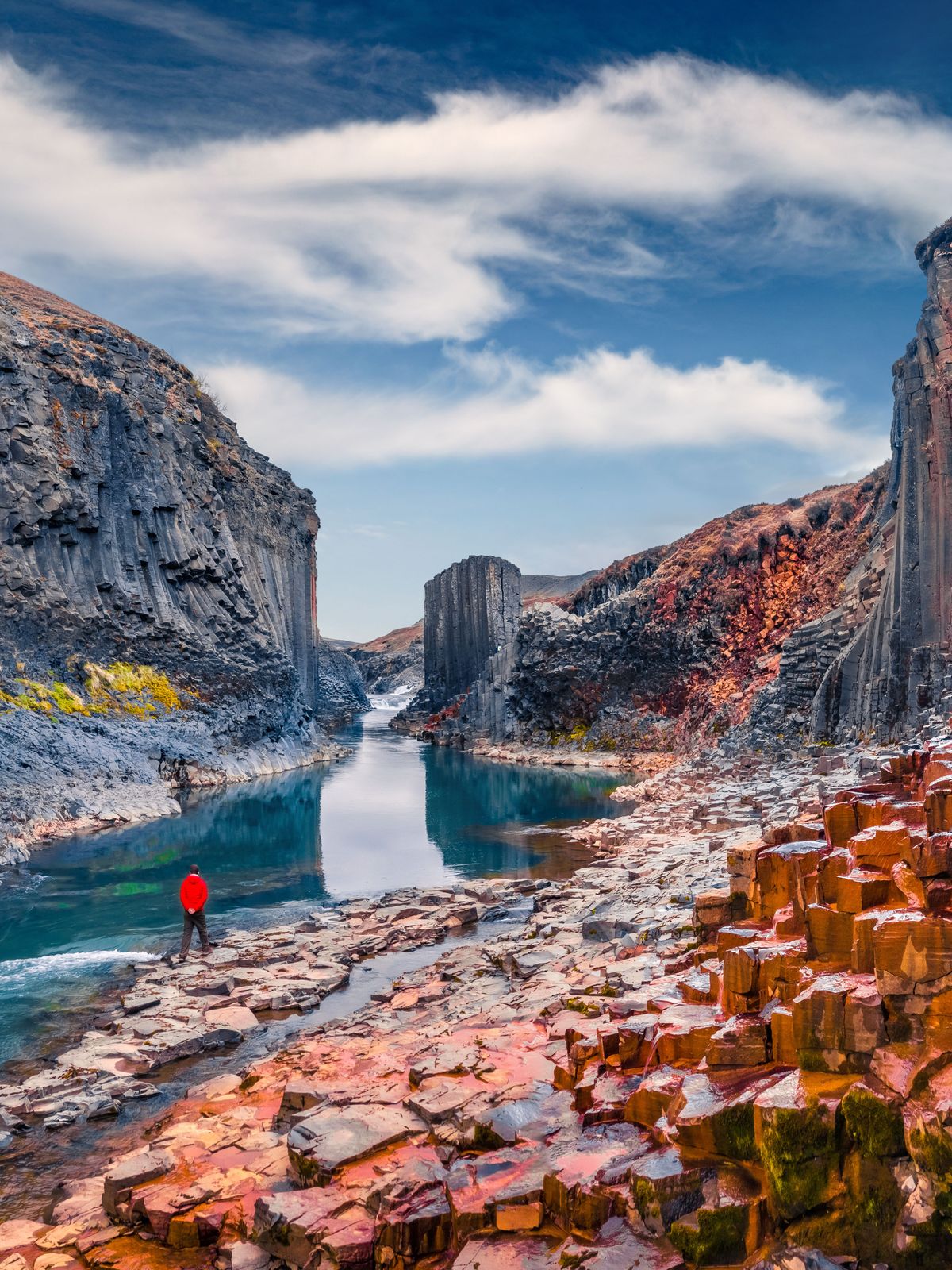
The dark rock in the canyon is basalt from old lava flows. When the floods hit it, the water carved it into odd forms.
Hljóðaklettar, or the Echo Rocks, reveal the inside of an ancient volcano. The surrounding rock was stripped away, leaving chambers and columns that send sound bouncing around in odd ways.
Ásbyrgi, at the north end, has a shape so clean that older stories tied it to legends. Today, we know the floods formed it, but the shape still feels unusually precise.
Best Time to Visit
Your experience here can be completely different depending on the season. Summer gives you long days and open roads, which makes everything easier. Spring and fall can be great too, but you need to be flexible with conditions. Winter limits access so much that most visitors skip it entirely. Picking the right window makes the trip far more straightforward.
May and September can be great, but conditions vary. Some roads close without warning, and trails can be wet or rough. You’ll see fewer people, though, and early fall can offer northern lights if skies are clear.
Winter isn’t realistic for most visitors
From October through May, access becomes very limited. Snow closes roads, temperatures drop, and daylight is short. A few guided trips operate with specialized vehicles, but only when the weather allows.
How to Get There
Getting to Jökulsárgljúfur is straightforward once you understand the road system, but it’s still remote enough that you’ll want to plan your route carefully. Some roads are paved, others aren’t, and both can change in quality depending on the weather. Knowing the differences between the access roads helps you decide what kind of car you need and how much time to budget.
Two roads, two experiences
Road 862 on the west side connects to the Ring Road and is partly paved. In summer, most cars can handle it.
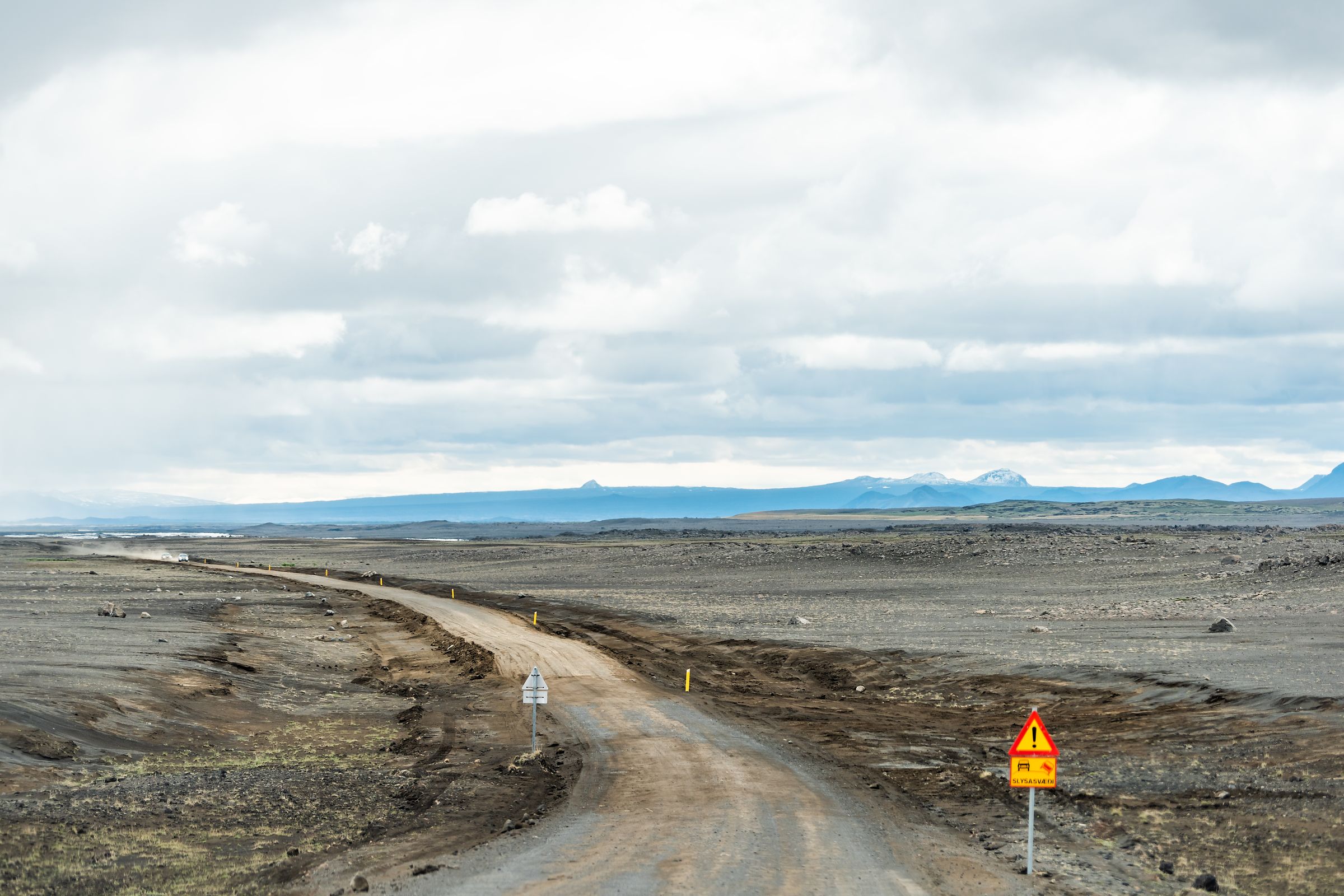
Road 864 on the east side is gravel and rougher, but it brings you closer to the waterfalls. The views are excellent, but the driving is slower and bumpier.
What kind of car you need
A regular car is usually fine in good summer weather, especially on Road 862. A 4x4 gives you more security on uneven roads.
Rental insurance in Iceland often excludes highland or gravel damage, so it’s worth reading the details before you go.
Tours vs driving yourself
There’s basically no public transport here. Your choices are renting a car or booking a tour. Tours remove the stress of navigation and road conditions but limit how long you can stay at each spot.
If you like exploring at your own pace, driving yourself is the better option.
Rent a Car in Iceland
Explore every corner of the island with complete ease
The canyon is packed with places that look completely different from one another, which keeps things interesting as you move around. You’ll see waterfalls, odd rock formations, stretches of forest, and steep cliffs all within a fairly short distance. Visiting a few of these spots helps you understand how diverse the area really is.
Dettifoss
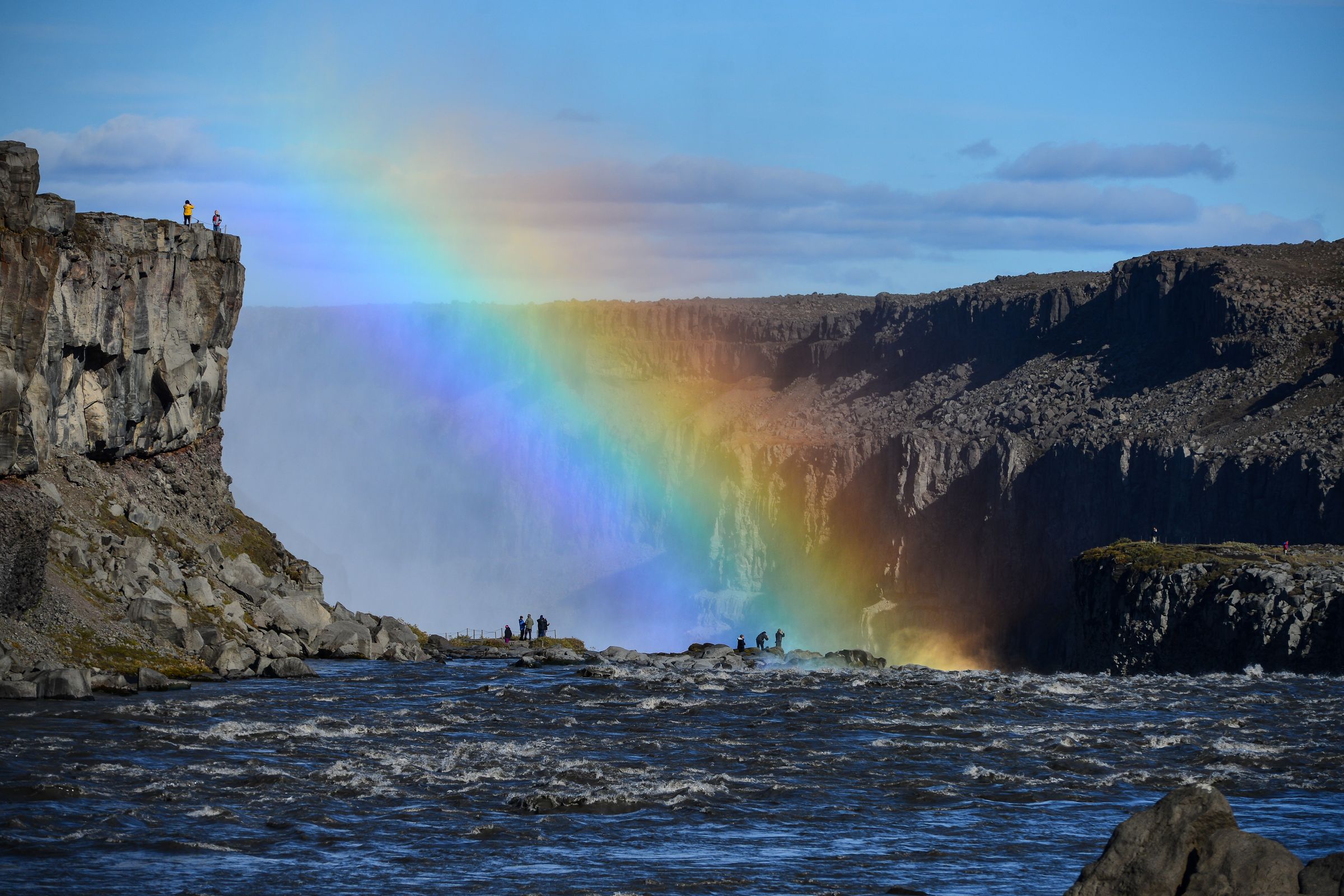
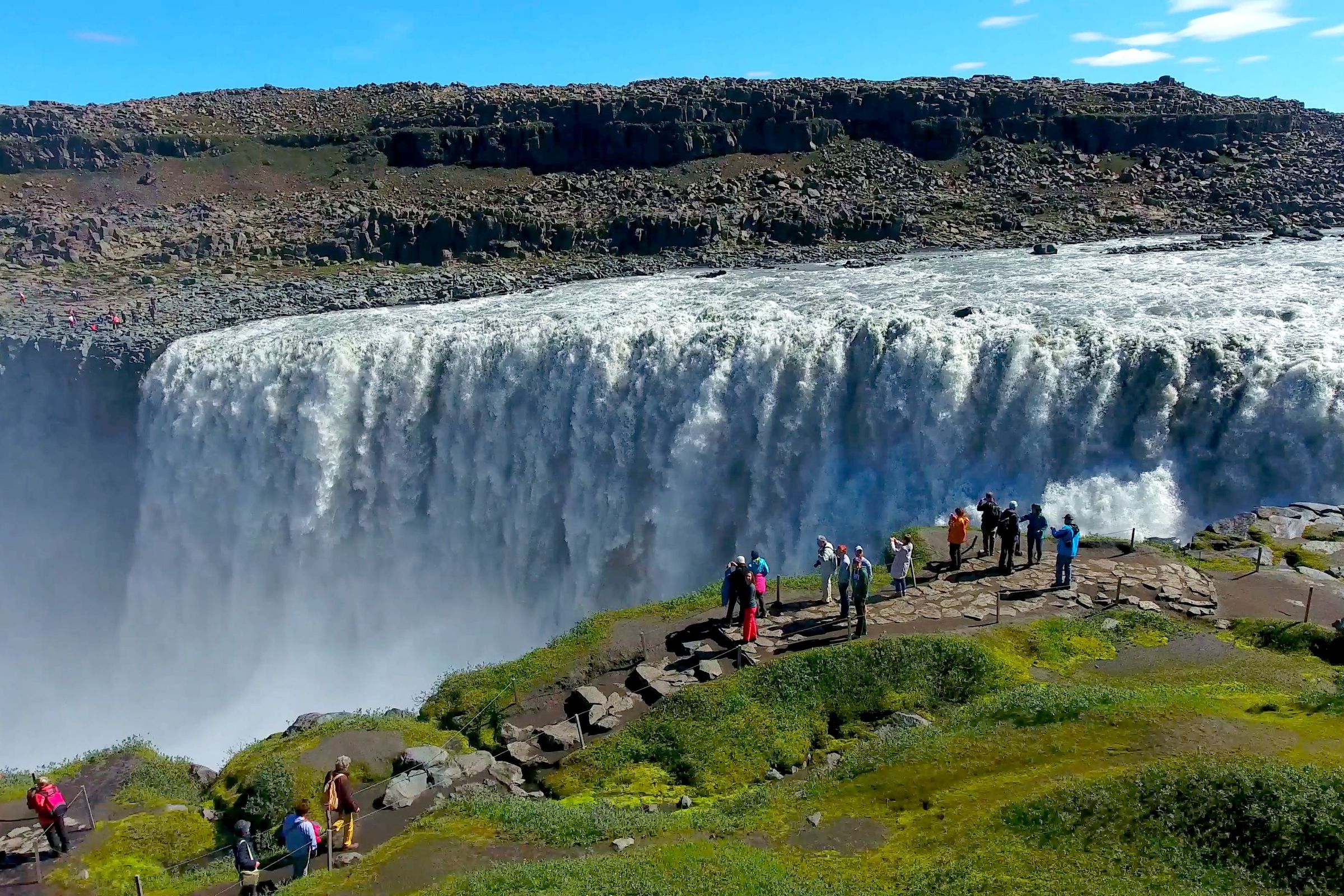
Dettifoss is the most powerful waterfall in Europe by volume. It drops 44 meters and pushes out about 193 cubic meters of water every second. You usually hear the rumble well before you see the fall, and the sound has a weight to it that you can actually feel.
You can visit from either side of the river. The west side (Road 862) has a built viewpoint and an easier path. The east side brings you closer, but the ground is uneven and takes a bit more attention. If you have to choose one, the east side gives you a more immediate sense of the force of the water.
The mist travels far and rises surprisingly high, so expect to get wet even on a sunny day.
Selfoss
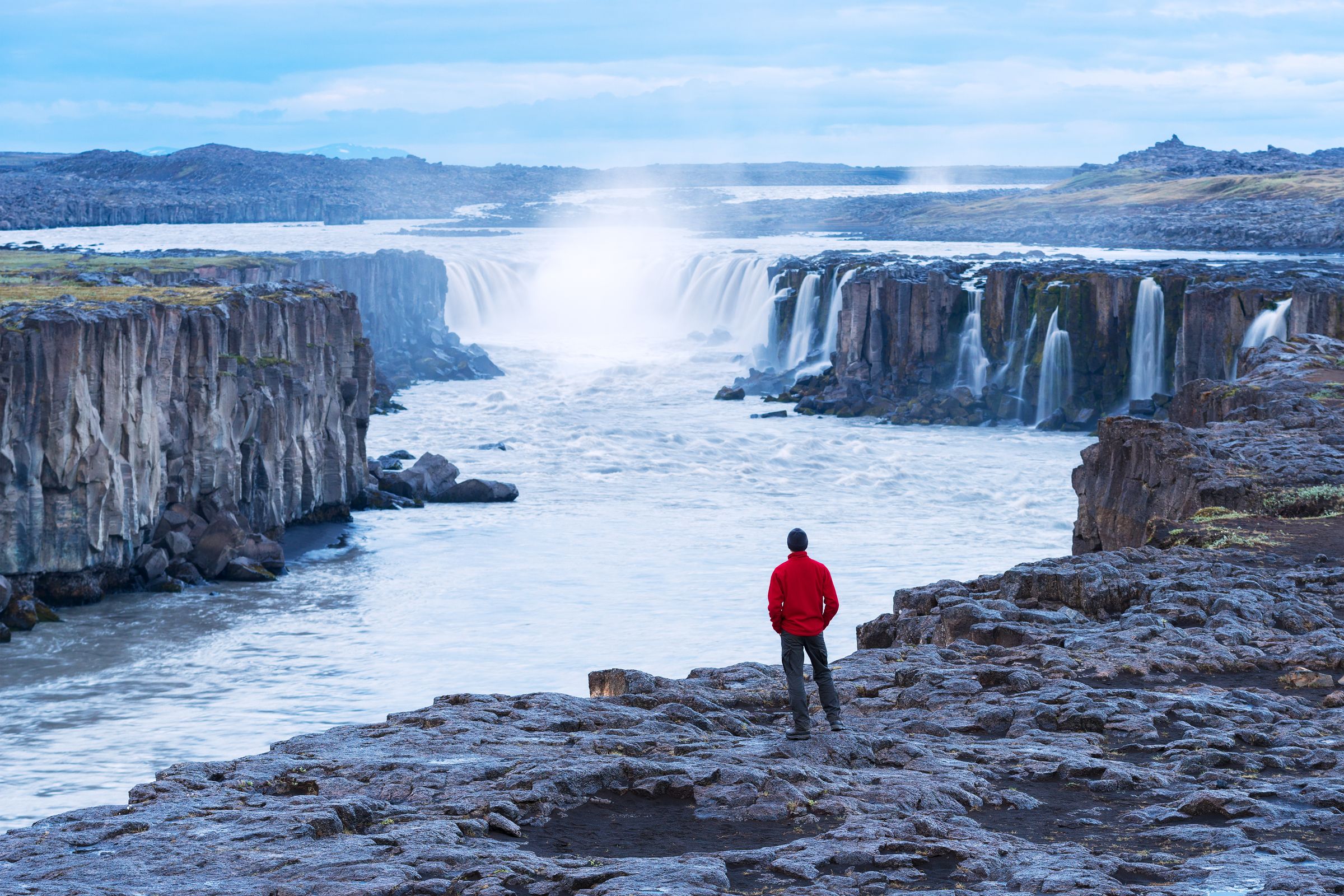
Selfoss sits about 15 minutes upstream from Dettifoss and has a completely different feel. It’s only 11 meters tall, but it’s wide and spreads out across a curved line of smaller drops.
You can walk fairly close to the edge here, and the whole place feels calmer than Dettifoss. The staggered ledges create a really clean, layered look that makes it easy to photograph.
Hafragilsfoss
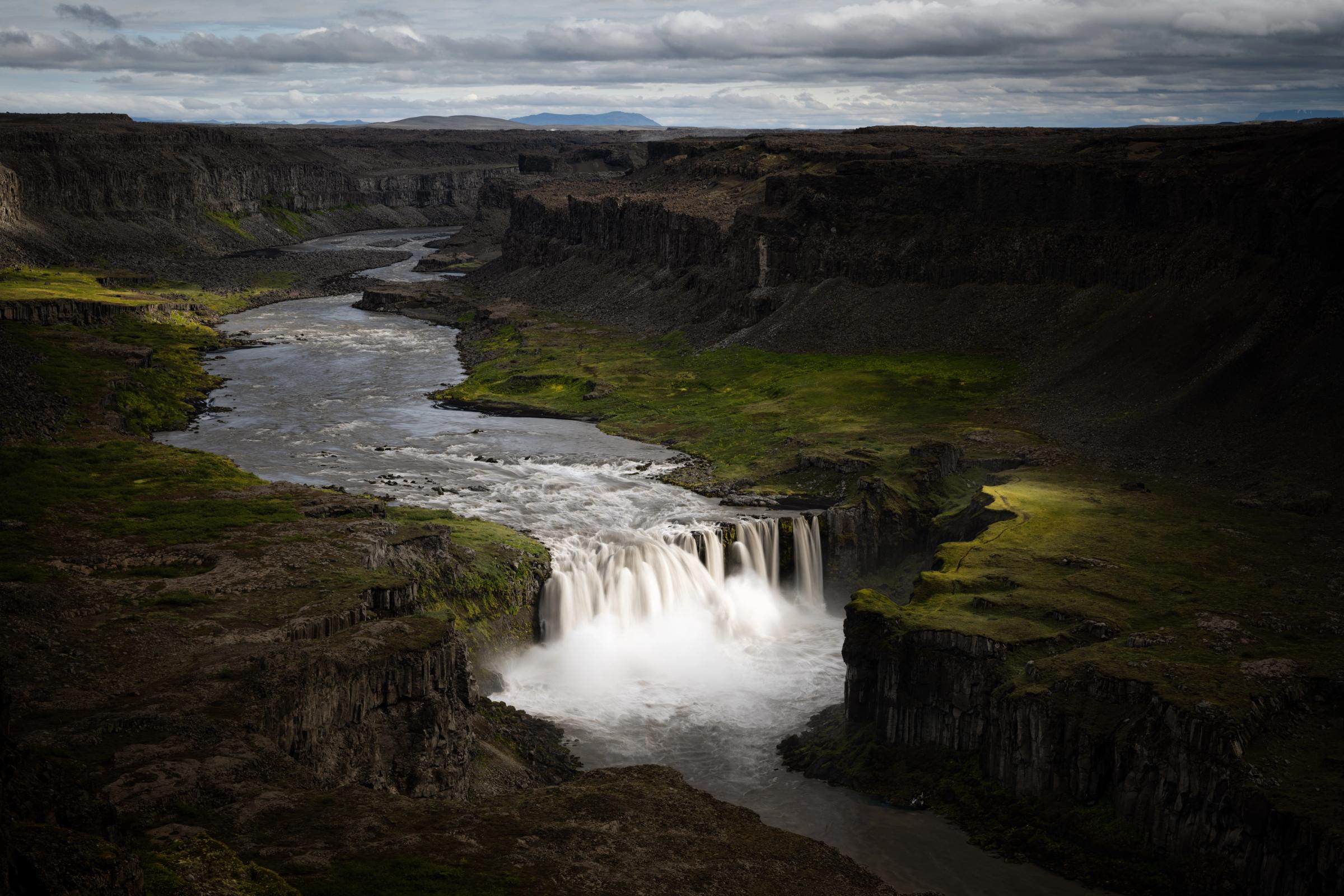
A few kilometers downstream from Dettifoss, Hafragilsfoss tends to get overlooked simply because it requires a little extra walking. The path isn’t difficult, which means you often get the viewpoint mostly to yourself.
The fall drops 27 meters into a narrow gorge framed by basalt columns. It’s not as overwhelming as Dettifoss or as wide as Selfoss, but the steep walls and the depth of the gorge make it a surprisingly striking stop.
Ásbyrgi Canyon
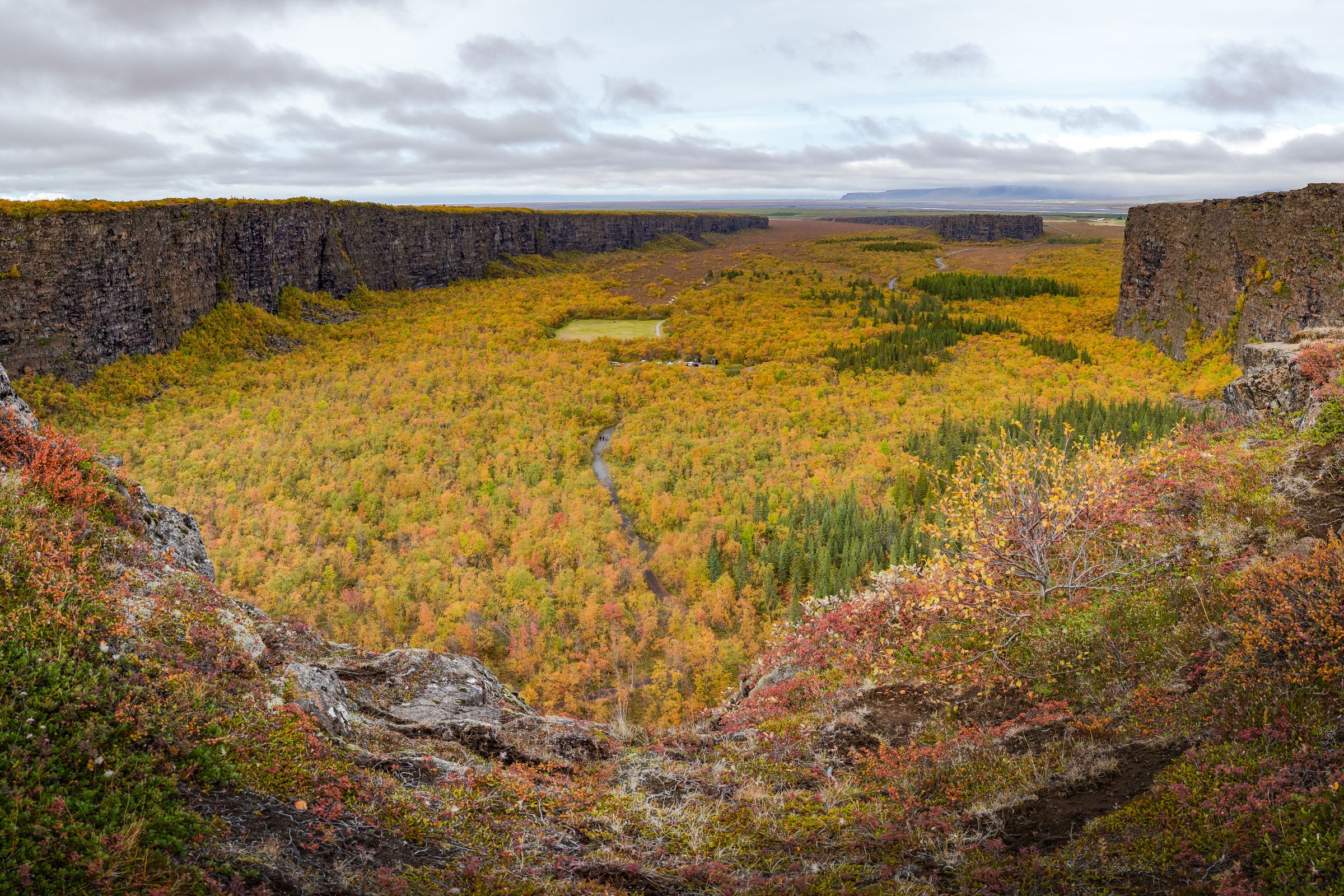
Ásbyrgi sits at the northern end of the canyon system and feels different from everything around it. The horseshoe-shaped walls create a sheltered space where trees can grow, which is rare in Iceland.
The canyon is about 3.5 kilometers long and roughly a kilometer wide, with 100-meter cliffs surrounding a flat floor. There’s a small lake at the far end that reflects the walls on calm days.
If you want a higher view, the hike up to Eyjan (the central plateau) gives you a clear look at the whole horseshoe shape.
Hljóðaklettar and Rauðhólar
Hljóðaklettar, or the Echo Rocks, has basalt formations that look almost engineered. Floods carved out odd shapes and pockets that bounce sound around in strange ways. Even a short shout echoes in directions you don’t expect.
A couple of formations have names, like the Church, which has angles that resemble a built structure, and the Troll, a rock tied to old stories about giants turning to stone.
Right next to the dark lava rock are the Rauðhólar hills, which are bright red because the iron in the volcanic material oxidized over time. The color shift is stark and makes this area stand out from the rest of the canyon.
Best Hikes in Jökulsárgljúfur
Walking is the easiest way to get a real sense of the canyon. The trails range from short, simple loops to longer routes that take you through quieter parts of the area. Even the quickest hikes give you some surprisingly good viewpoints, while the longer ones show how varied the landscape really is. There’s something here for every comfort level.
Easy options for most people
The walk between Dettifoss and Selfoss is about 2.5 kilometers round-trip and takes about an hour. It can be slick in spots, but it isn’t difficult.
Ásbyrgi has a short, accessible trail to the lake with great views of the cliffs.
The Hljóðaklettar loop is 2.7 kilometers with some uneven footing, but it is manageable for most people.
Moderate challenges
The Eyjan viewpoint in Ásbyrgi is a 4.8-kilometer round-trip hike with a steady climb and excellent views.
The Rauðhólar loop is 5.1 kilometers and circles the red hills.
The big adventure
The full canyon trail from Ásbyrgi to Dettifoss covers 32 kilometers and usually takes two days. It includes river crossings and rough ground.
The sections are Ásbyrgi to Vesturdalur (12 km), Vesturdalur to Hólmatungur (8 km with a river crossing), and Hólmatungur to Dettifoss (11.5 km). Campsites exist, but there are no cabins or services.
This route lets you see parts of the canyon that day-trippers never reach, but it requires solid preparation.
Nearby Attractions to Add to Your Itinerary
Since you’re already making the trip up north, it’s easy to add a few nearby spots that really round things out. They’re close, they don’t require complicated detours, and each one shows a different side of the region. You get geothermal areas, a coastal town with real character, and one of Iceland’s most famous waterfalls all within a short drive.
Lake Mývatn
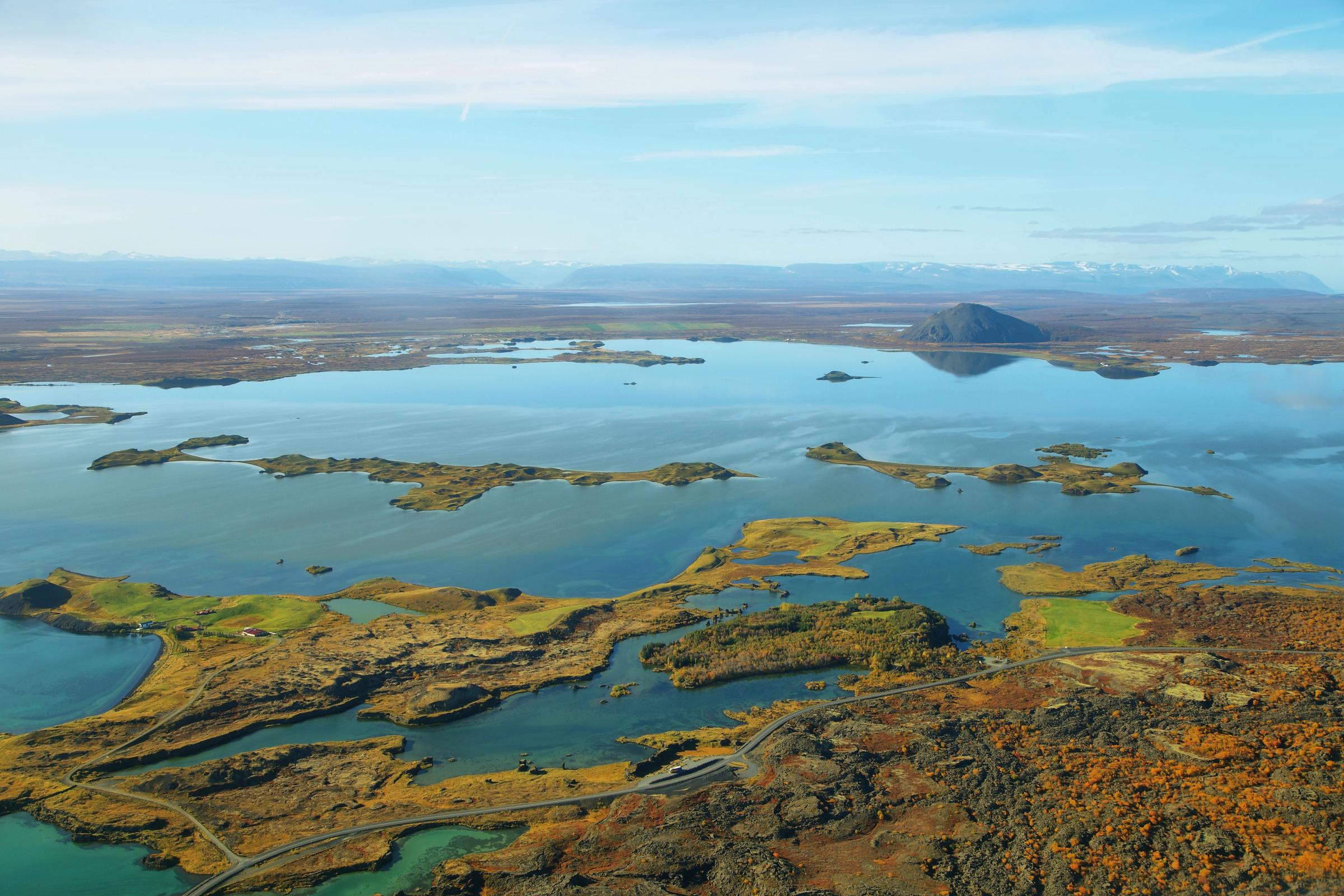
About an hour south of the canyon, the Mývatn area is full of volcanic activity. You’ll see mud pots that never stop bubbling, lava fields with shapes that look like they shouldn’t exist, and hot springs where you can actually relax after a long day outside.
The Mývatn Nature Baths are a quieter, simpler version of the Blue Lagoon. The water is the same warm, milky blue, but the setting feels more open, with mountain views instead of big buildings and crowds.
Húsavík for whale watching
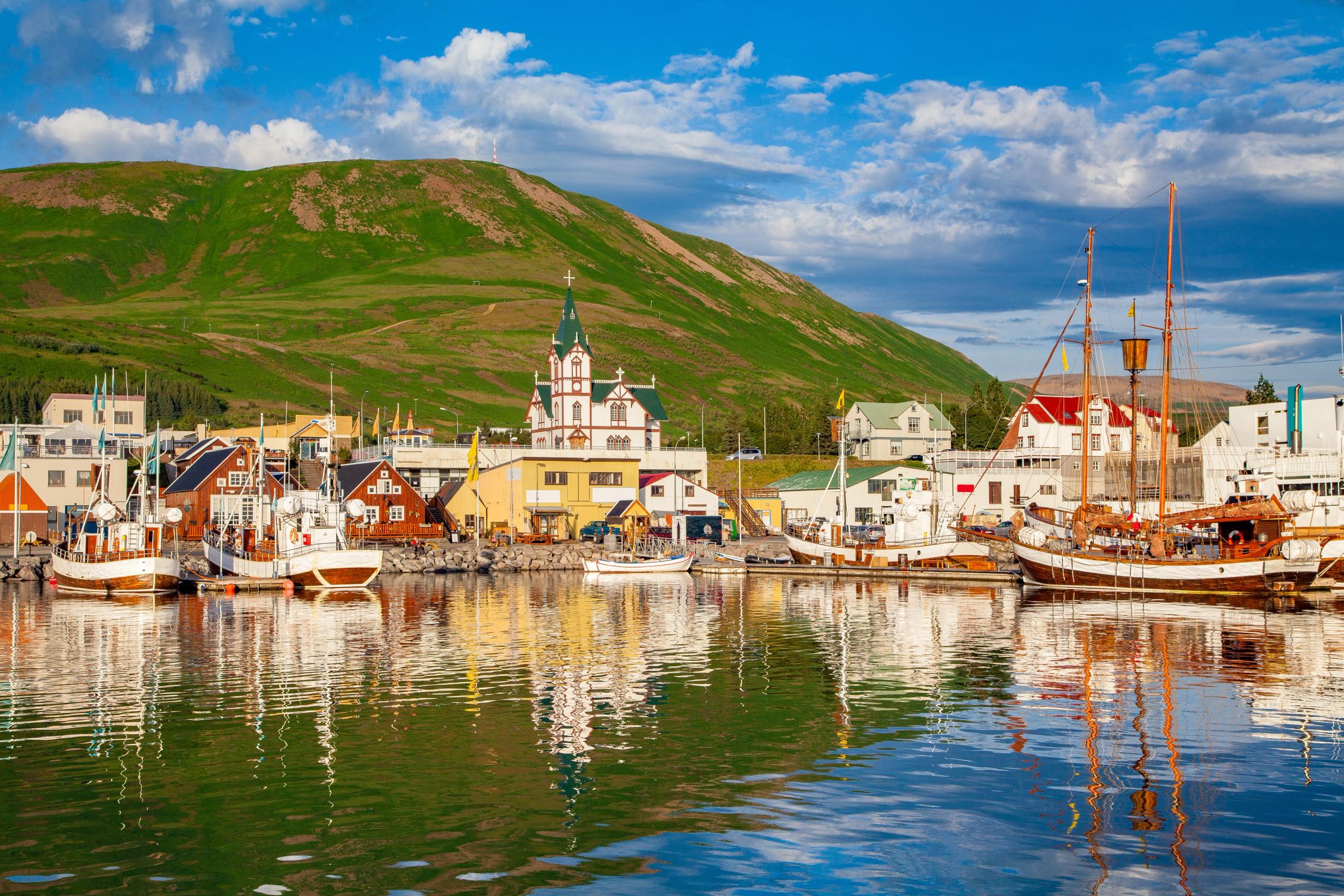
Roughly an hour northwest, Húsavík is known across Iceland for whale watching. From April to October, humpbacks are common, and every now and then, blue whales come through too. The tours here tend to be straightforward, and the bay gives you good visibility.
Even if you skip a boat trip, Húsavík is still worth stopping in. The harbor is small and easy to wander, and the wooden church near the water is one of those buildings you immediately recognize from photos.
Goðafoss
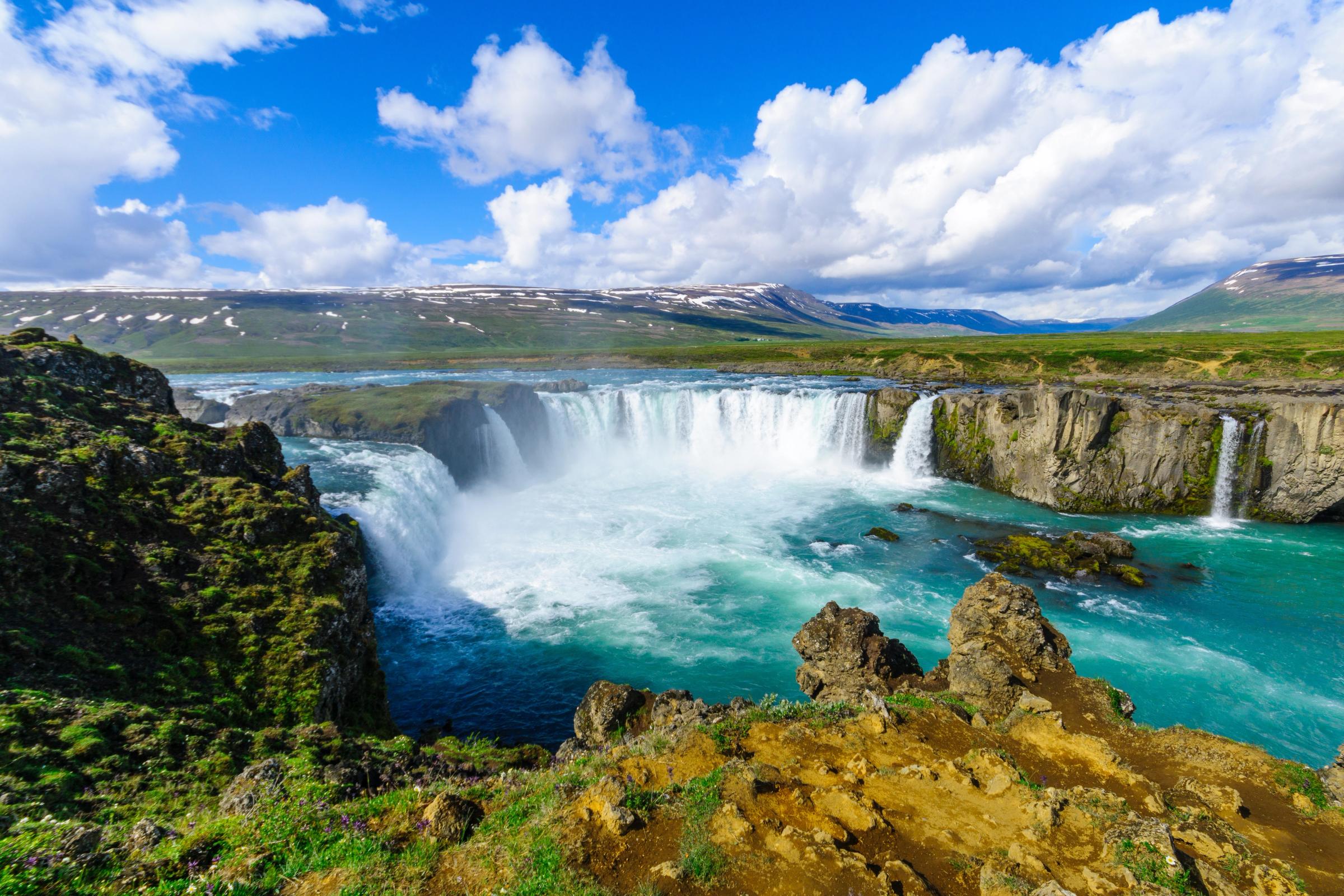
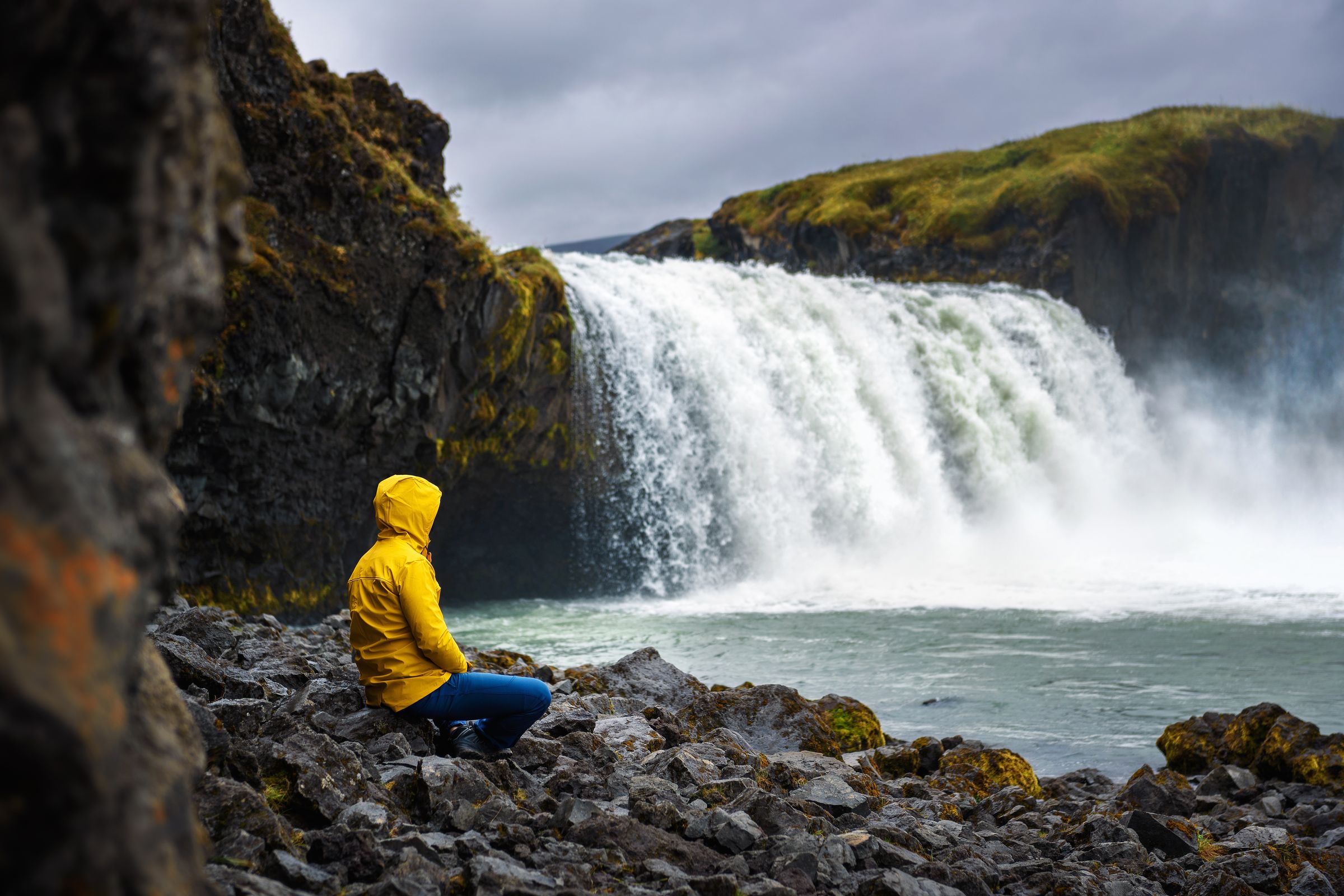
Goðafoss sits right on the Ring Road, so if you’re driving between Jökulsárgljúfur and other northern towns, you’ll pass it anyway. It’s a wide, curved waterfall that’s simple to view from several angles without much walking.
Its name comes from a story dating back to the year 1000, when Iceland officially adopted Christianity. The tale says old pagan idols were thrown into the falls during the transition. Whether that’s exactly what happened or not, the waterfall itself is easy to visit, and a nice contrast to the bigger, more remote canyon falls.
Practical Tips for Visiting
This part of Iceland is pretty far from anything, so a little planning goes a long way. Roads can change fast, services are limited, and it’s easy to underestimate driving times. Knowing a few basics before you head out makes the whole day a lot less stressful. With the right prep, you can focus on the experience instead of scrambling for information on the spot.
Road conditions and safety
Gravel and highland roads change fast with the weather. Check road.is before you leave. Bring extra food, water, warm layers, and simple tools. Cell service can disappear completely. Let someone know your plans.
Where to find bathrooms and services
Ásbyrgi’s visitor center has restrooms and a small shop. After that, facilities are limited. The main Dettifoss parking area on the west side has no toilets.
Carry basics like toilet paper and sanitizer. Bring extra water if you plan to hike.
Camping vs staying in towns
Camping at Ásbyrgi is memorable thanks to the cliff walls, but you need good gear because the area can get cold and windy.
Staying in Húsavík or around Mývatn gives you more comfort at the expense of longer drives.
What to pack
Dress in layers that handle rain, wind, and sudden temperature changes. Wear solid hiking boots on the rocky ground. Bring a hat, gloves, sunglasses, and extra camera batteries.
Conclusion
Jökulsárgljúfur shows a side of Iceland that’s powerful, remote, and shaped by events far larger than anything we see today. There’s no polished walkway or long line of visitors. You get big landscapes, real quiet, and the sense that you’ve reached somewhere that still feels untouched.
The drive, the planning, and the unpredictable weather all become part of the experience. Standing near Dettifoss with its steady roar and nothing else competing for your attention is something you don’t forget.
Give yourself time here. Come prepared. Move at a pace that lets you notice the details. This isn’t a quick stop, and that’s exactly why it feels so special.
Frequently Asked Questions About Jökulsárgljúfur
Yes. There is no entrance fee for Jökulsárgljúfur, and parking at the main sites is currently free.
A half day is enough to see Dettifoss and Selfoss. A full day is better if you want to visit Ásbyrgi or hike beyond the main viewpoints.
Light rain is manageable, but strong wind, fog, or heavy rain can reduce visibility and make trails unsafe. Conditions can change quickly.
No. Drone use is restricted within Vatnajökull National Park without special permission from park authorities.
About the author
Aron Freyr
Born and raised in Iceland, Aron Freyr has spent all 28 years of his life exploring the country and getting to know its landscapes, regions, and ever changing conditions. From long summer road trips to winter journeys through remote areas, he has traveled across Iceland more times than he can count. As part of the Go Car Rental Iceland team, Aron turns this firsthand experience into trustworthy, practical guidance that helps visitors navigate Iceland with confidence. His deep local insight makes him one of the most reliable voices on Icelandic travel today. He claims this expertise also includes knowing exactly which gas stations make the best hot dogs.