Hverir Geothermal Area: A Complete Guide to North Iceland’s Boiling Earth
The air smells funny. The ground hisses. And the landscape looks like someone drained the color out of Earth and replaced it with sulfur yellow, rust orange, and ash grey.
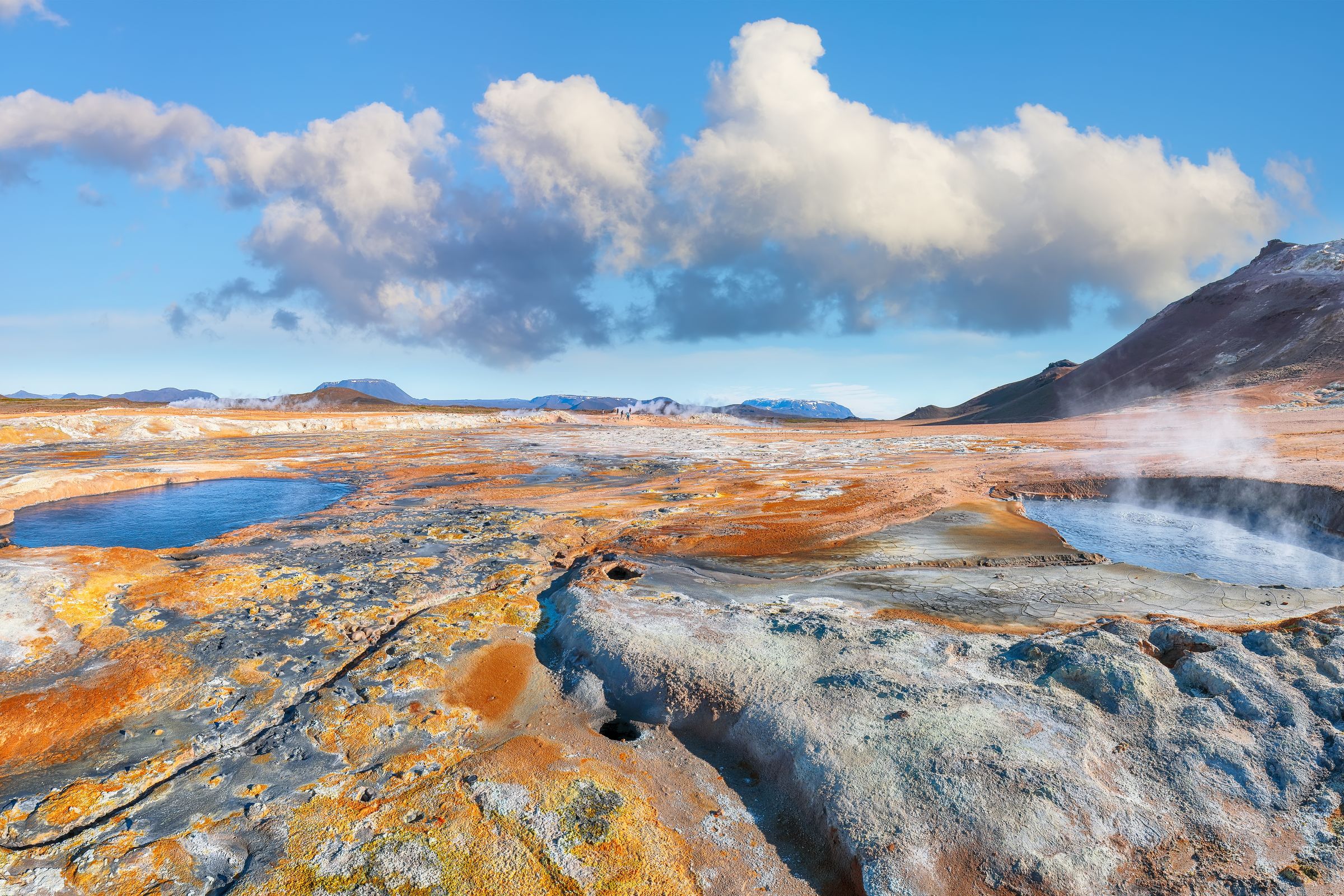
That's Hverir, a high-temperature geothermal field in North Iceland where the earth is actively boiling. Mud pots bubble, steam vents roar, and the bare mineral-stained ground stretches out toward the ridge of Námafjall like something from another planet.
It sits right off the Ring Road near Lake Mývatn, which means getting there is easy. What you find when you arrive is a different story.
What Is Hverir Geothermal Area?
Hverir (you'll also see it written as Námafjall Hverir, Námaskarð, or Hverarönd) sits at the base of Mt. Námafjall in North Iceland's Mývatn region, right off the Ring Road (Route 1). It's a high-temperature geothermal field where the earth literally boils. Mud pots bubble, steam vents hiss, and the ground is stained yellow, orange, and red from mineral deposits.
It's one of the most intense geothermal spots in Iceland, and it's also one of the easiest to get to. You pull off the Ring Road, step out of the car, and you're already there.
Quick facts:
- Region: North Iceland, Mývatn area
- Full adress: J5RR+978, 660 Reykjahlíð, Islandia
- Elevation: ~410 m (1,345 feet) above sea level
- Road access: Directly off Route 1 (Ring Road) at Námaskarð pass
- Distance from Reykjahlíð: About 6 km
- Entry fee: None (paid parking applies)
- Recommended visit time: 30–60 minutes for the main field; 2–3 hours if you add the Námafjall hike
The Geology Behind Hverir
Iceland sits on the Mid-Atlantic Ridge, where the North American and Eurasian plates are slowly pulling apart, and on top of a mantle hotspot that pushes extra heat up from below. Hverir is part of the Krafla volcanic system, which has a magma chamber sitting about 3–5 km underground. That's the heat source behind everything you see at the surface. From 1975 to 1984, a series of eruptions known as the Krafla Fires reshaped this entire area and intensified geothermal activity. It's still changing today.
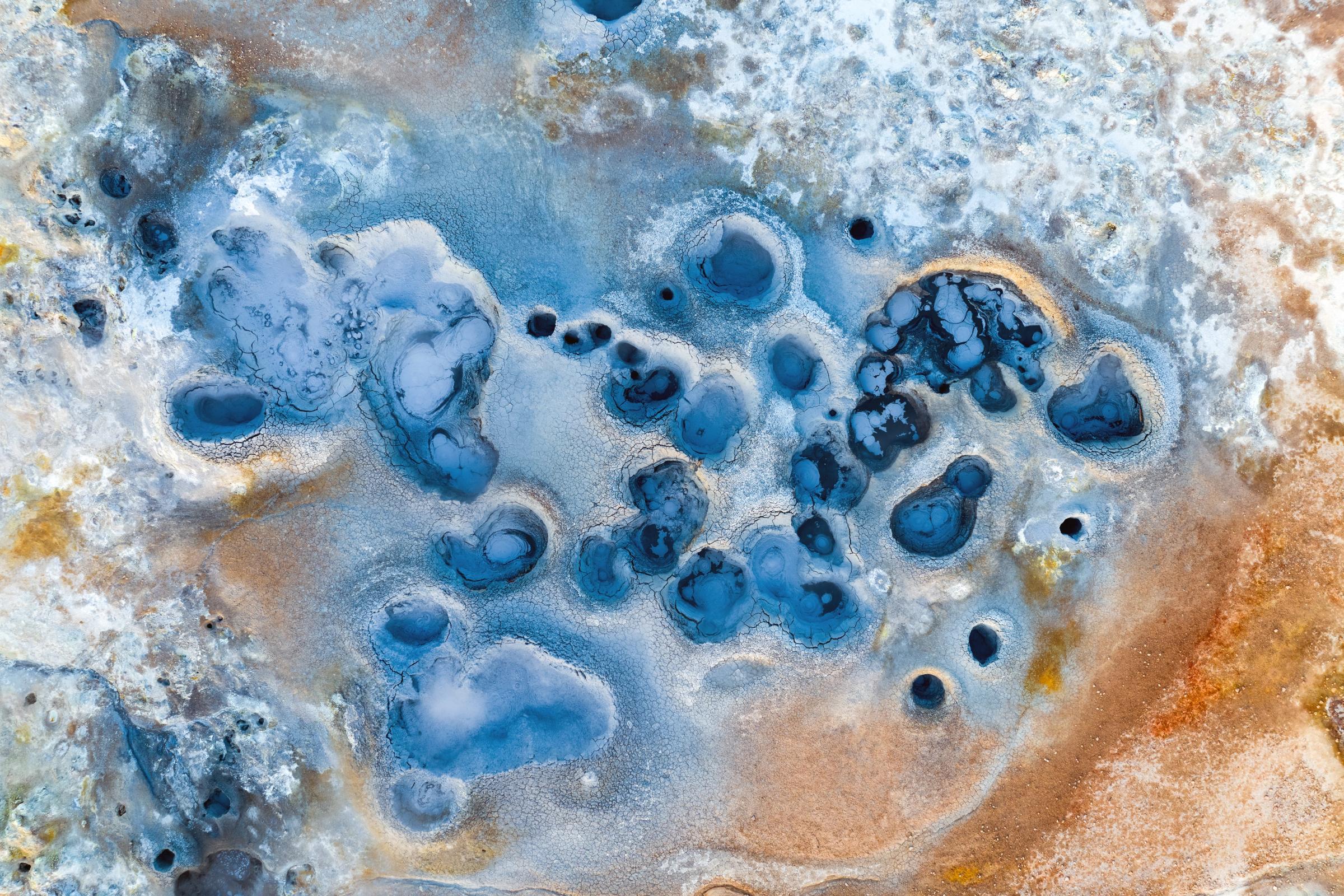
Groundwater seeps down through cracked basalt, heats up near the magma, picks up gases and minerals, then gets pushed back up under pressure. Where it escapes through cracks as steam, you get fumaroles. Where it breaks down the rock into a clay-rich mix, you get the bubbling mud pots. The smell is hydrogen sulfide in the gases. Near the active spots, ground temperatures can hit the boiling point, which is why almost nothing grows here. The colors are basically a map of what's happening underground: yellow and orange are sulfur, red and rust are iron oxides, white and grey are silica and clay.
Where Is Hverir and How to Get There
Hverir is one of the easier places to reach in Iceland. No rough roads, no 4WD needed, no long hike. It's right on the Ring Road.
Getting There by Car
Driving yourself is the easiest option by far. From Reykjahlíð, the main village on Lake Mývatn, it's about 6 km east on Route 1, so roughly 5–10 minutes. From Akureyri, Iceland's biggest northern city, it's about 89 km east and takes around 1 hour and 15 minutes. From Reykjavík, you're looking at a 6-hour drive north.
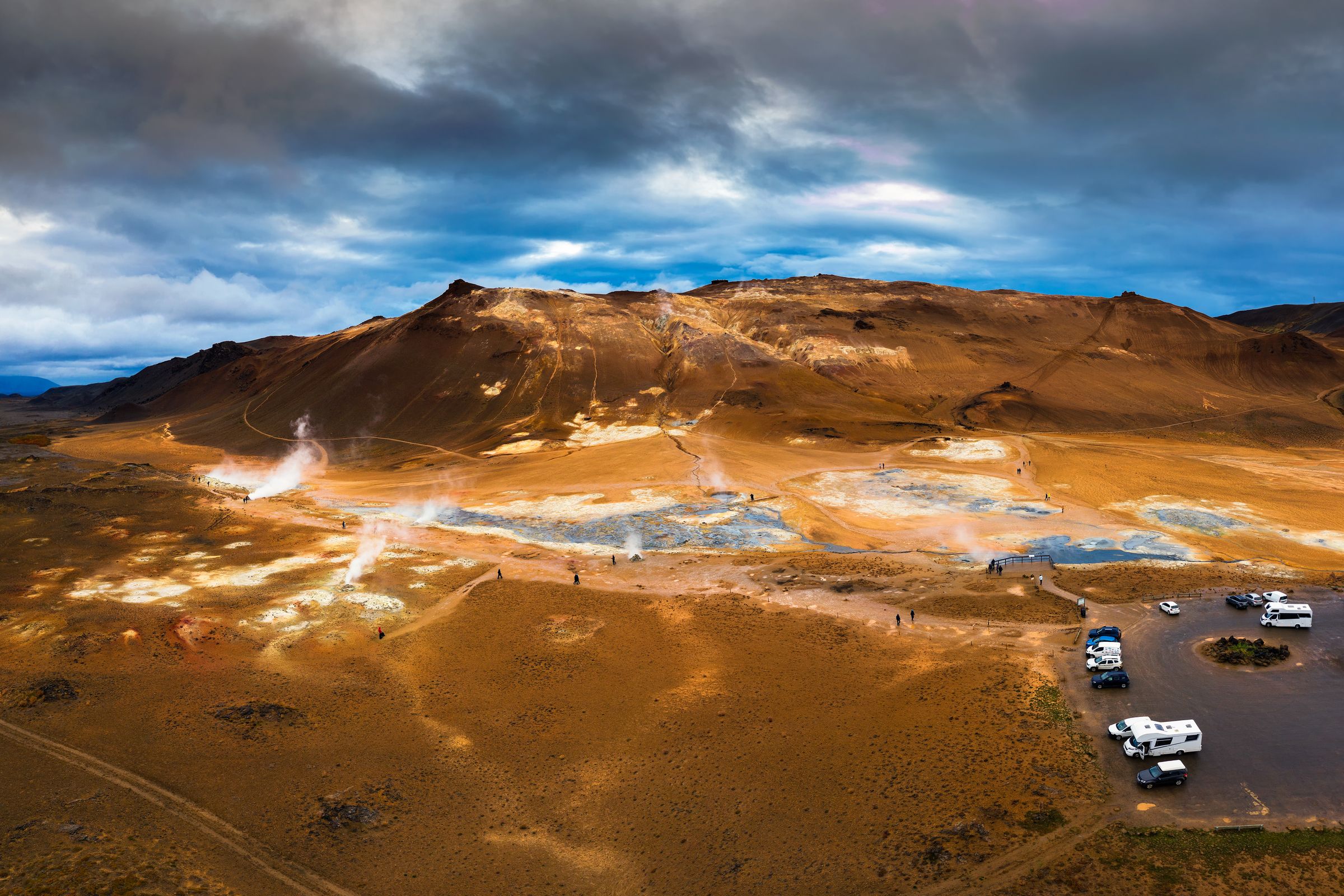
You can usually spot the site from the road because of the steam rising above it. There's a dedicated parking area right there.
Getting There by Tour
If you're not renting a car, Hverir appears on quite a few guided Diamond Circle day tours that depart from Akureyri or Húsavík. Those tours typically run 8–10 hours and hit several stops.
Winter Driving
The Ring Road (Route 1) is paved and stays open year-round, but North Iceland winters can bring ice, low visibility, and road closures on connecting routes. Check road conditions at umferdin.is and weather at vedur.is before you go, especially between November and April.

What You'll See at Hverir
Hverir is a compact site. Walking the marked paths at a normal pace takes 30–60 minutes, but there's plenty to look at.
Mud Pots
The mud pots are what most people come for. They're pools of hot, acidic, clay-rich mud that bubble steadily as gas pushes up from below. Some are slow and gentle. Others spit. They look kind of approachable, but the mud is boiling, and the ground around them can be surprisingly thin. Stay on the paths.
Fumaroles and Steam Vents
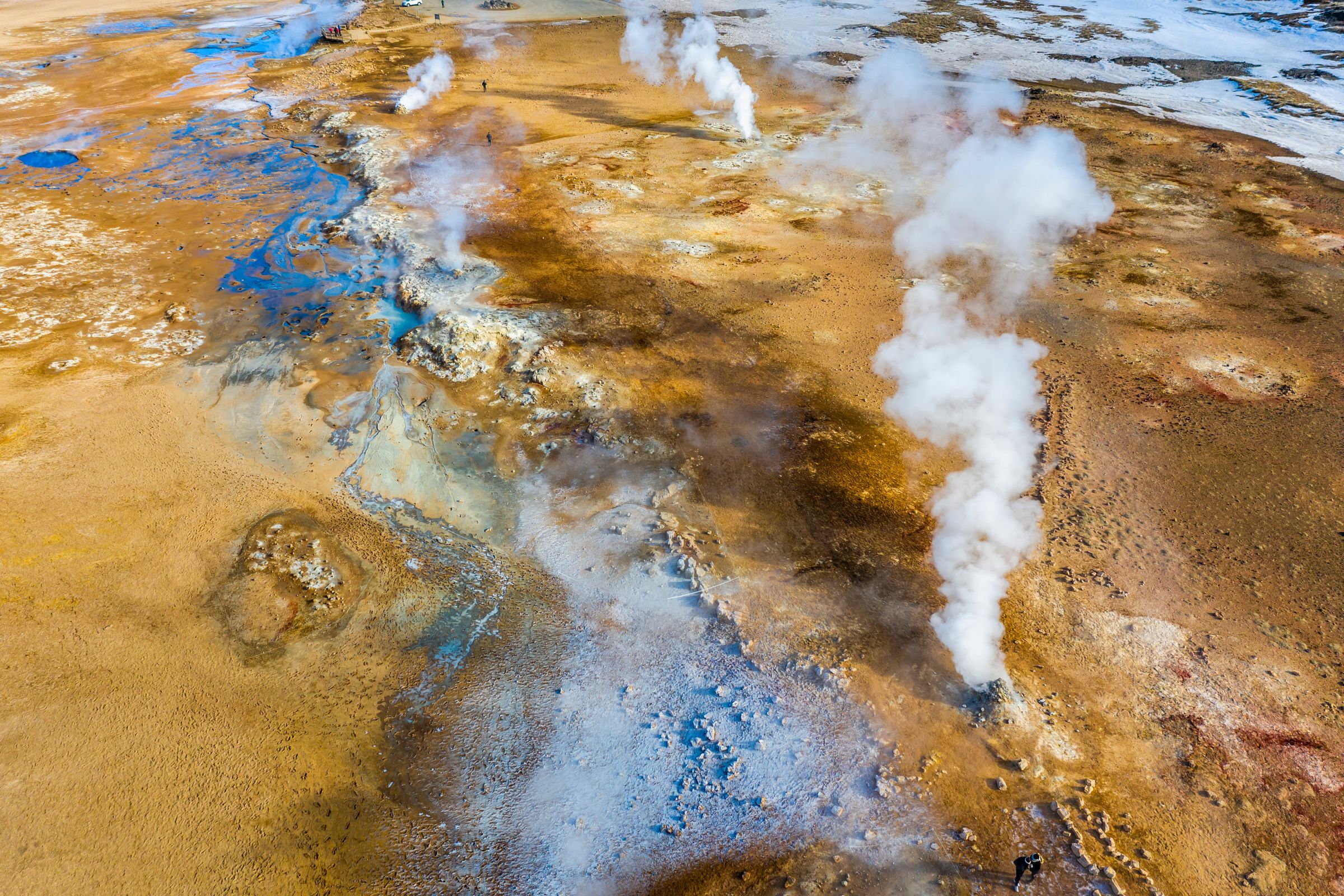
Some of the fumaroles at Hverir are loud enough to hear before you see them. Steam and volcanic gases push through cracks in the ground, and the vents are usually surrounded by white and yellow mineral crusts. On a calm day, steam rises straight up. When there's wind, it sweeps across the field in big plumes.
Sulfur Deposits and Mineral Staining
The ground around the most active vents is coated in bright yellow sulfur. That's elemental sulfur that settles out as the gases cool near the surface. This area was actually mined for sulfur for centuries. At one point, it was supplying a big chunk of Europe's gunpowder production in the medieval period.
The Landscape
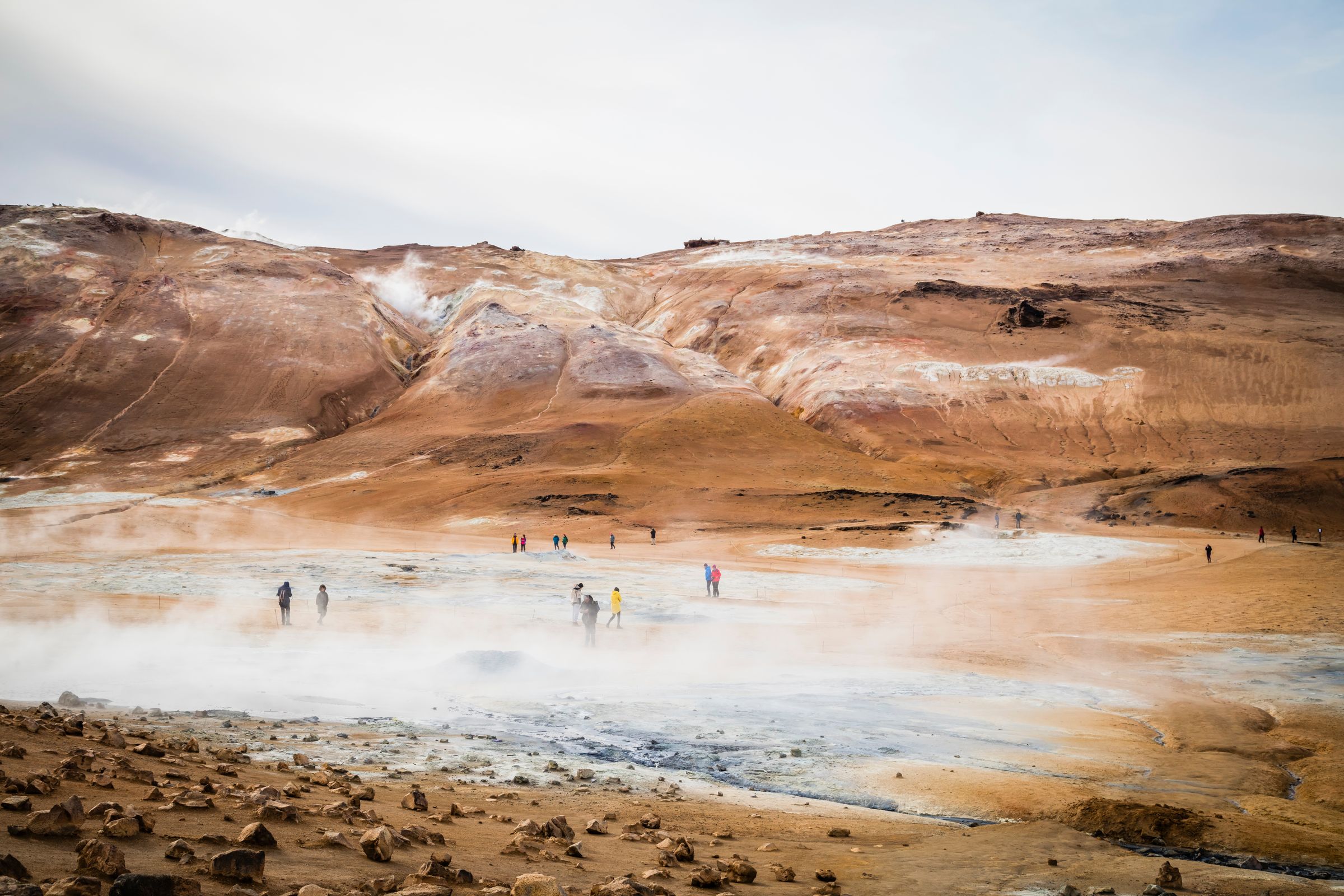
From a distance, the whole thing looks a bit alien. Bare, strangely colored ground, almost no vegetation, steam rising in multiple spots. The “looks like Mars” comparison gets used a lot in Icelandic travel writing, but honestly, at Hverir, it’s accurate. There's no other landscape quite like it.
Visiting Guide: Practical Information
Hverir is one of the most accessible geothermal sites in Iceland, but a few practical things catch visitors off guard, mainly around parking, facilities, and how long to budget. Here's what you need to know before you arrive.
Entry, Parking, and Facilities
There's no entrance ticket. It's an open natural site. Parking costs 1200 ISK (paid via the Parka app), making it one of the most expensive in Iceland. Facilities are very limited. Don't rely on finding a bathroom there. Stop in Reykjahlíð before you head over.
How Long to Spend
The main geothermal field is compact, so 30–60 minutes is enough to walk it properly. Add another 1.5–2 hours if you want to hike up Námafjall for the view. If you're combining Hverir with Krafla, Víti, Dimmuborgir, and the Mývatn Nature Baths (recently rebranded as Earth Lagoon Mývatn), block out a half to full day for the whole cluster.
Accessibility
The main field is close to the parking lot and involves a short walk on gritty, uneven paths. Most of it is manageable, but it's not fully wheelchair-friendly because of the terrain and wind exposure. The Námafjall hike is not suitable for wheelchairs.
Practical Information: Seasons, Weather, and Road Conditions
When you go matters a lot at Hverir. The site is open year-round, but the experience changes quite a bit by season.
Best Time to Visit
Summer (May–August) is the easiest time to visit. Roads are in good shape, temperatures sit around 10–15°C, and you get long days. North Iceland has the Midnight Sun near the solstice, so you can show up late in the evening with full daylight and almost nobody around. Midday in July is when it gets busiest.
Winter (November–March) is a different visit entirely. Steam against snow looks good, and the site feels quieter and more raw. Northern Lights are possible when the skies are clear and solar activity is present. The trade-offs are short days with only 4–6 hours of light, icy paths, and road conditions on connecting routes that depend on the weather.
Shoulder seasons (April–May and September–October) tend to hit the best balance. Fewer people, cooler air that makes steam more visible, and conditions that are generally easier to deal with. Autumn weather can turn fast, so keep some flexibility in your plans.
Weather and Wind
The Námaskarð pass is open and exposed. Wind picks up quickly here and changes the whole experience. A strong gust can push steam and sulfur gas sideways across the walking paths. Check the wind forecast before you go. If the smell gets strong from one direction, move upwind and don't hang around in a concentrated gas plume.
Bring a windproof layer no matter what month you're visiting. Even on a mild summer day, the wind at 410 m elevation can make it feel a lot colder than it actually is.
Safety at Hverir
Hverir has real hazards. A few things worth knowing before you walk in.
Stay on Marked Paths
The most important rule. The crust can look solid, but sit over hot mud or superheated water just below the surface. Off-trail walking has caused burns and injuries at geothermal sites. The paths are there for good reason.
Heat and Ground Contact
Rocks and soil near active vents can be very hot. Don't touch anything close to a fumarole or mud pot edge. The mud is boiling and acidic.
Gas Exposure
Hydrogen sulfide (H2S) in the volcanic gases is what causes the sulfur smell. At low levels, it's unpleasant. At higher concentrations, it irritates your eyes and airways. If you get eye stinging, a headache, or feel nauseous, move upwind straight away. If you have asthma, COPD, or are sensitive to strong smells, it's worth knowing this before you go.
Children and Groups
Kids are fine at the site, but keep them close and on the paths. Mud pot edges and vent openings are off limits.
Environmental Responsibility
Iceland's Nature Conservation Act bans off-road driving, and the same logic applies on foot at Hverir. Volcanic soils scar permanently. The crust around active vents is thin and fragile. The Icelandic Environment Agency oversees the protection of this site. Stay on the marked routes, don't take rocks or minerals, and don't let anyone go off-path for a photo.
Emergency number in Iceland: 112. Save it before you go.
Travel Tips for Visiting Hverir
A few practical things that make the visit smoother.
- Footwear: Closed-toe shoes you don't mind getting stained. Sulfur and mineral mud can discolor footwear permanently.
- Clothing: Windproof jacket and warm layers, even in summer. Wind is common, and the site is exposed.
- Timing: Early morning or late evening means fewer people and more visible steam in cooler air. In summer, late evening in North Iceland is still full daylight.
- Drones: Drone use is regulated in Iceland. Check the current rules and any protected-area restrictions before flying at Hverir.
- Toilets: Use facilities in Reykjahlíð or at your previous stop before you arrive.
- Fuel: Fill up in Akureyri or Reykjahlíð before going further into the Mývatn area. Services are grouped together, not spread out along the route.
Nearby Attractions
Hverir works best as part of a bigger Mývatn day, not a standalone stop. Everything nearby is worth combining.
Lake Mývatn
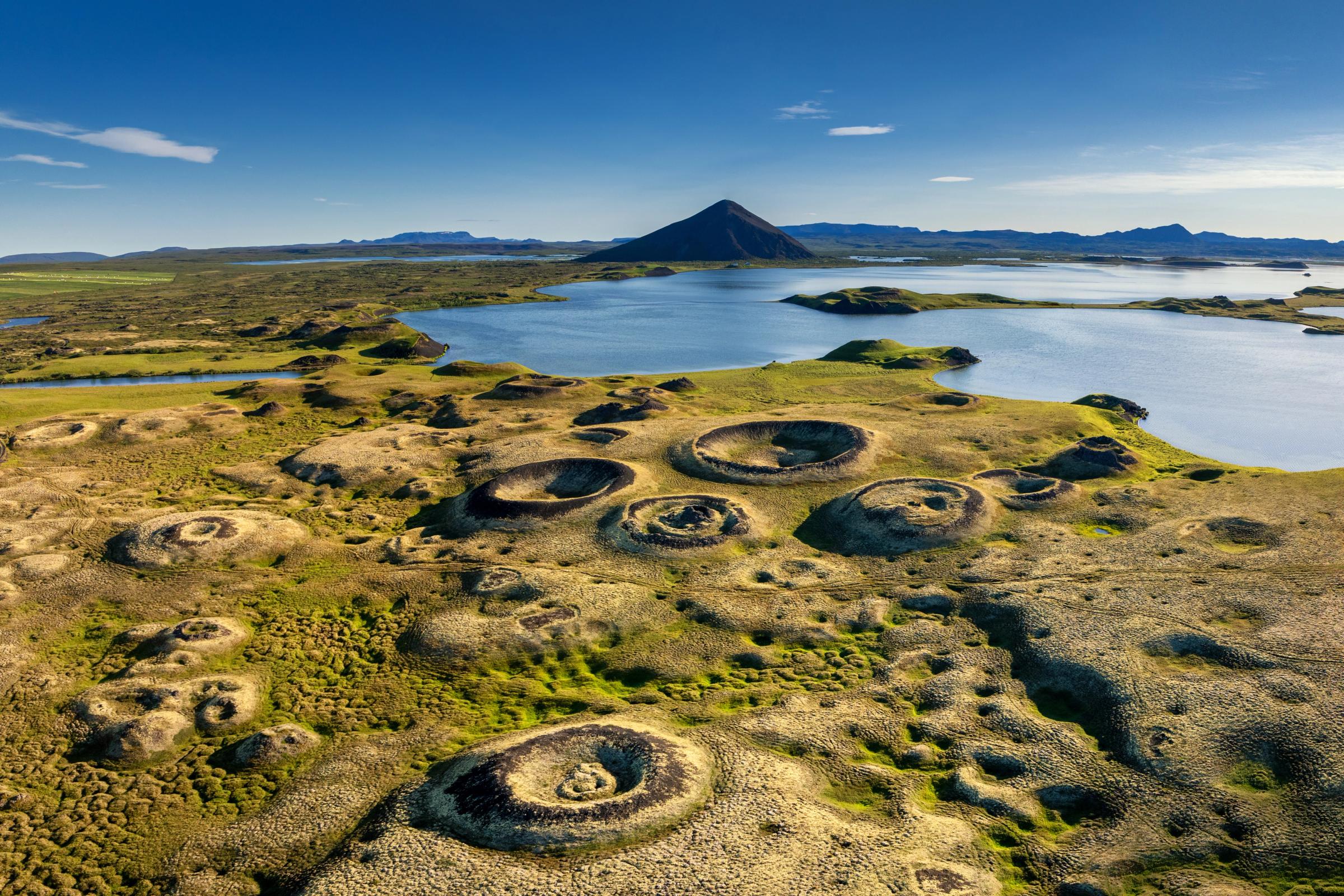
The hub of this whole area. Lake Mývatn is about 15 km (9.3 miles) west and is surrounded by lava formations, pseudocraters, and good birdwatching. The lake is fed by geothermal springs and supports a huge range of waterfowl. The Skútustaðagígar pseudocraters on the southern shore are worth a short walk.
Krafla Caldera and Víti Crater
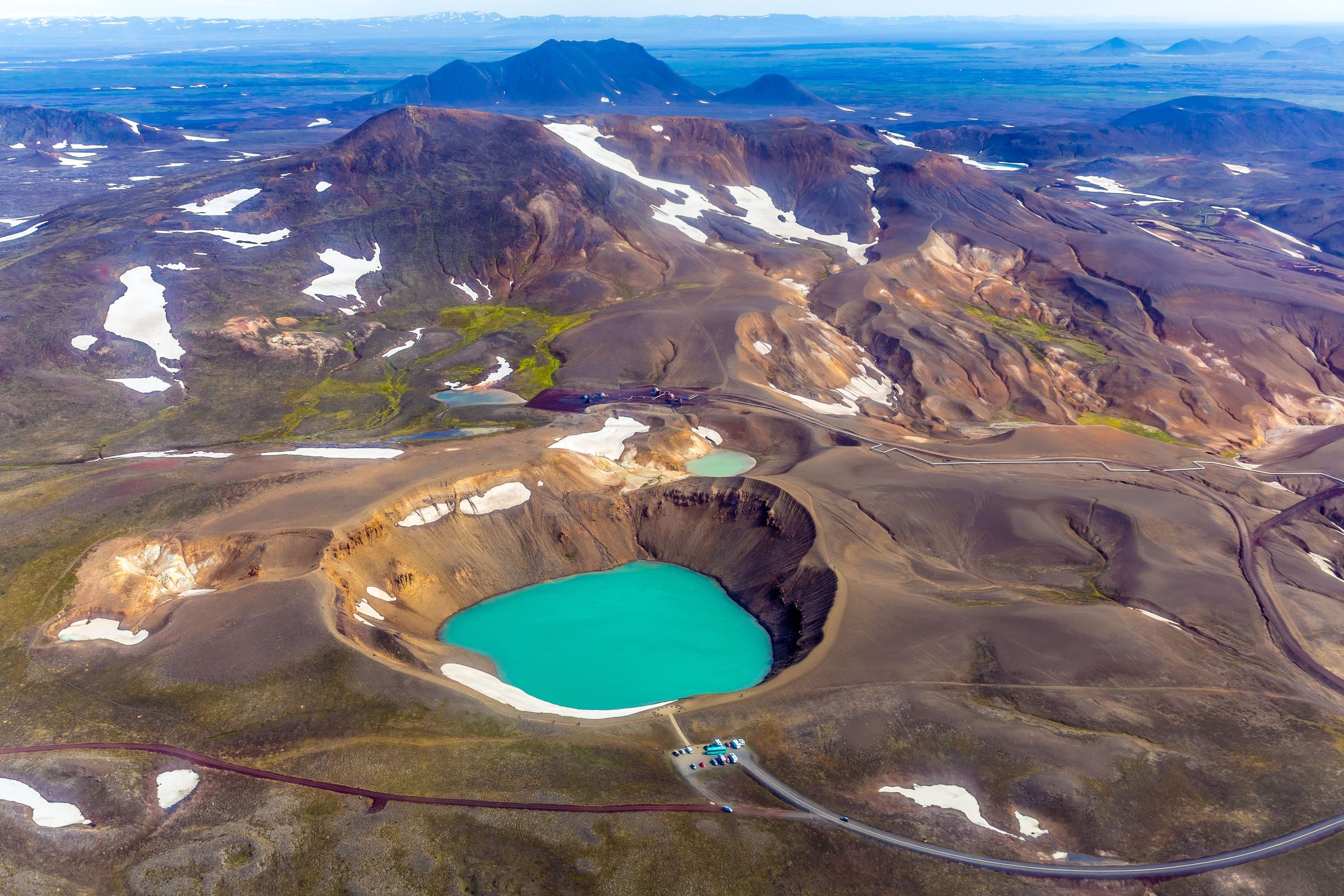
About 10 km (6.2 miles) northeast of Hverir, Krafla is the volcanic center that powers the whole system you've been walking around. The Víti explosion crater, a circular lake sitting inside the Krafla caldera, is an easy add-on to any Hverir visit. You can also see the Krafla Geothermal Station, which uses this same heat source to generate around 60 MW of electricity.
Dimmuborgir Lava Formations
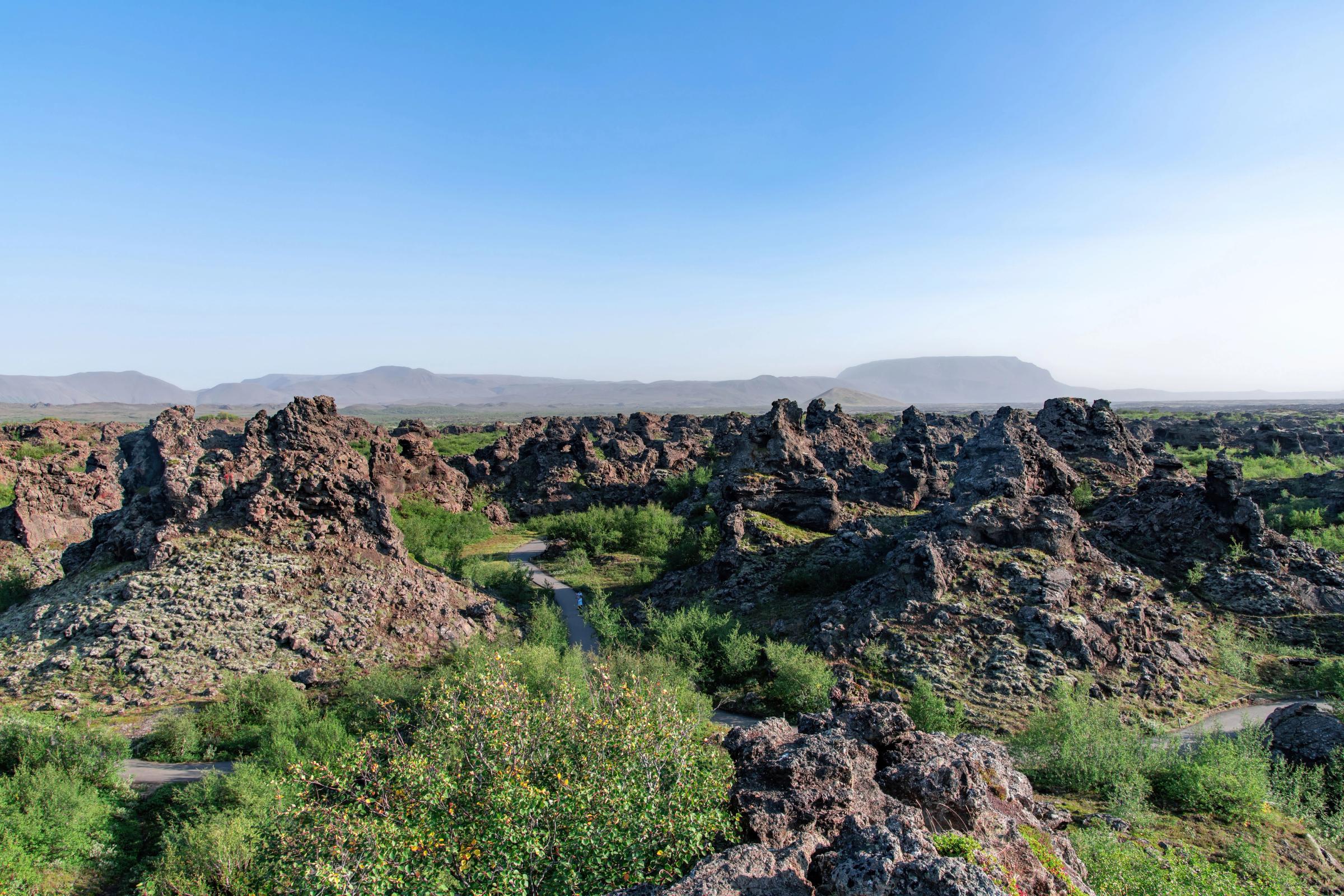
Around 12 km (7.45 miles) southwest of Hverir, Dimmuborgir is a field of lava columns and arches formed from an ancient lava lake. It's a sharp contrast to Hverir, dark and textured, where Hverir is bare and colorful, and it makes for an easy half-day pairing.
Earth Lagoon Mývatn
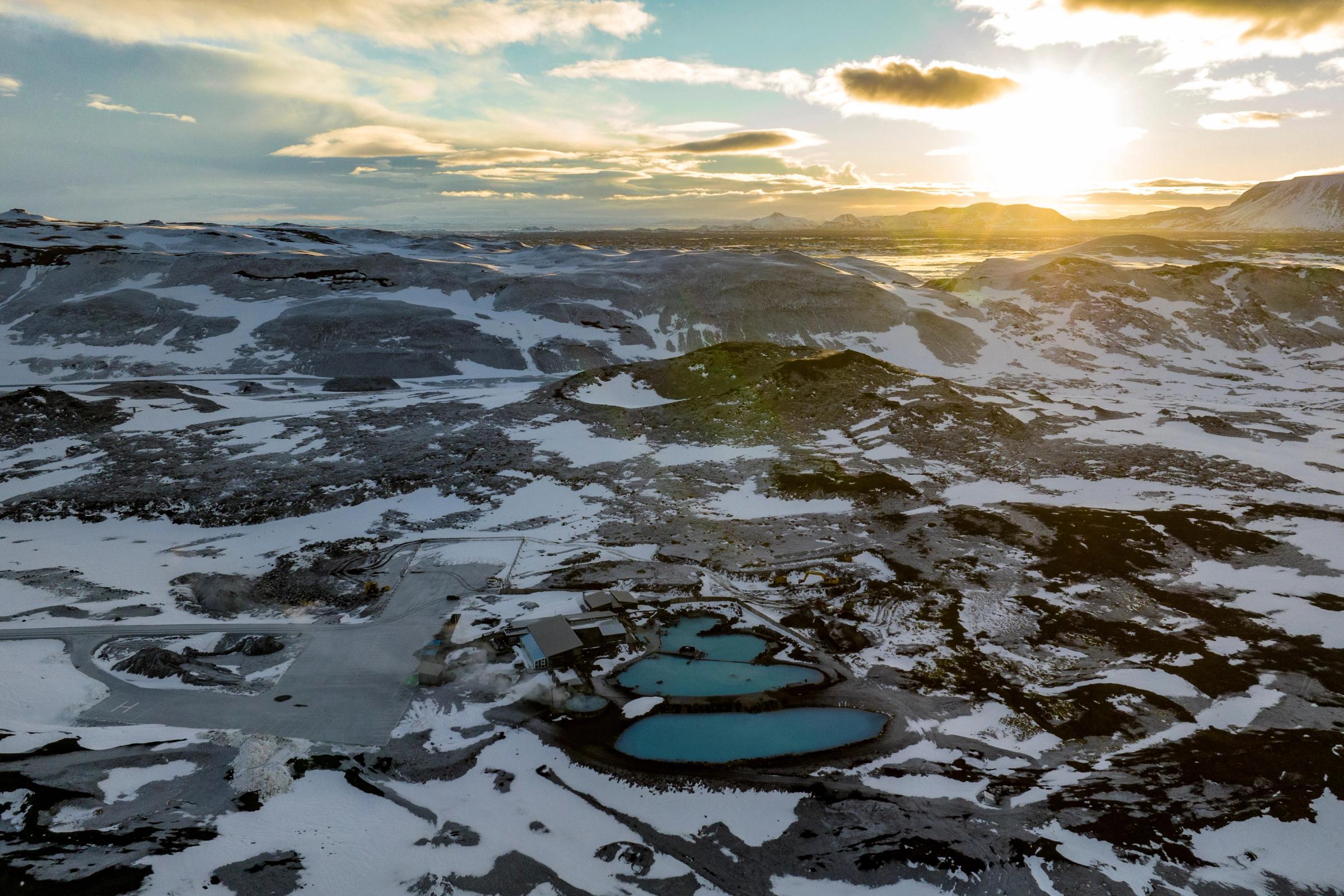
If Hverir is the part where you look at geothermal activity, the Earth Lagoon Mývatn (about 4 km away) is the part where you actually get in it. The geothermal pool is heated by the same system and is a good way to wind down after a long driving day. The ticket costs around $65.
Dettifoss
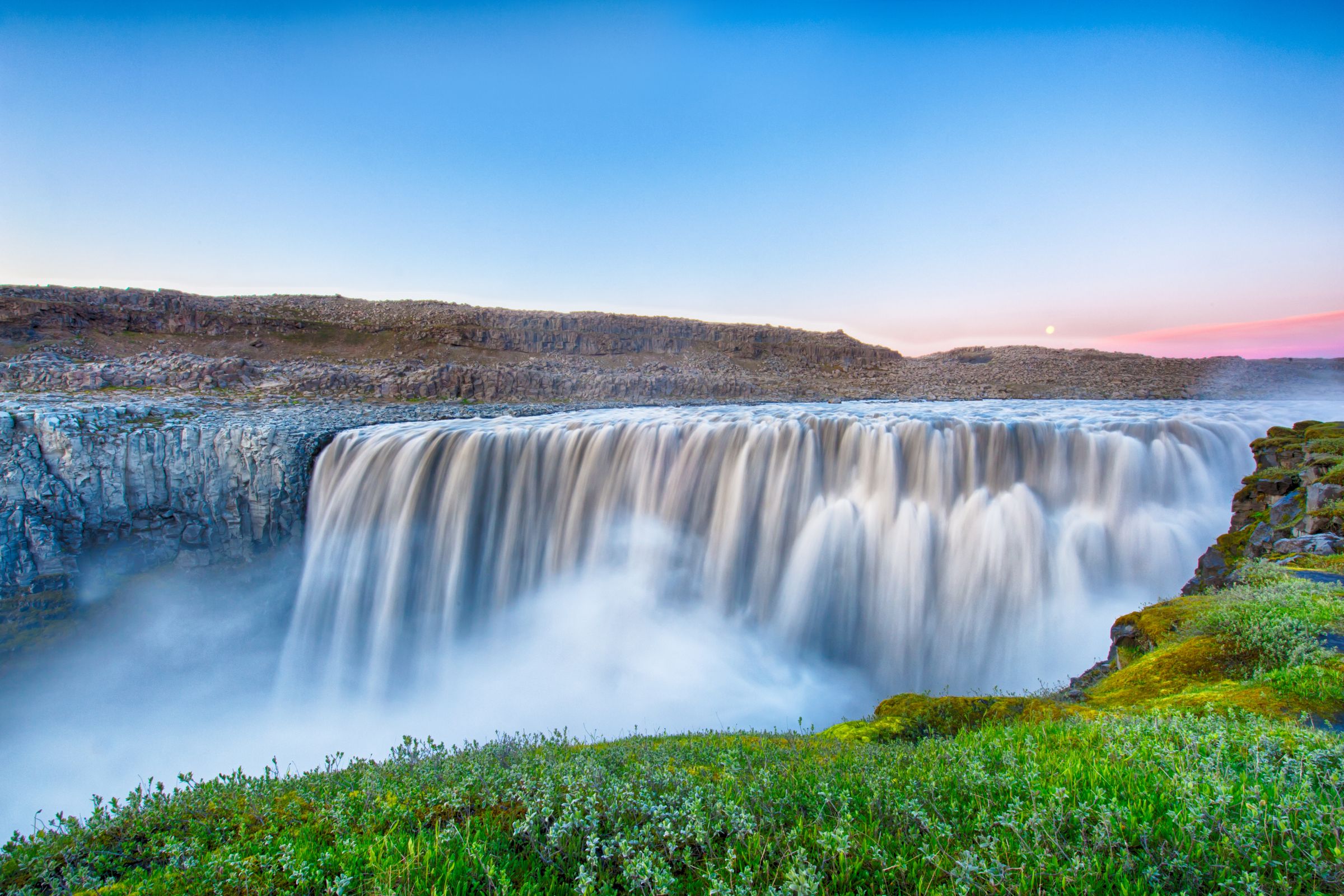
About 45 km (28 miles) northeast, Dettifoss is one of Europe's most powerful waterfalls and a key stop on the Diamond Circle. Road access changes by season. Road 864 on the east side closes in winter, so check before you plan around it.
Hverir as Part of the Diamond Circle Route
The Diamond Circle is a roughly 250 km loop in North Iceland that connects Goðafoss, the Mývatn area, Dettifoss, Ásbyrgi Canyon, and Húsavík. Hverir sits in the Mývatn segment and is the geothermal anchor of the whole route.
Sample Diamond Circle Itinerary
Option A: 1 full day (summer only, requires long daylight)
- Goðafoss waterfall (30 min)
- Lake Mývatn area: Dimmuborgir and pseudocraters (1–2 hours)
- Hverir (45 min)
- Krafla and Víti (45 min)
- Dettifoss (45 min)
- Ásbyrgi Canyon (1 hour)
- Húsavík (endpoint, whale watching if there's time)
Total: roughly 8–10 hours of driving and stops. Doable in summer but it's a full day.
Option B: 2 days (works in any season)
- Day 1: Goðafoss, Mývatn area, Hverir, Krafla, Mývatn Nature Baths. Overnight near Reykjahlíð.
- Day 2: Dettifoss (check road conditions), Ásbyrgi, Húsavík.
Two days is a lot less stressful and gives you room to deal with weather or road issues.
Hverir vs. Other Geothermal Sites in Iceland
Wondering how Hverir stacks up against other geothermal spots? Here's a quick breakdown.
Hverir vs. Blue Lagoon
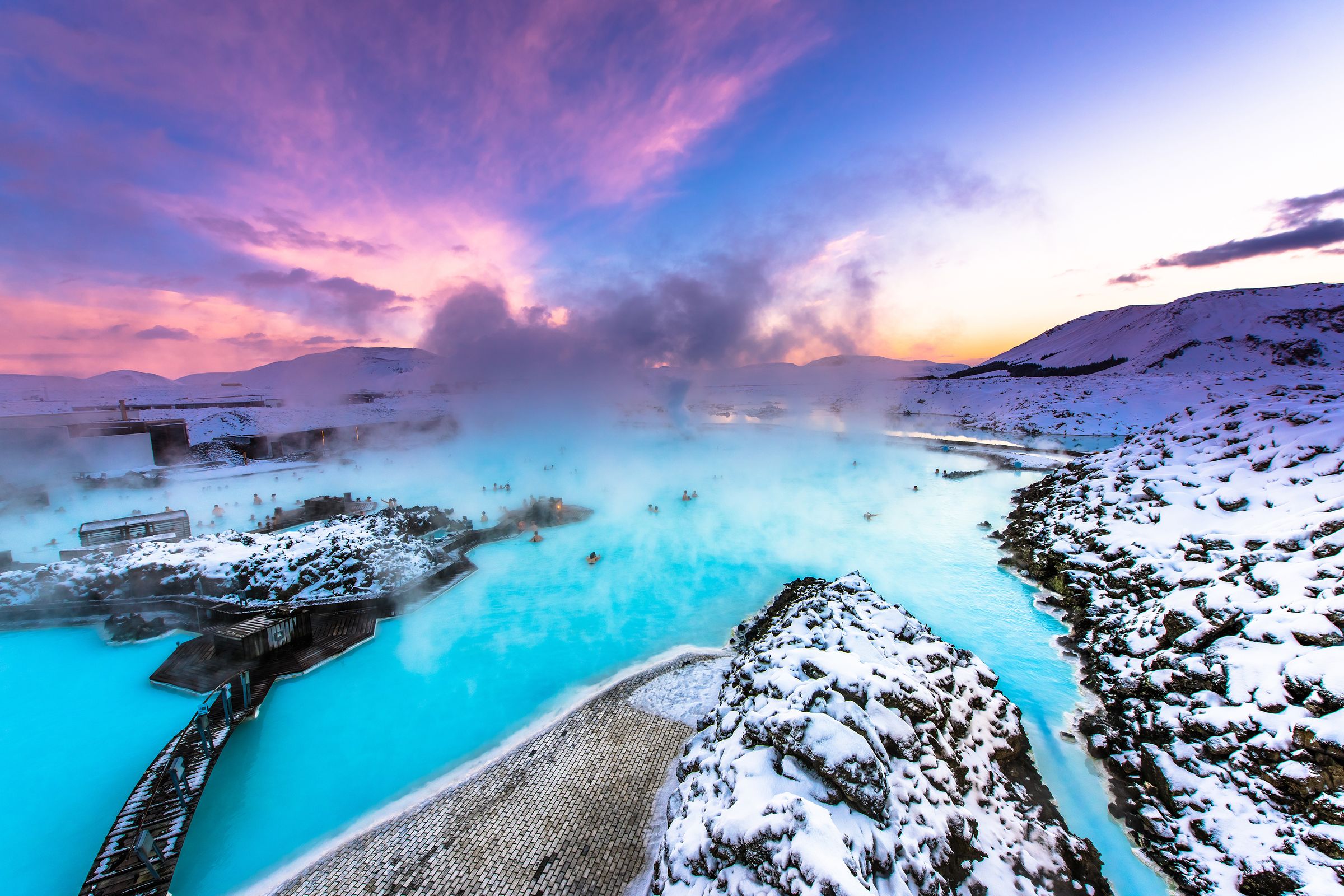
These two come up together a lot, but they're completely different things. The Blue Lagoon is a developed spa. You book a time slot, pay for entry, and soak in a managed pool with changing rooms and amenities. Hverir is a natural field where you walk around boiling mud and steam vents. No bathing, no changing rooms, no services. If you want to actually see what Iceland's geothermal activity looks like up close, Hverir is the place. If you want to relax in warm water, that's the Blue Lagoon.
Hverir vs. Geysir (Haukadalur)
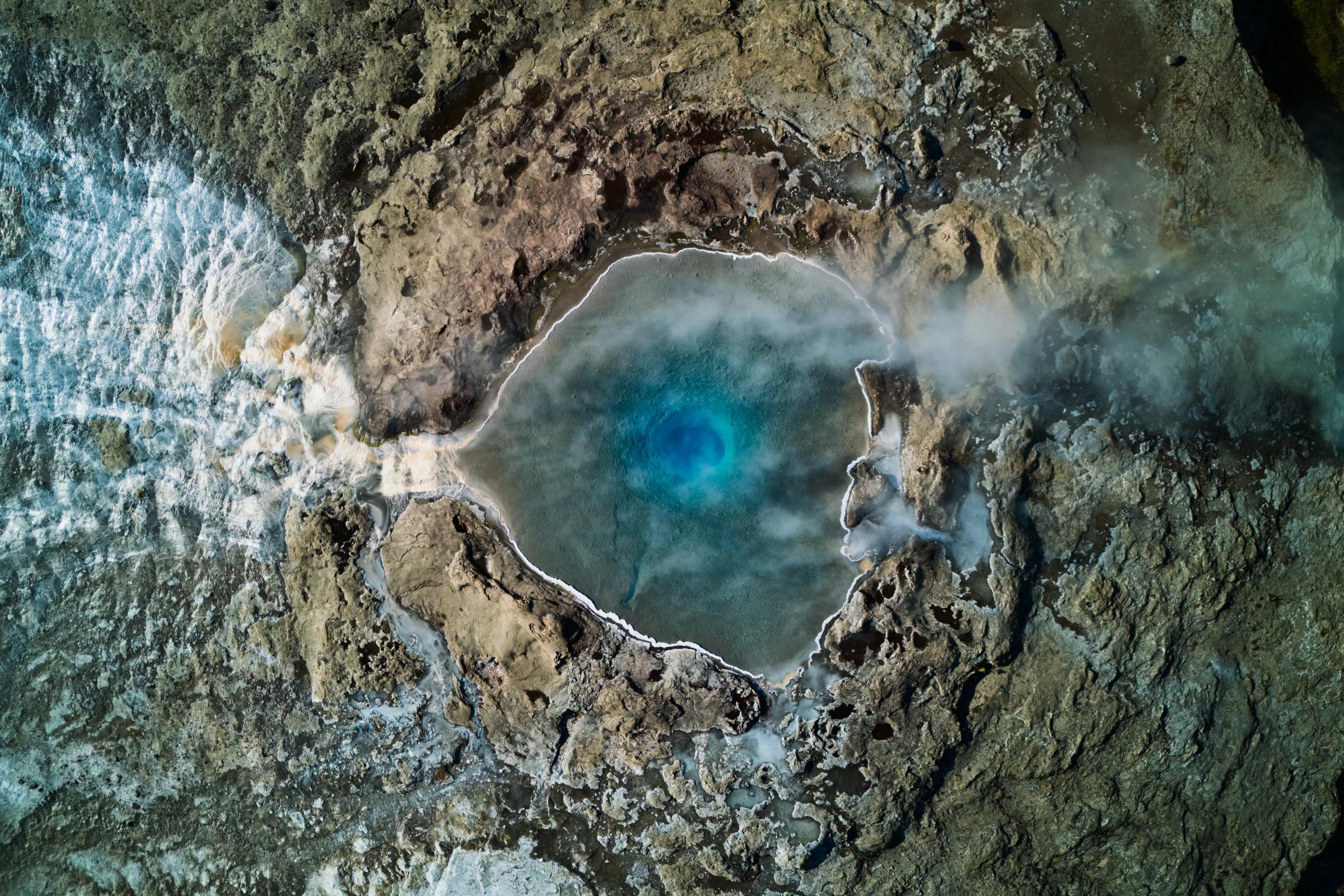
Geysir on the Golden Circle is about the erupting geyser. Strokkur shoots water up to 35 m every 5–10 minutes, and it's a good show. Hverir has no geysers at all. It's all fumaroles, mud pots, and sulfuric ground. Want erupting water columns? Go to Geysir. Want the raw, boiling earth experience? Hverir.
Hverir vs. Gunnuhver (Reykjanes Peninsula)
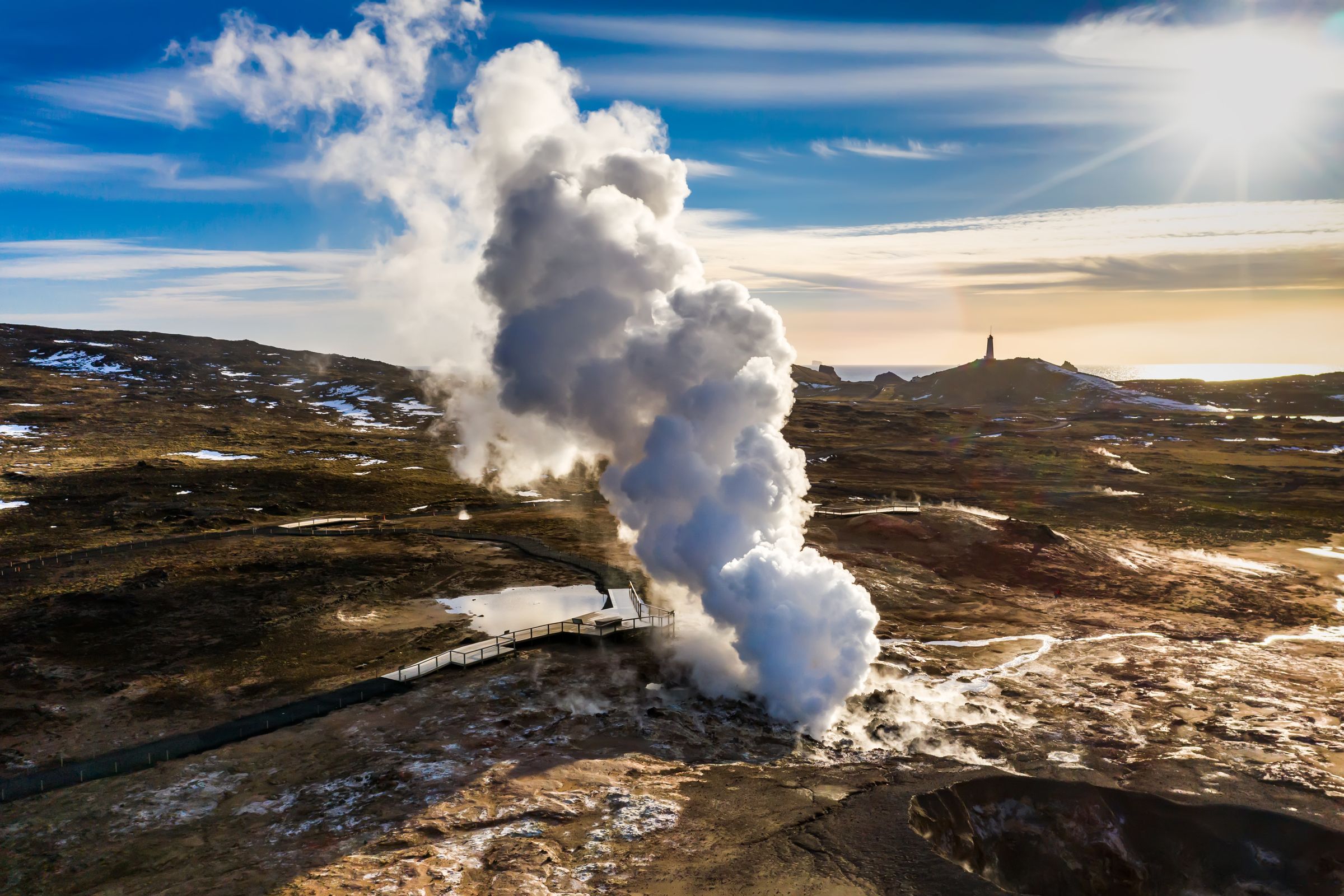
Gunnuhver near Reykjanes has strong steam vents in a coastal setting with boardwalk paths. It's smaller than Hverir and in a completely different location, near Reykjavík rather than in the northern volcanic zone. Hverir is bigger, more varied, and more visually intense.
Hverir vs. Highlands Geothermal Areas
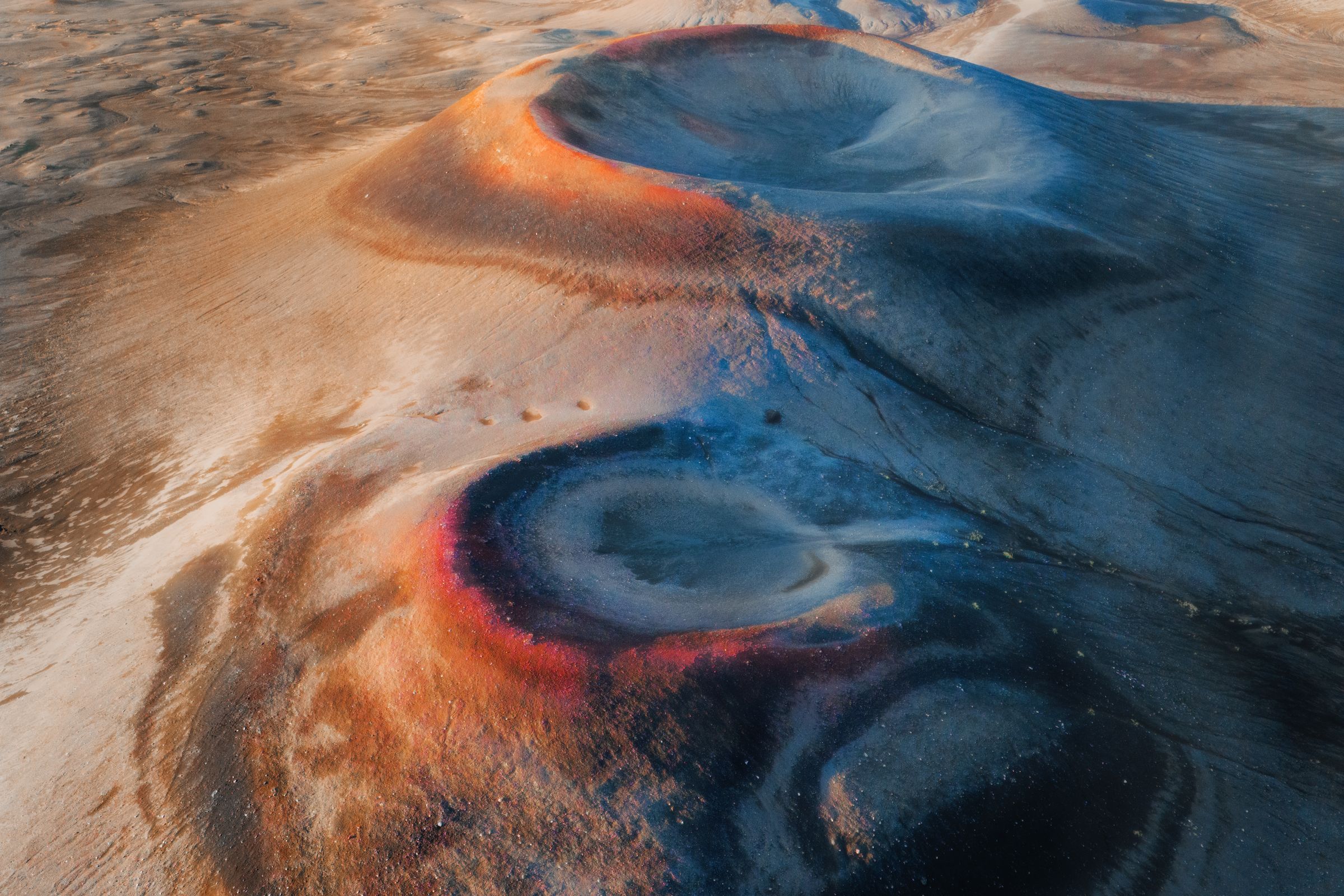
Places like Kerlingarfjöll and Hveradalir in the Highlands have dramatic geothermal valleys with vivid colors and good hiking. But getting there means F-roads and a 4WD. Hverir gives you a similar "boiling earth" experience right off the Ring Road, no Highland logistics needed. If you want fumaroles and mud pots without the complexity, Hverir is the easier call.
Conclusion
Hverir is one of the few places in Iceland where you can stand right in front of an active high-temperature geothermal field without any serious effort to get there. The science behind it, the Krafla volcanic system, the Mid-Atlantic Ridge, the underground plumbing that turns rainwater into boiling mud, makes the landscape a lot more interesting once you understand what's driving it.
It's not a polished visitor attraction. There are no facilities, the smell can be strong, and the ground around you is genuinely dangerous if you step off the path. That's also what makes it worth the stop. Combine it with Krafla, Víti, and the Mývatn Nature Baths, work it into the Diamond Circle, and you've got one of the best days of any Iceland trip.
Frequently Asked Questions About Hverir Geothermal Area