Hljóðaklettar: The Complete Guide to Iceland's Echo Rocks
Hljóðaklettar is a group of basalt columns, caves, and arches inside Vatnajökull National Park in Northeast Iceland. The formations were shaped by volcanic eruptions roughly 9,000 years ago and carved further by glacial flooding over thousands of years. Unlike most basalt sites in Iceland, the columns here tilt in multiple directions, and the caves create a noticeable echo effect. That's where the name comes from: Hljóðaklettar means "Echo Rocks."
This guide covers the geology, how to get there, which trails to take, and how to fit Hljóðaklettar into a Diamond Circle itinerary.
What's Hljóðaklettar?
Hljóðaklettar (pronounced roughly hlyo-tha-KLET-tar) means "Echo Rocks." Hljóð means sound or echo, klettar means cliffs or rocks. The name refers to what actually happens there: the Jökulsá á Fjöllum river echoes off the basalt formations, and the caves and arches amplify the sound.
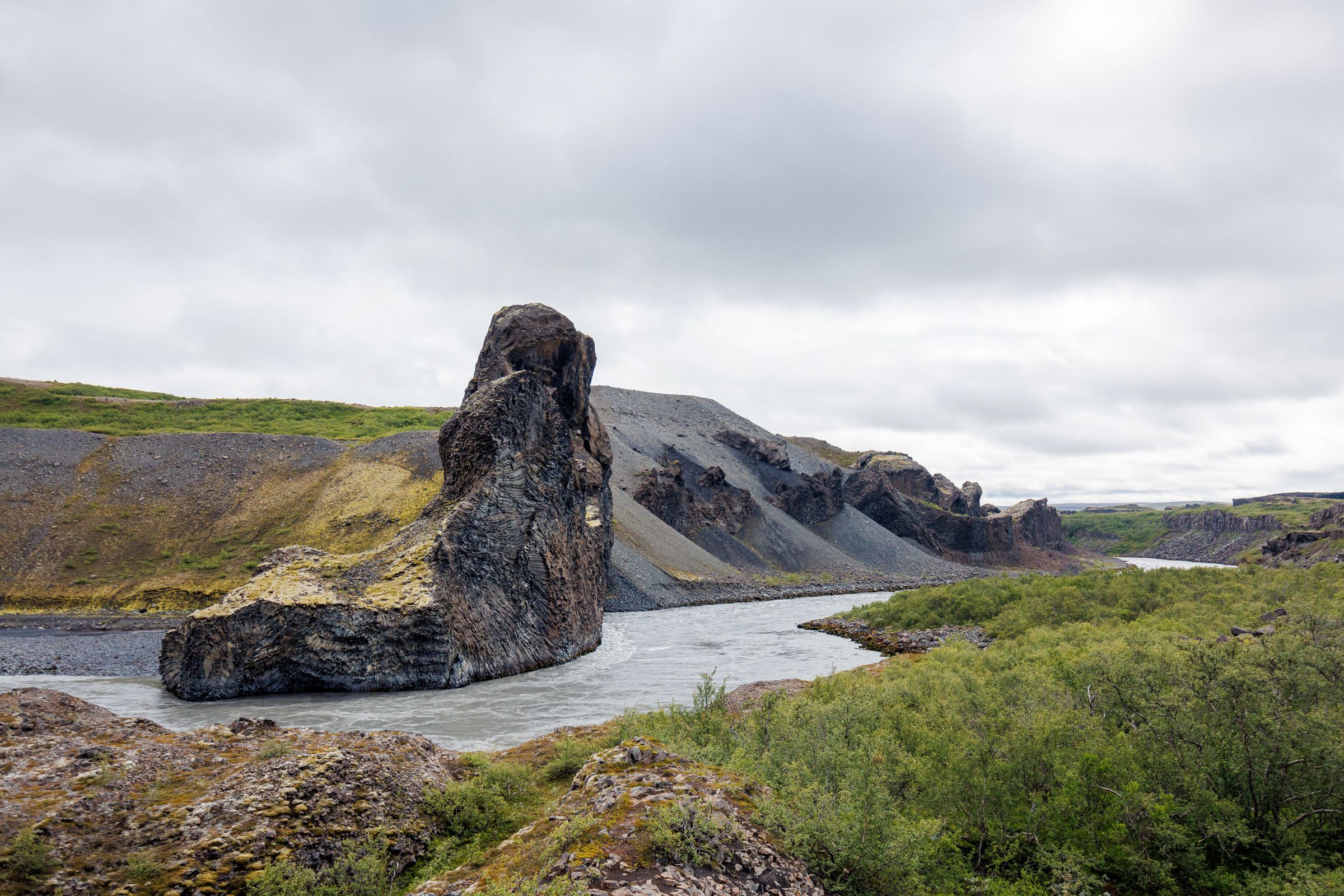
The site sits at the entrance to Vesturdalur valley, inside the Jökulsárgljúfur area of Vatnajökull National Park, about 15 km south of Ásbyrgi Canyon. The columns tilt at odd angles, there are natural arches and caves, and some sections show rosette and swirling patterns. These shapes come from the geology: what you're looking at is solidified volcanic conduit material, basically the hardened interior of an ancient eruption system, that got exposed after glacial flooding stripped away the softer rock around it.
The formations are roughly 8,000 to 9,000 years old, tied to a crater row eruption along the Jökulsá á Fjöllum corridor. Vatnajökull National Park describes it as a rare sight globally, a place where you can see how magma hardened inside volcanic conduits and was later exposed by erosion.
Geology and Formation
About 8,000 to 9,000 years ago, basalt lava erupted through a 6 km-long row of craters along the Jökulsá á Fjöllum river corridor and hardened within the volcanic conduits. As the lava cooled, it contracted and fractured outward from cooling centers, forming polygonal columns, usually six-sided. This process is called columnar jointing and happens at other basalt sites too, like Giant's Causeway in Northern Ireland, Reynisfjara beach, and Svartifoss in Iceland. What makes Hljóðaklettar different is that the lava cooled in multiple directions inside the conduit system, so the columns go vertical, horizontal, and radial, sometimes all within a few meters of each other. Nearby Rauðhólar (Red Hills) is part of the same crater row and shows what the area looked like before erosion: red scoria cones, less worn down by water.
The current shapes came from jökulhlaups, glacial outburst floods from Vatnajökull glacier. The Jökulsá á Fjöllum, Iceland's second-longest river, carried that meltwater and carved the Jökulsárgljúfur canyon system. A major flood roughly 2,500 to 3,000 years ago stripped away the loose volcanic material around the hardened basalt cores, leaving the formations you see today. The echo effect is a direct result of the rock: basalt reflects sound waves rather than absorbing them, and the curved cave walls and arches like Kirkjan bounce sound between surfaces before it reaches your ears.

Folklore and Cultural Importance
Most rock formations in Iceland have names, and those names usually come from the shape of the rock: a troll, a church, an old couple. Before written maps, naming landmarks was how people navigated and shared knowledge about the land. Hljóðaklettar follows that same tradition.
Named Formations
Kirkjan (The Church) is the most well-known formation at the site. It's a domed cave or arch whose interior shape resembles a cathedral ceiling. It's also where the echo effect is clearest. The park records it as one of the earliest named features here.
Tröllkarlinn or Tröllið (The Troll or Giant Troll) gets its name from a common Icelandic belief that trolls caught outside at sunrise turn to stone. The formation has a hunched, human-like shape that makes the name easy to see once you're standing in front of it.
Karl og Kerling (The Old Man and Woman) are named cliffs with their own hiking trail, V5, and connect to stories from Iceland's settlement era. Kastili (The Castle) is a named pillar, usually the first formation you notice when starting a loop walk. The park notes that the stories tied to Karl og Kerling and Tröllkarlinn go back to tales from Iceland's settlement period.

Location and How to Get There
Hljóðaklettar is inside Vatnajökull National Park's Jökulsárgljúfur area, at the entrance to Vesturdalur valley in Northeast Iceland, about 15 km south of Ásbyrgi Canyon. The main parking area is at Langavatnshöfði, which also gives you a view of the crater row before you start walking.
Driving Directions
From Akureyri, drive east on the Ring Road (Route 1) for roughly 100 km, then turn north on Route 85 toward Húsavík. From there, follow signs onto Route 862 (Dettifossvegur) and continue south to the Hljóðaklettar parking area. The full drive from Akureyri is about 150 km and takes around 2 hours.
From Lake Mývatn, it's 50 to 60 km via Routes 1 and 862, roughly 1 to 1.5 hours. From Reykjavík, fly to Akureyri (45 minutes) and drive from there, or drive the Ring Road, which takes about 6 to 7 hours.
Road Conditions
Route 862 north of the area is paved. Sections heading south can be gravel. The road is not in winter service from January through early April, and Road 864 on the east side of Dettifoss closes in winter too. A 2WD car works fine in summer. A 4WD gives you more flexibility if conditions are rough.
Check road conditions at vegagerdin.is before you drive. The site updates frequently, and conditions in this part of Iceland can change quickly. Phone coverage is limited in Vesturdalur, so download offline maps before you leave.

Things to Do at Hljóðaklettar
Most of what there is to do at Hljóðaklettar involves walking. There are four marked trails starting from the parking area, ranging from 30 minutes to about 2 hours. The formations look different from different angles, and the acoustic effects shift as you move through the site.
Hiking Trails
All four trails start from the main parking area. The park signage is clear, but phone signal is unreliable in Vesturdalur, so download your route before you arrive.
| Trail | Distance | Time | Difficulty | Highlights |
| V2 – Hljóðaklettar–Tröllið | 1.2 km | ~30 min | Easy | Geology intro, acoustic spots, suitable for all fitness levels |
| V3 – Hljóðaklettar Circle | 3 km | 1–1.5 hrs | Challenging | Full formation loop, Kirkjan cave, varied columns |
| V4 – Rauðhólar Route | 5 km | 1.5–2 hrs | Challenging | Red scoria craters, crater-row views, connects to V3 |
| V5 – Karl & Kerling | 2–3 km | ~1 hr | Easy | Named cliffs, settlement-era stories, river views |
V2 works well if you're short on time or hiking with children. It covers the main acoustic spots and introduces the geology without any difficult terrain. V3 gives you the most complete picture of the formations. The loop includes Kirkjan and the sections with the most varied column arrangements. V4 adds the Rauðhólar red craters, which help put the volcanic history in context. V5 is flat and easy, passing the named formations with views of the river.
One note on V3: walking it counterclockwise reportedly gives better views. The signage shows the standard direction, but going the other way puts the light behind you earlier in the morning.
Listening for the Echo
The echo at Kirkjan is worth testing on purpose. Stand near the cave or arch, make a short sharp sound such as a clap or a single word, then take a few steps and do it again. The echo changes with position because the angles between you and the reflecting surfaces change.
Go early if you can. Once other groups are nearby, background noise from conversation kills the effect. The site is small enough that a few people talking is enough to make it hard to hear.
Photography
Wide-angle lenses work well for capturing the full column clusters and cave openings. For detail shots of the polygonal column ends, the honeycomb weathering patterns the park highlights, and the moss on the rock surfaces, a standard or telephoto lens gets you closer.
Morning and evening light hits the columns at low angles and shows the surface texture better. Overcast days also work, since they cut harsh shadows inside the caves. If you're visiting both Hljóðaklettar and Dettifoss on the same day, do Hljóðaklettar first to take advantage of the morning light.
Recreational drone use is not permitted in Jökulsárgljúfur. That includes Hljóðaklettar, Vesturdalur, and Ásbyrgi. The only exception in the wider area is a specific framework at the west side of Dettifoss. If you're bringing a drone, leave it in the car.

Places to Visit Nearby
Most of the other attractions near Hljóðaklettar are within the same Jökulsárgljúfur zone or a short drive away. Two or three stops in one day is realistic.
Dettifoss
Dettifoss is about 10 km south of Hljóðaklettar and is the most powerful waterfall in Europe by water volume. It's very loud and very large. The experience is nothing like Hljóðaklettar: one is about shapes and sound, the other is about the volume of water. Visiting both on the same day makes sense. Access is via Road 862 on the west bank (paved) or Road 864 on the east bank (gravel, closed in winter).
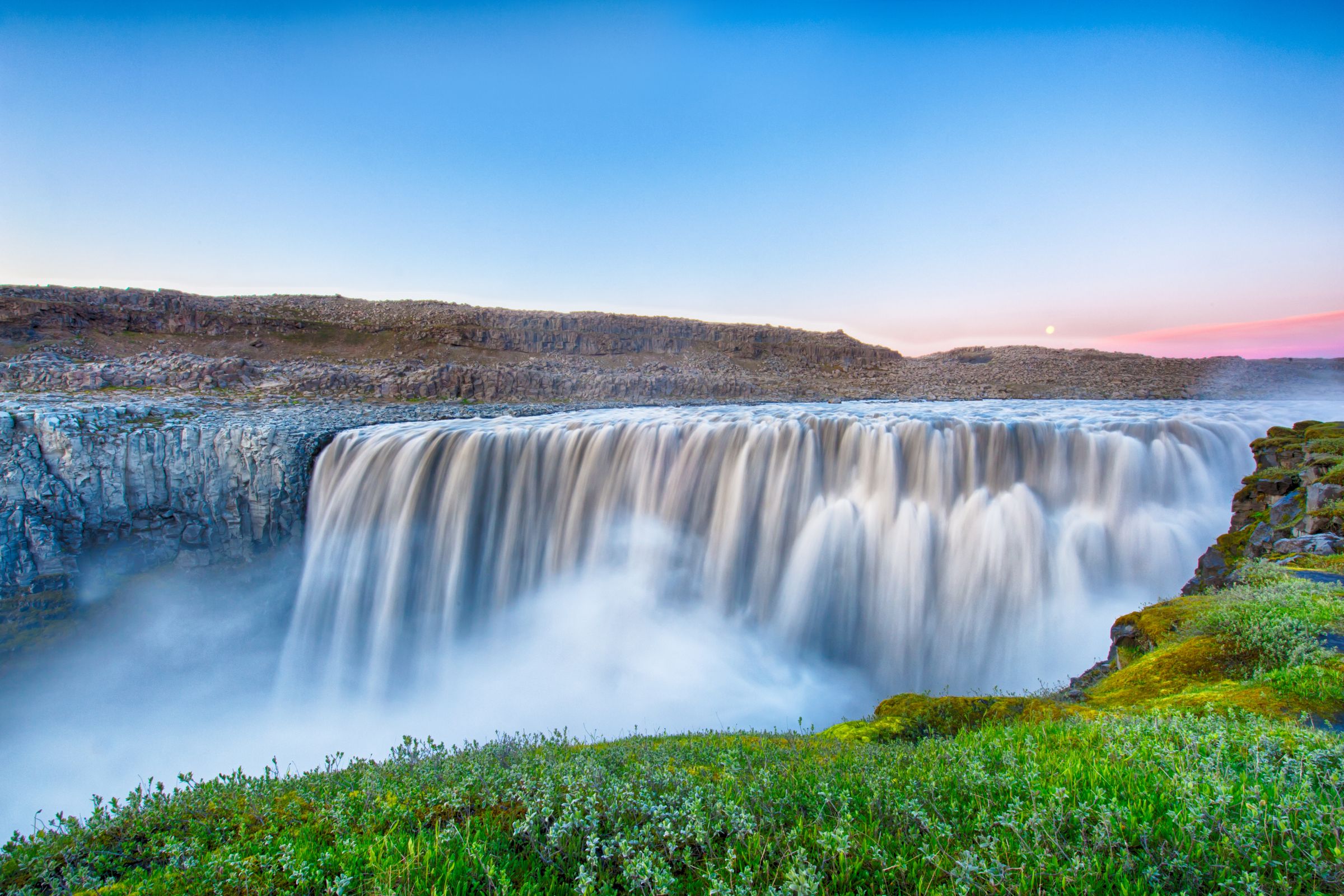
Selfoss
Selfoss is a short walk from Dettifoss. It's a wide, lower waterfall that gets less attention than it probably deserves. The broad horseshoe shape photographs better than Dettifoss in some ways. Worth 20 minutes if you're already at Dettifoss.
Ásbyrgi Canyon
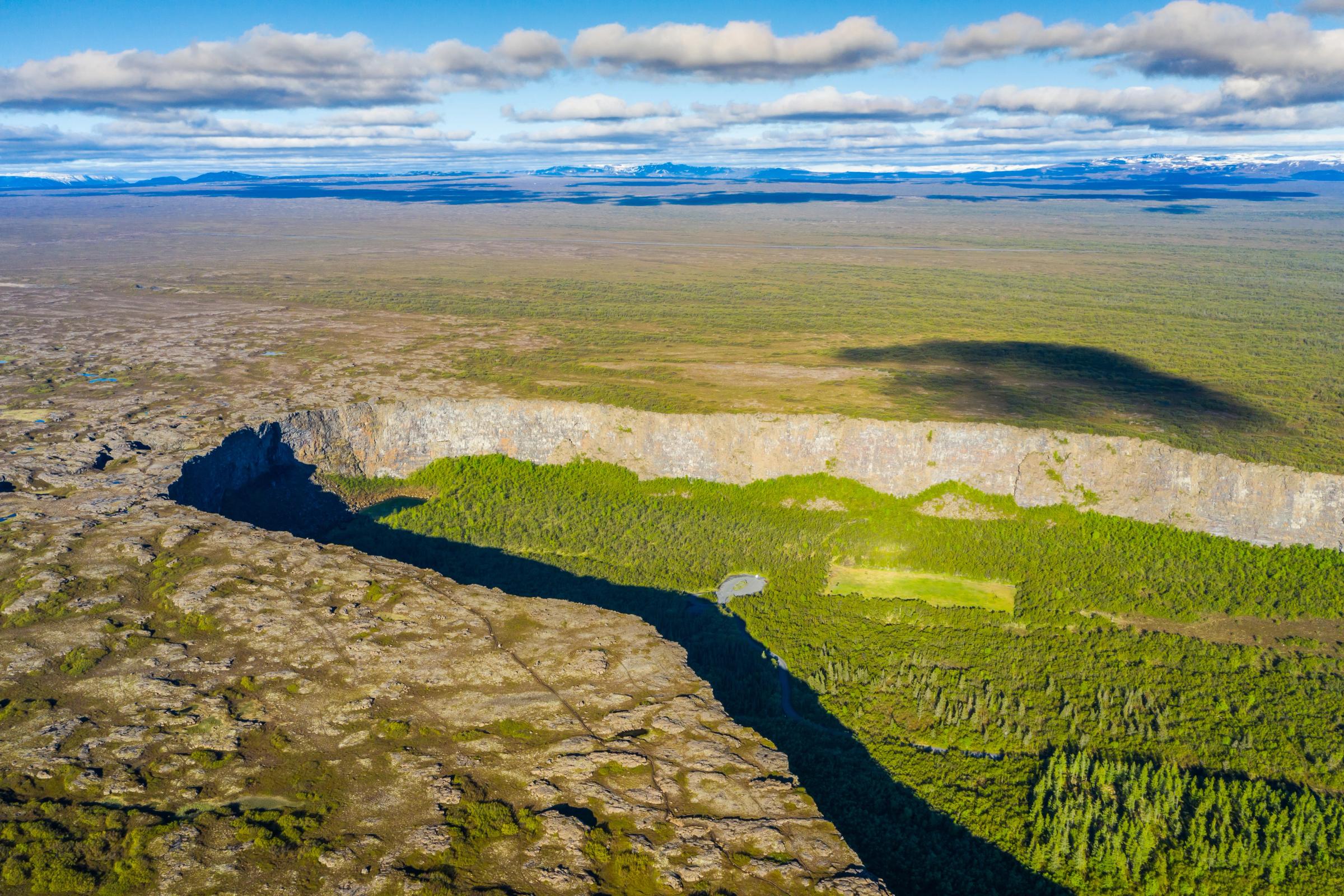
Ásbyrgi is 15 km north of Hljóðaklettar. It's a horseshoe-shaped canyon with hiking trails and the Gljúfrastofa visitor centre, which is the main information hub for the Jökulsárgljúfur area. The centre has restrooms, a charging station in the parking lot, and staff who can tell you current trail and road conditions. If you're planning a full day in the area, stopping here first is useful.
Hólmatungur
Hólmatungur connects to Hljóðaklettar via marked hiking routes. It's a greener area with streams and dense vegetation, which looks very different from the black basalt at Echo Rocks. Worth including if you're doing a longer route or staying at the Vesturdalur campground.

Lake Mývatn
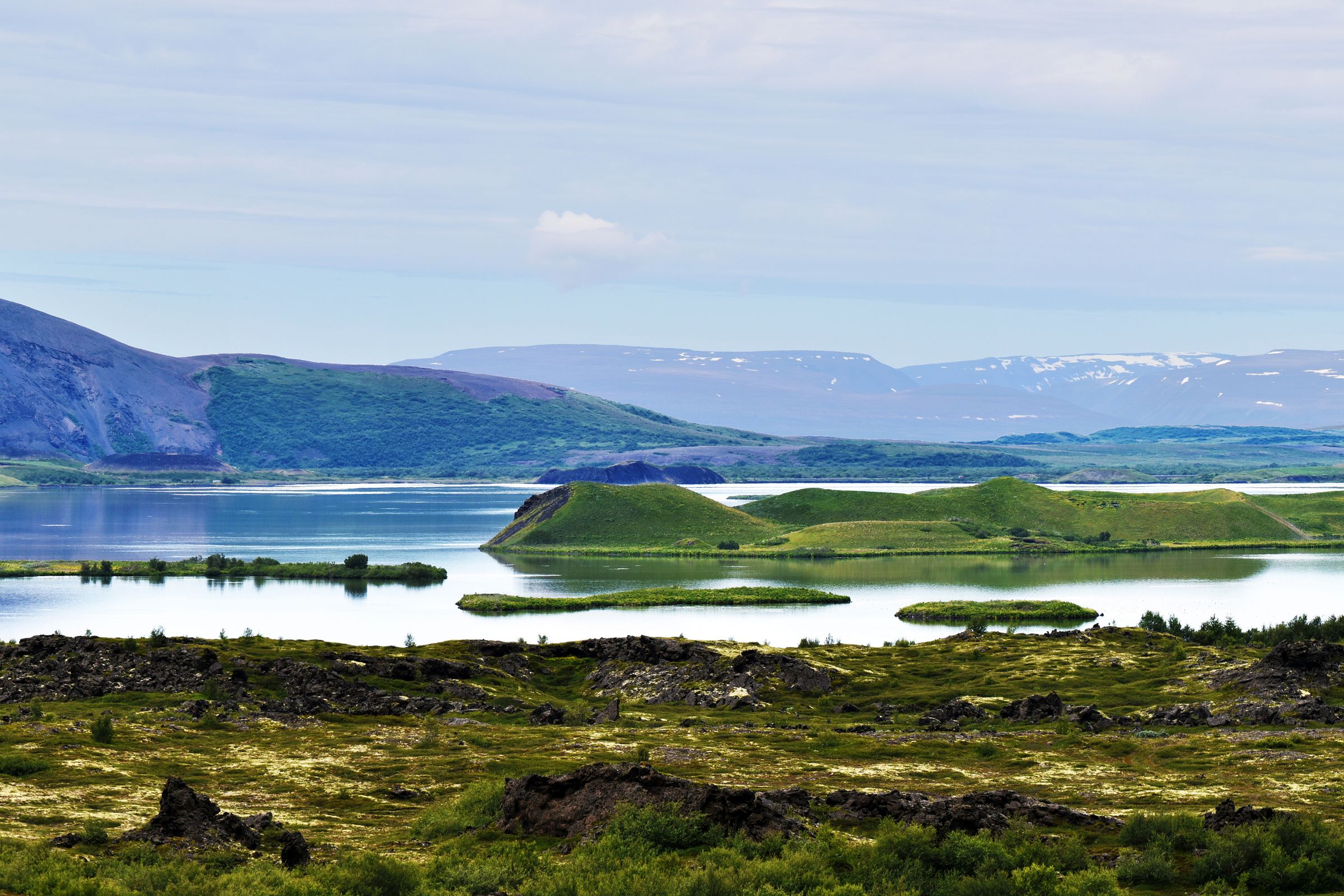
Lake Mývatn is about 50 km west of Hljóðaklettar. It's a geothermal area with pseudocraters, lava formations, birdlife, and the Earth Lagoon Mývatn. Most people spend half a day to a full day there. On a Diamond Circle loop, it's typically one of the first stops before heading east toward Dettifoss and Hljóðaklettar.
Húsavík
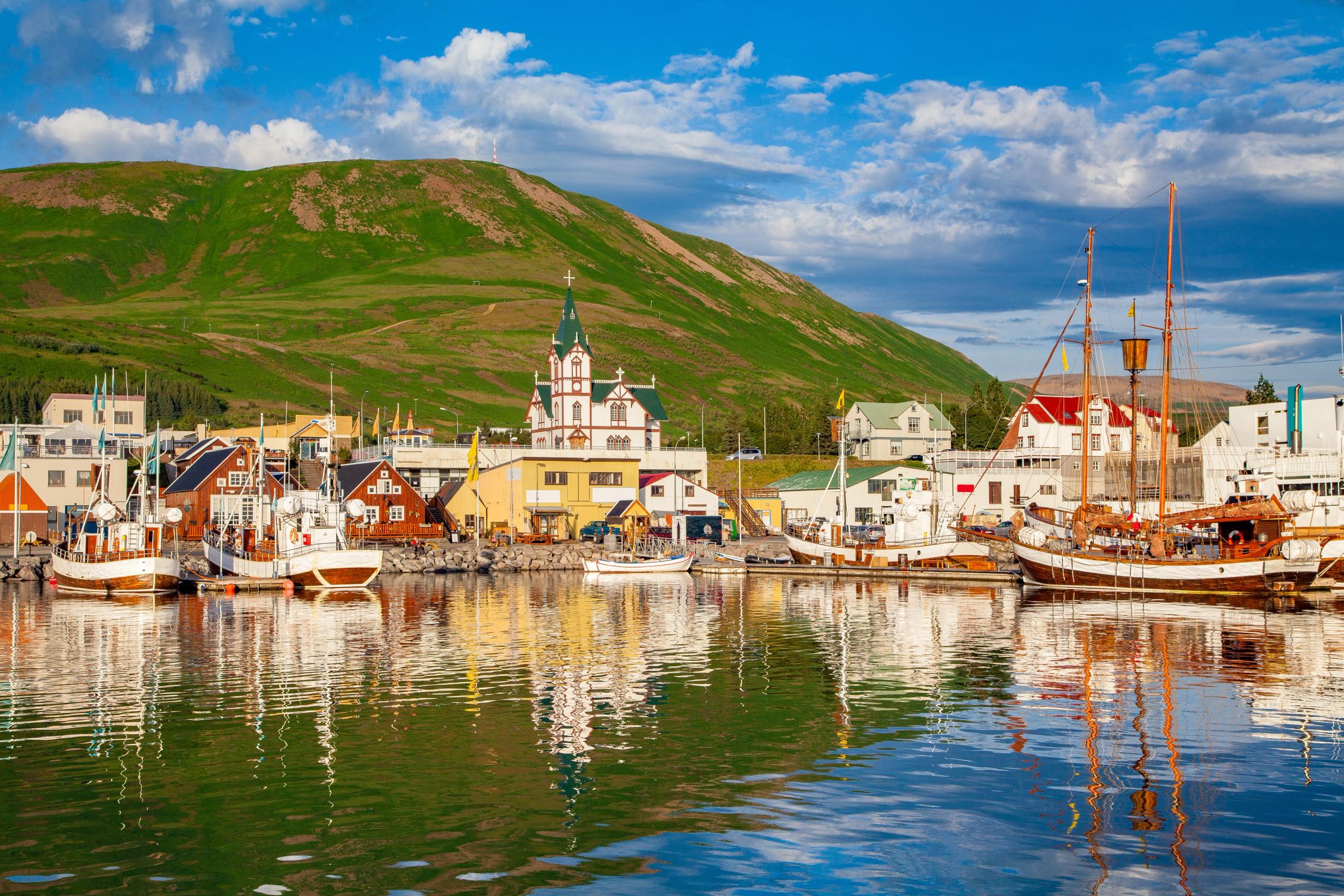
Húsavík is 50 km north and is Iceland's main whale-watching town. It has the Húsavík Whale Museum, restaurants, and more accommodation options than Ásbyrgi. If you're staying overnight in the area, Húsavík is the most practical base.
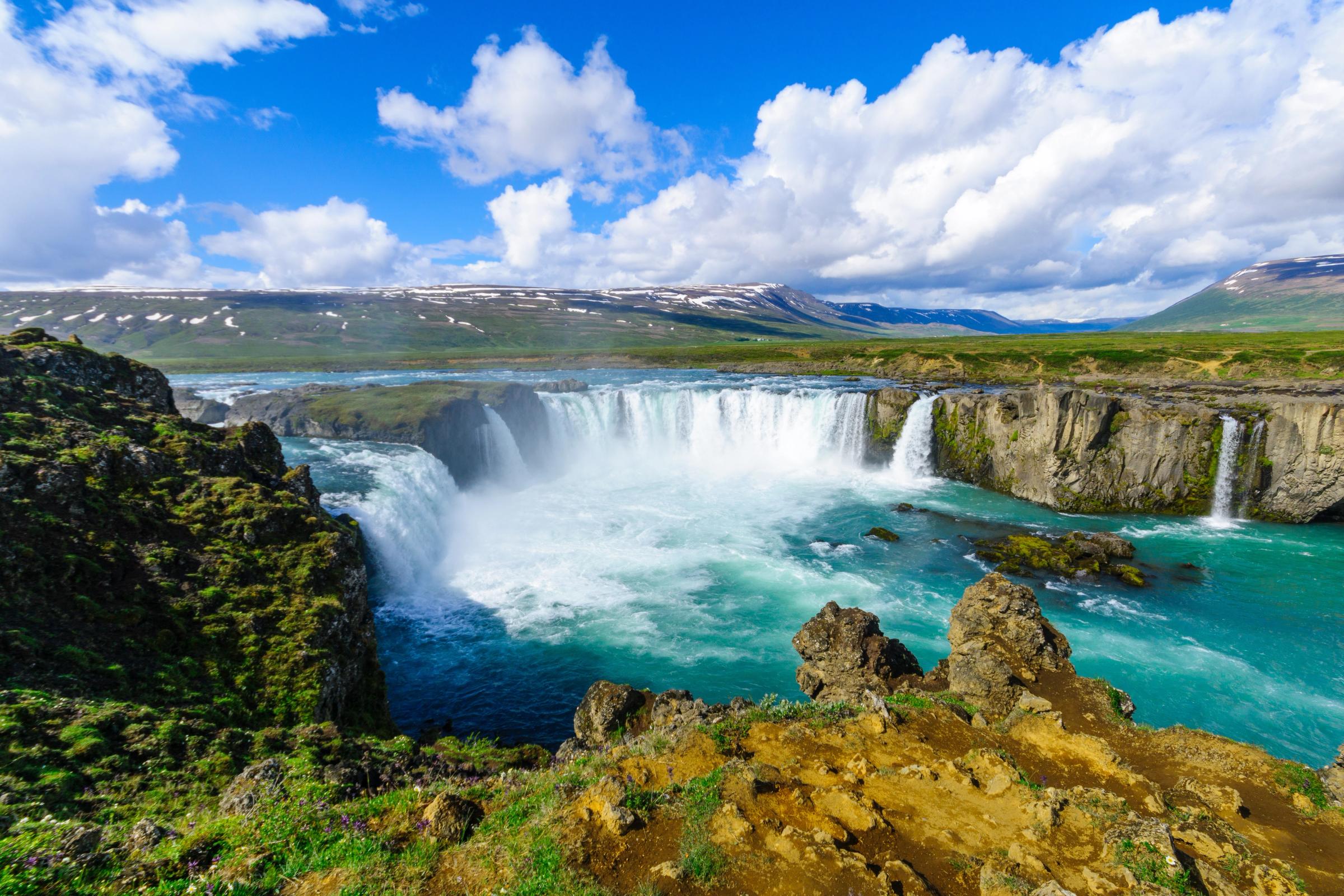
Goðafoss
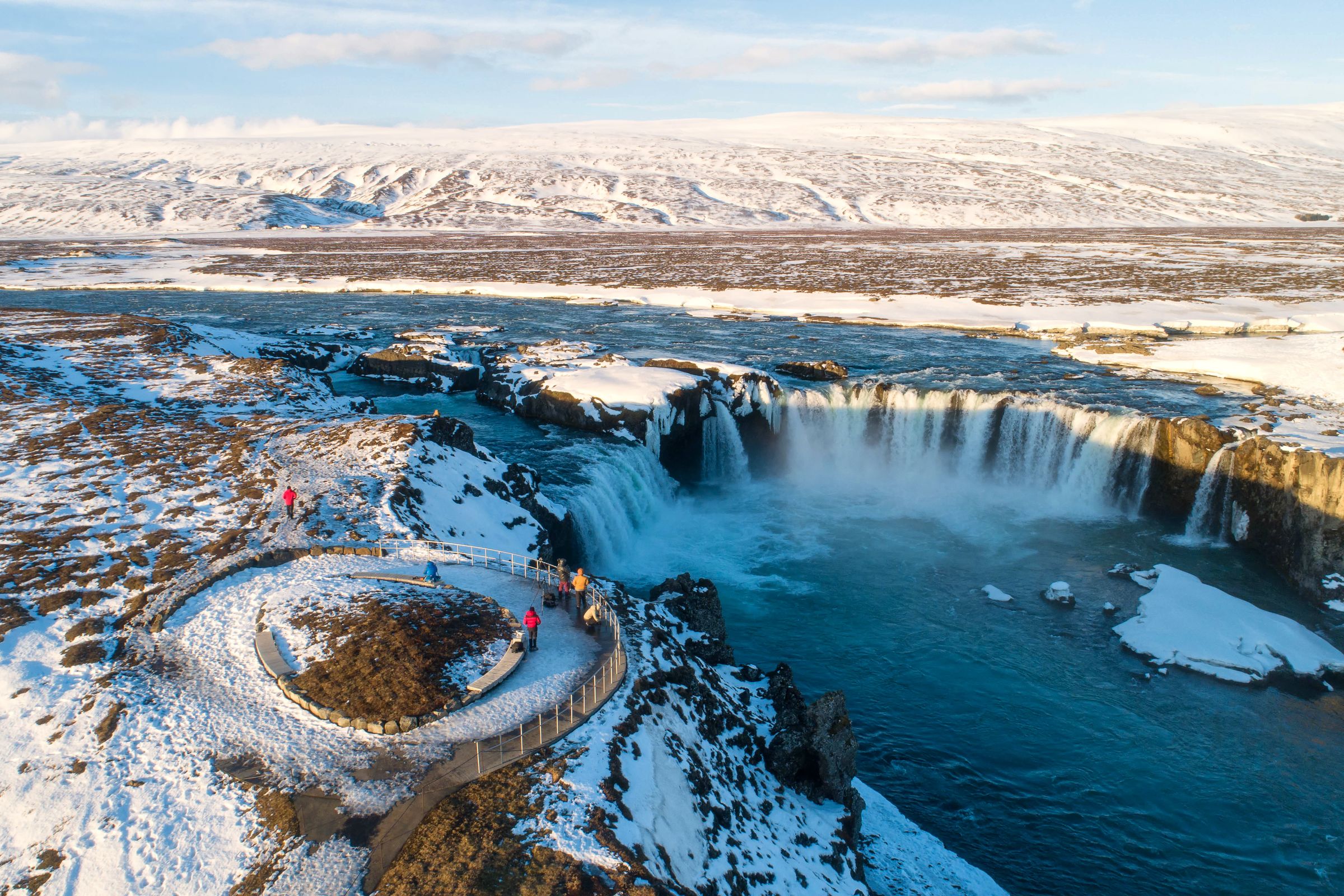
Goðafoss is about 50 km west of Mývatn, right off the Ring Road. It's usually the first or last stop on a Diamond Circle loop. The waterfall is wide and easy to access. It also has a historical connection: around 1000 AD, a local chieftain reportedly threw statues of Norse gods into it after Iceland converted to Christianity.
Visiting Hljóðaklettar as Part of the Diamond Circle
The Diamond Circle is a roughly 250 km loop in Northeast Iceland (Norðurland eystra) with five main stops: Goðafoss, Lake Mývatn, Dettifoss, Ásbyrgi, and Húsavík. It's often described as a one-day route, but that doesn't leave much time at any of the stops, and it leaves no time for Hljóðaklettar at all.
Recommended Routing
The most practical place to add Hljóðaklettar is between Dettifoss and Ásbyrgi. The park's trail network connects in both directions, so it fits into the route without backtracking. A logical full-loop order:
- Goðafoss (Ring Road, 30 to 45 minutes)
- Lake Mývatn and geothermal areas (half day)
- Dettifoss and Selfoss (1 to 2 hours)
- Hljóðaklettar (1 to 2 hours, V3 recommended)
- Ásbyrgi Canyon and Gljúfrastofa visitor centre
- Húsavík (whale watching or dinner)
This runs west to east, then north, which follows the road layout without backtracking.
One Day vs. Two Days
One day is doable, but there's no time buffer for road delays, weather, or spending longer at any stop. Gravel road sections, short hikes, and stopping for photos all take longer than they look on a map. Two days is more comfortable: Mývatn as the overnight base on Day 1, then Dettifoss, Hljóðaklettar, Ásbyrgi, and Húsavík on Day 2.
If one day is all you have, Goðafoss is the easiest stop to cut. It's a good waterfall, but not essential if you're running short on time. Put those 45 minutes toward a longer hike at Hljóðaklettar or a whale-watching boat in Húsavík.
Good to know: Hljóðaklettar gets far fewer visitors than Dettifoss. If you go while Dettifoss is busy at midday, you'll often have the Hljóðaklettar trails to yourself.
Practical Information
There's no food, fuel, or shop at Hljóðaklettar. The nearest services are in Ásbyrgi, 15 km north. Stock up before entering the park.
Entry and Facilities
Entry is free. Hljóðaklettar is part of Vatnajökull National Park, which was established in 2008 when the former Jökulsárgljúfur National Park was folded into it. The site is accessible 24/7, but the access road closes in winter. Plan your visit for June through September.
The parking area at Langavatnshöfði has basic toilets and information boards. There's no electricity, food, or fuel on-site. For restrooms inside a building, a charging station, trail maps, and staff, go to the Gljúfrastofa visitor center at Ásbyrgi.
Camping at Vesturdalur
The Vesturdalur campground is right next to Hljóðaklettar and opens from early June to mid-September. Tents only. No electricity, no hot water, limited phone signal. Drinking water and toilets are available. There are no reservations; pay rangers on-site.
If you have everything you need with you, it's a good base for spending a couple of days in the area. If you need a shower, a restaurant, or a reliable phone signal, stay in Húsavík or Ásbyrgi and drive in each day.
Accessibility
The trails are uneven basalt and packed earth. V2 and V5 are manageable for most fitness levels, but none of the trails are wheelchair accessible. With young children, V2 is the safest option. Keep kids away from cliff edges and cave openings throughout.
Conservation Rules
Walking off the marked footpaths at Hljóðaklettar and Rauðhólar is not allowed. The ground between formations has mosses and plants that take a long time to recover from foot traffic. The park enforces this rule. Stay on the marked trails.
Travel Tips
Hljóðaklettar is not a complicated visit, but knowing some things in advance can be helpful
Timing Your Visit
Early morning or late evening gives you better light on the columns and fewer people around. Hljóðaklettar is a small area, and even a handful of other groups nearby changes the feel of it. In June and July, the midnight sun means you can get good light as late as 10 PM and often have the place to yourself.
What to Bring
- Hiking boots with grip: wet basalt is slippery
- Waterproof and windproof jacket: the weather in North Iceland shifts fast
- Water and food: nothing available on-site
- Offline maps downloaded before you leave: no phone signal in Vesturdalur
- A wide-angle lens if you shoot photos
- The safetravel.is app: it lets you share your GPS with Iceland's 112 emergency service
Combining with Dettifoss
Dettifoss is 10 km from Hljóðaklettar, and the two work well as a pair on the same day. Dettifoss is a very loud, very large waterfall. Hljóðaklettar is about the shape and texture of the rock and the acoustic effect. Do Hljóðaklettar first for the morning light and smaller crowds, then continue to Dettifoss.
Check Conditions Before You Go
Road 862 can close with little notice in the shoulder seasons. Check road.is for current conditions on the morning you plan to drive. The Icelandic Met Office (vedur.is) also posts weather warnings. If you're unsure about conditions on the day, staff at Gljúfrastofa in Ásbyrgi will have the most current information.
Conclusion
Hljóðaklettar is not the most dramatic thing in Northeast Iceland. Dettifoss, 10 km away, is louder and bigger. What Hljóðaklettar has is different: basalt columns shaped by volcanic conduit cooling rather than surface lava flows, an acoustic effect in the caves, and named formations tied to Iceland's settlement-era storytelling tradition.
The formations are roughly 9,000 years old. They were exposed by glacial flooding from the Jökulsá á Fjöllum river over thousands of years. As part of the Diamond Circle, Hljóðaklettar fits naturally between Dettifoss and Ásbyrgi and adds something the other stops don't have.
Give it 1 to 2 hours, go early, wear boots with grip, and test the echo at Kirkjan.
Frequently Asked Questions About Hljóðaklettar