Fimmvörðuháls in Iceland: Complete Hiking Guide to the Valley of Five Cairns
Iceland has plenty of unusual landscapes, and this hike is one of the most interesting ones to walk through, sitting between two large glaciers and giving you a steady mix of waterfalls, lava fields, and wide views as you climb higher. It is a long day out, but it keeps changing as you go, so you never really settle into one type of scenery for long.
Here’s everything you need to know about Fimmvörðuháls before you set for adventure.
Key takeaways
- The trail is 22 to 26 kilometers long, linking Skógar and Þórsmörk, with more than 1,000 meters of elevation gain.
- The best time to go is June through September, when the snow on the pass has mostly melted.
- You see over 25 waterfalls, the craters from the 2010 eruption, and two major glaciers along the route.
- You need decent fitness and to take the weather seriously because conditions can turn quickly.
- You can finish in one long day or split it into two days with a night in a hut.
What Is Fimmvörðuháls?
Fimmvörðuháls is both a mountain pass and one of Iceland’s well-known hiking routes, sitting between the Eyjafjallajökull and Mýrdalsjökull glaciers in the south. Its name means Five Cairn Pass, a reference to the stone markers that guided people long before the modern trail existed. If you want to try the pronunciation, it sounds a bit like “FIMM-vur-thoo-houls.” You’ll probably get it wrong, but there will be no judgment on our side.
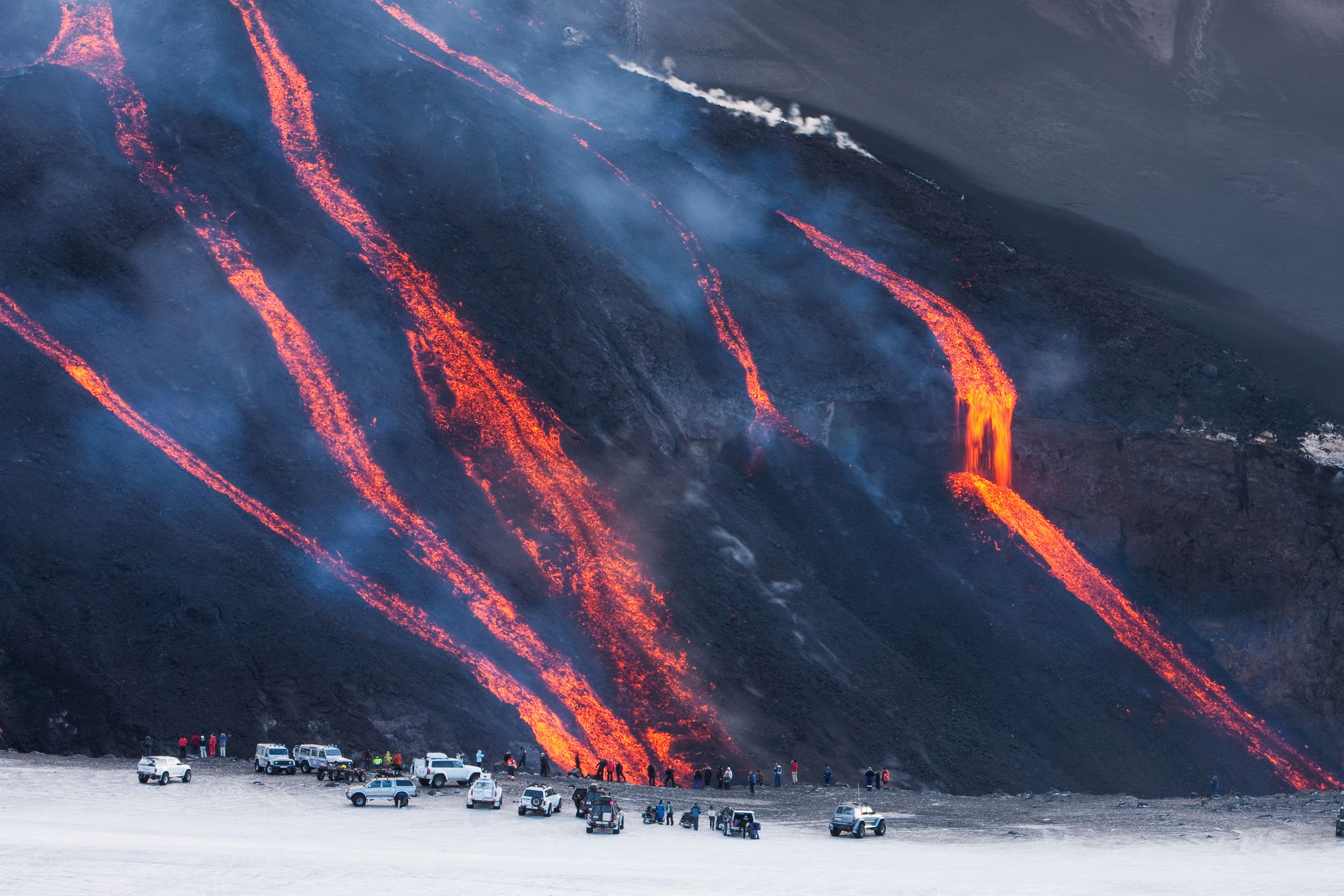
What makes this area especially interesting is what happened in 2010, when the Eyjafjallajökull eruption began right on this pass and created the Magni and Móði craters that you walk past on the way to Þórsmörk. The lava from that eruption is still cooling slowly beneath the surface, so you are walking across land that, in geological terms, is extremely new.
This trail sits on a boundary where two tectonic plates pull apart, which fuels a lot of volcanic activity, while the glaciers around you have been shaping the valleys for thousands of years. Those two forces meet directly here, which is why the landscape changes so quickly as you move through it.
Most hikers begin in Skógar by the well-known Skógafoss waterfall and head toward Þórsmörk, a sheltered valley with more plant life than the rest of the route, and once you reach it, you can connect straight into the Laugavegur Trek if you want a longer trip.
Location and Geography
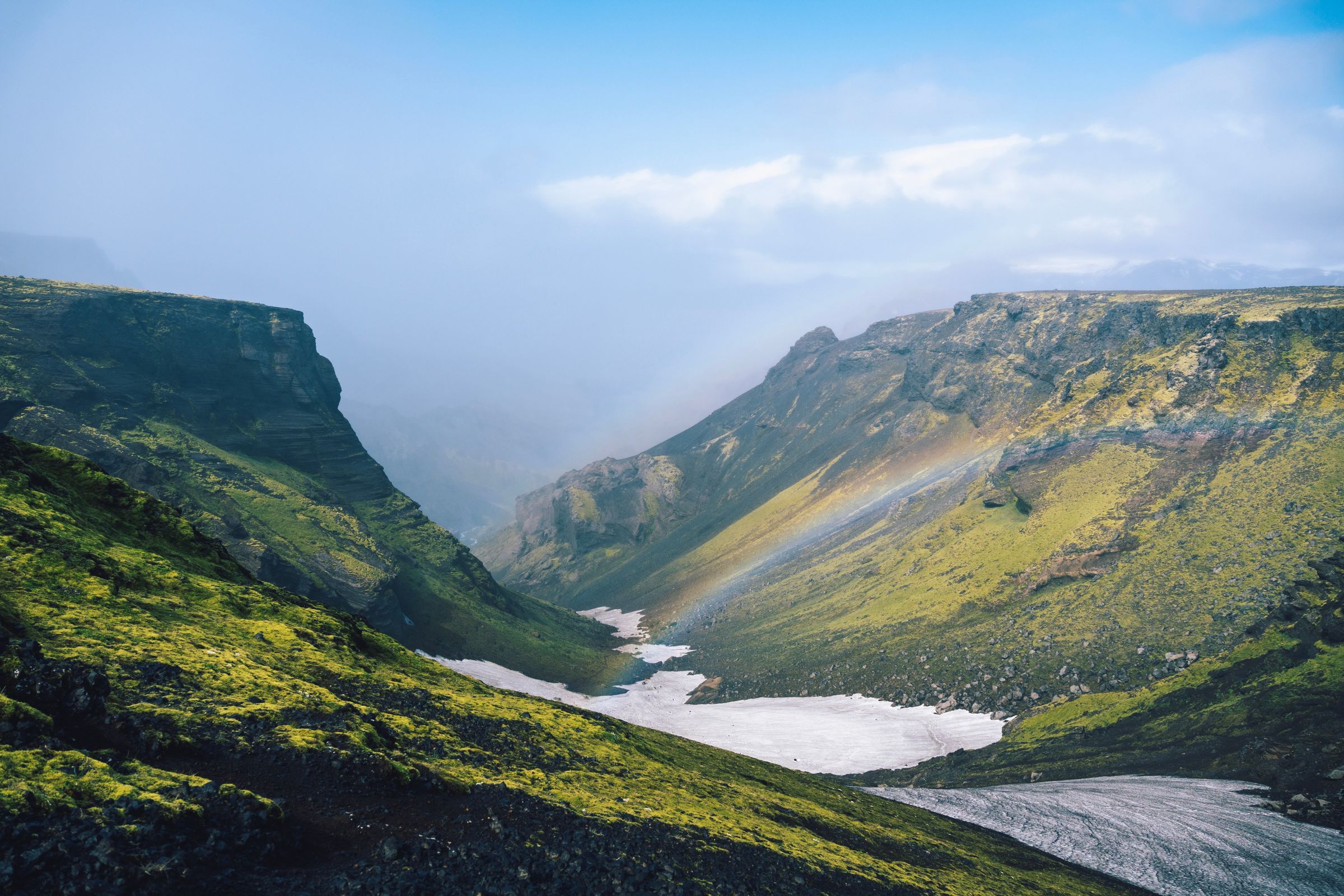
The trail sits in southern Iceland about 150 kilometers east of Reykjavík along the Ring Road, and the pass itself rises to about 1,050 meters. Eyjafjallajökull is on one side, and Mýrdalsjökull is on the other, with Mýrdalsjökull covering the volcano Katla, which scientists monitor closely because of its history.
You start near sea level at Skógar and work your way upward through several different types of terrain, moving from grassy areas into higher, more sparse ground, then into a rough volcanic landscape near the top of the pass, before dropping into the greener, more sheltered environment of Þórsmörk with its birch woods and softer paths.
The geology under your feet ranges from ancient basalt formed millions of years ago to fresh lava from 2010, and all of it exists because Iceland sits directly on the Mid-Atlantic Ridge, where the crust is slowly pulling apart, creating new land.
The wide floodplains you see between the mountains come from sudden glacier melts during eruptions, which send large, fast floods through the lowlands. These events often reshape the ground, which is why the rivers below look braided and spread out.
The weather here is strongly shaped by the geography. The pass funnels wind, and the glaciers create localized weather that can change quickly. Fog can rise without much warning and make it hard to see the markers, which is why navigation takes some focus even on a well-traveled trail.
Volcanic History and the 2010 Eyjafjallajökull Eruption
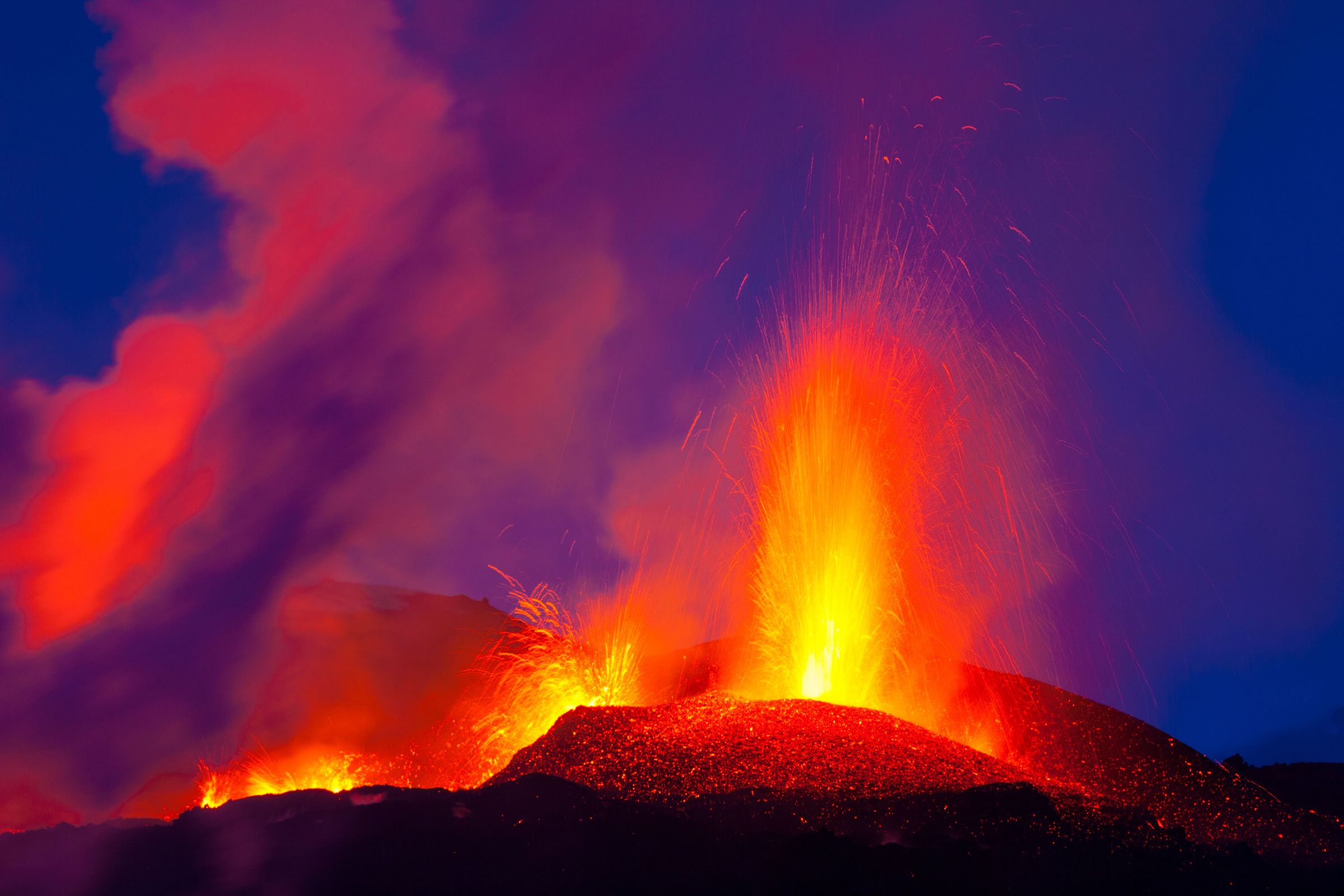
The 2010 eruption of Eyjafjallajökull began right on this pass, so when you walk here, you are crossing the area where the first phase took place. In March of that year, a long crack opened and created the Magni and Móði craters, named after Thor’s sons from Norse mythology. For several weeks, lava flowed from this fissure in a steady, visible way that people could watch safely from reasonable distances.
This early stage of the eruption did not produce the ash cloud that affected air traffic across Europe. That only happened once the eruption moved under the glacier, which caused ash to rise high into the atmosphere. On Fimmvörðuháls itself, the eruption was mostly about flowing lava rather than explosive ash.
The lava field you walk across is called Goðahraun, and it is still dark, sharp, and full of strange surface textures from the way the lava cooled. In a few places, the ground stays warm underneath, which you can sometimes feel if you dig slightly into the surface.
Because the eruption covered parts of the old path, the trail had to be adjusted afterward, with new markers and small detours added so hikers could cross the area safely.
There is still a bit of activity in subtle ways. Magni sometimes releases a little steam, and snow melts earlier in spots where heat still moves upward from below. All of this ties into Iceland’s position on the boundary between the North American and Eurasian plates, which pull apart slowly but steadily and drive the constant volcanic activity that keeps reshaping the island.
The Fimmvörðuháls Hiking Trail Explained
The trail is about 25 kilometers long and takes you across a wide range of terrain, so it feels like a full day, no matter how experienced you are. Most people hike from Skógar in the south up toward Þórsmörk in the north, partly because the climb along the waterfalls is steady rather than abrupt, and partly because ending in a sheltered valley feels more natural after spending hours in the high, exposed area near the pass. You can go the opposite way, but starting in Þórsmörk means your morning begins with a very steep climb.
Most hikers take between 8 and 12 hours, though strong hikers may finish closer to 6 or 7, and slower paces can stretch to 14. You gain roughly 1,400 meters and then lose around 1,000 on the way down, with the toughest parts happening in the middle sections.
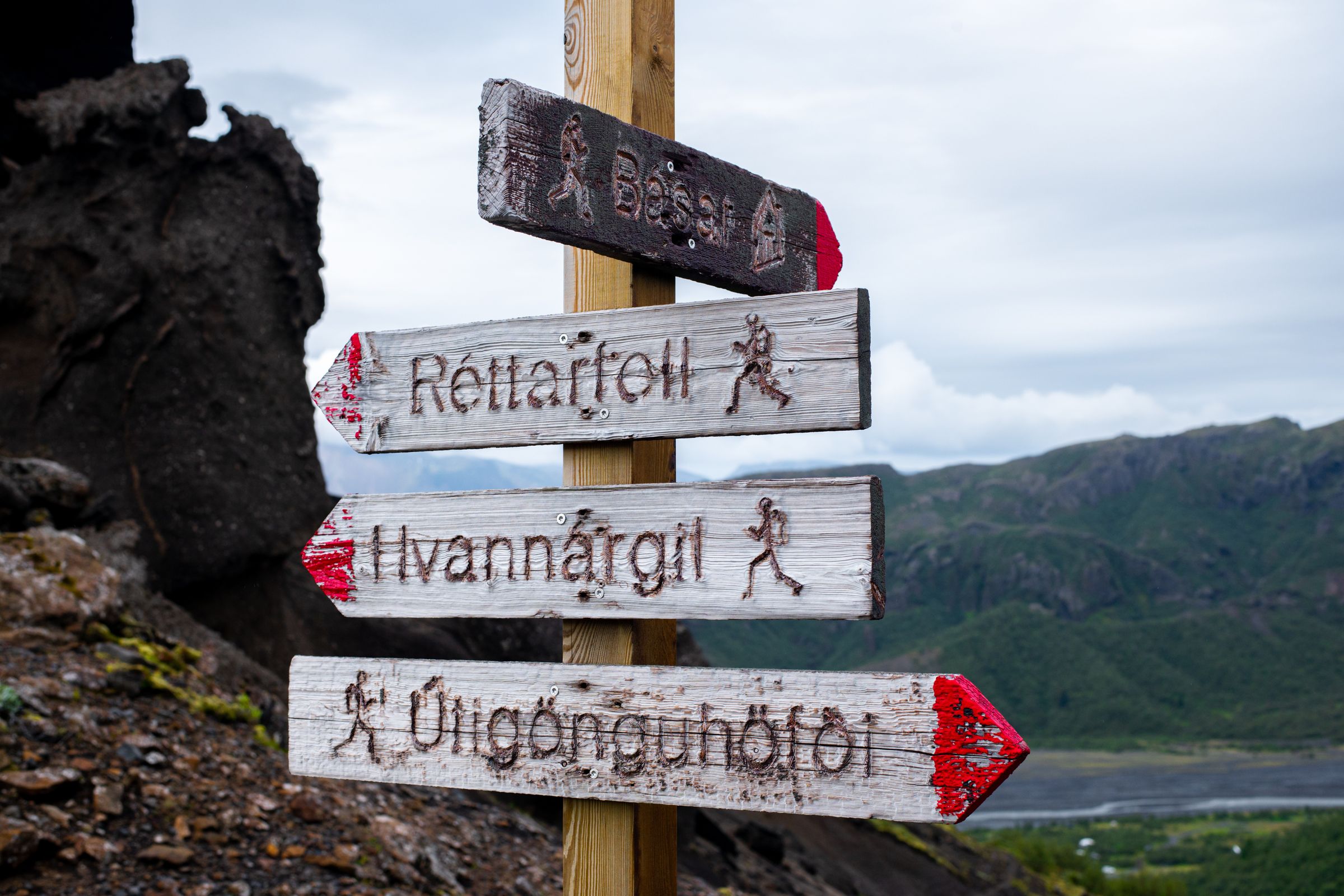
Trail markers are red wooden stakes and stone cairns that work well in good visibility, but they can be hard to spot when fog settles in or if there is lingering snow. The trail itself changes a lot, starting as a worn dirt path near the waterfalls, turning rocky and uneven higher up, and eventually running across fresh lava that formed in 2010.
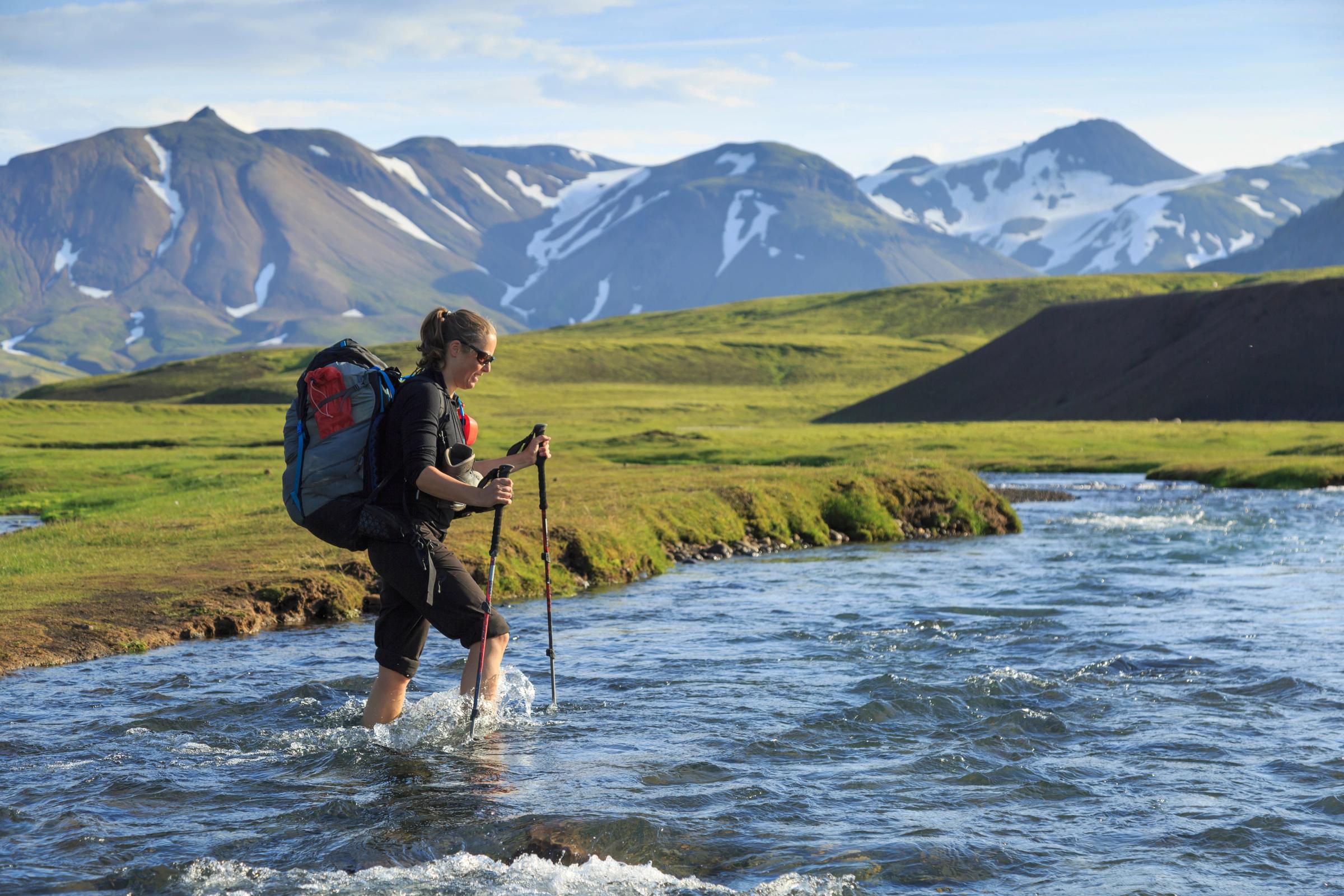
River crossings are not too difficult because the bigger ones have bridges. You may still need to step across stones in smaller streams, but nothing too deep. The main crossing is the bridge over the Skógá River around the 8-kilometer point, which is also a good place to take a break and refill water.
If you want to go farther, the trail connects directly into the Laugavegur Trek once you reach Þórsmörk, so you can continue north toward Landmannalaugar. A lot of hikers choose to combine the two routes into one longer trip.
There are mountain huts along the way if you want to split the trek over two days. Baldvinsskáli sits near the top and offers basic shelter, with bunks and a simple cooking area. It books up early, so you need to reserve in advance through the Icelandic Touring Association.
Connection to the Laugavegur Trail
Fimmvörðuháls links directly to the Laugavegur Trail at Þórsmörk, which means you can combine both hikes and cover a huge stretch of Iceland’s interior. Laugavegur is a 55-kilometer route that usually takes four to five days, running from Landmannalaugar to Þórsmörk. It passes colorful rhyolite mountains, long glacier views, and geothermal areas where natural hot springs sit right in the middle of the landscape.
When you add Fimmvörðuháls to it, the whole journey becomes roughly 75 to 80 kilometers, and you get an even wider sample of Iceland’s environments. You can start at Landmannalaugar, hike the Laugavegur to Þórsmörk, then continue over Fimmvörðuháls to Skógar, or flip the order and start at the coast before heading into the Highlands. Both directions work fine. It just depends on how you want the climb and descent to feel.
Many hikers see this combined route as a kind of complete version of Iceland’s best-known trails, since you move through colorful geothermal areas, high volcanic ground, and then end in either a coastal landscape or a sheltered valley. The contrast between the two trails makes the combination memorable without needing to rely on a particular order.
Guided companies offer five to six-day itineraries that include both trails, handling the huts, transport, and meals. For solo hikers, it is possible to book everything yourself; however, huts along the Laugavegur fill up months in advance during the summer.
Both trails have roots in older travel routes across the highlands, and over time, they became part of Iceland’s wider hiking culture. Walking them now still follows those older paths, even though the infrastructure around them has improved.
Waterfalls and Natural Highlights
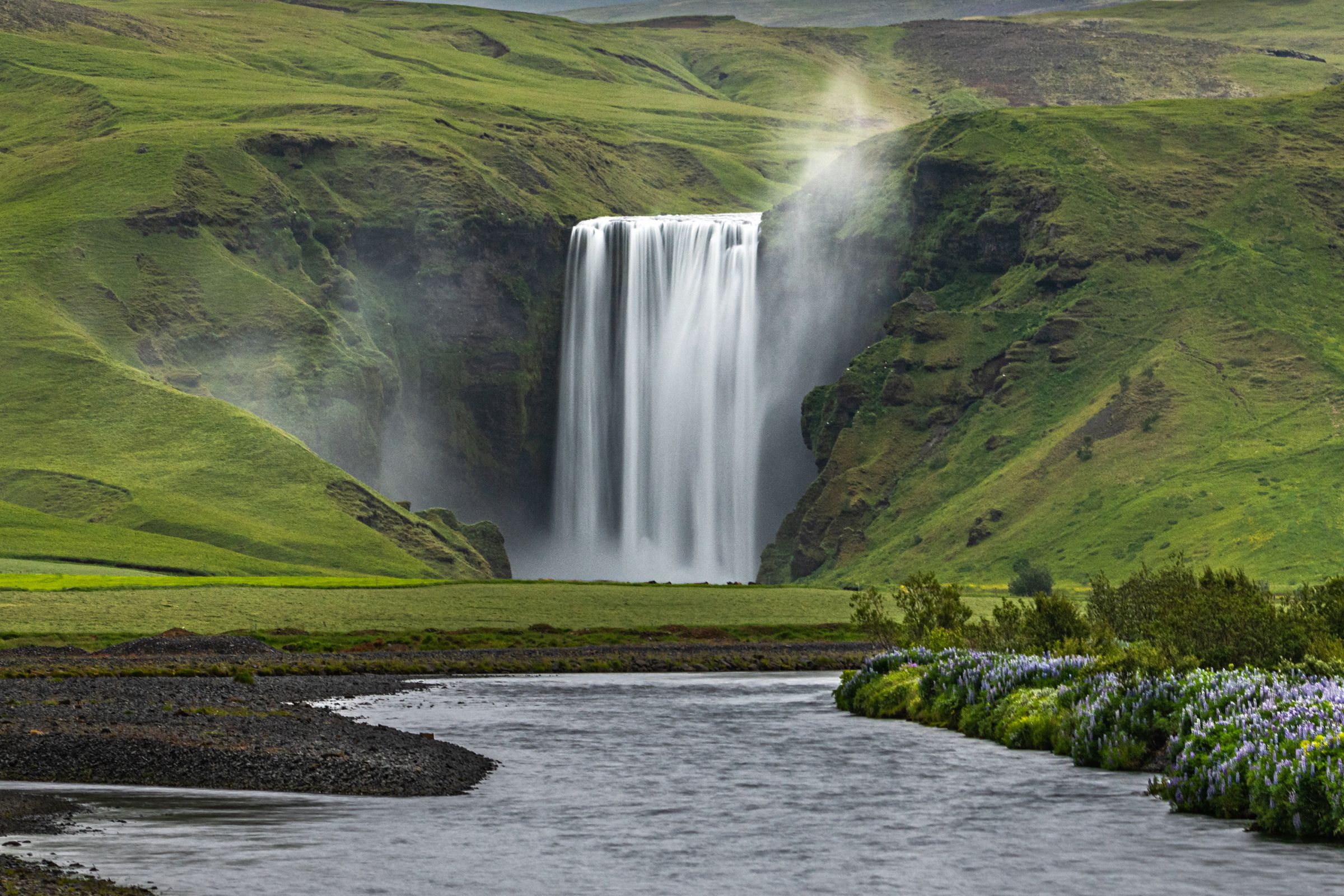
The trail is full of things to look at, and each part feels different from the one before it. Right at the start, you have Skógafoss, a 60-meter waterfall that drops over old sea cliffs. There is a staircase beside it that lets you climb to the top for views back toward the coast and upstream toward the highlands.
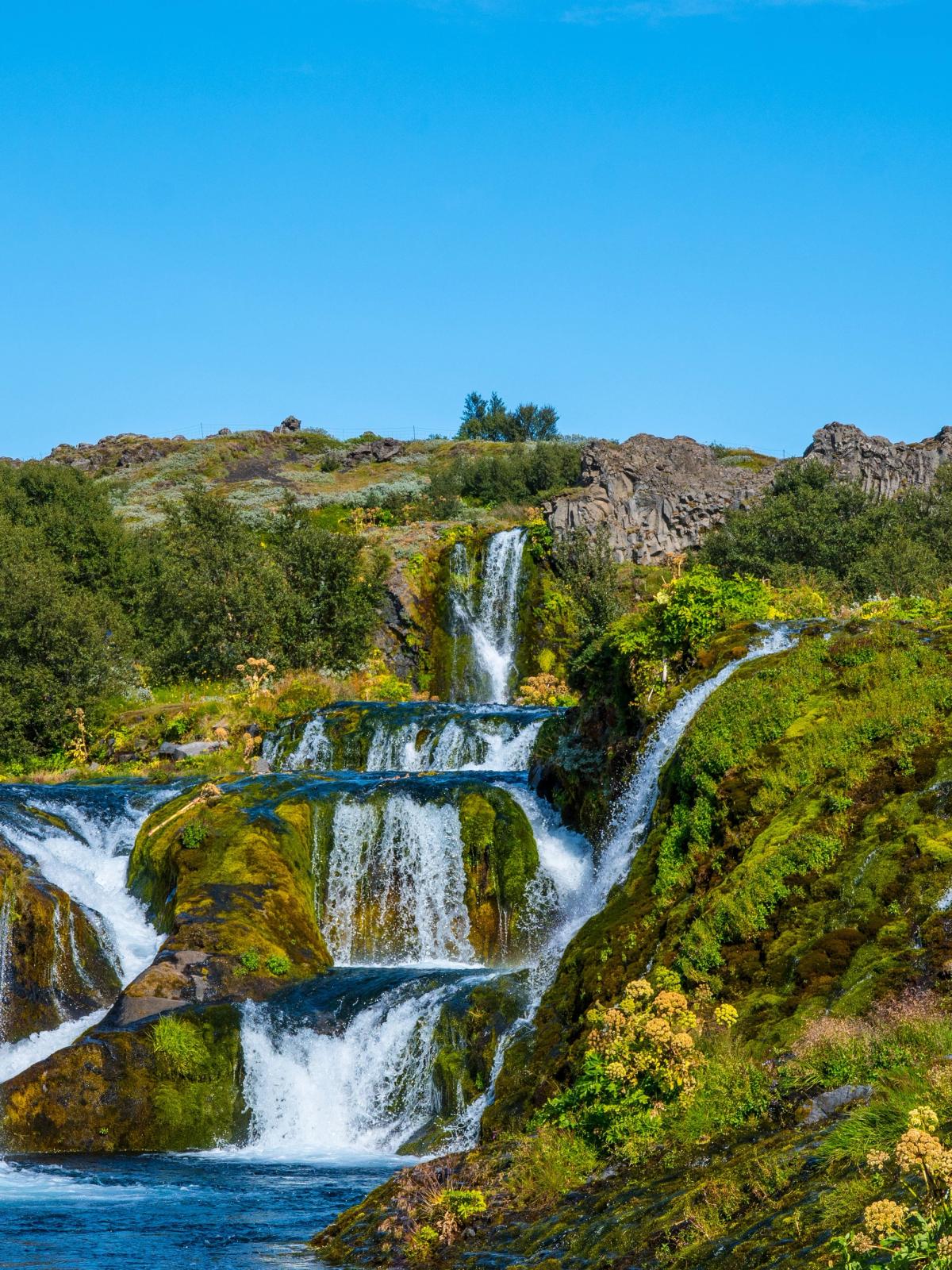
From there, the route follows the Skógá River, and this stretch is known for having more than 25 waterfalls, each shaped a little differently. Some fall into narrow gaps, others spread out over wide ledges, and the river bends constantly, so the views keep changing as you follow it upward.
Once you cross the Skógá bridge around the 8-kilometer mark, the landscape shifts quickly from green ground and moss to darker volcanic terrain. It becomes more open, and the vegetation fades as you approach the higher areas of the trail.
Near the pass, you reach the 2010 eruption zone. The Goðahraun lava field covers a broad area, and you can take short side paths to stand at the edges of the Magni and Móði craters. The lava here is still black and sharp, with surfaces that cooled in unusual patterns.
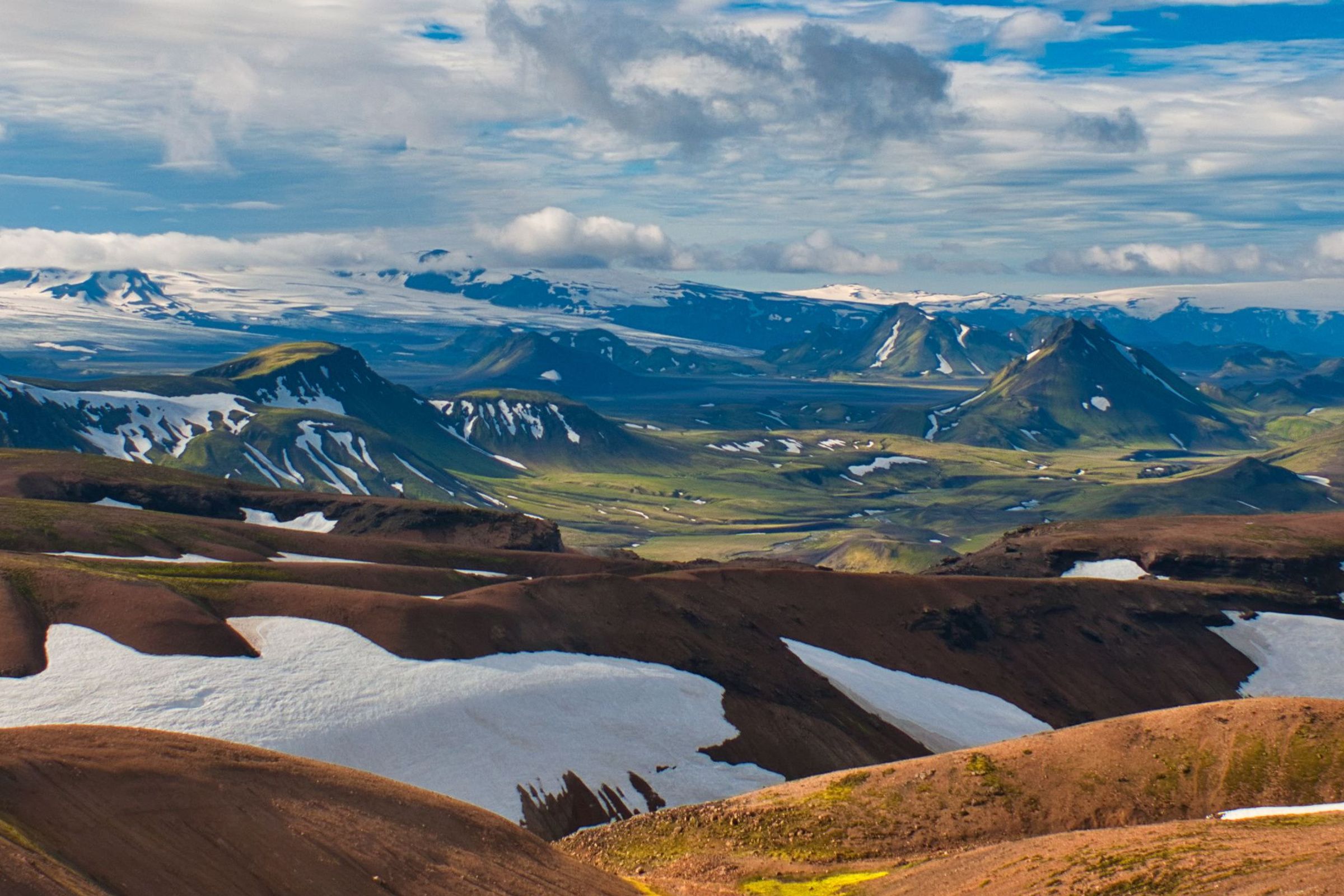
Throughout the day, you have views of both glaciers, Eyjafjallajökull to the west and Mýrdalsjökull to the east. Their size shapes the weather and the river systems below.
As you descend into Þórsmörk, the environment softens again. The ground becomes greener, birch trees appear, and the braided rivers in the valley floor come into view. The shift from volcanic desert to sheltered forest happens quickly, which makes the final stretch feel very different from the rest of the hike.
Weather and Best Time to Hike
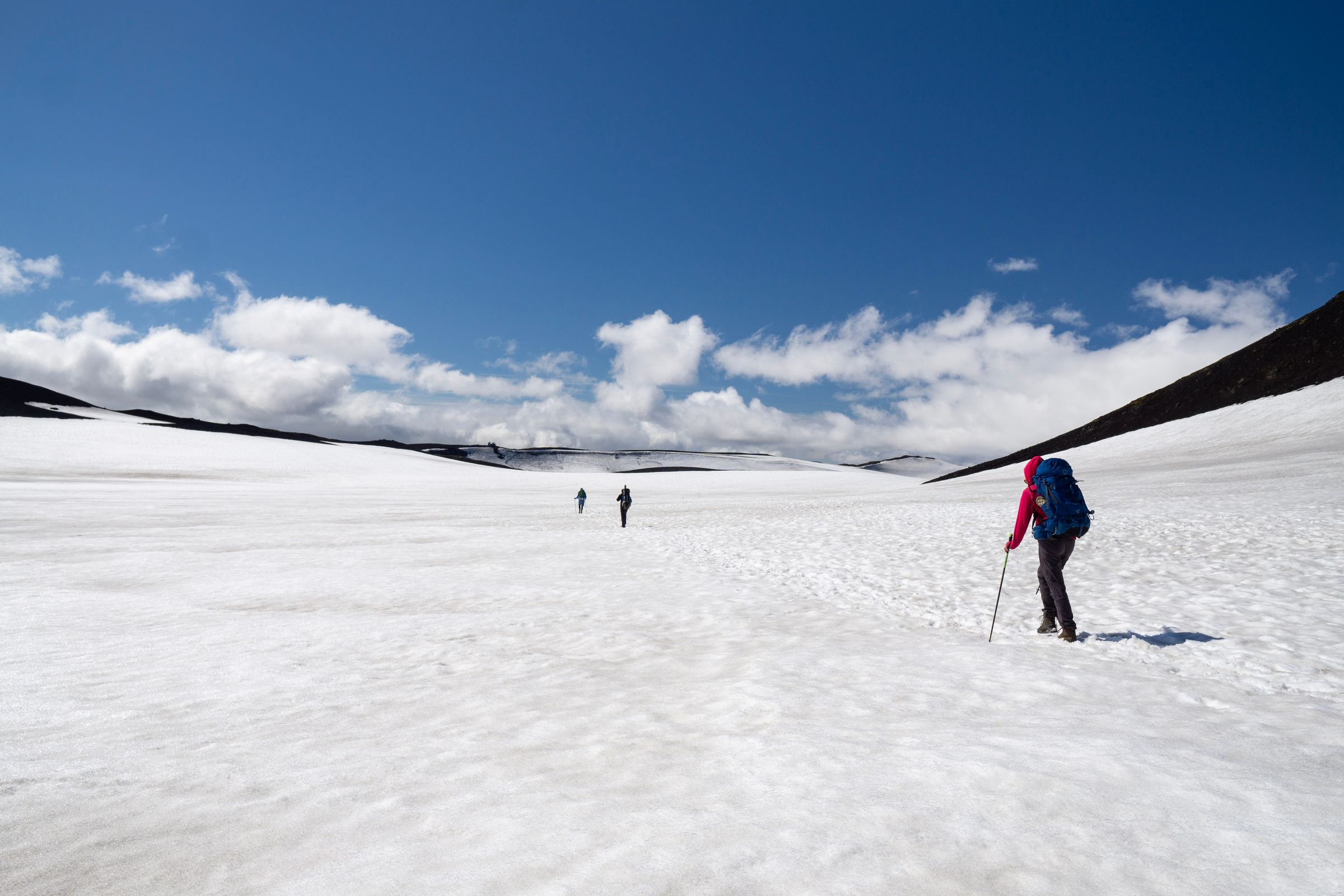
Timing matters a lot on this route because the weather can swing from calm to difficult in a short period of time. The main hiking season runs from mid-June to early September, when the snow has usually melted enough to make the pass safe without winter gear. Even in this period, temperatures near the top often stay low, and nights can drop below freezing.
July and August are the most stable months, with the most daylight and the warmest temperatures. By the middle of July, most of the snow on the pass has melted except for a few shaded spots, and the markers are easier to see. The long daylight hours also give you plenty of time to finish the hike, even if you move slowly.
June can be good but less predictable. Snow sometimes lingers longer than expected, and storms can move in quickly. September brings very nice colors to the lower parts of the trail, especially in Þórsmörk, but the weather becomes more unstable, and the days get noticeably shorter.
The weather on the pass does not always match what is happening at the lower trailheads. The high point funnels wind, and the glaciers can create conditions that build and change faster than standard forecasts suggest. Fog is common and can appear within minutes.
You should check the Icelandic Met Office forecast before hiking, but keep in mind that the pass can behave differently from the valleys. If winds above 12 meters per second or storm warnings show up in the forecast, it is smart to postpone.
Outside of summer, the trail becomes a winter mountaineering route, with deep snow, ice, and strong winds. From October through May, it is not considered suitable for casual hikers.
Safety, Preparation, and Gear
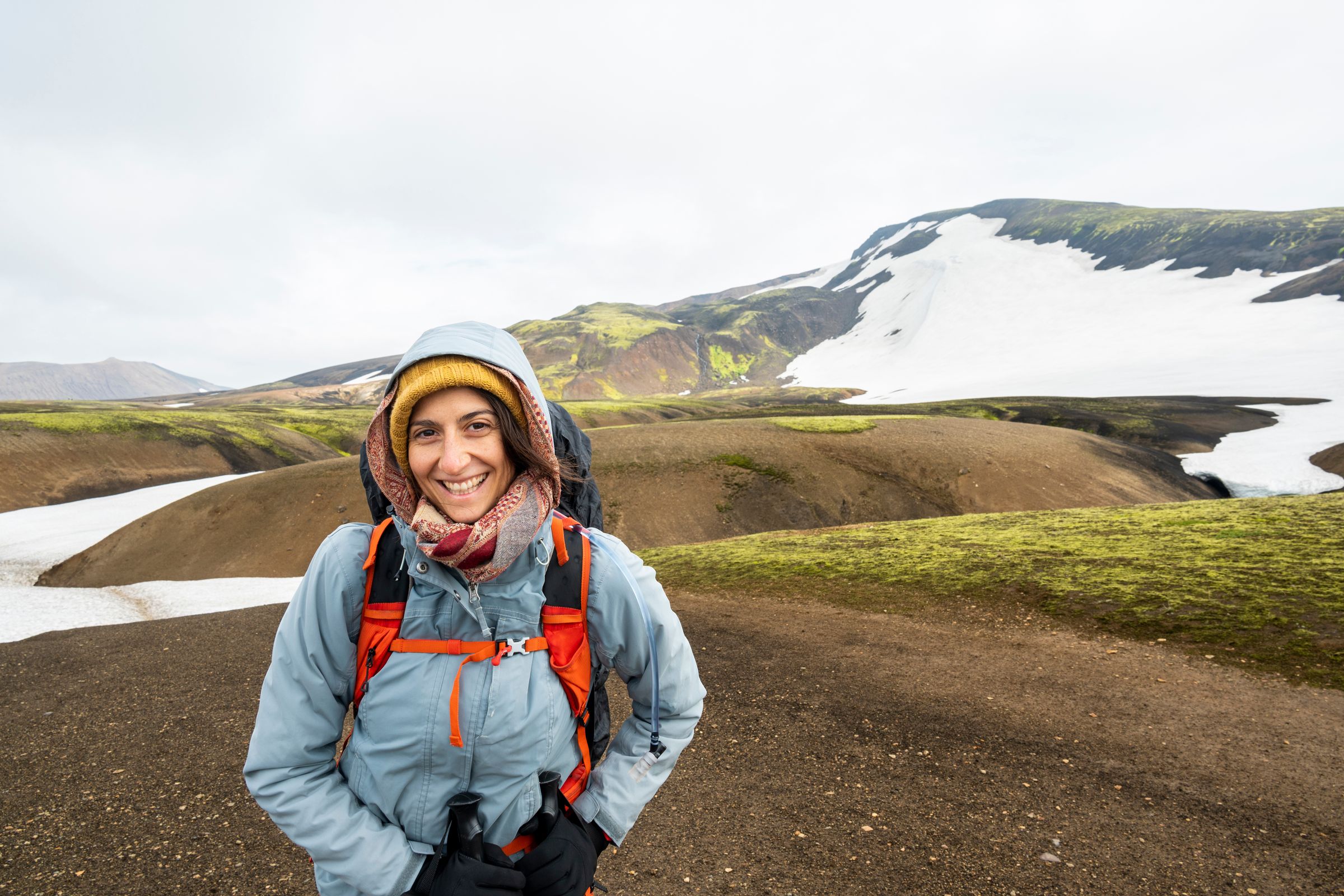
Preparing well for this hike matters a lot, since once you’re up on the pass, you’re fully exposed to whatever weather arrives. Good gear won’t stop a storm, but it helps you deal with sudden changes and gives you more flexibility if conditions get worse than expected.
Clothing and Footwear
You need clothing that keeps you dry and warm even when the weather shifts quickly. The basics look like this:
- A fully waterproof jacket and pants
- Warm layers made of wool or synthetic materials that still insulate when wet
- No cotton, since it holds moisture and cools you down fast
- Waterproof hiking boots with ankle support
- Gaiters to keep mud, water, and sharp debris out of your boots
Navigation and Essential Gear
Even though the trail is marked, fog or snow can hide the markers quickly, so navigation tools matter. It helps to bring:
- A map and compass
- A GPS device or a phone with offline maps
- The 112 Iceland app, which can send your location to emergency services if you have a signal
- A headlamp
- A first aid kit
- An emergency blanket
- Extra food
- Hiking poles for balance on steep, loose, or icy ground and during stream crossings
Understanding Your Limits
Before starting, be honest about your experience level. The combination of distance, elevation gain, and exposure makes this a demanding hike, and going alone increases the risks if you are not used to navigating in poor visibility.
Emergency Awareness
Iceland’s Search and Rescue teams are skilled and reliable, but reaching remote areas can take time. To help them find you if something goes wrong, register your travel plan at safetravel.is. If you need help and have a signal, call 112. Turning back is always a valid decision if the weather changes or you feel unsure about continuing.
Practical Planning and Tourism Information
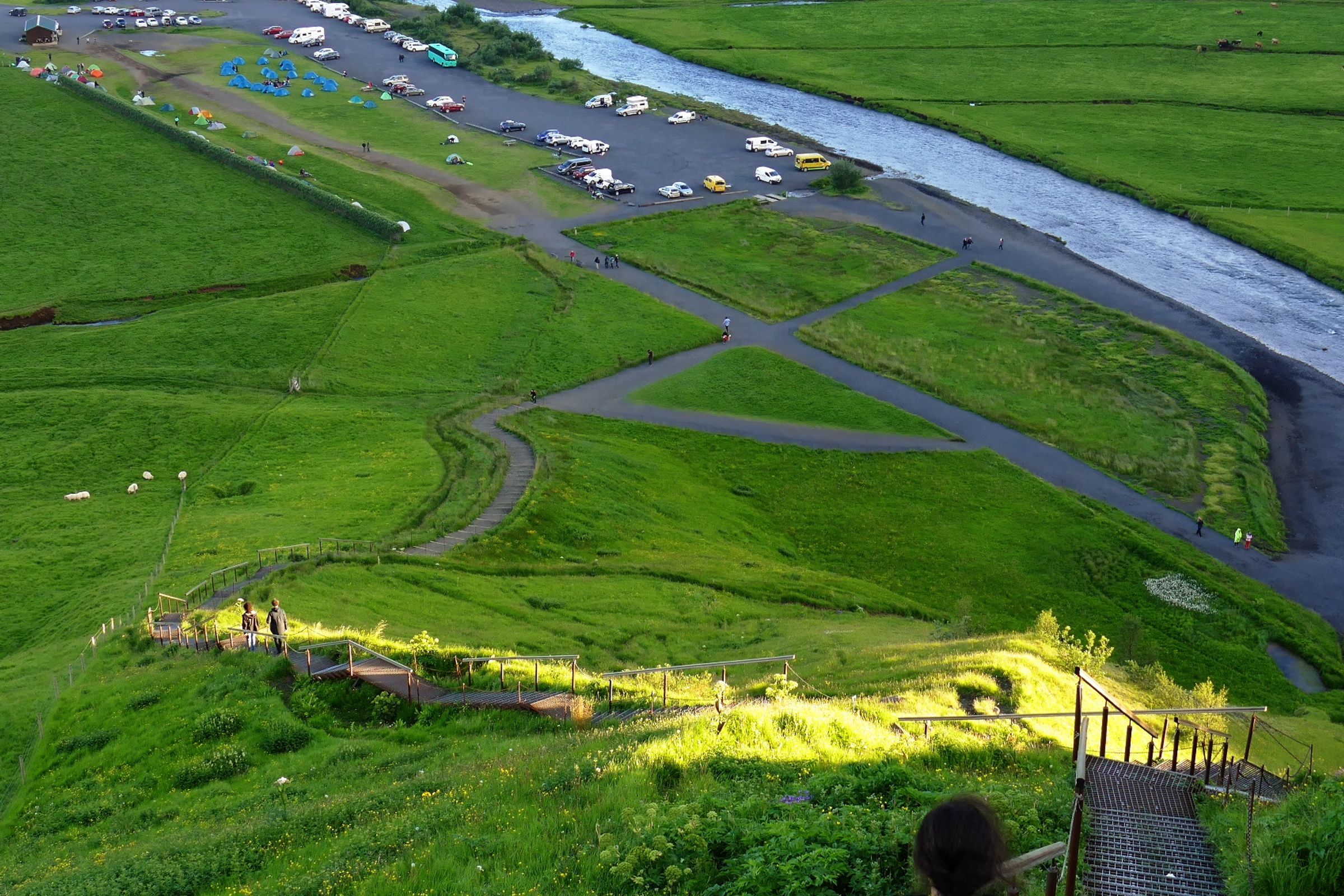
Sorting out the logistics ahead of time makes the whole experience easier, especially because Skógar and Þórsmörk are very different places to access. Skógar is simple to reach since it sits right on the Ring Road, about two and a half hours from Reykjavík by car, and public buses run there regularly in summer.
Þórsmörk takes more planning. The road into the valley has unbridged river crossings, so only highland buses and specially equipped vehicles can make the trip. Companies like Reykjavík Excursions and TREX operate summer bus routes made for hikers starting or finishing the trail there. Seats often fill up, especially on weekends, so booking ahead is usually necessary.

Accommodation
Where you stay depends on which end of the trail you start from or finish at:
- Skógar has a small number of guesthouses and some camping spots near the waterfall.
- Þórsmörk has huts and campsites managed by different groups, and the huts sell out well before July and August. Booking months in advance is normal if you want a guaranteed bed.
Guided Options
If you do not want to deal with the planning yourself, guided tours are available.
- Some offer single-day hikes over Fimmvörðuháls.
- Others run multi-day trips that include both Fimmvörðuháls and the Laugavegur Trail.
- Prices tend to be high because of transport costs and the remoteness of the area.
Responsible Travel
The highlands are slow to recover from damage, so it is important to follow Leave No Trace principles.
- Stay on marked trails.
- Pack out everything you bring in.
- Avoid stepping on fragile vegetation.
Tourism in Iceland has grown quickly, so planning ahead also helps ease pressure on local resources. Being flexible with dates, routes, and transportation is useful if weather or bus schedules shift.
Safety and Registration
Before you go, register your hiking plans at safetravel.is, and make sure your travel insurance covers hiking in remote areas. Search and Rescue teams do not charge for rescues, but reaching someone in a valley like Þórsmörk can take time and involves risks for the teams responding.
Cultural and Linguistic Context
Fimmvörðuháls is not just a modern hiking route. It follows paths that people in Iceland have used for centuries when crossing the highlands, and understanding that background gives the trail a different kind of depth.
The name Fimmvörðuháls means Five Cairn Pass. Cairns were simple stone markers that helped guide travelers through Iceland’s rough interior long before maps or digital tools existed. They played an important role because the landscape can change fast in bad weather, and even familiar routes can become hard to recognize.
Stories about highland crossings appear in old Icelandic sagas and folklore. These areas were known for sudden storms and long stretches without shelter, and people often told stories about travelers who got lost or found unexpected refuge. There is a memorial cairn on the pass for two hikers who died in a blizzard in 1970, which serves as a reminder of how challenging the highlands can be.
Names along the trail often come from Norse mythology. Þórsmörk means Thor’s Valley. The craters Magni and Móði were named after Thor’s sons. These names connect the landscape to the stories Icelanders have passed down for generations.
Why Fimmvörðuháls Is Unique
Fimmvörðuháls is special because you walk through several completely different landscapes in one hike. You start near the coast, climb into a volcanic area, and finish in a quiet, green valley, and each part feels different from the last.
Here are the main things that make it stand out:
- You walk between two enormous glaciers while crossing lava that formed in 2010, so you see both very old ice and very new land on the same day.
- The eruption area is still changing as the lava cools and cracks, and the craters keep shifting a little over time.
- The first part of the hike has more than 25 waterfalls along one river, which is uncommon even for Iceland.
- The landscape changes quickly, from grass to tundra to black volcanic rock, then down into a small birch forest in Þórsmörk.
- The trail follows old routes that Icelanders used long ago, so it has cultural meaning as well as natural interest.
Even on its own, the trail feels full of variety and history, which is why it leaves such a strong impression.
Conclusion
Fimmvörðuháls is one of Iceland’s most memorable hiking routes because it brings together volcanic terrain, long stretches of waterfalls, and views of two major glaciers in a single trip. The trail runs from the coast at Skógar to the sheltered valley of Þórsmörk, and along the way, you walk across land shaped by the 2010 Eyjafjallajökull eruption while also following paths that people have used for centuries.
Its position between two glaciers creates a mix of landscapes you do not often see on one trail, from the green lower valleys to the dark lava fields near the top. Hiking it safely means paying close attention to the weather, bringing proper gear, and being honest about your experience level. With the proper preparation, the route offers a complete look at some of Iceland’s most interesting natural features in a single day or over two if you choose to stay in a hut.
Frequently Asked Questions About Fimmvörðuháls