1-Day Golden Circle Itinerary: The Complete Guide to Iceland's Most Famous Route
If you’ve only got one day and you want to see Iceland’s biggest highlights, the Golden Circle is the easy answer. It’s a simple loop from Reykjavík that takes you to waterfalls, geysers, and a place where two continents are slowly pulling apart. All on paved roads. All doable on your own.
There’s a reason it’s the most popular route in the country. You get three major natural landmarks in one trip, plus a few optional stops if you’ve got time. You can rent a car and go at your own pace, or book a tour and let someone else handle the driving.
This guide walks you through the whole day in a clear, practical way. When to leave. How long to stay at each stop. How to avoid the worst crowds. What you can add if you’ve got extra time. The full loop is about 300 kilometers, and by the end of this, you’ll know exactly how to use those hours well.
Golden Circle Map Overview & Route Breakdown
The Golden Circle is about 300 kilometers round trip. You start in Reykjavík, head out into the southwest countryside, and loop back to the city by the end of the day.
There are three main stops:
- Þingvellir National Park
- Geysir Geothermal Area
- Gullfoss Waterfall
The usual route is simple. From Reykjavík, take Route 36 north to Þingvellir. After that, continue on Route 365 and then Route 35 toward Geysir and Gullfoss. When you’re done, follow Route 35 south and connect to the Ring Road (Route 1) to get back to Reykjavík.
If you want to add Kerið Crater, it’s just off Route 35 on the way back, so it’s an easy detour.
Driving Time and Distance
If you drove the whole loop without stopping, it would take about 3.5 to 4 hours. But that would completely miss the point.
Realistically, plan for 6 to 8 hours with proper stops at each main site. If you add places like Secret Lagoon or Friðheimar for lunch, give yourself another hour or two.
The roads on the main route are paved and open year-round. You do not need a 4x4 for the standard Golden Circle. A regular rental car is perfectly fine unless you’re planning to leave the main roads and head somewhere like Langjökull Glacier.
Best Direction to Drive
Go clockwise. That means Reykjavík to Þingvellir first, then Geysir, then Gullfoss, and back.
This order helps for two reasons. First, you reach Þingvellir early, before most tour buses arrive. Second, the afternoon light at Gullfoss works better when the sun is behind you rather than in your face.
Fuel and Services
You’ll find gas stations in Reykjavík and in Selfoss, plus a few scattered along Route 35. It’s smart to fill up in Selfoss before heading deeper into the rural stretch. Stations can be spaced out, and outside of summer, some close early or have limited hours.
Cell service is generally good along the route. You can use GPS without much trouble and check road conditions while you’re out.

Your Golden Circle Day: A Complete Hour-by-Hour Itinerary
Let’s walk through a full day step by step.
We’ll use a July day as the example, since that gives you long daylight and generally decent weather. In summer, these times work well. In winter, you’ll need to compress the schedule because you’ll only have 4 to 6 hours of daylight.
The idea is simple: leave early, stay ahead of the biggest crowds, and give yourself enough time at each stop without feeling rushed. You’ll see the three main attractions, stop for lunch, and still have space for one or two optional extras.
07:30 – Prep and Departure from Reykjavík
Leave early. It makes the whole day smoother.
Either eat breakfast at your hotel or grab coffee and something small from a bakery in Reykjavík. Most open around 7 AM.
Before you go, check road.is and vedur.is for road and weather conditions. Even in summer, Icelandic weather can shift quickly. Wind can especially affect driving.
Fill up your rental car in Reykjavík if you didn’t the night before. It saves you time later.
Head east on the Ring Road (Route 1), then turn onto Route 36 toward Þingvellir. At this time of day, traffic is light. Most tour buses don’t leave Reykjavík until around 9 AM, so you’re comfortably ahead of them.
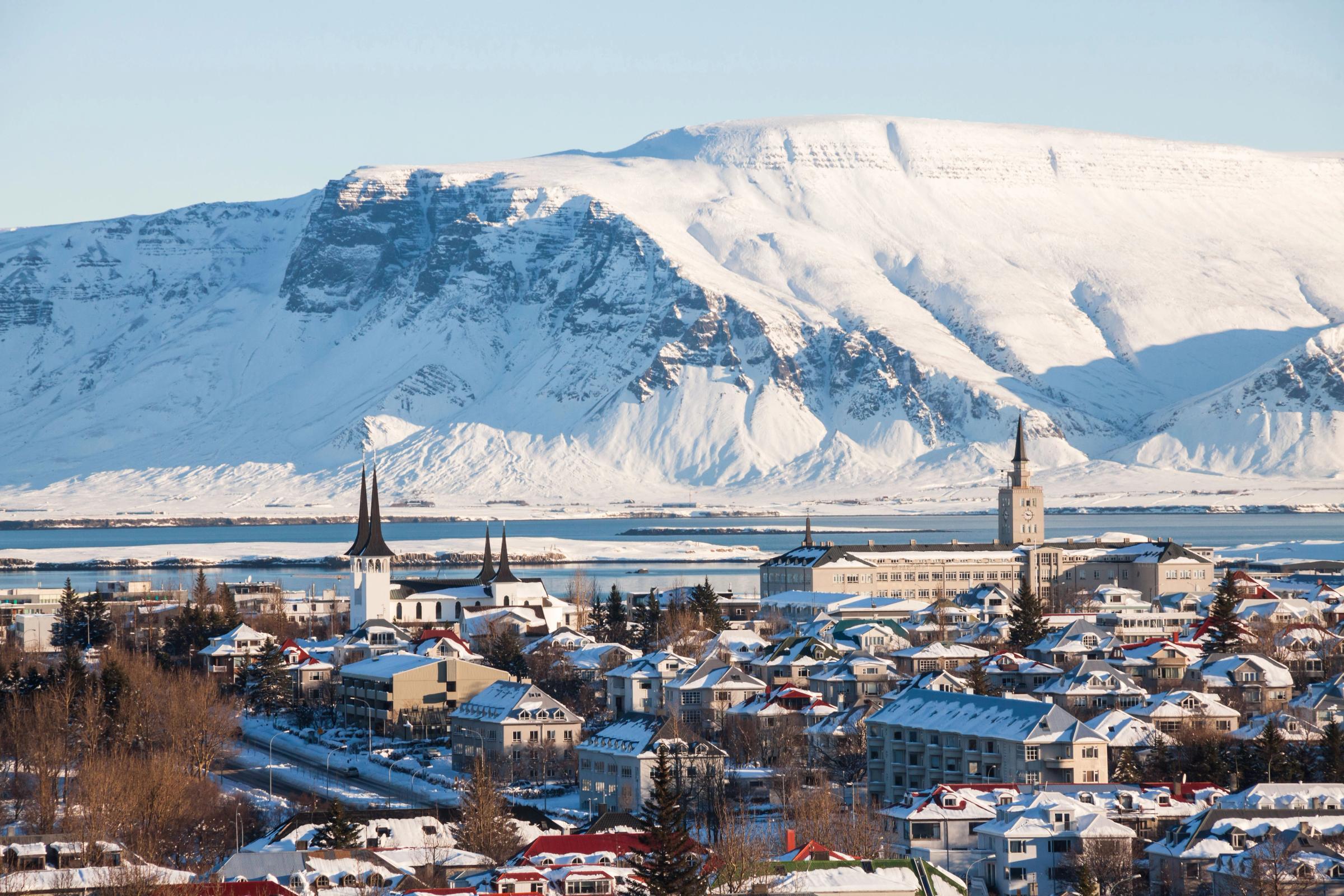
08:15 – Arrive at Þingvellir National Park (45 minutes from Reykjavík)
You’ll reach Þingvellir in about 45 minutes.
Park in the P1 or P5 lots near the visitor center. These give you easy access to the main walking paths. Parking costs around 1000 ISK for the day.
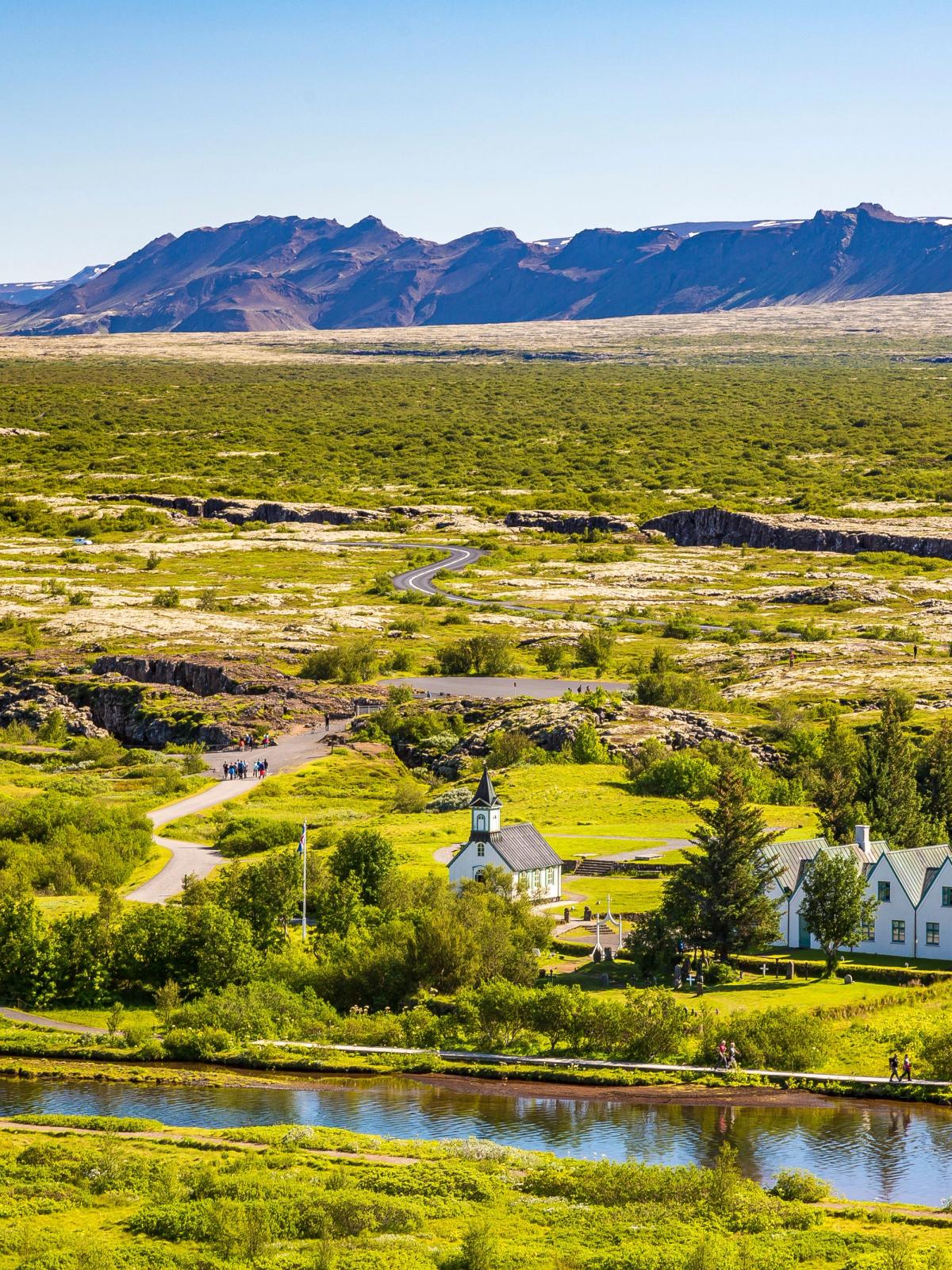
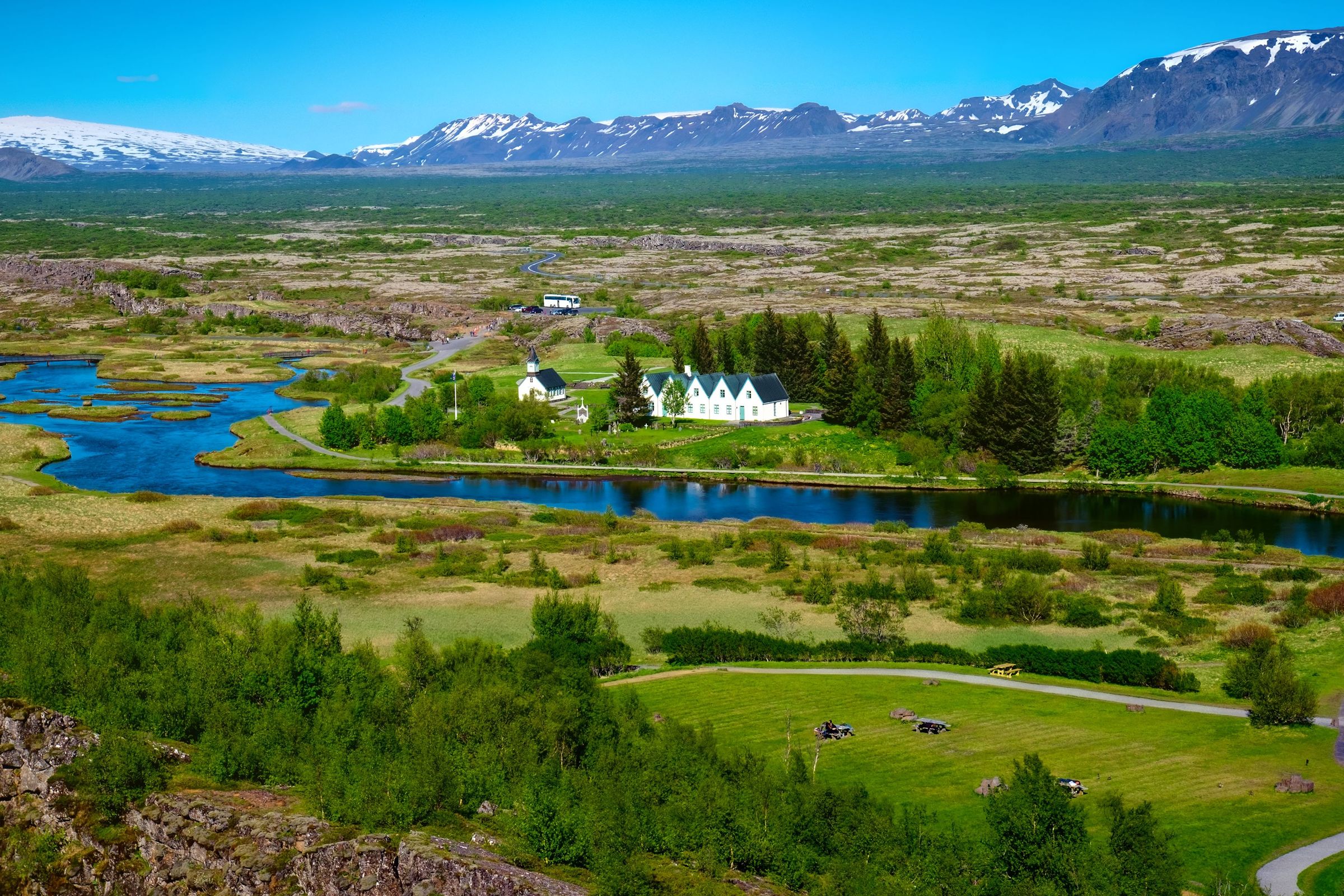
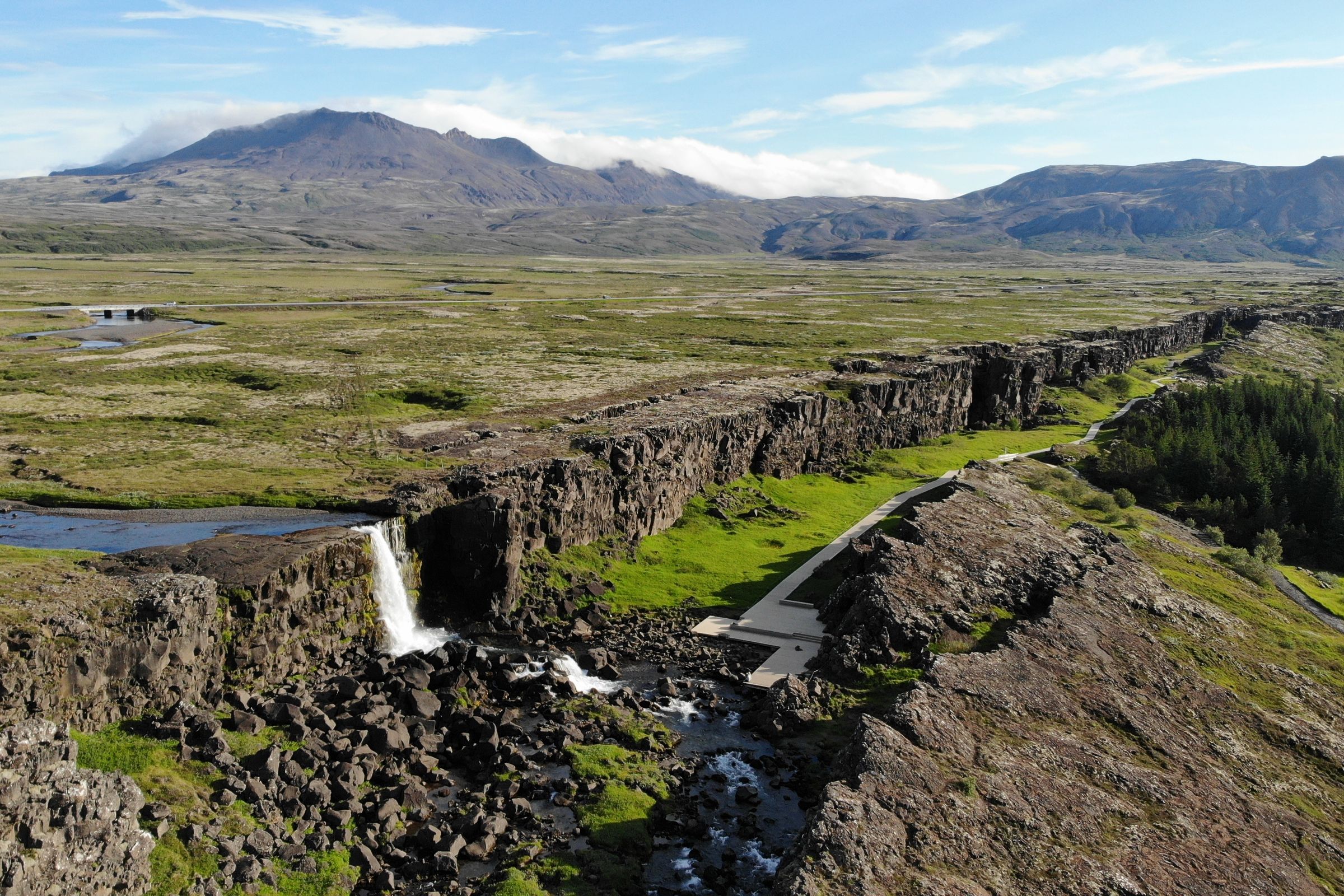
Þingvellir is important for two reasons. Historically, it’s where Iceland’s parliament met for centuries. Geologically, it’s where the North American and Eurasian tectonic plates are slowly pulling apart. It’s a UNESCO World Heritage Site because of that mix of history and geology.
What to Do Here (1 hour 15 minutes)
Start at the visitor center. There are clean bathrooms and simple exhibits that explain what you’re looking at. It only takes a few minutes, but it helps everything make more sense.
From there, walk through Almannagjá, the main rift. You’re literally walking between two continental plates. The path takes you down into the rift valley, with tall rock walls on both sides. From the parking area to the main viewpoint is about a 20-minute walk.
Next, head toward Öxarárfoss. This waterfall sits inside the park and takes another 10 to 15 minutes to reach. The walk is easy. It’s not huge, but it’s a good spot for photos, and it’s usually quieter than Gullfoss later in the day.
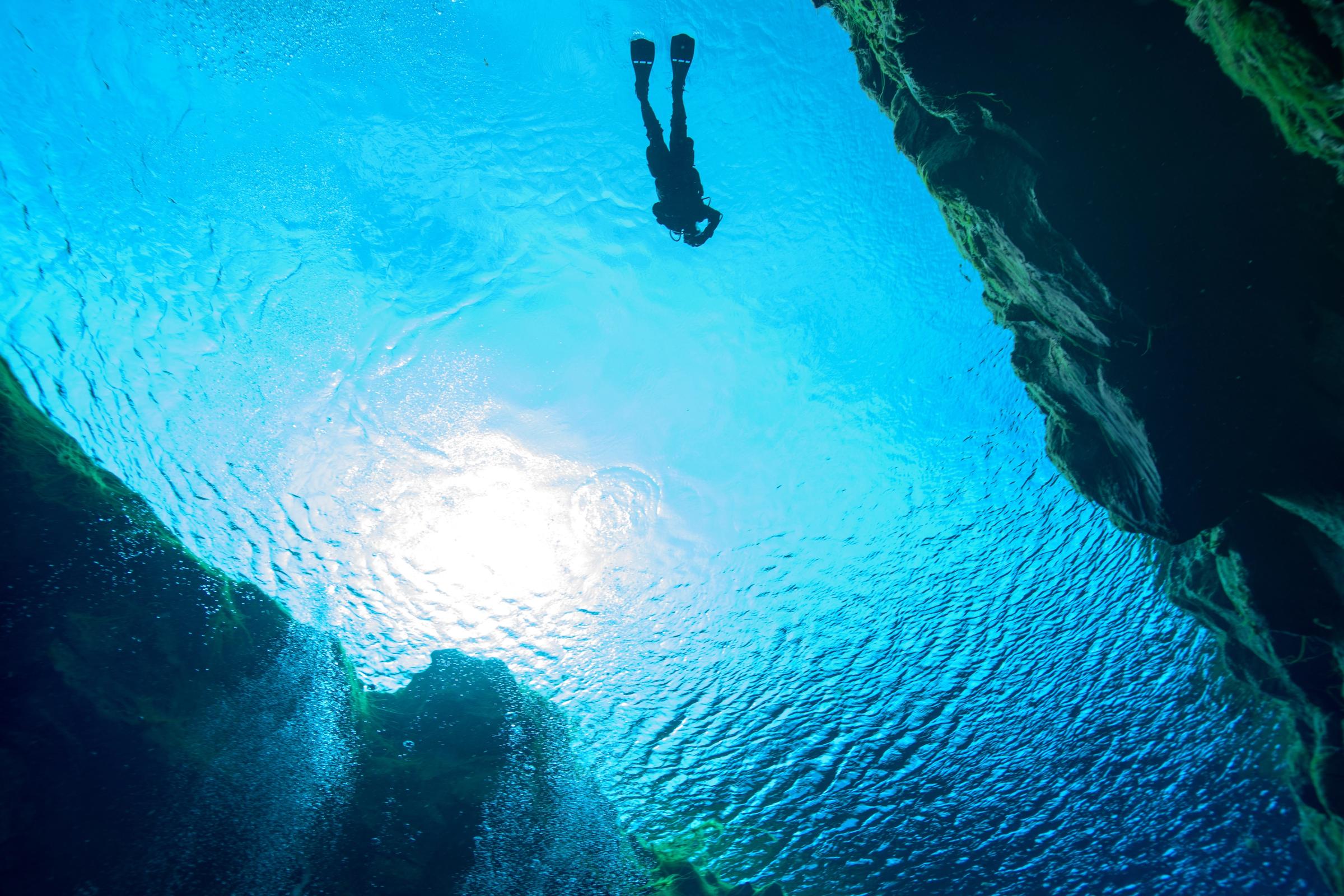
If you’ve got extra time, walk toward the Silfra area. You’ll see snorkelers and divers preparing to enter the fissure. The water is extremely clear. If you want to swim between the continents yourself, you need to book a guided tour in advance.
By around 9:30 AM, you’ll have seen the main highlights. After 10 AM, the park starts filling up with tour groups. Leaving now means you experienced it while it was still relatively calm.
09:30 – Drive to Geysir (50 minutes)
Leave Þingvellir and head east on Route 36. Then connect to Route 365 and Route 35 toward the Geysir Geothermal Area. The drive takes about 50 minutes.
This stretch is quiet and open. You’ll pass farmland, low hills, and horse fields. If you see Icelandic horses near a fence and it’s safe to pull over, you can stop briefly. They’re smaller than most horses and usually pretty curious.
The roads are paved and easy to follow. Just stick to the main route, and you won’t have any trouble.
10:20 – Arrive at Geysir Geothermal Area (50 minutes from Þingvellir)
You’ll pull into Geysir around 10:20 AM. Parking is about 1,000 ISK.
As soon as you step out of the car, you’ll see steam rising from the ground. The geothermal area is just a short walk from the lot.
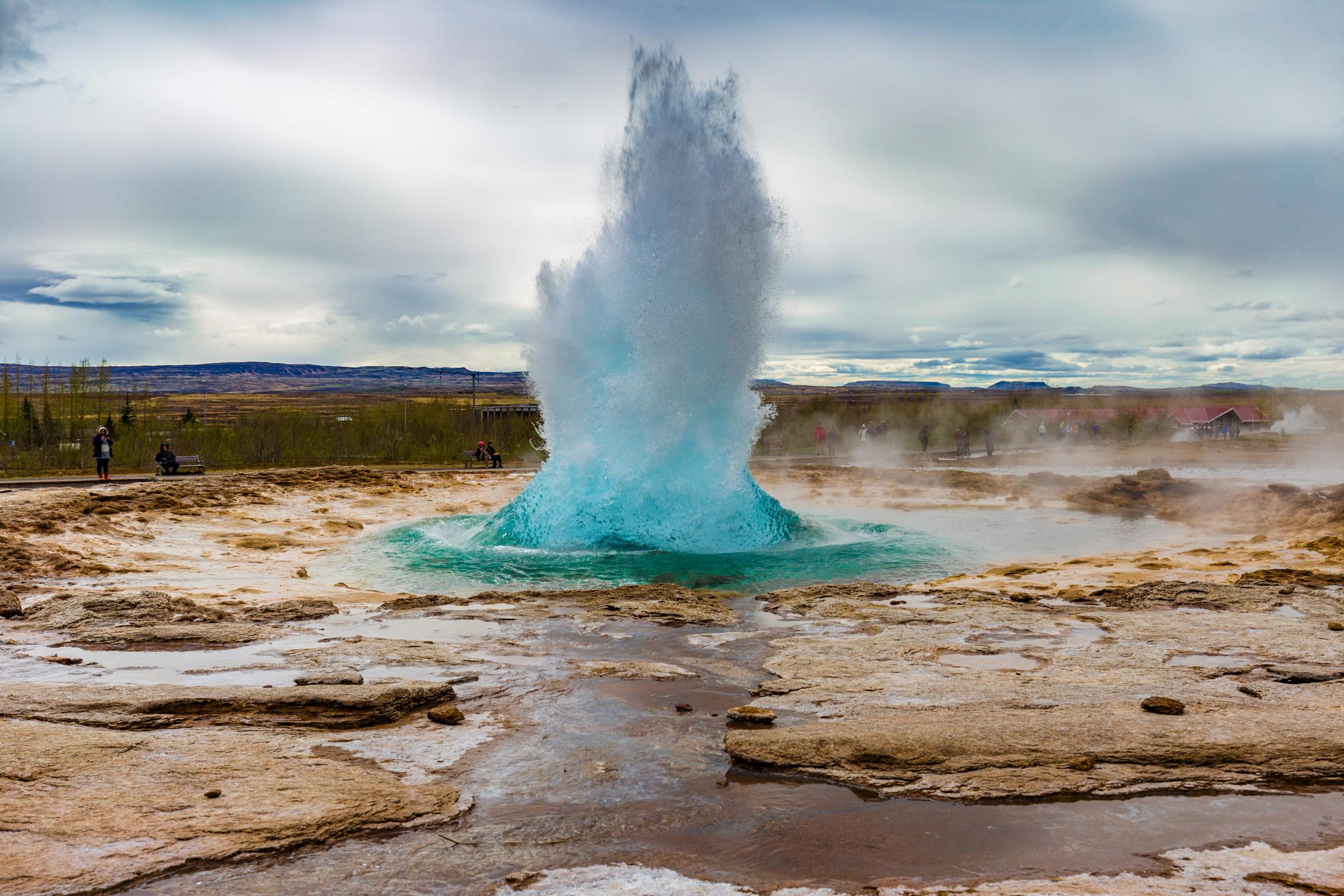
This is where Strokkur is located. It erupts every 5 to 10 minutes, shooting hot water up to around 30 meters. There are also bubbling mud pools, steaming vents, and smaller hot springs spread across the hillside.
What to Do Here (45 minutes to 1 hour)
Go straight to Strokkur first. You won’t have to wait long for an eruption. Right before it goes off, the surface of the water forms a big blue bubble that swells up. That’s your cue to get your camera ready.
Stand upwind if you can. The spray can reach you depending on the breeze.
After you’ve watched a few eruptions, walk the marked paths around the geothermal field. There are several smaller hot springs and mud pots worth seeing. The Great Geysir is here too, but it rarely erupts these days, so don’t expect much from it.
The visitor center across the road has bathrooms, a restaurant, and a gift shop. Food here is more expensive than in Reykjavík, but it’s convenient if you need a quick snack or coffee.
By around 11:15 AM, you’ll have covered everything without rushing.
11:15 – Drive to Friðheimar for Lunch (15 minutes)
From Geysir, drive south on Route 35 for about 17 minutes to reach Friðheimar Tomato Farm.
It’s right off the main road and easy to find.
You can skip this stop and go straight to Gullfoss if you’re not hungry. But stopping here breaks up the day nicely and gives you something different between natural sights.
11:30 – Lunch at Friðheimar (45 minutes to 1 hour)
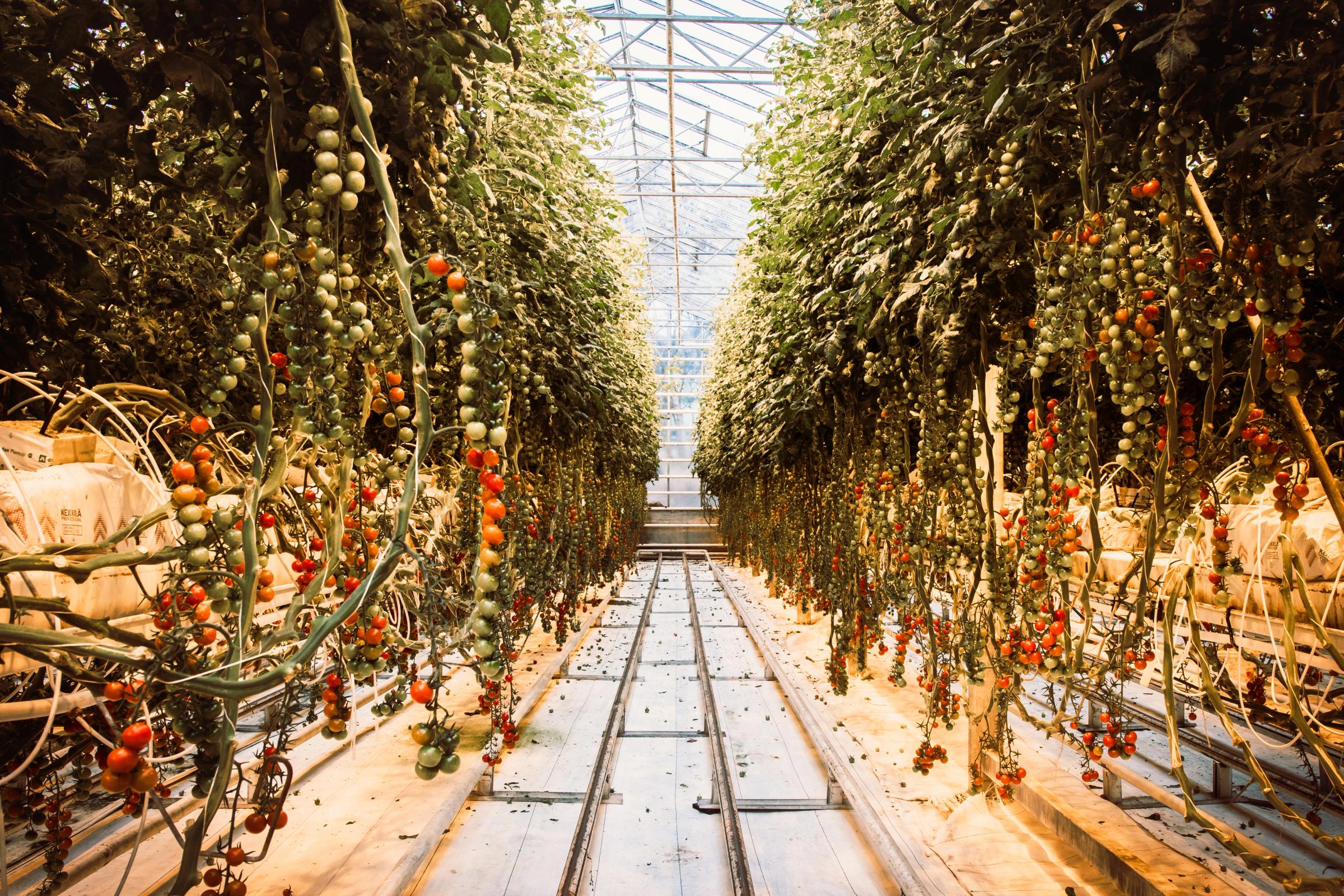
Friðheimar is a greenhouse restaurant that grows tomatoes year-round using geothermal heat. You eat inside the greenhouse, surrounded by rows of tomato plants.
Most people order the tomato soup with fresh bread. It comes with unlimited refills and costs around 2,000-3,000 ISK. They also serve pasta, tortillas, and other tomato-based dishes if you want something heavier.
It’s warm and humid inside, which feels good if the weather outside is cold or windy.
After you eat, you can walk around briefly to see how the tomatoes are grown. The farm also breeds Icelandic horses, and sometimes you can see them nearby.
Plan to spend about 45 minutes to an hour here, including time to order and look around.
12:30 – Drive to Gullfoss (10 minutes)
After lunch, drive back north on Route 35 for about 27 minutes.
You’ll be there quickly, and the waterfall is visible from the parking area once you arrive.
13:00 – Arrive at Gullfoss Waterfall (27 minutes from Friðheimar)
You’ll get to Gullfoss around 12:45 PM. Parking is free, and the lot is right next to the visitor center and café.
Gullfoss is a wide, two-level waterfall that drops about 32 meters into a narrow canyon. The water comes from the Hvítá River, which is fed by meltwater from Langjökull Glacier. That’s why the water often looks pale, almost milky blue.
It’s loud. You’ll hear it before you’re close. The scale is bigger than it looks in photos.
What to Do Here (45 minutes to 1 hour)
Start with the upper viewing platform. It’s an easy walk from the parking lot and gives you a wide, open view of the falls and canyon. If it’s windy, you’ll feel the spray, so keep your waterproof jacket on.
Then walk down to the lower platform. This path brings you much closer to the water, and you really feel the power of it from here. On sunny days, rainbows form in the mist. Sometimes more than one at a time.
The light in early afternoon usually works well for photos. The canyon is lit evenly, and you won’t be shooting directly into the sun if you’re following the clockwise route.
If you need a break, the café inside has hot drinks, snacks, and bathrooms. It’s a good place to warm up before heading back out.
By around 1:45 PM, you’ll have seen it from both angles and be ready to move on.

13:45 – Drive to Kerið Crater (45 minutes)
From Gullfoss, head south again on Route 35 toward Reykjavík.
After about 40 minutes, you’ll see signs for Kerið Crater on your left. It’s clearly marked and easy to find.
This stop is optional, but it doesn’t take long and adds something visually different to the day. If you’re short on time, you can skip it and head straight back. Or you can choose Secret Lagoon instead.
14:30 – Arrive at Kerið Crater (45 minutes from Gullfoss)
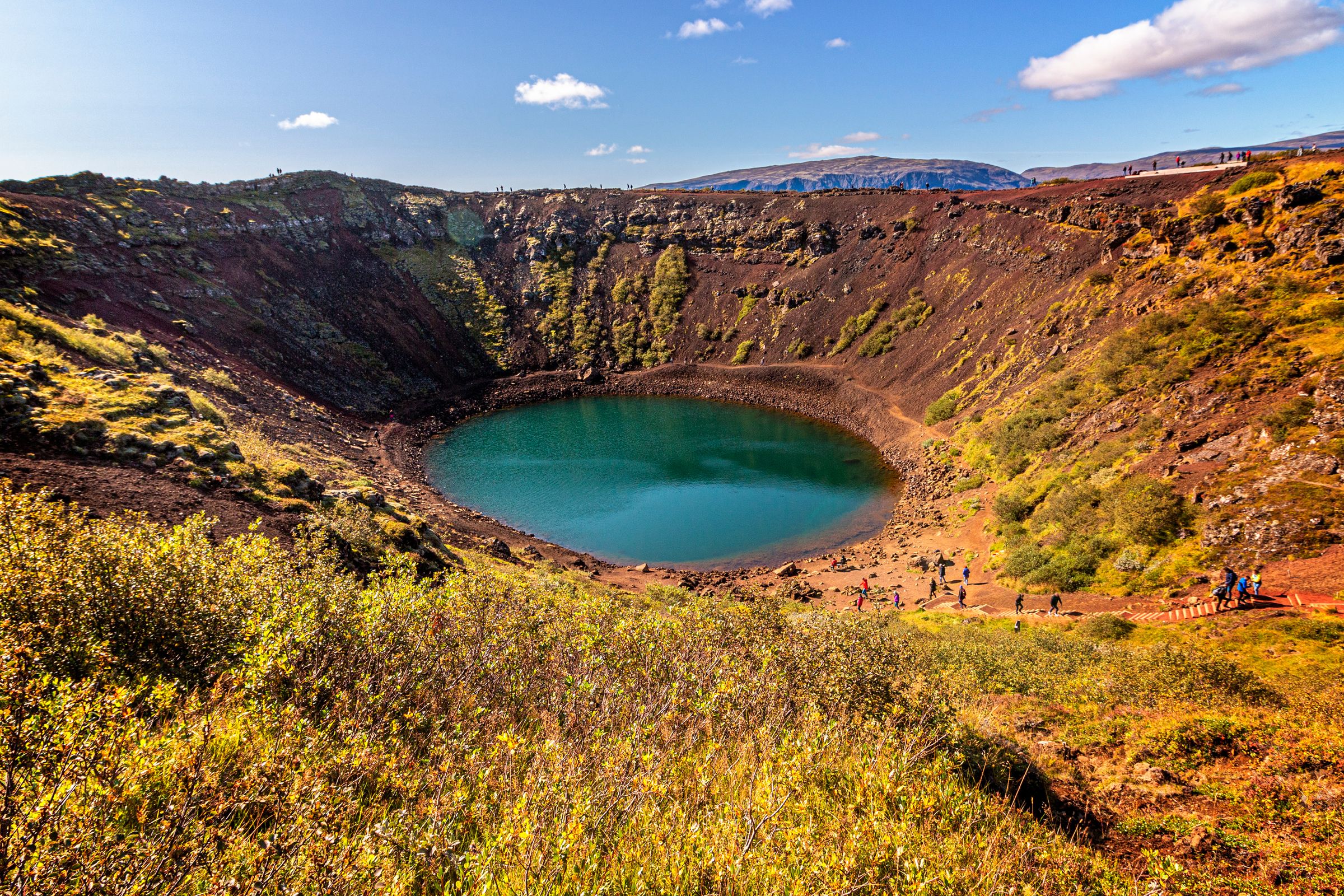
Kerið is a volcanic crater lake with red and orange slopes and bright blue water at the bottom. It formed somewhere between 3,000 and 6,500 years ago when part of a volcano collapsed inward.
Entry costs around 600 ISK per person. You’ll pay at a small booth near the parking area.
What to Do Here (30 minutes)
Walk the path around the rim. It’s short and easy, and the full loop takes about 15 to 20 minutes. The color contrast between the red rock and blue water is strong, especially in the afternoon light.
If you want, you can walk down to the water’s edge. The path is steeper but manageable.
By about 3 PM, you’ll be done here and can decide whether to head back to Reykjavík or add one more stop.
15:00 – Optional: Drive to Secret Lagoon (35 minutes)
If you still have energy and want to end the day in warm water, drive toward Secret Lagoon near Flúðir. From Kerið, it’s about 35 minutes southeast on Route 35.
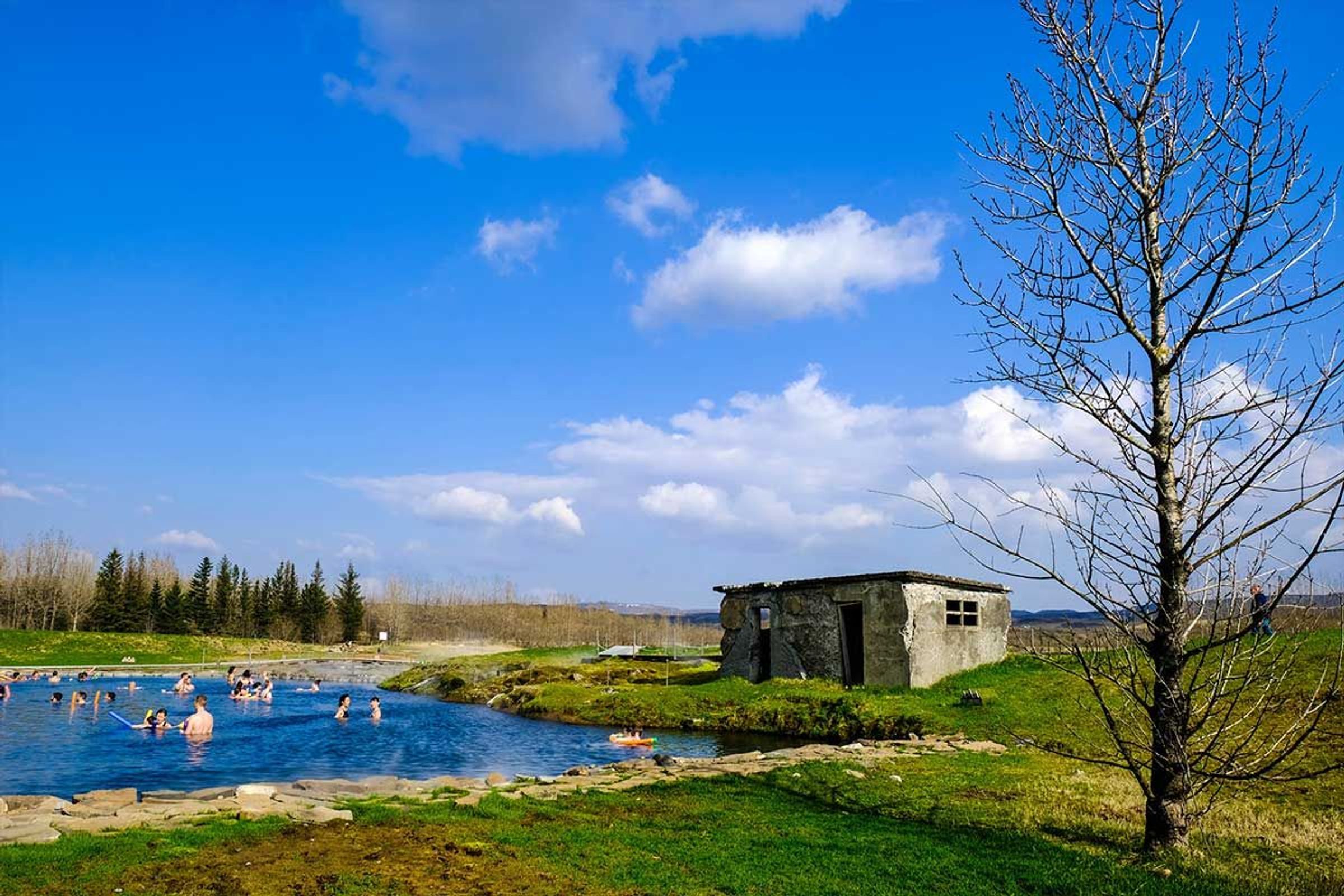
Secret Lagoon is the oldest swimming pool in Iceland, dating back to 1891. It’s a natural geothermal pool, and the water stays around 38 to 40°C.
15:35 – Soak at Secret Lagoon (1 to 1.5 hours)
This place is simple. No luxury spa setup. Just a large warm pool surrounded by steam vents and small bubbling areas of geothermal activity. It feels more local and less polished than Blue Lagoon.
You’ll sit in warm water and watch steam drift across the surface. In the late afternoon, it’s often quieter than earlier in the day.
Plan for at least an hour in the pool. Bring your own towel or rent one there.
Entry is 4,500 ISK.
If you skip Secret Lagoon, you can drive straight back to Reykjavík from Kerið and be in the city around 4 PM.
17:00 – Drive Back to Reykjavík (1 hour 15 minutes)
If you stopped at Secret Lagoon, leave around 5 PM.
Take Route 35 west until it connects with the Ring Road (Route 1), then follow Route 1 back into Reykjavík. The drive takes about 1 hour and 15 minutes.
As you get closer to the city, traffic gets heavier, especially on weekdays between 5 and 6 PM. It’s not extreme, but you might slow down near the outskirts.
If you skipped Secret Lagoon and left earlier from Kerið, you’ll reach Reykjavík closer to 4 PM instead.
18:15 – Arrive Back in Reykjavík
You’ll roll into Reykjavík around 6:15 PM if you did the full version of the day.
Drop off your rental car if you’re done with it, or head back to your hotel to rest and warm up.
For dinner, you’ve got plenty of options. If you want something quick and simple, grab a hot dog from Bæjarins Beztu Pylsur. It’s the well-known stand in the city center. Or go for fish and chips at one of the casual spots nearby.
If you prefer a sit-down meal, Reykjavík has everything from seafood restaurants to ramen and pizza. After a full day outside, honestly, anything warm will feel good.
Best Order to Visit (To Avoid Crowds)
In summer, the busiest window is roughly 10 AM to 2 PM. That’s when most tour buses are at the main stops.
The schedule above is designed to stay slightly ahead of that wave. But if you want to adjust things, here are a few ways to think about it.
Early Morning Strategy
If you arrive at Þingvellir around 8 or 9 AM, you’re ahead of most tours. Buses usually leave Reykjavík around 9 AM, so they won’t reach Þingvellir until closer to 10.
By the time they move on to Geysir and Gullfoss, you’re already there or leaving. That timing helps you avoid the most crowded moments at each stop.
Late Evening Option (Summer Only)
From May through August, you have very long daylight. In late June, it barely gets dark.
You can flip the schedule and start around 3 or 4 PM instead. Visit Gullfoss and Geysir in the evening when the crowds thin out. Þingvellir in the softer evening light is also a nice experience.
This only works in summer. In winter, you’ll lose daylight by mid-afternoon, so don’t try this then.
Reverse Direction
Some people drive counterclockwise, meaning Reykjavík to Gullfoss first, then Geysir, then Þingvellir.
This can sometimes put you ahead of certain bus routes. But in the afternoon, you’ll be facing into the sun at Gullfoss, which makes photos harder and can be uncomfortable on bright days.
Clockwise is usually the easier and more predictable option.
Self-Drive vs Guided Tour
You can easily do the Golden Circle on your own. You can also join a tour and let someone else handle the logistics. It really depends on what you prefer.
Self-Drive
A rental car usually costs around 5,000-10,000 ISK per day, depending on the season and vehicle type. Gas for the full loop is about 5,000 ISK.
From May to September, a regular 2WD car is completely fine for the paved Golden Circle roads. In winter, most rental cars come with winter tires. If you want extra stability in snow and ice, a 4WD can feel more secure.
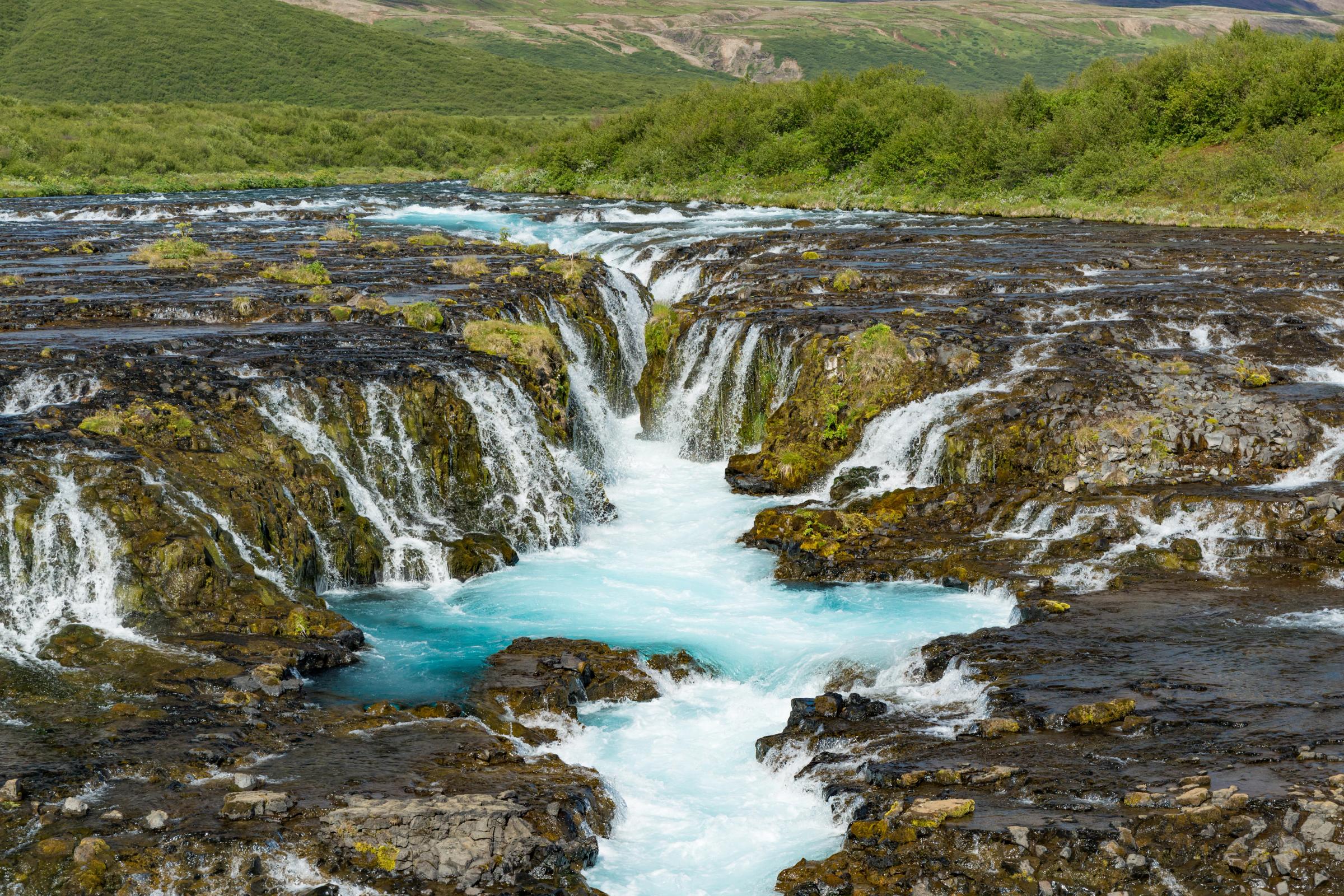
Driving yourself means you control the pace. You can leave early, skip places you’re not interested in, or stay longer somewhere you like. You can also add stops like Bruarfoss or Laugarvatn without worrying about a strict tour schedule.
Guided Tours
Bus tours typically cost between 10,000 and 19,000 ISK per person.
They handle driving, parking, and timing, which makes the day easier if you don’t want to navigate or drive in winter conditions.
Small group tours, usually under 20 people, cost more but feel less crowded. In winter, Super Jeep tours run with larger vehicles built for rougher conditions. Some include extra stops or Northern Lights viewing after the main route.
Tours are a good choice if you’re short on time, uncomfortable driving in winter, or want more detailed explanations about the history and geology along the way.
What to Pack for a Golden Circle Day
The weather in Iceland shifts quickly. You can get sun, wind, and rain in the same hour. It’s better to be slightly overprepared than uncomfortable all day.
Clothing
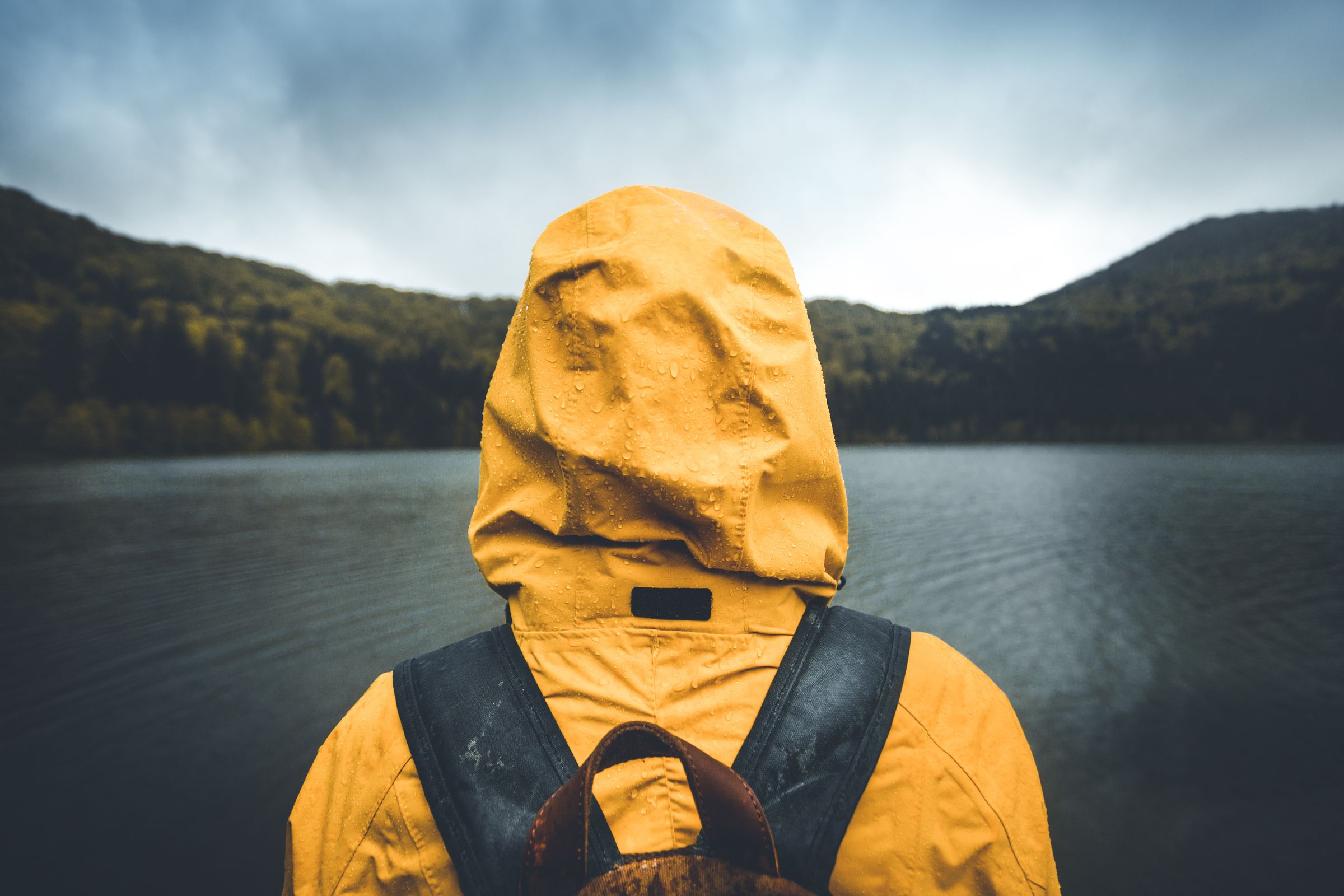
- A waterproof jacket is essential. Gullfoss sprays into the air, and rain can appear at any time.
- Layers work better than one thick coat. Start with a base layer, either wool or synthetic. Add a fleece or light insulated jacket. Put your waterproof shell on top. That way, you can adjust if you warm up while walking.
- Shoes matter. Paths can be wet, muddy, or icy depending on the season. Hiking boots or trail shoes with a good grip are much better than regular sneakers.
- In winter, bring a warm hat, gloves, and a scarf. Wind can make 0°C feel much colder.
Gear
- Bring snacks and water. There are cafés at major stops, but having your own food means you’re not stuck paying high prices if you’re just a little hungry.
- Pack a swimsuit if you plan to visit Secret Lagoon or any other hot spring.
- A microfiber cloth is useful for wiping spray off your camera lens at Gullfoss and Geysir. A simple rain cover helps, too.
- Sunglasses are useful year-round. Snow and ice reflect a lot of light, and even in summer, glare can be strong.
Conclusion
The Golden Circle gives you three of Iceland’s biggest natural highlights in one day. You walk between tectonic plates, watch a geyser erupt, and stand next to one of the country’s most powerful waterfalls. All without long or complicated driving.
Start early if you want fewer crowds. Dress for changing weather. Add smaller stops if you have time.
It works in summer when the days are long. It works in winter if you plan around limited daylight and road conditions.
If you’re staying longer in Iceland, the South Coast or the full Ring Road are natural next steps. But if you only have a day or two, the Golden Circle covers the essentials without wasting time in the car.
Frequently Asked Questions About the Golden Circle Itinerary